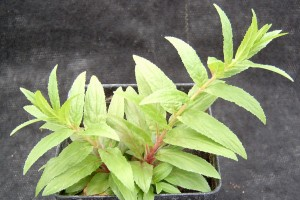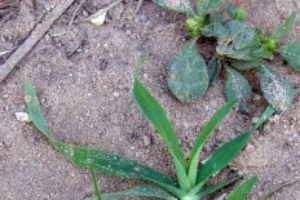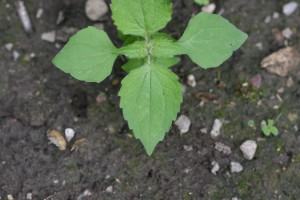
Common ragweed – Ambrosia artemisiifolia
 Print
Print Email
EmailAmbrosia artemisiifolia L.
Asteraceae (Aster family)
MI Status
Native
Life cycle
Erect, branching summer annual.
Leaves
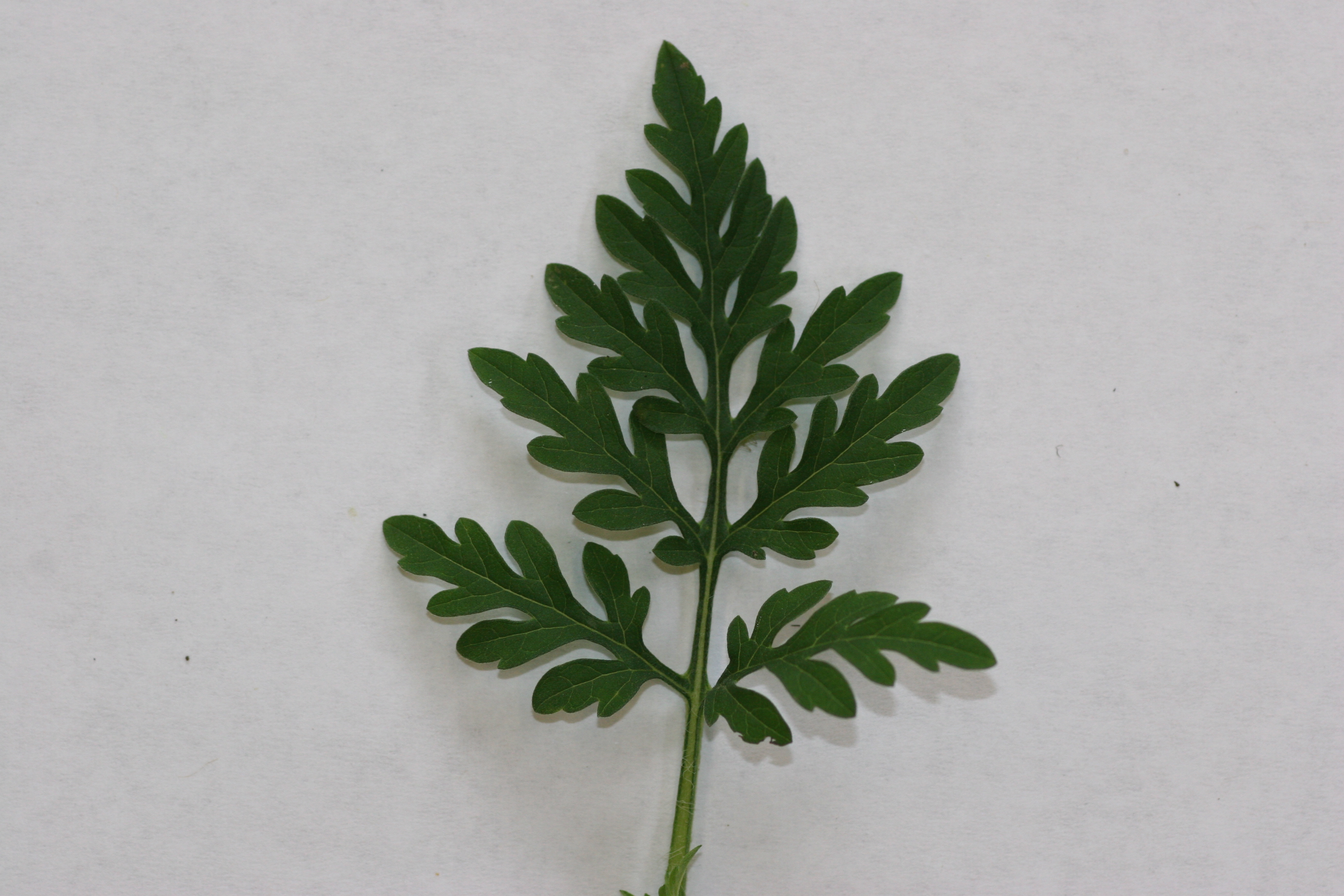
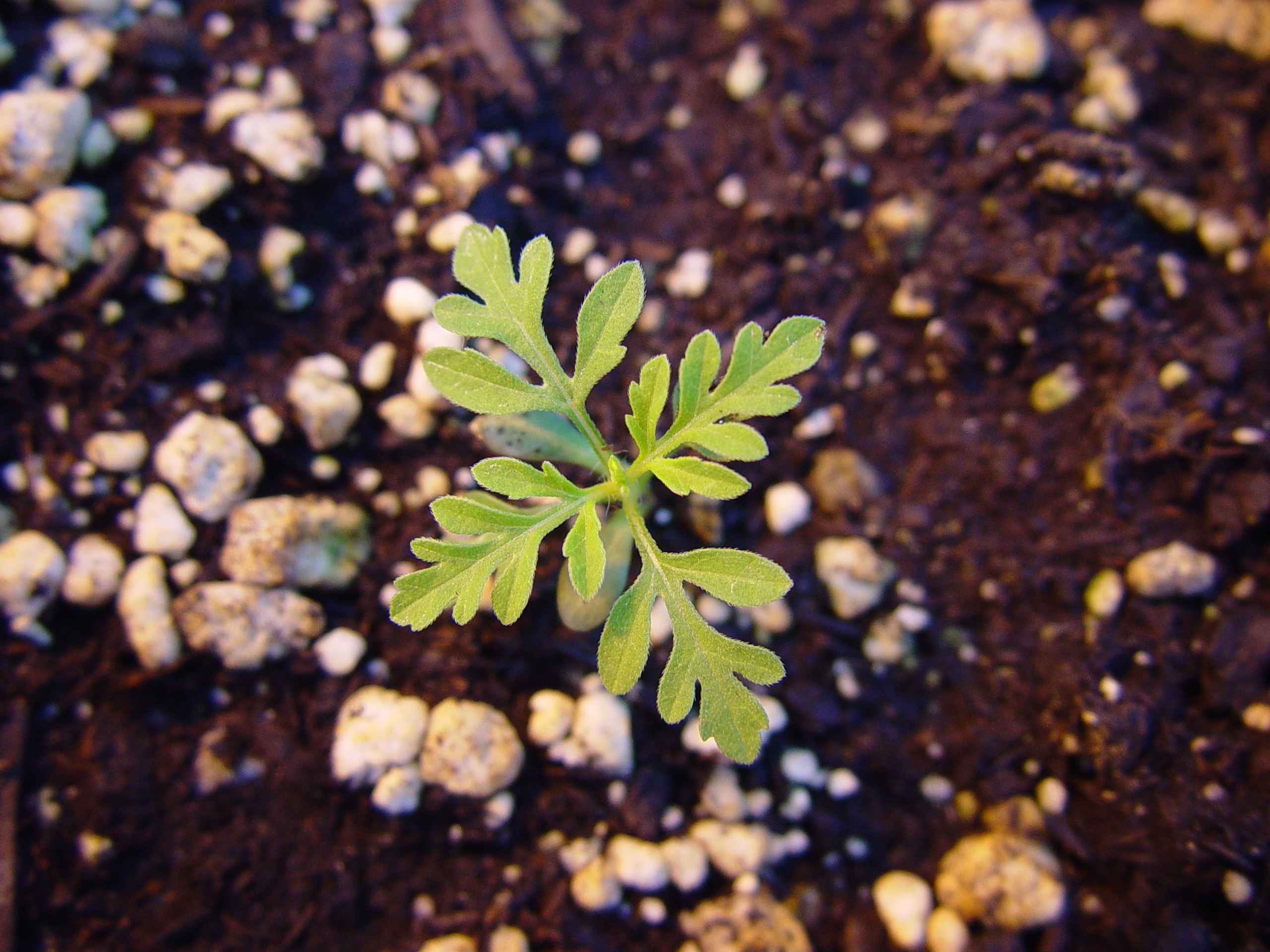
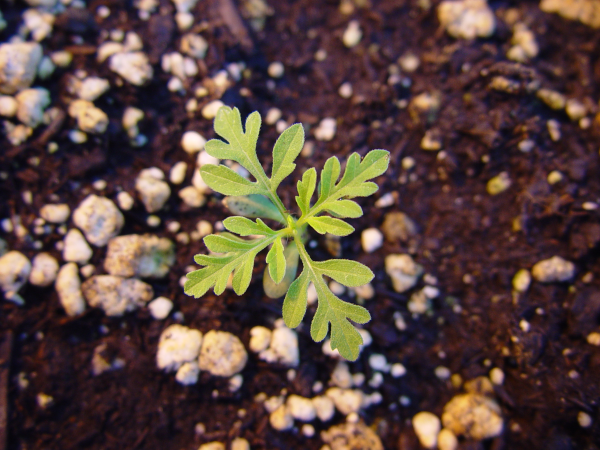
Cotyledons are thick and oval to spatula-shaped. Leaves are fernlike, once- or twice-compound, and usually hairy. Upper leaves are alternate; lower leaves may be opposite or alternate with distinct petioles.
Stems
Usually hairy, erect, and branched up to 6 feet tall.
Flowers and fruit
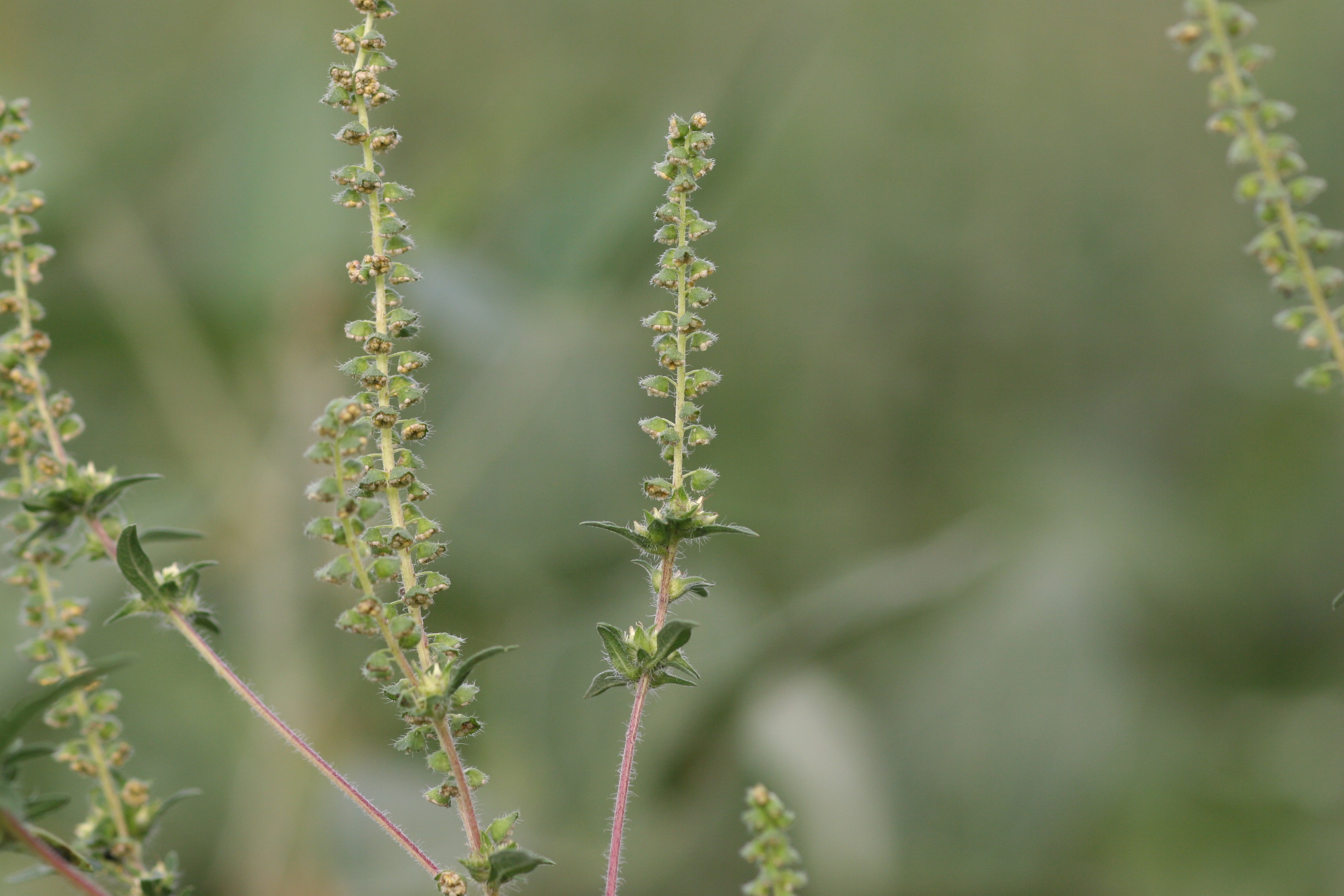
Flowers are generally inconspicuous, found on terminal branches. They produce prolific amounts of pollen. The seed is enclosed in a single-seeded, woody fruit with several spikes resembling a crown.
Reproduction
Seeds.
Similar weeds
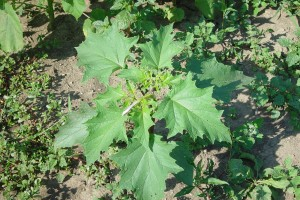
Giant ragweed (A. trifida L.)
Differs by having cotyledons three to four times larger; three- to five-lobed leaves opposite in arrangement; and a height that may reach 15 feet.
Western ragweed (A. psilostachya DC.)
Differs by being perennial, with prolific creeping roots, densely hairy leaves, and a height typically not exceeding 4 feet.