


Community Change Guide for Adult Active Communities
Active communities make it easier for people to move more as part of their daily life.
Regular physical activity supports physical health, mental well-being and independence. Community support can make these benefits easier to achieve and can help communities:
- Create safe and welcoming places for people to be active.
- Support health and independence across the lifespan.
- Strengthen social connection and community engagement.
- Build environments and routines that make healthy choices easier.
This resource is designed for community champions who want to increase physical activity opportunities for adults in community settings such as senior centers, housing communities, worksites, faith-based organizations and local nonprofits.
Use this Community Change Guide for Adult Active Communities to find practical steps, examples and tools for getting started. The guide follows Michigan State University Extension’s Six Step Community Change Model to help you move from identifying needs to acting and sustaining improvements over time.
Step 1: Identify the need
Here are some approachable ways an organization can identify a need to support physical activity in the community. Think about both the barriers individuals may face and the challenges your setting may have in making movement part of daily routines.
Talk with the people you serve: Ask participants, residents or staff if they would like more opportunities to move during the day. Short questions can be included in surveys, registration forms or casual conversations.
Simple questions can include:
What makes it hard for you to be physically active right now?
Are there barriers that make movement difficult, such as cost, transportation, safety, health concerns or not feeling comfortable or included?
When would it be easiest for you to move more during the day?
What types of movement feel safe and comfortable for you?
What would make it easier to be active in this setting?
Observe your environment: Notice when people are sitting for long periods or when movement could fit naturally into the schedule. Look for spaces that could be used for walking, stretching or light strength-building. Consider whether equipment, safe walking areas or scheduled activity time are available.
Review your policies and practices: Think about whether your organization’s routines support movement. Are there long meetings without breaks? Limited access to equipment? No scheduled time for activity? Small changes in schedules, expectations or space can make physical activity easier for everyone.
Tool for identifying the need: Use the Identify the Need Guide and Worksheet to learn more about ways to identify a strong community need for active communities.
Step 2: Bring people together
Physical activity changes are more likely to last when supported by more than one person. If possible, start by identifying two to four people who care about wellness and have an influence in your setting. This could include staff, volunteers, residents or community partners. This does not need to be a formal committee. A simple “Active Communities Team” can create a shared goal by starting with a short conversation:
What is the need we are trying to address?
What is one realistic change we can try?
How will we communicate the goal and encourage participation?
Who will help support the change, so it does not rely on one person?
Not every organization has the capacity to form a team right away. If you are leading the change on your own, that is still a strong place to begin. Often one small success helps others see what is possible and builds support over time.
Tip: Keep the first step small. Many teams begin with one quick change that is easy to try and easy for others to support.
Tool for bringing people together: Use the Bring People Together Guide and Worksheet to help identify people to include in your action team.
Step 3: Explore what’s working
Across Michigan, community organizations are increasing physical activity using practical strategies that can last over time. These changes often involve simple adjustments to schedules, equipment or routines that make movement easier to include in daily activities.
Some organizations add short movement sessions before existing programs at a senior center or community site. Others encourage walking meetings, stretch breaks during long events or regular walking groups. Small equipment purchases such as resistance bands, balance tools or portable equipment can help adults feel more comfortable being active.
In worksites or community organizations, leaders may also notice long periods of sitting during meetings or events. Changes such as adding movement breaks, supporting walking routes or improving access to safe places to be active can help make movement part of the routine. Resources such as Change Lab Solutions’ Walk This Way Guide show how workplace and community policies can support physical activity both at the worksite and in the surrounding community.
Example: Building an active community at Greenbriar HUD Housing
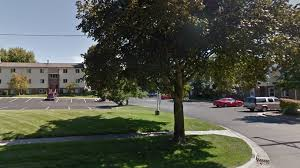
At Greenbriar HUD Housing in Greenville, Michigan, residents partnered with Michigan State University Extension to create regular opportunities for physical activity as a policy, systems and environmental change. A walking club was started and became part of the weekly routine, with residents tracking progress and celebrating milestones together.
Over time, interest in health grew across the community. Residents continued walking regularly and later started container gardening, providing another way to stay active through planting, watering and harvesting.
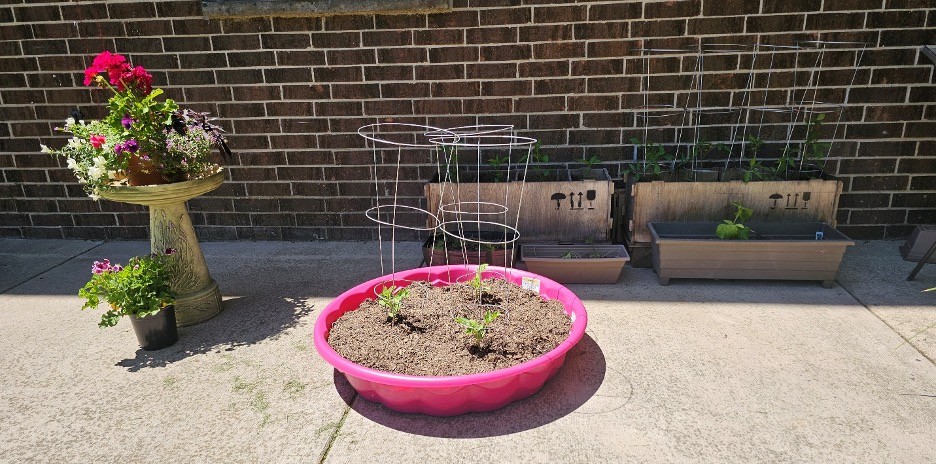
Why it worked: This change was successful because it was consistent, community-led and built into the normal routine rather than offered as a one-time program.
Photo credits: Joanna Urban
Tool for Exploring What's Working
Use the Explore What’s Working Guide and Worksheet to guide you through this step and group conversations.
Check out Michigan State University Extension’s Stories of Change for more ideas.
Step 4: Gather resources
Once you have identified a focus area and are ready to move forward, gathering reliable resources can strengthen your plan and increase confidence. The resources below offer practical tools, messaging support and sector-based strategies that can be adapted across senior centers, worksites, faith-based organizations, housing communities and other adult-serving settings.
Michigan State University adult physical activity resources
Get Moving Facilitator Guide and Participant Activity Guide: Get Moving is a ready-to-use adult physical activity curriculum that builds confidence and introduces functional strength and balance movements. It is especially useful in senior centers, community education settings and wellness programs where you want a structured but approachable lesson format.
MSU Extension Physical Activity Website: Learn the type and amount of physical activity that is recommended for each age group, from childhood through the older adult years. Find examples of aerobic, strength, balance and flexibility exercises, including videos and articles.
Tai Chi for Arthritis and Falls Prevention: This program helps adults improve balance, strength and confidence with movement through slow, gentle exercises that can be adapted for different ability levels. Programs like this can help community organizations introduce safe activity options and support changes that make physical activity a regular part of community programming.
Other adult physical activity resources
ChangeLab Solutions Shared Use Playbook, also called joint use, community use or open use – occurs when government entities or other organizations agree to open their facilities for use by the broader community.
Kansas City Regional Physical Activity Plan provides examples of cross-sector collaboration to increase movement opportunities. It is helpful if your community is exploring built environment improvements or employer-based wellness efforts.
MI Moves Coalition is leading the development of Michigan’s statewide Physical Activity Plan and bringing together partners across sectors, including public health, transportation, education, worksites, healthcare and community organizations. Their website will serve as a central hub for future strategies, collaboration opportunities, funding announcements and shared resources to support physical activity across Michigan.
Move Your Way is a campaign from the U.S. Department of Health and Human Services. It translates national physical activity guidelines into clear, encouraging messages for adults of all abilities. Materials emphasize that all movement counts and provide simple examples of aerobic, strength and balance activities. This resource is helpful for communication and promotion efforts in worksites and community programs.
Tool for gathering resources: Use the Gather Resources Guide and Worksheet to focus your goals and find additional reliable resources to help you implement your change.
Step 5: Make a plan and act
After identifying your need, building buy-in, exploring options and reviewing resources, the next step is to try one manageable change.
Choose a clear focus: For example, a senior center may decide to incorporate a 10-minute balance and strength session before lunch programs. A worksite might commit to adding brief movement breaks during weekly staff meetings. A community organization could launch a weekly walking group and promote it using Move Your Way messaging.
Testing one change for four to six weeks allows you to learn what works before expanding your efforts. Clear ownership, leadership support and simple communication strategies increase the likelihood that the change will continue.
Tool for making a plan and acting: Use the Make a Plan and Act Guide and Worksheet to outline responsibilities, timelines and communication strategies. Worksheet 5a will provide guidance on writing a policy if a physical activity policy is the direction your action team wishes to take.
Step 6: Reflect and share what you learned
After implementing your change, take time to reflect. Consider what worked well, what challenges emerged and what adjustments would strengthen the effort. Reflection builds momentum and prepares you for expansion.
If the change is working, share it. If adjustments are necessary, share that, too. A short update in a staff meeting, board meeting, coalition gathering or newsletter can inspire others and build broader support.
Sustainable change occurs when movement becomes part of how an organization operates. Embedding expectations into policy, routines, onboarding and communication ensures the effort continues beyond the initial launch.
Tool for reflecting and sharing: Use the Reflect and Share Guide and Worksheet to help with this step and document your progress.
Adult Active Communities Key Resources
All key resources below are free to use and share. Additional resources can be found under the "Step 4: Gather resources" section.
Get Moving Physical Activity Adult Facilitator and Participant Activity Guides
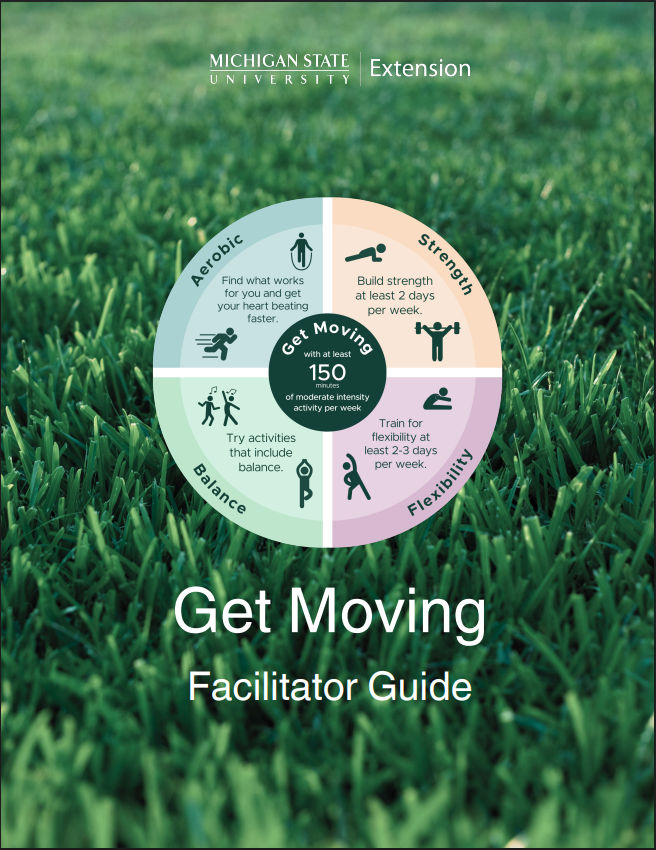
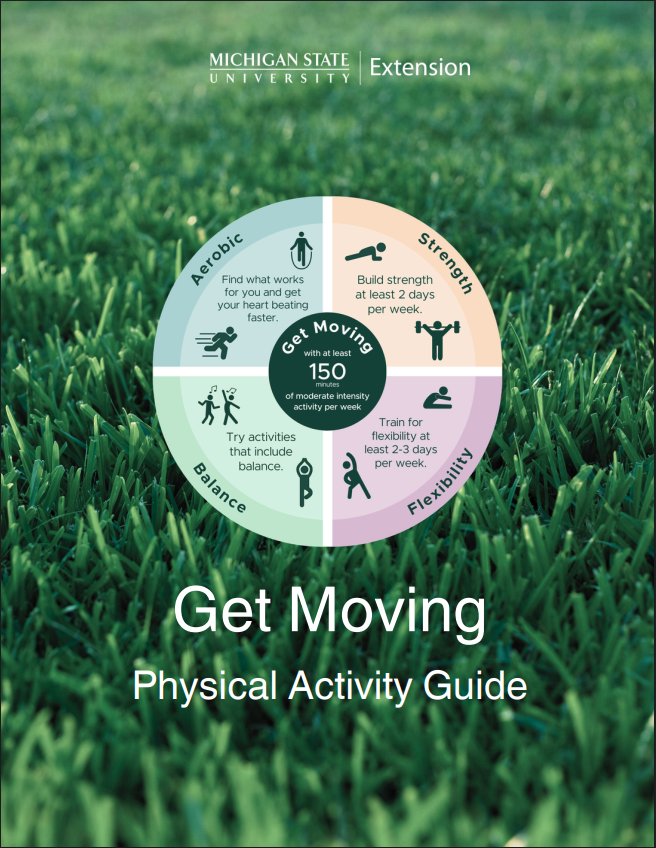 Six lessons that can be used to guide older youth and adults through inclusive physical activity. Use to incorporate movement in a classroom, a youth group or even a staff meeting.
Michigan State University Extension Physical Activity Website
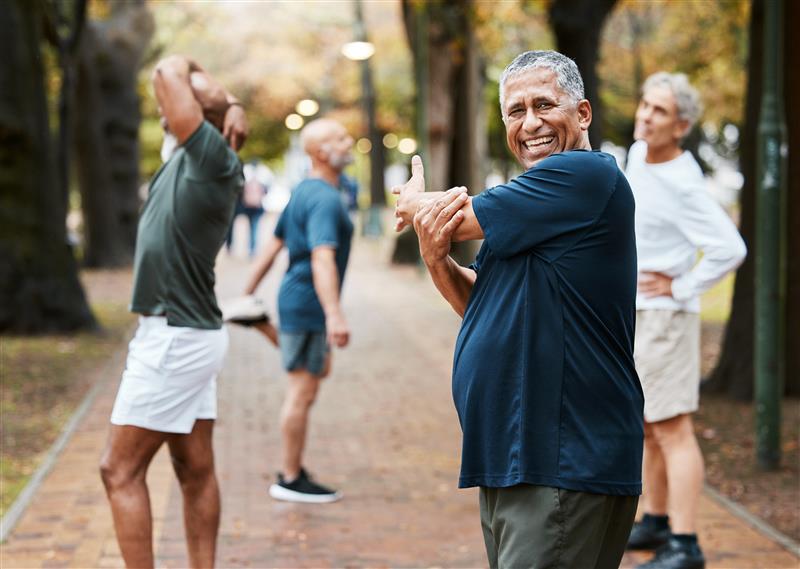 Learn the type and amount of physical activity that is recommended for each age group, from childhood through the older adult years. Find examples of aerobic, strength, balance and flexibility exercises, including videos and articles.
Move Your Way Campaign
 Campaign from the U.S. Department of Health and Human Services. It translates national physical activity guidelines into clear, encouraging messages for adults of all abilities. Materials emphasize that all movement counts and provide simple examples of aerobic, strength and balance activities. This resource is helpful for communication and promotion efforts in worksites and community programs.
 Print
Print Email
Email