


Basics of pressure canning foods
 Print
 Email
Discover how to safely home preserve low-acid food using a pressure canner.
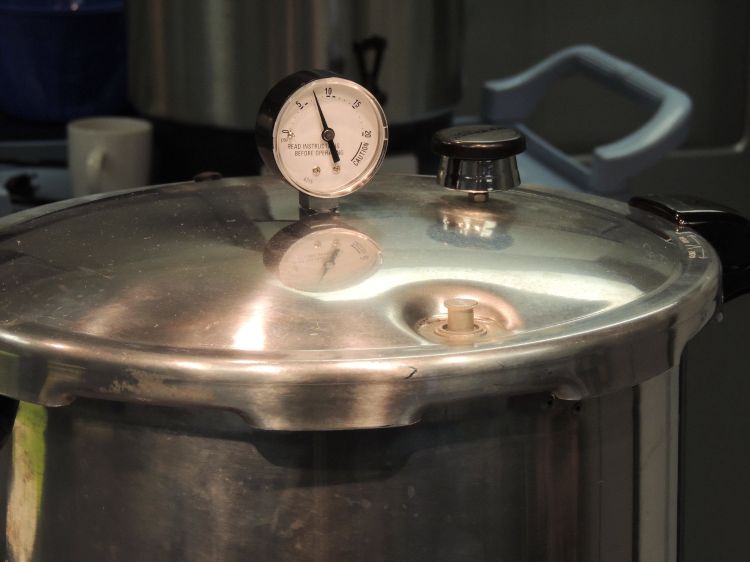
Pressure canning is the only safe method of preserving low-acid foods. Low-acid foods include vegetables, meat, fish and poultry. When home canning these foods, they must be processed in a pressure canner.
Pressurized steam creates the needed temperature of 240 degrees Fahrenheit or higher that will destroy the bacterial spores naturally present in these foods. After processing, as the jars cool, a vacuum is formed, sealing the food in the jars and preventing any new microorganisms from entering and contaminating the food.
Follow these steps
Michigan State University Extension recommends these steps for safely preserving food using a dial gauge or weighted gauge pressure canner:
- Put two to three inches of hot water in the pressure canner based on manufacturer’s directions.
- Place filled jars on the rack in canner and lock the lid in place on top of canner.
- Leave vent port off, turn heat to highest setting and heat canner until a steady stream of steam flows from the vent port pipe.
- Once steam pours steadily from the vent pipe, let it escape for 10 full minutes, using a timer to verify the time. This step drives air out of canner and evens out the pressure inside.
- Next, place the weight on vent port. This will allow the canner to pressurize to the recommended pounds of pressure for the dial gauge or weighted gauge canner.
- Start timing the processing recommendation once the dial gauge or weighted gauge has reached the recommended pressure (see manufacturer’s directions).
- Regulate heat to maintain steady pressure. If reading decreases from the recommended pressure, bring pressure back up and start timing process again.
- When timed processing is complete, turn off heat and wait until canner returns to zero on a dial gauge and 30 to 45 minutes for weighted gauge (see manufacturer’s directions).
- After the canner is depressurized, remove the canner lid by turning it away from you to avoid possible steam burns.
- Remove jars with a jar lifter and place on a towel or cooling rack.
- Leave jars on the counter, undisturbed for 12 to 24 hours.
- After cooling, check that all lids have properly sealed.
- If a jar has not sealed, the contents can be reprocessed according to recipe directions, or the jar must be refrigerated and eaten immediately.
Testing your dial guage pressure canner
If you have a dial gauge pressure canner, it is recommended to have it tested each year to ensure adequate calibration for safe food preservation. MSU Extension offers free pressure canning dial gauge testing; find your local office to inquire about getting your gauge tested here. Pressure canners with weighted gauges do not need to be tested.
For further information on pressure canning and other food preservation methods join a free online virtual class or take an online self-paced training.