Charter fishing plays a significant role in Michigan’s coastal economy
 Print
Print Email
EmailLed by its captains, the charter fishing industry adapts to changing conditions.
Celebrating America’s 250th anniversary, this Great Lakes Fisheries Heritage trail story explores how fisheries have shaped Michigan and our country throughout history; and how these stories live on today through the people, fish, and fishing that connect our coastline, culture and Great Lakes identity. 
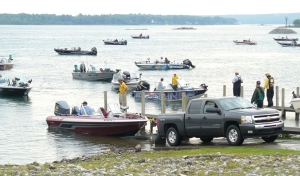
For more than half a century, charter captains have occupied a unique place within Great Lakes fisheries. Part guide, part entrepreneur, part educator, and part citizen scientist, they spend hundreds of days each year on the water observing changes in fish populations, water conditions, and angler preferences. Their experiences provide an important connection between fisheries management, coastal communities, and the public.
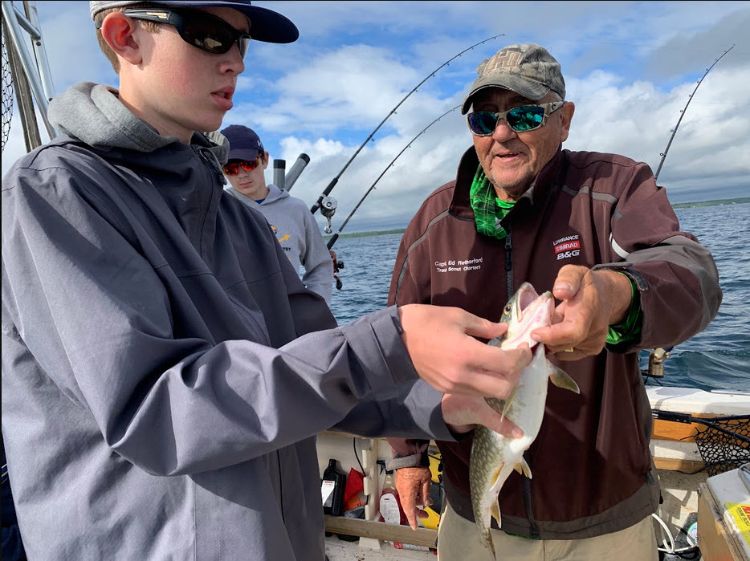
Captain Ed Retherford sails on Lake Huron, out of Alpena, and has followed the fish from the height of bounteous Chinook salmon years through to today's diverse mix of species. Over on Lake Michigan, Captain Denny Grinold heads toward deep water from Grand Haven, guiding clients in pursuit of salmon across one of the most productive recreational fisheries in the country.
Their boats work on different lakes, but their stories are deeply connected. Together, they reflect the rise, transformation, and continued importance of charter fishing on the Great Lakes.That story is shaped by science, grounded in coastal communities, and sustained by captains who have adapted alongside the lakes themselves.
Read the expanded story online to learn more about the charter boat industry.
Charter fishing continues to play a significant role in Michigan’s coastal economy. Michigan Sea Grant studies indicate the state’s charter fishing industry includes more than 600 licensed captains and generates roughly tens of millions annually in economic activity, supporting tourism, small businesses, and hundreds of thousands of employment hours in coastal communities.
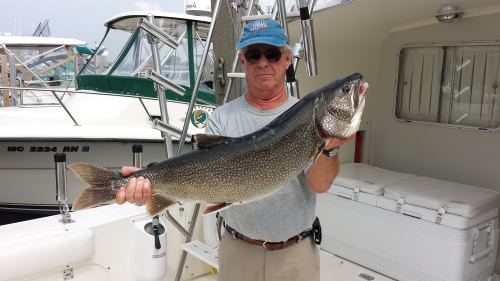
Even as participation has fluctuated over time, the economic contribution of charter fishing has remained strong, reinforcing its importance as a tourism driver. Captains play an important role in shaping visitors’ experiences. Their knowledge, professionalism, and ability to connect people to the resource contribute to high levels of customer satisfaction and repeat visitation.
More stories
Michigan Sea Grant and Michigan State University Extension, in partnership with America250MI and the Great Lakes Fisheries Heritage Trail (GLFHT) network, offer this Great Lakes fisheries history and heritage storytelling series celebrating Michigan’s commemoration of America’s 250th anniversary. More stories of Michigan’s Great Lakes fisheries heritage are online at the Great Lakes Fisheries Heritage Trail website.
Additional resources
Explore to learn more about Great Lakes fisheries:
- Life of the Lakes: A Guide to the Great Lakes Fishery — produced by Michigan Sea Grant with University of Michigan Press.
- Small Fry, Big Catches: The Great Lakes Fishery — a Michigan History Magazine article published by the Historical Society of Michigan in partnership with Michigan Sea Grant.
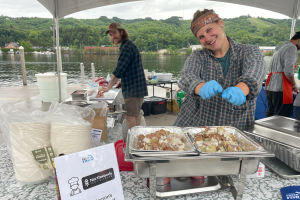
- Looking to go charter fishing on the Great Lakes? The Michigan Charter Boat Association offers an online filterable database of fishing captains and guides operating across the state. Through the Michigan Catch & Cook program, anglers can also enjoy their charter fishing catch prepared at participating local restaurants, extending the experience from the water to the table.
- Learn more about America250MI: america250mi.org
The following worked together to bring you this learning series as part of Michigan’s America250 commemoration: Great Lakes Fisheries Heritage Trail network, Michigan Sea Grant and Michigan State University Extension, Great Lakes Fishery Commission, Michigan Department of Natural Resources, Besser Museum for Northeast Michigan, Fishtown Preservation Society, and others. This series has been made possible in whole or in part by America250MI.