Cracked solar panel raises questions, but what does the science say?
 Print
Print Email
EmailFact sheet examines how modern solar panels are built and why studies show damaged panels pose little risk to soil and groundwater.
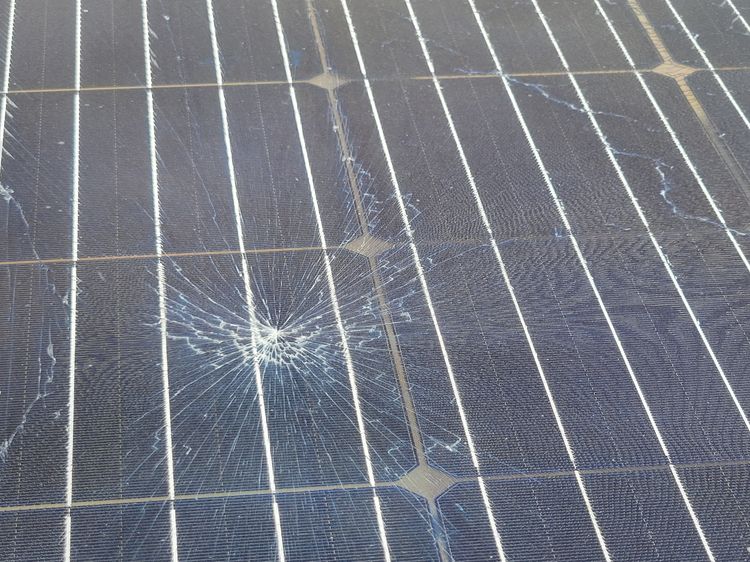
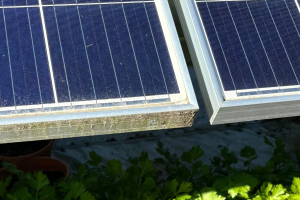
At first glance, the above photo of a cracked solar panel can be alarming. Many people see damage like this and immediately wonder: Are harmful chemicals now leaking into the soil? It is a reasonable question, but according to a six-page science-based fact sheet authored by Taylor Curtis with the National Laboratory of the Rockies and Annick Anctil with Michigan State University, the evidence does not support the belief that damaged solar panels pose a significant contamination risk to soil or groundwater.
The authors explain that modern solar panels are designed to protect their internal components from weather, moisture and physical damage. A solar panel consists primarily of glass, with smaller amounts of metals and other materials securely encased within protective polymer layers. These layers are specifically engineered to prevent exposure to internal materials and to withstand decades of outdoor conditions, including rain, wind, hail and extreme temperatures.
One concern that is frequently raised is the presence of lead in some crystalline silicon panels and cadmium compounds in certain thin-film panels. However, the authors note that these materials represent approximately 0.1% or less of a panel's total weight and are securely encapsulated within the panel structure. Scientific testing indicates that people would not be exposed to these materials under normal conditions, even when panels are damaged.
Researchers have gone a step further by testing broken solar panels under conditions more extreme than what occurs in the field. In one study, damaged panel pieces were submerged in a solution designed to mimic acid rain for an entire year. The results showed that levels of lead and cadmium remained below U.S. Environmental Protection Agency screening thresholds, indicating no risk to human health or the environment.
The authors further note that technical experts have found no evidence that commercially available solar panels contain arsenic, hexavalent chromium or harmful PFAS "forever chemicals."
Images of damaged solar panels can naturally raise questions about safety and environmental impacts. The fact sheet provides science-based information on solar panel composition, durability, and the findings of recent environmental studies. Those interested in understanding the research in greater detail are encouraged to read the fact sheet. The fact sheet serves as a valuable resource for anyone seeking a better understanding of how modern solar panels are designed and how they perform under real-world conditions.