CRFS Underscores the Impact of 10 Cents a Meal for Michigan’s Kids and Farms to Michigan Legislature
 Print
Print Email
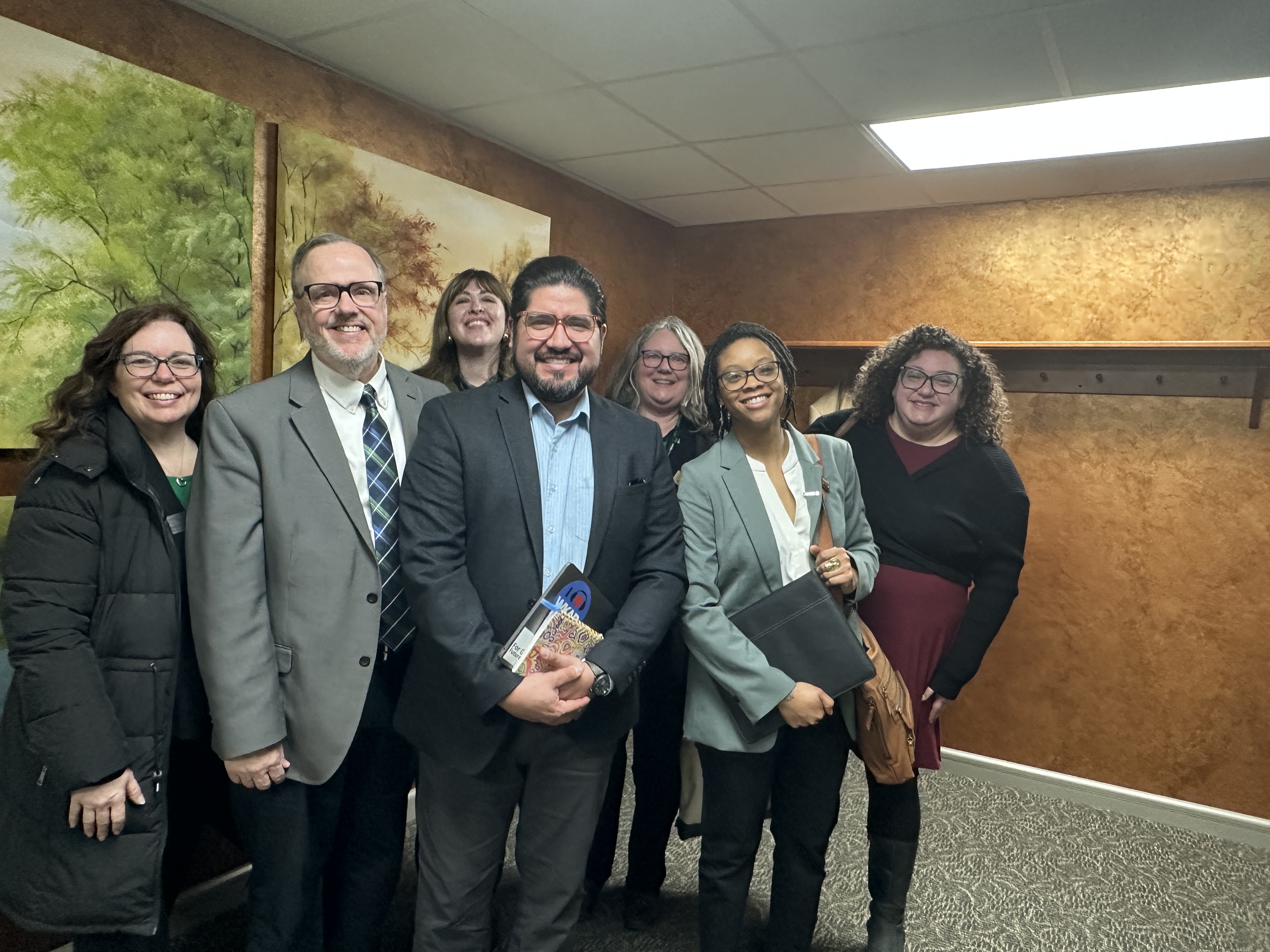
EmailDirector of Farm to Institution Programs at Michigan State University Center for Regional Food Systems, May Tsupros, provided testimony on 10 Cents a Meal for Michigan’s Kids and Farms to the Michigan Legislature in March 2026.
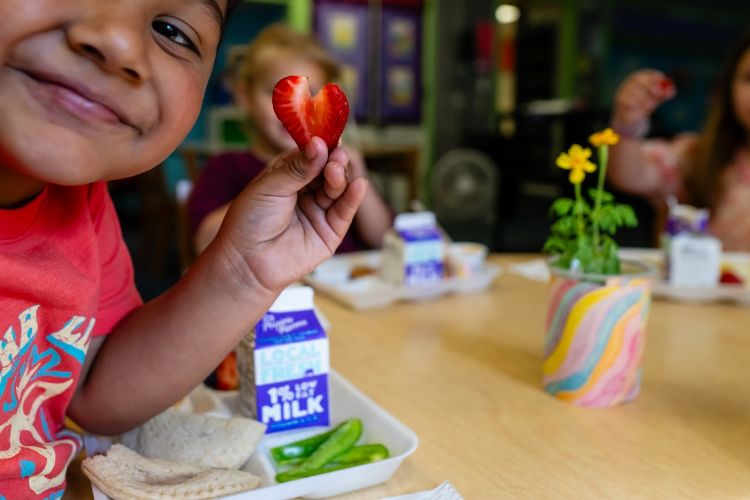
On March 17 and 18, May Tsupros, Director of Farm to Institution Programs at Michigan State University Center for Regional Food Systems (CRFS), provided testimony on 10 Cents a Meal for Michigan’s Kids and Farms (10 Cents a Meal) to the Michigan Legislature. After nine consecutive years of state funding, 10 Cents a Meal was not included in the state budget for the 2025–2026 program year. A multidisciplinary group of supporters prepared speeches to highlight the impact of the program for children, farmers, and local food systems in Michigan.
“Programs like 10 Cents a Meal enhance the quality of that food [served in schools], and they're incredibly important for making sure we have lifelong, healthy youth go on to grow into healthy adults and encourage the next generation to also have healthy eating habits,” Tsupros testified and virtually attended both the Michigan House Appropriations Subcommittee for School Aid and Department of Education and Senate Appropriations Subcommittee for Natural Resources and Agriculture.

10 Cents a Meal operated as a state-funded local food purchasing incentive grant program that reimbursed 50% of the cost of fresh or minimally processed Michigan-grown fruits, vegetables, and dry beans, used in meals and educational activities for children. During the most recent program year, 2024-2025, 251 grantees in 64/83 Michigan counties served over 600,000 children. Through a $3.5 million state investment in the program administered by the Michigan Department of Education (MDE), grantees reported spending nearly $7 million on Michigan grown products. Moreover, according to the USDA-designed tool, the Local Food Impact Calculator, this program year yielded an $11.9 million economic impact for Michigan. There were 307 pending applications, notably a record-breaking number of applicants, from potential participants for the 2025-2026 school year.
“So when I talk about the 10 Cents program and what it does for us, it encourages school districts to buy local food, but it really drives development of a new food system. This doesn't happen overnight and it takes time— what the state invested in this program comes back multiplied. There's an immediate economic impact to our farmers and our community,” Dan Gorman, Food Service Director at Montague and Whitehall Public Schools, said. “But what it does is it builds that long-term infrastructure that's so important for a stronger farm economy, more opportunities for small and midsize farms, a more resilient Michigan food system, and most importantly, healthier, better food on the plates of Michigan students.”
Gorman was one of the several people who provided a personal testament at the Michigan House and Senate Subcommittee hearings. Others spoke on behalf of their roles as farmers, educators, and food systems advocates, including: Amanda Brezzell of the Groundwork Center for Resilient Communities, Diane Golzynski of the Michigan Department of Education, Jim Bardenhagen of Bardenhagen Farms and MI Farm Coop, Nic Welty of 9 Bean Rows and MI Farm Co-op, Mark Coe of Great Lakes Farm to Freezer, Phil Raymond of Blue Mitten Farms, Megan Fogata McManus of Chef Ann Foundation, and Greg Bird of Michigan Vegetable Council.
A state-funded local food purchasing incentive program for Michigan, such as 10 Cents a Meal, was initially identified as a policy priority by the 2010 Michigan Good Food Charter. Since the program launched as a regional pilot in the 2016-2017 school year, a core team has supported 10 Cents a Meal: MDE administers the program, CRFS conducts annual evaluation of the program, Groundwork Center for Resilient Communities leads communications and advocacy efforts, and the Michigan Department of Agriculture and Rural Development assists with food and agriculture connections.
Tsupros described how the consistent evaluation of the program has contributed to the evolution and growth of impact over time. “10 cents a Meal program doesn't just move forward with the same old actions each year. We use this really thorough evaluation work to assess the programs, the needs of the food service directors, the farmers, the producers, the students, the parents. And we create a responsive program that continues, as you can see from this slide, to grow the program, grow the impact, and grow the amount of food that's spent on fresh local food and students that it's bringing it to.”
Throughout the program's duration, 10 Cents a Meal has changed in multiple ways. For example, it grew in geographic eligibility from a regional pilot in Northwest Lower Michigan in its first year to a statewide program. Additionally, it expanded grantee eligibility beyond K-12 schools to accepting early care and childcare sites. The 2024-2025 school year marked one of the most impactful changes to the program: allowing grantees to use a portion of their grant funds on local food transportation fees and food service labor expenses. These changes expanded the ability of all grantees to cook and serve locally grown products.
Farm to school leaders and advocates have used the 10 Cents a Meal program as a model for programs and policy in their own states, according to Tsupros.
“So right now, inspired by this innovative program, children across the country are able to make healthier choices because of the 10 Cents a Meal program,” Tsupros said. “These other states are looking to Michigan right now to see what's going to happen with this groundbreaking program in our beloved state.”
To communicate the national impact of the 10 Cents a Meal, CRFS is currently in the process of publishing a report featuring testimonials from other state’s farm to school program leaders. Looking ahead, the Michigan House and Senate are considering their statewide budget priorities.
Learn More about 10 Cents a Meal
- Legislative Reports
- Read these concise reports designed to provide timely information to policymakers following the 2016-2017 pilot year through the 2023-2024 school year. The 2024-2025 legislative report will be available soon.
- Evaluation Reports
- Explore the full evaluation and reporting on the program’s activities and impacts led by CRFS. The full 2023-2024 report is now available.
- Success Stories
- Hear directly from the farmers, educators, students and communities that are being nourished by 10 Cents a Meal for Michigan's Kids & Farms.
About the Michigan State University Center for Regional Food Systems
The Michigan State University Center for Regional Food Systems advances regionally-rooted food systems through applied research, education, and outreach. We do this by uniting the knowledge and experience of diverse stakeholders with that of MSU faculty and staff. Our work fosters a thriving economy, equity, and sustainability for Michigan, the nation, and the planet by advancing systems that produce food that is healthy, green, fair, and affordable. Learn more: foodsystems.msu.edu