Get ready to control early spring Christmas tree pests
 Print
Print Email
EmailThe 2026 growing season is here! Christmas tree growers need to be aware of early season pests and control options.
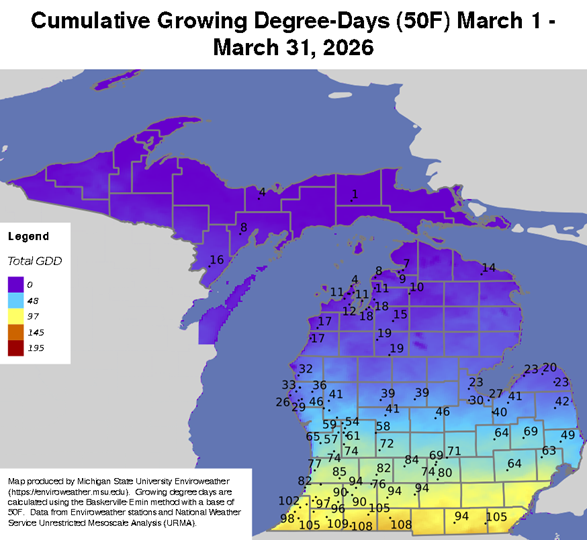
Welcome to the 2026 growing season. Weather conditions vary greatly across Michigan, with a strong delineation in conditions between the north and south. Winter-like weather remains across the upper and northern Lower Peninsula, while much warmer weather has passed over the southern Lower Peninsula. This is reflected in growing degree day accumulations, which range from above 100 growing degree days in southern Michigan to near 0 in the Upper Peninsula (Photo 1). In a change from the wetter and colder winter in the state, most of the Lower Peninsula is now about two weeks ahead of normal in current growing degree accumulation (Photo 2).
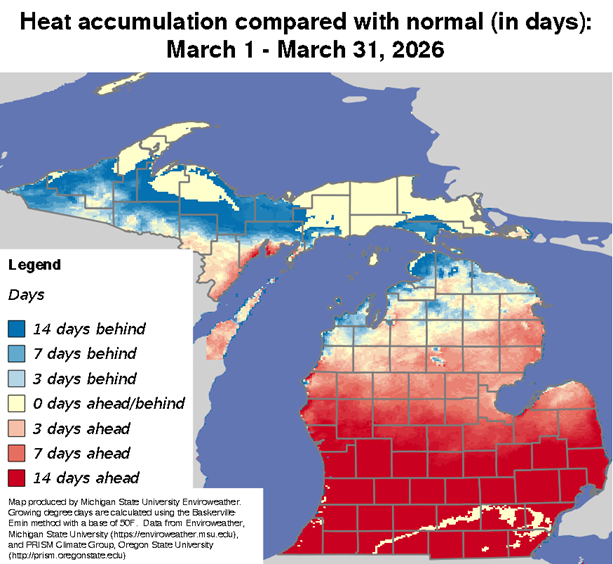
The predicted weather pattern for April will be very active with many rounds of storms resulting in above average precipitation and above average temperatures. Over the past fall and winter, enough precipitation has erased much of the drought conditions that had plagued the state for much of 2025 (Photo 3). One year ago, 72% of Michigan was in a drought classification and that has decreased to 3% currently.
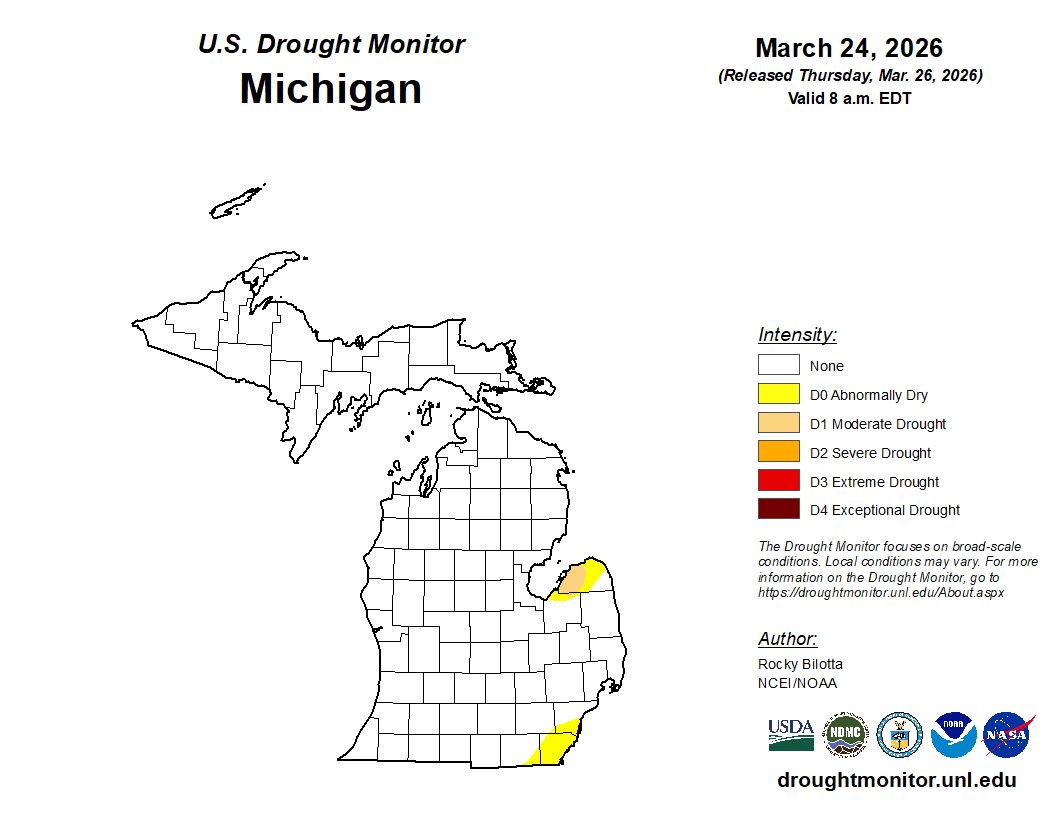
Pest development is linked to growing degree day accumulation. Don’t forget that several key early season pests have treatment windows at very low growing degree day accumulations. For example, white pine weevil treatment interval is between 25 and 65 growing degree days base 50 degrees Fahrenheit (GDD50). After that interval, the white pine weevil have inserted their eggs into the tree leader and insecticide applications are no longer effective.
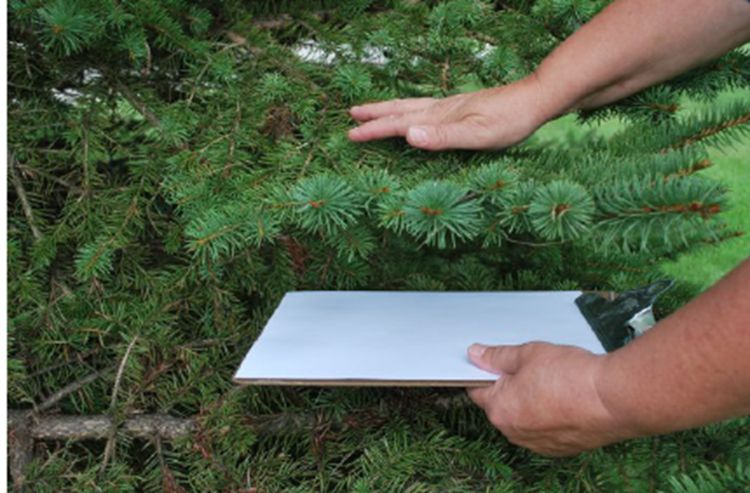
Other early season insect pests that may need to be controlled will depend on many factors, such as species grown, past pest pressure and market demands, and can include balsam twig aphid, eastern spruce gall adelgid or spruce gall adelgid. However, spruce spider mites are one of the most common problems growers may experience. Start scouting for this pest (Photo 4) biweekly at about 150 GDD50. This will provide useful information to help make informed decisions on pest populations levels and when or if treatment options are needed. If populations levels rise above threshold levels (10% for trees in the year of sale, 20% trees waist-high to year prior to sale, 40% less than waist high tree height), consider applying a miticide to prevent tree damage.
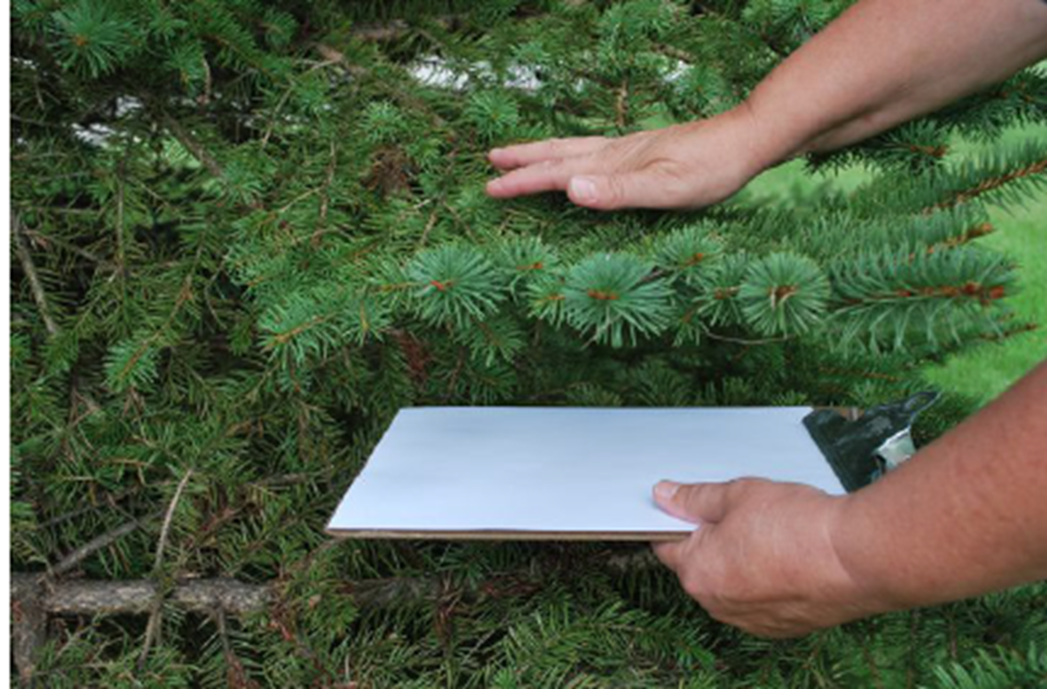
Making pesticide applications only based on symptoms of tree damage is not effective as populations may have already crashed prior to treatment. For specific labeled pesticide products and more information on pests, check out the 2026 Michigan Christmas Tree Pest Management Guide from Michigan State University Extension or contact Bill Lindberg at lindbe35@msu.edu.
Looking for more Christmas tree production information? Consider attending the MSU Spring Christmas Tree Spring Meeting on Saturday, April 18. Restricted use pesticide credits have been approved for Michigan applications. Pre-registration is required to attend.