


Michigan grape scouting report – September 23, 2026
 Print
Print Email
EmailConcise, research-based updates on weather trends, vine development, pest pressure and disease risk.
Key takeaways
- Harvest is underway across Michigan grape regions. Juice grape harvest has started in southwest Michigan, many early wine grape cultivars have already been picked, and early-season hybrids are also being harvested in the Tip of the Mitt.
- Cool, wet and humid conditions are influencing late-season fruit development and quality. Sugar accumulation has slowed in some areas, while cluster rots and bird damage are important concerns as fruit approaches harvest.
- Monitor fruit maturity closely and base harvest timing on more than °Brix alone. Regularly evaluate °Brix, pH, titratable acidity, berry flavor, seed maturity, fruit health, cultivar characteristics and weather conditions when making harvest decisions.
- Late-season scouting remains important. Continue monitoring for Botrytis and sour rot, leafhoppers, grape berry moth, yellow jackets, vinegar flies and bird injury, particularly where damaged fruit could increase the risk of secondary rots.
- Spotted lanternfly was detected in south Berrien County, but not in a vineyard. Remain aware of this emerging pest and watch for additional updates from MSU Extension.
- Postharvest scouting can improve next year’s vineyard management. After harvest, identify weak or missing vines, poorly matured shoots, trunk and disease problems, trellis or irrigation issues, and areas of excessive or insufficient vigor before leaf fall.
- Keep detailed harvest and production records. The SAM Tool can be used to record harvest dates and yields by vineyard block and variety, helping growers build useful year-to-year production histories.
Regional weather and seasonal progress
Seven-day forecasts for Michigan grape regions are as follows:
- Southwest Michigan: Benton Harbor | Fennville | Lawton | Watervliet
- Northwest Michigan: Old Mission | Suttons Bay| Traverse City | Leland | Northport
- Tip of the Mitt AVA: Petoskey | Harbor Springs | Charlevoix | East Jordan
Weekly in-season weather updates are provided to the MSU Extension fruit team by Jeff Andresen, PhD, MSU agricultural meteorologist. These reports offer timely insights into weather conditions affecting fruit production across Michigan. You can watch recordings of these agricultural weather outlooks.
Growing degree day (GDD) report
You can track vine development using the MSU Enviroweather Growing Degree Day Map. Visit the Enviroweather site to find your nearest weather station, create a free account, and monitor GDDs daily.
Biweekly GDD summary (base 50 degrees Fahrenheit)
The following table summarizes current GDD accumulation, last week's totals and the biweekly increase for each monitored location across Michigan:
|
Location |
Current GDD (Base 50 F) |
Forecast GDD (Base 50 F) |
Average Annual GDD Accumulation (Base 50 F) |
|
Southwest Michigan |
2955.6 |
3021.3 |
~2700–3100 |
|
Northwest Michigan |
2129.2 |
2197.4 |
~2200–2500 GDD |
|
Tip of the Mitt AVA |
2086.8 |
2148.9 |
~1,900–2,200 GDD (typical ≈ 2,050) |
Vine development
Southwest and Southeast Michigan
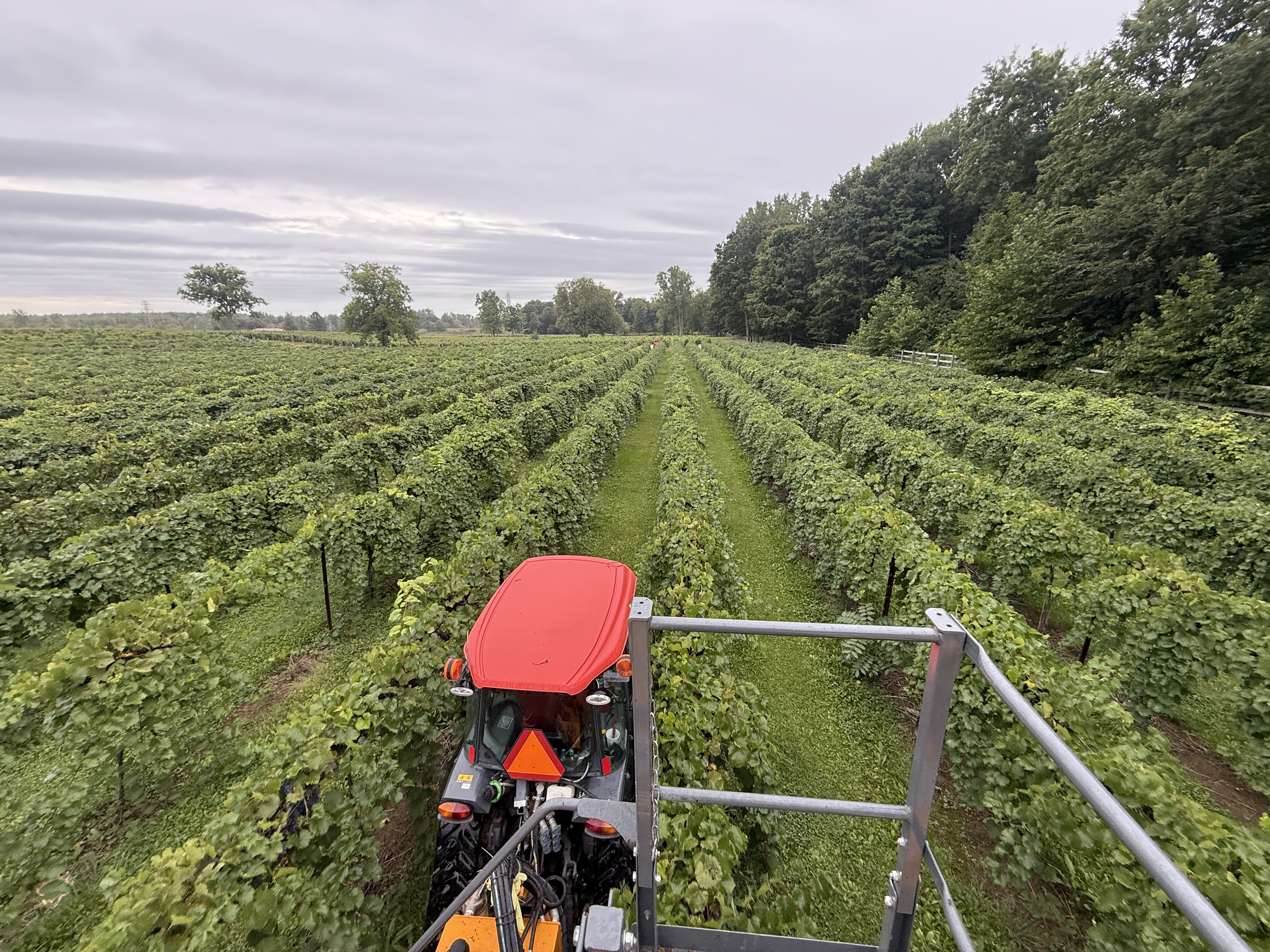
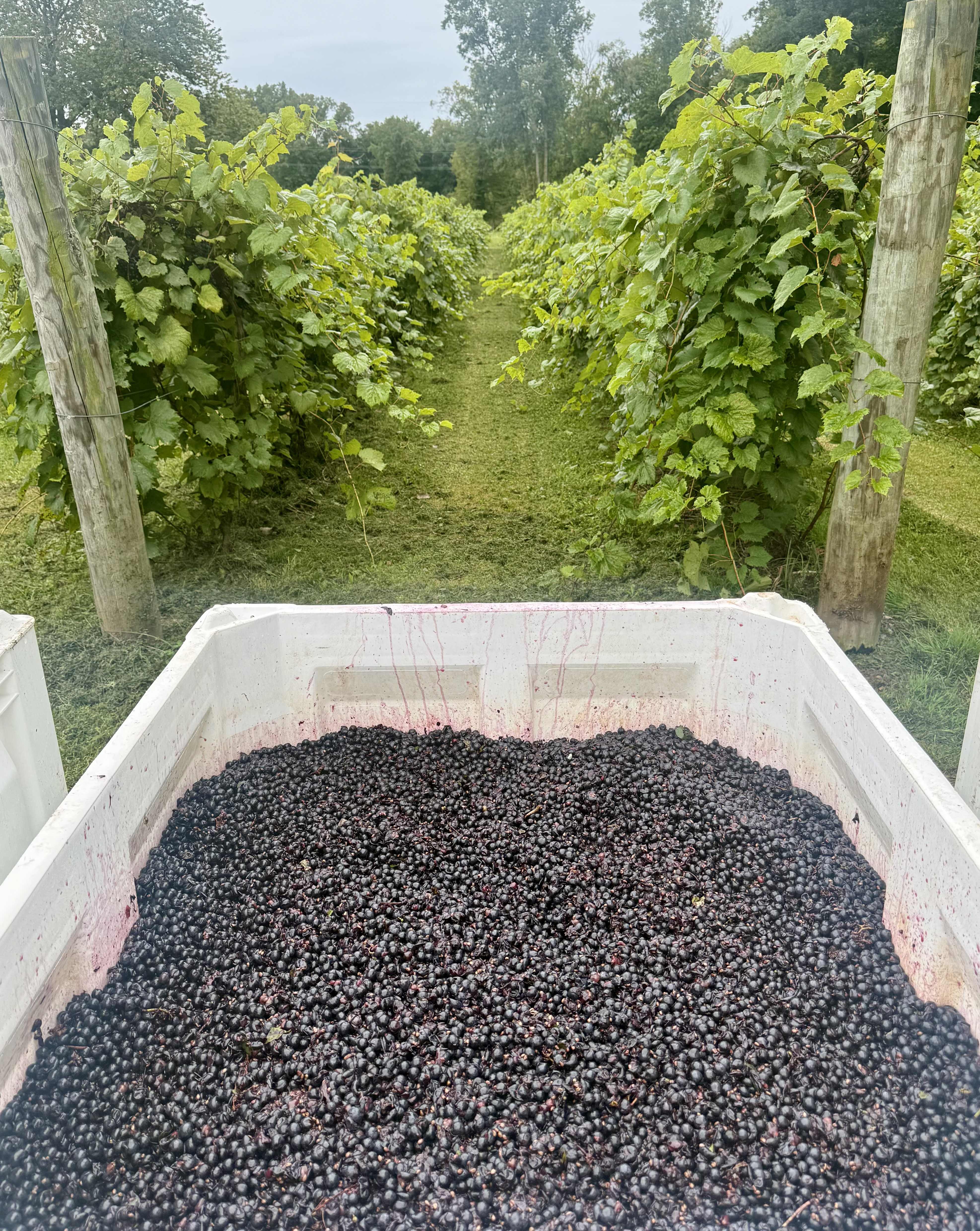
Juice grape harvest has begun. Niagara harvest started Monday morning. Concord harvest will begin Monday, Sept. 28, and last about two weeks. Early wine grape hybrids like Marechal Foch, Itasca and Marquette have already been harvested. Early vinifera such as Chardonnay, Sauvignon blanc and Pinot gris are being harvested or slated to begin this week. The cool weather seems to be slowing sugar accumulation. Cluster rots are a problem this year with the rainy and humid weather. Localized crop losses attributable to bird damage have been observed in advanced cultivars.
In Southeast Michigan, most hybrid wine grape cultivars have already been harvested such as ‘Petite Pearl’ and ‘Prairie Star’ with only later season cultivars like ‘Frontenac’ left. Most growers have wrapped up late table grapes like ‘Mars’ as well as juice grapes like ‘Concord.’
| Varieties | °Brix | pH |
| Albarino | 19.2 | 3.08 |
| Cabernet franc | 22.2 | 3.15 |
| Cabernet sauvignon | 20.4 | 3.07 |
| GM311 | 21.1 | 3.12 |
| GM318 | 22 | 3.19 |
| Gruner veltliner | 18.8 | 3.25 |
| Marsanne | 20.8 | 3.38 |
| Noiret | 20.3 | 3.09 |
| Regent | 21 | 3.16 |
| Sauvignon blanc | 21.1 | 3.08 |
| Sauvignon gris | 21.9 | 3.17 |
| Seyval blanc | 24.1 | 3.13 |
| Tempranillo | 21.1 | 3.15 |
| Traminette | 23 | 2.93 |
| Valvin muscat | 17.6 | 3.17 |
Northwest Michigan
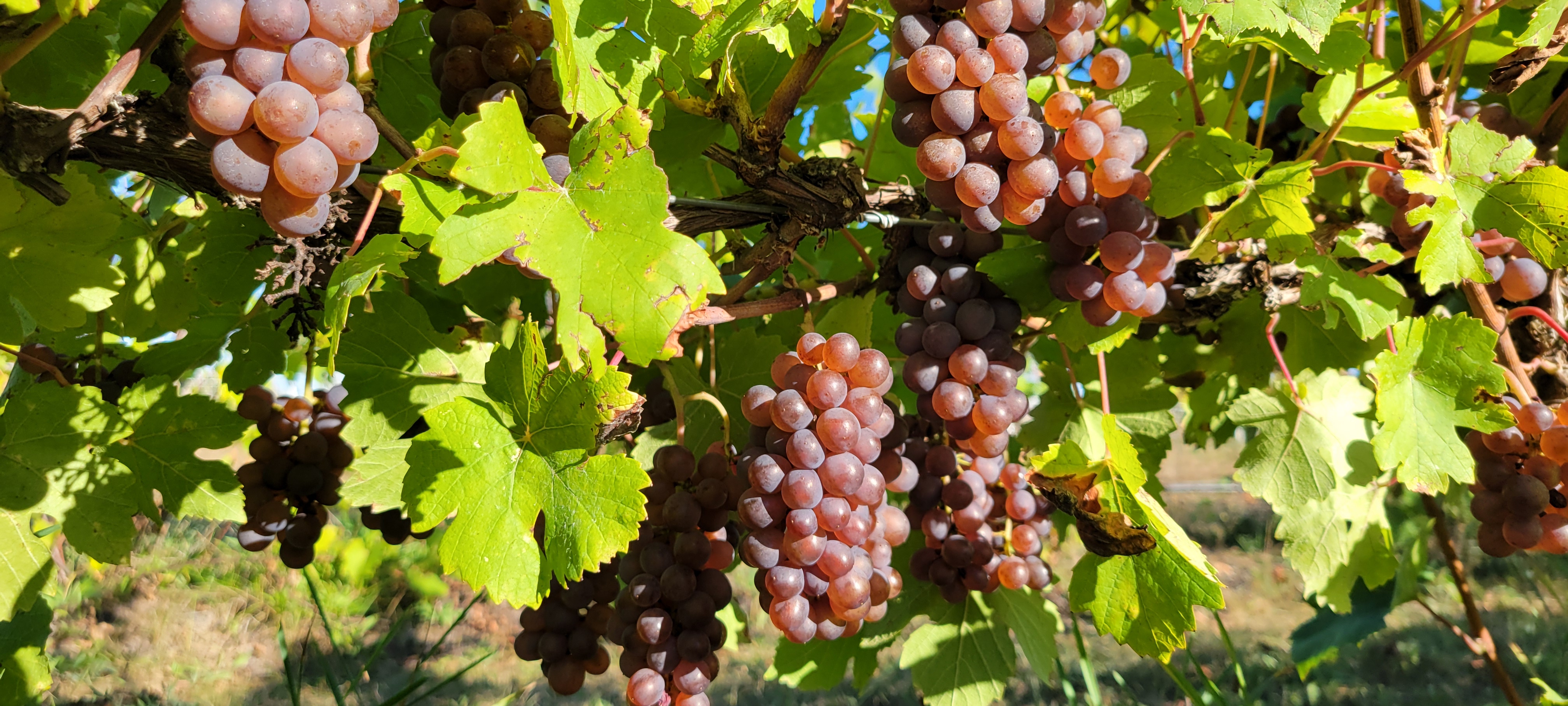
Vineyards across the region continue to show steady progress toward ripening as the 2026 harvest season approaches. Among the varieties surveyed, Gewürztraminer, Chardonnay, and Pinot Gris are leading sugar accumulation, with fruit nearing or reaching 20 Brix. Pinot Noir and Merlot are also advancing steadily toward maturity, while Cabernet Franc and Riesling remain the least advanced varieties in this snapshot. Available pH measurements are within the expected range for this stage of development, suggesting balanced fruit chemistry and favorable ripening conditions as growers prepare for harvest.
For a precise visual reference, consult MSU Extension’s Grape Growth Stages chart.
| Varieties | °Brix | pH |
| Riesling | 16.8 | NA |
| Merlot | 18.6 | NA |
| Chardonnay | 19.8 | 3.11 |
| Pinot Noir | 18.9 | 3.09 |
| Gewürztraminer | 20.1 | 3.11 |
| Pinot Gris | 19.7 | 3.01 |
| Cabernet Franc | 17 | NA |
Tip of the Mitt
Harvest is underway in the Tip of the Mitt for early season hybrid cultivars such as Itasca and LaCrescent. Vitis vinifera cultivars are progressing nicely as brix levels are increasing and acid levels are decreasing. Mildew and botrytis conditions are currently low. For reference, see MSU Extension’s Grape Growth Stages chart.
| Varieties | °Brix | pH |
| Riesling | 17.2 | NA |
| Zweigelt | 19 | NA |
| Marquette | 21 | 2.94 |
| Itasca | 22.5 | 2.96 |
| Frontenac Gris | 18.5 | 2.88 |
| LaCrescent | 20.8 | 2.95 |
| L’Acadie Blanc | 21 | 3.15 |
Viticulture
Preparing for harvest
As harvest approaches, vineyard management should shift toward close monitoring of fruit maturity and preservation of fruit quality. Representative berry sampling should be conducted regularly to track soluble solids (Brix), pH and titratable acidity, while also considering berry flavor, seed maturity, cultivar characteristics and the intended wine style when determining harvest timing.
At the same time, carefully monitor clusters for Botrytis bunch rot, sour rot, insect injury and increasing bird pressure, all of which can accelerate fruit deterioration late in the season. Maintain good canopy aeration, minimize berry damage and carefully observe preharvest intervals for any crop-protection products.
Harvest decisions should ultimately balance technological and physiological maturity with fruit health and weather conditions. Close communication between growers and winemakers becomes increasingly important as harvest approaches so that fruit can be picked at the optimal stage for its intended use and delivered rapidly and in good condition to the winery.
For more detailed guidance on harvest decisions, consult two recently published MSU Extension articles addressing fruit chemistry and harvest maturity in Vitis vinifera and hybrid cultivars:
- For vinifera cultivars: Ready to pick? Preparing for harvest and evaluating wine grape quality in Michigan
- For hybrid cultivars: Beyond cold hardiness: Managing fruit quality and harvest maturity of hybrid wine grapes in Michigan.
These articles discuss the key chemical and physiological parameters used to assess fruit maturity and provide practical guidance for determining the optimal time of harvest.
Scouting vineyards after harvest
Once the last clusters leave the vineyard, Michigan grapevines enter an important transition toward dormancy. Healthy leaves may continue photosynthesizing, carbohydrates and nutrients are redistributed to perennial tissues, shoots complete maturation, and vines begin acclimating to winter. What growers do, or fail to do, during this period can influence vine health, winter survival and performance the following season.
One of the most valuable postharvest practices is also one of the simplest: walk the vineyard carefully before leaf fall. Rather than viewing the vineyard from the headlands, inspect individual rows and vine positions. Look for weak vines, missing vines, poorly matured shoots, disease symptoms, trunk damage, crown gall, uneven canopy development and areas where excessive vigor or crop load may have affected vine balance.
The observations should be interpreted according to cultivar, site and training system. A low-cordon VSP Pinot noir vineyard should not be evaluated in the same way as a high-wire Marquette block. Dense VSP canopies may indicate excessive shoot number, nitrogen supply or repeated lateral growth, whereas vigorous high-wire hybrids may develop long, overlapping curtains that reduce light, airflow and spray penetration. Similarly, a missing vine can be obvious in VSP but almost invisible in a high-wire vineyard when neighboring vines grow into the empty space.
Postharvest is also the time to count and map missing or declining vines. Even modest losses add up quickly. At an 8-by-4-foot spacing, a vineyard contains about 1,360 vine positions per acre; a 5% loss represents roughly 68 missing vines per acre. Recording replacements by cultivar, clone and rootstock before nursery orders are placed helps maintain vineyard uniformity.
Nutrition and irrigation should also be approached cautiously. Harvest nutrient removal does not automatically mean fertilizer is required. Late nitrogen applications can stimulate unwanted vegetative growth and interfere with winter acclimation, particularly in already vigorous vines. Potassium applications should be based on soil and tissue testing and, for wine grapes, considered in relation to fruit and must pH.
Likewise, irrigation after harvest should reflect soil moisture, remaining functional leaf area and weather conditions rather than assumptions based only on cultivar cold hardiness.
Finally, use the postharvest period to inspect trellis hardware, irrigation systems and equipment, identify trunks or cordons that may need renewal, and develop a winter-pruning strategy based on vine size and eventual bud survival.
The most useful postharvest question is not simply, “How did the vineyard look this year?” It is, “What did this season teach us about the interaction among cultivar, site and management?” Harvest ends fruit production. Postharvest management turns the season into information that can improve the next one.
Pest management
Diseases
Fungicide programs should prioritize materials with strong protectant and systemic activity, while rotating modes of action to manage resistance. Products in FRAC groups 3 (DMIs) and 11 (QoIs), often used in premixes, remain key options for powdery mildew and black rot, while multi-site protectants such as captan (M4) or mancozeb (M3) provide additional coverage and help reduce resistance risk.
For downy mildew, materials in FRAC groups 40, 45, 21 and 11, as well as phosphorous acid products, are effective choices when conditions favor infection. Careful selection and rotation of these chemistries, combined with thorough coverage during bloom, are essential to protect developing clusters and limit early-season disease establishment.
Insect pests
Current insects to look out for include leafhoppers, berry moth, yellow jackets, and vinegar flies. Scouting vineyards now is important to make sure you have these under control. We saw some vineyards this week that had very high leafhopper abundance and declining effective leaf area. Important to stop that level of damage now so the leaves have a chance of ripening the berries.
For cultivars with tight clusters that are prone to rots, we recommend protecting from sour rot using sterilants such as Oxidate or Jet Ag, or ProBlad Verde to manage the pathogens. Including an insecticide can help limit these outbreaks by stopping the vinegar flies from moving the pathogens. Talk to your winemaker about potential restrictions on late-season treatments, and check the E-154 guide for recommendations.
MDARD reported a detection of spotted lanternfly (SLF) in south Berrien County, the first in Southwest Michigan. It’s important to highlight that this detection was in a park and NOT in any vineyards. This article provides an overview of MSU’s information on this pest: Spotted lanternfly is spreading in Michigan, and MSU Extension is helping Michiganders prepare. MSU Extension will be sharing more information on this pest during winter meetings.
Bird damage and management
Bird pressure typically increases at veraison, when berries begin to soften, develop color and accumulate sugar, making ripening fruit increasingly attractive to birds. Once birds discover a vineyard and begin feeding, they can be difficult to discourage, so growers should begin monitoring and implementing control measures before or at the onset of veraison, particularly in high-value blocks and vineyards near woods or other bird habitat. Without effective control, bird feeding can result in substantial crop losses.
Bird netting remains one of the most reliable methods of protecting ripening fruit because it provides a physical barrier between birds and clusters. Other approaches include reflective streamers, scare devices, electronic distress calls, propane-fired bird-scaring cannons, predator-shaped kites, UAVs and laser-based deterrents. Visual or acoustic deterrents are generally more effective when combined and periodically repositioned or changed, since birds may become accustomed to a single deterrent over time.
Growers should also remember that bird injury can create open wounds on berries, increasing susceptibility to Botrytis bunch rot, sour rot and associated insect activity as fruit approaches harvest. Regularly scout clusters for bird feeding and berry injury, especially as sugar levels rise, and integrate bird management with late-season disease and insect management programs, as explained in this article from MSU Extension.
Weeds
Summer weed management in vineyards should focus on scouting and controlling weeds that escaped spring preemergence herbicide programs or emerged after residual activity began to decline. This is especially important during hot, dry periods because weeds compete with vines for soil moisture and nutrients at a time when vines may already be under heat and water stress. Young or newly planted vineyards are especially vulnerable, but even established vineyards can lose vine vigor when large weeds are allowed to remain in the undervine strip.
Growers should scout vineyard floors now and identify which weeds are present, their size, and whether they are broadleaves, grasses or perennial weeds. Summer annual weeds such as pigweed, lambsquarters, ragweed, foxtails, crabgrass, barnyardgrass and other annual grasses may continue to emerge through the summer, especially after rainfall or irrigation. Perennial weeds such as Canada thistle, bindweed, quackgrass, yellow nutsedge and dandelion may also be present and often require repeated management. If spring residual herbicides were applied earlier in the season, some breakthrough is expected as those products begin to lose activity, especially where weed pressure is high or where rainfall patterns affected activation or persistence.
Postemergence herbicides are most effective when weeds are small and actively growing. During heat waves or droughty periods, weeds may be stressed, dusty, hardened off or less actively growing, which can reduce herbicide performance. If possible, target applications before weeds become large and avoid waiting until weeds are moisture-stressed. Good spray coverage is especially important for contact herbicides. Also consider vine stress: avoid drift, use directed sprays, and do not allow herbicides to contact grape leaves, green shoots, green bark, suckers or young vines.
Several postemergence options are listed in the 2026 Michigan Fruit Management Guide for grapes. In established vineyards, glufosinate can be used as a directed application to actively growing weeds and is generally more effective on smaller weeds; higher labeled rates may be needed for larger weeds. Paraquat provides contact control of emerged annual weeds, but coverage is critical and it must be kept off green grape tissue. Aim can be used for burndown of small broadleaf weeds and is often most useful when weeds are small. Venue can be tank-mixed with glyphosate or glufosinate to improve desiccation of small broadleaf weeds. Gamma may also be used in grapes established at least two years and should be applied with another postemergence herbicide to improve control of established weeds. Glyphosate can control annual and perennial weeds, but it must be used with caution in grapes because contact with leaves or green shoots can cause serious injury, and applications after bloom should generally be avoided based on label and guide precautions.
For grass-only problems, products such as Fusilade DX, Poast, or Assure II may be used when grasses are actively growing and within the labeled size range. These products will not control broadleaf weeds, so growers should match the herbicide to the weed spectrum present. For mixed broadleaf and grass populations, a broader postemergence program or tank mix may be needed where labeled and appropriate.
At this point in the season, adding another residual herbicide may only be useful if the label allows the timing and if rainfall or irrigation is expected to activate the product. In established vineyards, some residual options such as Prowl H2O may be applied during the growing season where labeled, but residual herbicides will not control large emerged weeds by themselves. If emerged weeds are present, a labeled burndown partner is needed.
Always follow the product label for grape age restrictions, rates, adjuvants, maximum seasonal use, preharvest intervals, restricted-entry intervals, tank-mix compatibility and crop-safety precautions. Apply all postemergence herbicides as directed sprays to the vineyard floor and avoid contact with green grape tissue. Rotate herbicide sites of action and integrate mowing, cultivation, cover crops or other nonchemical tactics where possible to reduce herbicide-resistance risk and improve long-term vineyard floor management.
Scouting and recordkeeping tools
The SAM Tool helps Michigan grape growers organize day-to-day vineyard operations, including scouting, spray and non-spray activities, task assignments, communication with workers, and recordkeeping. Managers can plan and track vineyard activities from their computer, while the mobile app allows workers and managers to access tasks and record information out in the vineyard. The SAM Tool is available at sam.msu.edu.
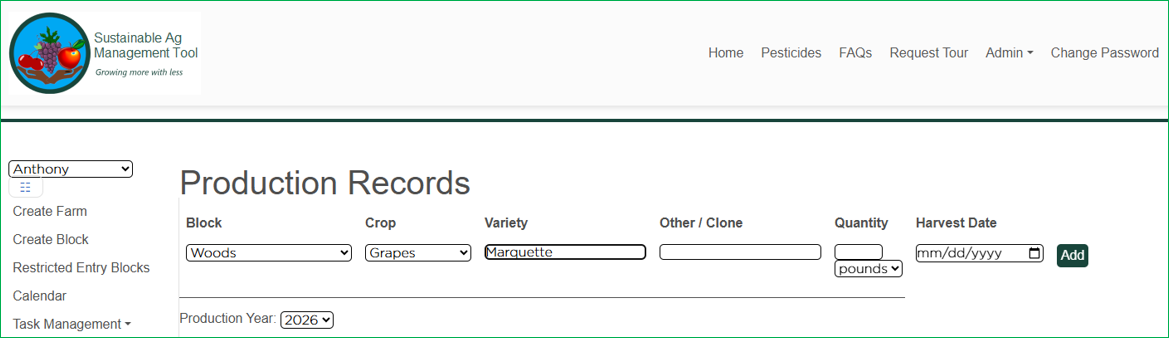
Harvest Time: Keep Your Production Records in the SAM Tool. As grapes are harvested, growers can use the SAM Tool to maintain block- and variety-specific production records. From the left-hand menu, select Records, then Productions. Select the vineyard block and grape variety, enter the harvested quantity in pounds or tons, and record the harvest date (see figure). Keeping production records by block and variety creates a valuable year-to-year history of vineyard productivity. Over time, these records can help growers compare production among blocks and varieties and evaluate changes across growing seasons.
If you have any questions about the SAM Tool or would like to participate in the Yield Estimation Modeling for Michigan Winegrapes research project, please send a message to the SAM Tool team at sustainableag@msu.edu.
Events and announcements
Michigan Grape Growers: Join Our Research Team!
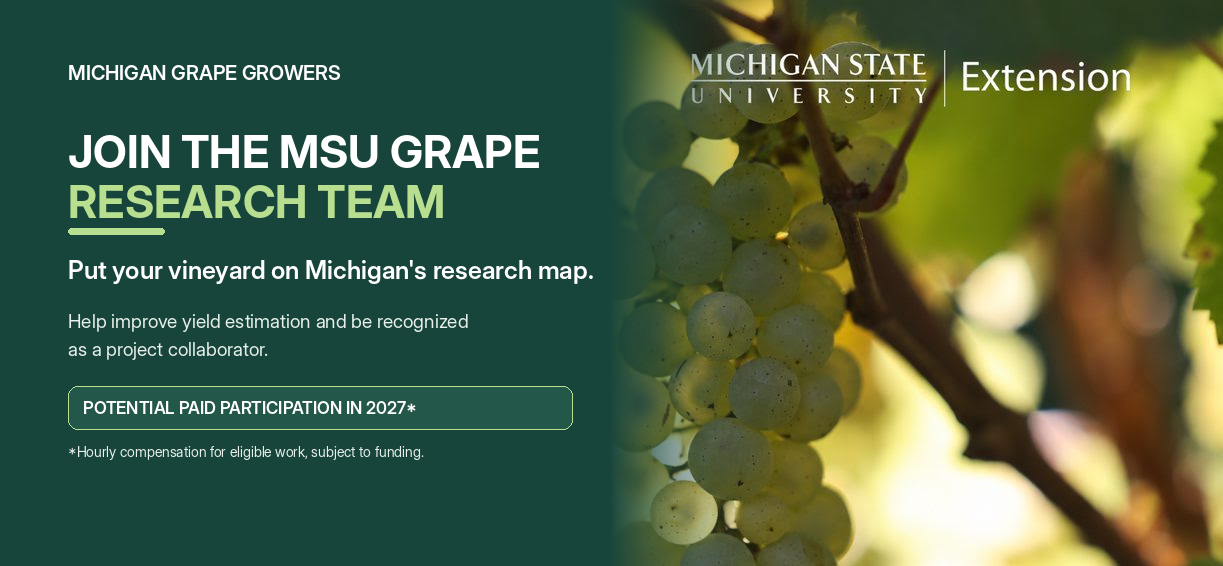
Michigan State University Extension is inviting wine and juice grape growers across Michigan to help improve grape yield estimation by filling out this brief survey.
Growers can contribute any available information, including:
- Vineyard acreage and varieties
- Previous harvest tonnage
- Harvest Brix and pH
- Average cluster weights
- Vineyard observations
- A brief letter of support
You can also choose to become an official project collaborator or research site. With permission, participating growers, vineyards, and wineries may be recognized in project materials.
We are seeking funding to expand the project in 2027. If funded, there may be opportunities for hourly compensation for eligible project work and data collection.
Help put your vineyard on Michigan’s grape research map.
Even partial records are valuable. Please share this opportunity with other Michigan grape growers who may be interested.
Great Lakes Expo Grape Session
Join the Great Lakes EXPO Grape Session for practical updates on priority vineyard insect pests, vineyard technology, canopy management, and grape disease management, including spore trapping, diagnostics, and fungicide resistance. Two RUP credits will be available. For more information, contact Esmaeil Nasrollahiazar at nasroll2@msu.edu.
Related articles
- Maximizing grapevine canopy potential: Optimizing pre-bloom shoot thinning and positioning
- Early hedging for healthier canopies and better ripening in cool climates
- Early season vineyard management
- Early season control of grape berry moth in Michigan vineyards for 2022
- Rose chafer management for northwest vineyards
- Fruit insecticide registration update for 2023
- Southwest Michigan fruit update – June 4, 2024
- https://www.canr.msu.edu/news/michigan-grape-scouting-report-june-15-2022
- 2022 MSU Fruit Pest Management Guide (E-154)
- Grape growth stages
- Early season vineyard disease management
- Early season vineyard management
- A Mobile Guide for Grape IPM Scouting in North Central and Eastern U.S.
- Using the MSU Enviroweather grape berry moth model in 2018