Michigan vegetable crop report – August 19, 2026
 Print
Print Email
EmailDisease pressure is increasing in some crops. Whitefly and spider mites pressure remains high while corn earworm pressure was also high in west-central locations.
Weather
For the past week, temperatures ranged from 1-2 degrees below normal in the north to 3-5 degrees above normal in the south. Precipitation totals through Tuesday, Aug. 18, ranged from nothing in the north to an inch in parts of the state. This total does not include rain that fell overnight Tuesday/Wednesday. The southwest corner of the state experienced some of the high rainfall that has troubled states to our south.
Overnight Tuesday, some parts of the western lower got some much-needed higher rainfall totals. The central lower and western upper have been missed and are still under a significant precipitation deficit.
Degree day totals (base 50 degrees) are “abnormally normal,” just a few days ahead or behind.
- Mostly fair and dry Wednesday and Thursday. Scattered showers and thundershowers developing late Thursday to the northwest slowly spreading southeast into the northern Lower Peninsula by late Friday and into the central and southern Lower Peninsula Saturday. Mostly fair and dry Sunday through early next week.
- Precipitation totaling 0.5 inches to the north decreasing to less than 0.1 inches moving into the lower peninsula.
- High temperatures generally from the mid-upper 70s to the north to near 80 through the weekend. Low temperatures in the 40s to the north to the 50s to the south through the weekend.
- Medium range outlooks generally call for an active storm track through the region with near to below normal mean temperatures and near normal precipitation totals.
The Midwest Mechanical Weed Control Field Day returns to Michigan
The Midwest Mechanical Weed Control Field Day is on Sept. 16, 2026, at the Southwest Research and Extension Center in Benton Harbor, Michigan. The event will feature hands-on demonstrations of mechanical weed control equipment and emerging technologies. Vegetable growers can learn about new tools and strategies for improving weed management. Learn more about the event in the following article or visit the event registration page.
Crop updates
Asparagus
Between 9-13 disease severity values (DSVs) accumulated between Aug. 11-17 at eight sensors Michigan State University Extension and cooperators are monitoring in Oceana County asparagus. A fungicide application would have been due Monday at these locations if nothing had been applied since Aug. 7-10.
Brassicas and greens
Alternaria leaf spot/head rot is an annual problem in cole crop production in Michigan. Like any crop disease, preventative actions like crop rotation, resistant varieties, and minimizing unnecessary leaf wetness are key. For more information on Alternaria of brassicas, please refer to the webinar “Managing Altenaria Leaf Blight and Head Rot in Broccoli” from a past episode of the MSU Extension Veggie Grower Virtual Coffee Break Series.
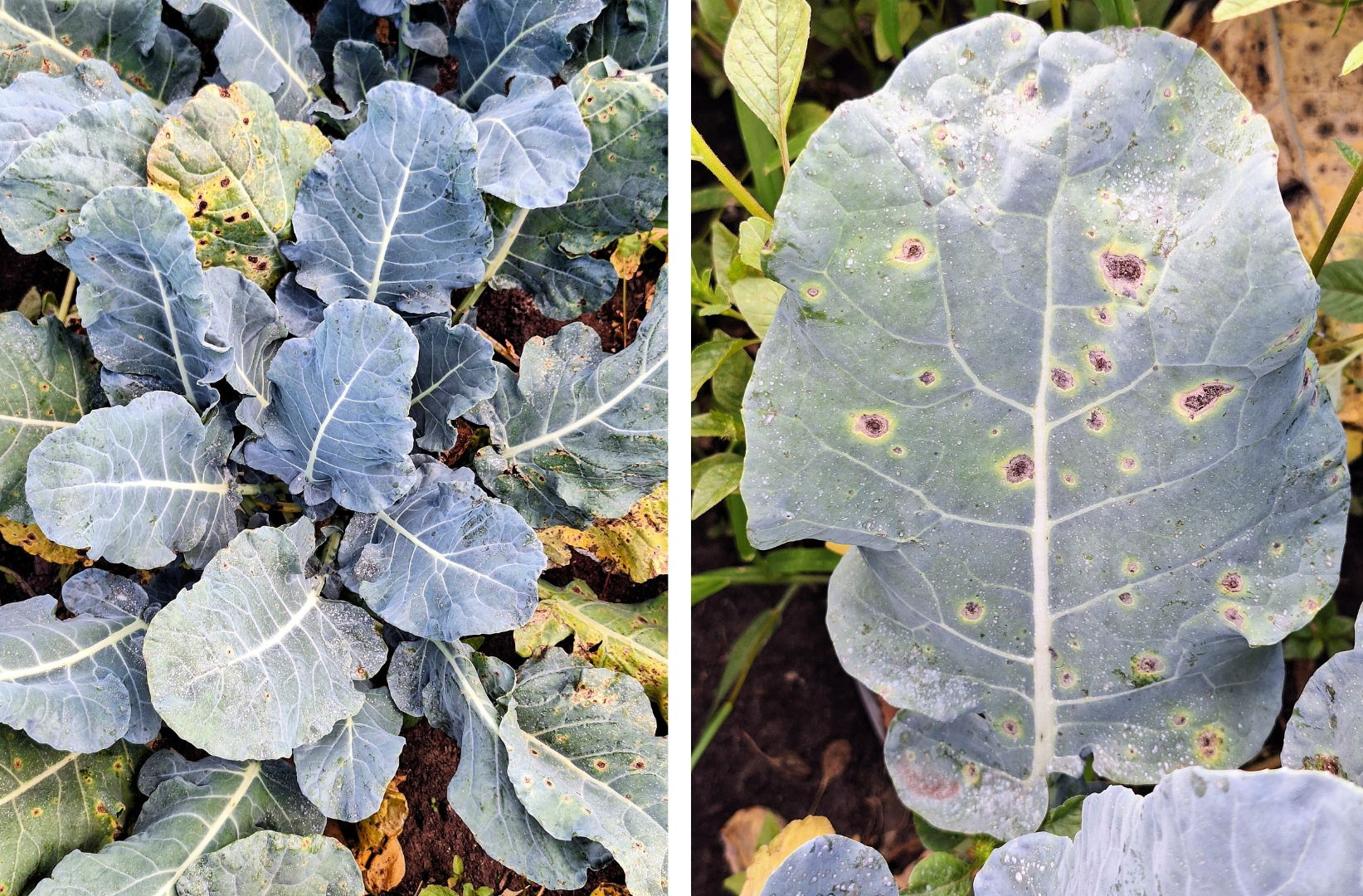
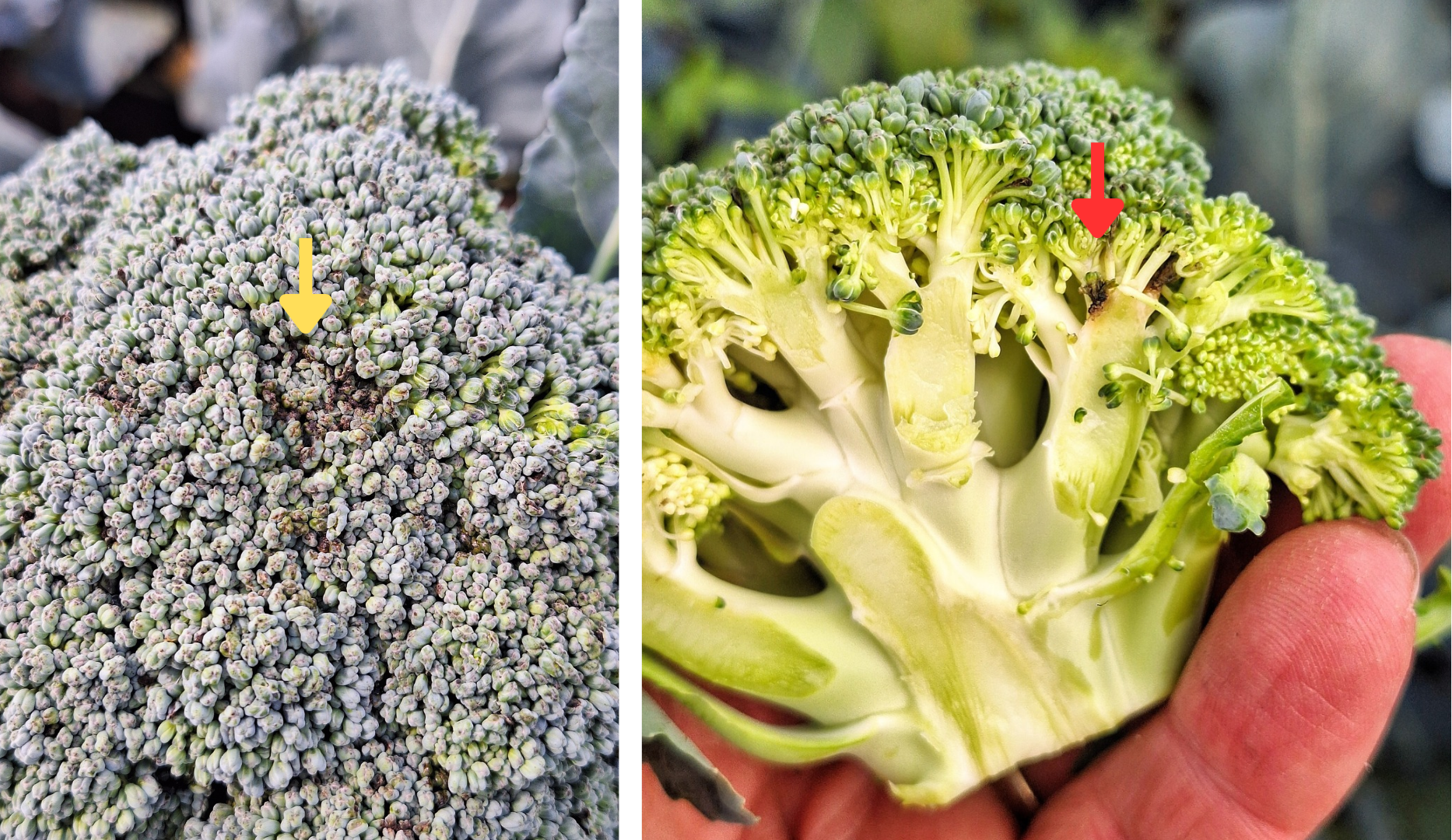
For Alternaria head rot in broccoli, combining a resistant cultivar with a fungicide program could be important, regardless of whether it is grown conventionally or organically. Organic fungicide options are limited. Research in Georgia and Virginia showed that Kocide 3000-O and OSO can help reduce foliar symptoms and/or head rot. However, in a Virginia trial with especially heavy disease pressure, organic fungicides only helped when combined with a less susceptible cultivar.
For conventional growers, including a locally systemic product early in a fungicide program could be important. Conventional, locally system fungicides showing efficacy in Georgia and Virginia trials included Quadris Top, Inspire Super, Miravis Prime, Luna Sensation, and Priaxor. Resistance to FRAC 11 and 7 fungicides has been detected in some parts of the country, so using a diversity of modes of action may be helpful. Protectants like chlorothalonil remain important tank mix or rotational partners. Interestingly, one trial with severe head rot found that fungicides helped most when combined with a less susceptible cultivar. Even with conventional fungicides, variety choice could be an impactful decision.
Plant breeders have produced a wide variety of broccoli cultivars varying in horticultural traits, but also susceptibility to Alternaria. For example, see this report on variety trials from 2023 in GA. Seed company representatives will be a good resource for choosing a variety that balances susceptibility, yield and quality.
Carrots and celery
For carrots, 11 DSVs accumulated between Aug. 11-17 at one sensor in Oceana County carrots MSU Extension is monitoring. A fungicide application would have been due Monday at this location if nothing had been applied since Aug. 8.
The leafhopper collection and testing program has ended for the season. Thank you to the MSU Extension educators, West Michigan IPM and MSU Plant and Pest Diagnostics who made this project possible. With continued grant funding, we expect to continue this project next year. Those signed up for 2026 text messages will be automatically included in the 2027 season.
Phytoplasma infectivity of aster leafhoppers:
|
County |
Collection Date |
Infectivity(%) |
|---|---|---|
|
Oceana |
August 10 |
0 |
|
Oceana |
August 3 |
0 |
|
Lapeer |
July 30 |
0 |
|
Oceana |
July 28 |
0 |
|
Ottawa |
July 28 |
0 |
|
Newaygo |
July 23 |
4.2 |
Cucurbits
Fusarium wilt has been detected in pumpkins on several farms. Cercospora leaf spot has been reported on spaghetti squash. Heavy powdery mildew infection on cucurbits has also been reported. Check out the report from July 15 on which fungicides and biologically based products work against powdery mildew.
Cucurbit downy mildew spores continue to be captured across Michigan State University’s trap network. To date, all spores are clade 2, which affects cucumbers and melons. Clade 1, which affects pumpkins and squash, has not been detected (and only occurs some years in Michigan). Read this article for more information and a list of effective fungicides. As always, you can track the spread of downy mildew with the Cucurbit Downy Mildew forecasting website.
Cucurbit downy mildew has been reported in Michigan. Read the latest article on cucumber downy mildew.
In last week’s report, we discussed managing pumpkins that have matured too early for customers’ preferences. Of course, the opposite problem can also happen, namely pumpkins developing slower than normal which can occur because of delayed germination and emergence after planting. Setbacks in this way can have several possible causes. Inadequate soil moisture is a common one. Seeds need to imbibe water to germinate, and if there are not sufficient levels in their surroundings, they sit in the soil until they have what they need.
Apart from water, seeds need warmth and oxygen. Cold soil temperatures can delay germination. If soil is compacted, it can prevent enough oxygen from reaching the seed.
Seed quality is another consideration. How old is your seed and when is the last time a germination test was performed on it? Time is valuable during the growing season, and you don’t want to plant questionable seed that may or may not still be viable. Apart from this, there are factors that may cause the seedlings to germinate underground fine but just not emerge. This could be from herbicide activity, preemergent damping off or, again, a compacted soil surface that seedlings can’t break through. Wildlife may also dig up seeds to consume them, but the signs of their excavation tend to be evident.
Fruiting vegetables
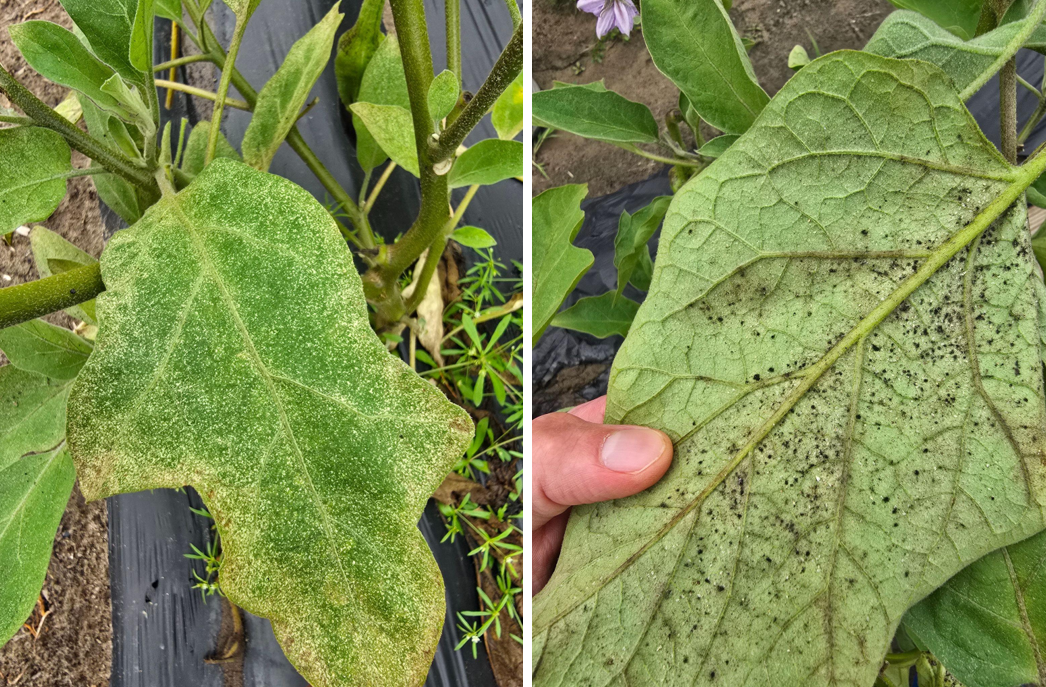
Whiteflies are peaking in many Michigan vegetable-growing areas. Scout the undersides of leaves for adults, eggs and immature stages, and watch for yellowing, leaf drop, sticky honeydew and black sooty mold.
Hot, dry weather can increase spider mite and thrips pressure in field-grown vegetables; learn what to watch for and how to protect your crops in this timely MSU Extension article.
Yellow shoulder is an abiotic ripening disorder of tomatoes that has been noted on a few farms this season. As the name suggests, the symptoms are hard, yellow tissue on the stem end of the fruit that never ripens fully. High temperatures seem to provoke this disorder, but it has also been associated with low potassium levels in the fruit. To the extent possible, keep plants free of heat stress during the dog days of summer.
Anthracnose has been reported in tomatoes. Late blight has been reported on potatoes in Michigan. You can track late blight information through Michigan’s potato late blight map. Late blight is a disease that most commonly affects potatoes, but can affect tomatoes when the weather is cool, rainy and humid. Check out this article on how to prevent late blight on tomatoes.
Sweet corn
There was a significant uptick in trap catches in some west central locations starting late last week through Monday. One cooperating scout reported captures of around 140–400 per night on Saturday–Monday from one of their traps. However, there was significant variability across this farm, showing the value of having your own trap or a good scout. When trap captures are high, tightened spray intervals and the use of effective products containing chlorantraniliprole or spinetoram can help.
The flight of corn aphids a few weeks back has been trouble for some growers as populations have risen. Sometimes if they colonize the tassel, their honeydew can create a mold growth on the ear below. Other times they colonize the husk itself and can even slide between the leaf sheaths and protect themselves from contact sprays. Organic-certified systemic insecticides are not available and getting good coverage with contact sprays is a challenge for everyone anyway without air-assist, high pressure, drop nozzles or some combination.
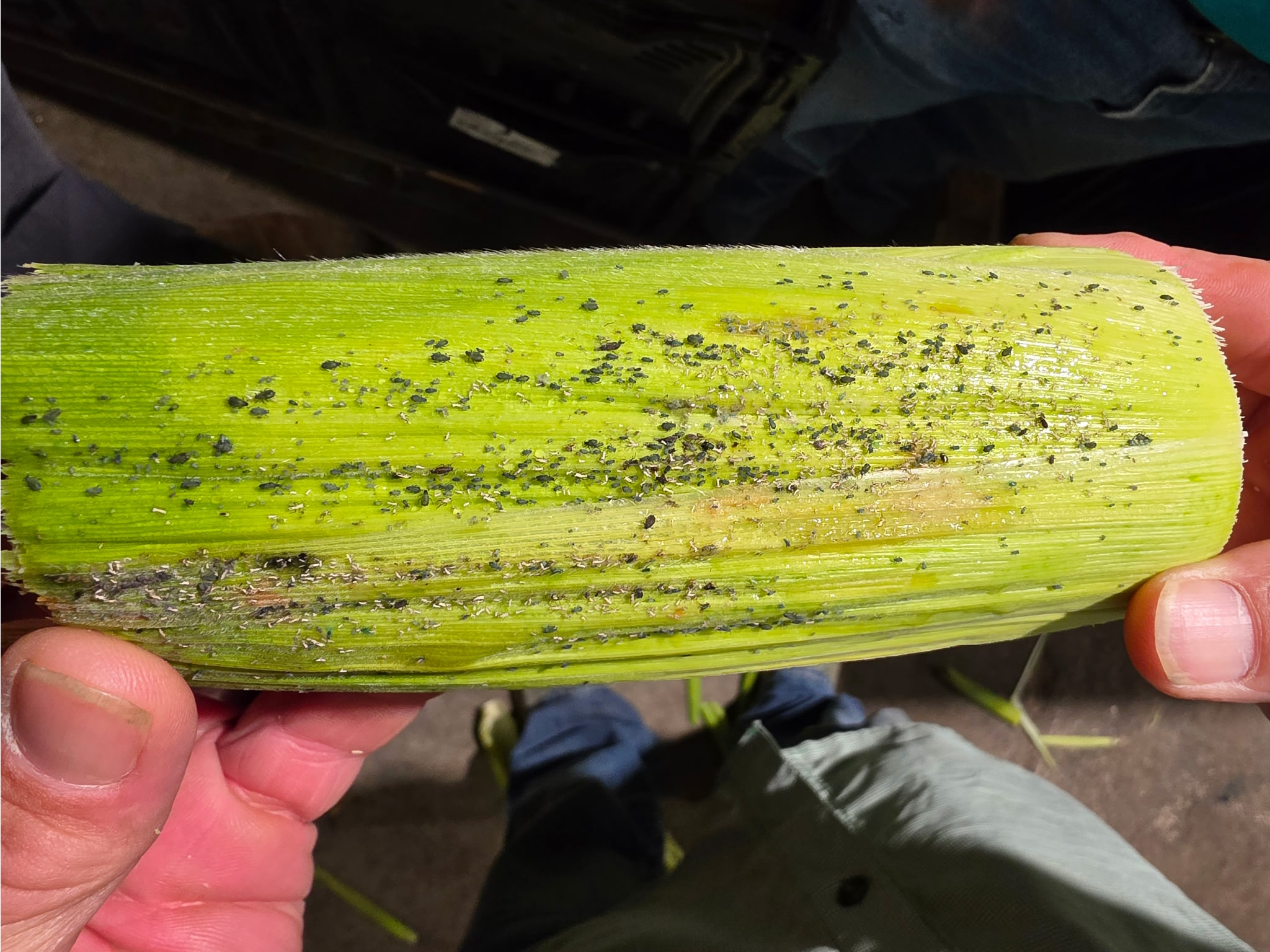
The insect forecast website predicts little to no risk of additional migration through Aug. 22. Interestingly, it predicted some risk of additional migration the night of Aug. 14, about when cooperators observed an increase in traps.
To our south, corn earworm was present at very low numbers in Ohio State University’s trapping network, as of Aug. 16.
Table 1. Corn earworm captures. Total in trap for week1 (avg # per night2).
|
Week |
Ottawa Co.4 |
Oceana Co.4 |
Washtenaw Co.3 |
Monroe Co.3 |
Saginaw Co.3 |
Lapeer Co.3 |
Genesee Co.3 |
Midland Co |
|---|---|---|---|---|---|---|---|---|
|
June 28 |
15 (1.5) |
- |
- |
- |
- |
- |
- |
- |
|
July 5 |
15 (1.5) |
0 |
- |
- |
- |
- |
- |
- |
|
July 14 |
15 (1.9) |
5 (0.8) |
0 |
- |
2 (0.2) |
6 (0.8) |
1 (0.1) |
- |
|
July 21 |
10 (1.4) |
8 (1.1) |
0 |
0 |
10 (1.4) |
1 (0.1) |
0 |
1 (0.1) |
|
July 28 |
10 (1.7) |
17 (2.4) |
0 |
0 |
4 (0.6) |
0 |
0 |
1 (0.1) |
|
August 4 |
4 (0.8) |
13 (1.9) |
0 |
2 (0.3) |
2 (0.2) |
0 |
0 |
1 (0.1) |
|
August 11 |
- |
- |
1 (0.1) |
2 (0.1) |
1 (0.1) |
0 |
0 |
0 |
|
August 18 |
- |
83 (5.9)* |
- |
16 (2.3) |
0 |
5 (0.7) |
6 (0.8) |
0 |
1Total number collected since last trap check; 2The total number divided by the number of nights since the last trap check; 3Cloth Heliothis traps track trends but catch less moths overall; 4Wire Harstack traps capture more moths. *This is a two-week total as traps were not emptied the week of Aug. 11.
If you are dealing with wildlife damage on sweet corn and wondering what wild animal is responsible, there are a couple of ways to get answers. You can look for evidence such as footprints, scat, feeding patterns or other specific types of damage that may provide clues about what animals are causing the problem. Additionally, installing a few trail cameras to capture photos or videos of the culprit might be helpful too.
Pay-for-Performance Program
The Pay-for-Performance (PfP) Program, led by Michigan State University’s Institute of Water Research in partnership with the Michigan Department of Agriculture and Rural Development (MDARD), provides financial incentives to farmers who implement conservation practices that improve water quality. Rather than paying solely for adopting conservation practices, the program rewards environmental outcomes by estimating the phosphorus reductions achieved on participating fields. Eligible practices include cover crops, reduced tillage, nutrient management, conservation crop rotations, drainage water management, filter strips, and conservation land set aside.
The program is currently available to eligible corn, soybean, wheat, and hay producers within the Western Lake Erie Basin in Southeast Michigan. Farmers interested in enrollment opportunities, eligibility requirements, and incentive payments are encouraged to visit the PfP website at iwr.msu.edu/pfp or contact David DeYoung at deyoun59@msu.edu or Chris Galbraith at galbra53@msu.edu for more information.
Produce Food Safety On-Farm Readiness Reviews
Schedule an On-Farm Readiness Review (OFRR) today for a two-hour educational visit that takes place during the harvest season and is meant to be casual and low stress! Everything discussed during an OFRR is confidential, and focused on ways a grower can reduce their own risks in relation to produce safety. There is no pressure to take our advice either, we are just here to support you in your produce safety efforts!
Events
- August 28, 2026: Washtenaw Conservation District Field Day – Ann Arbor, MI
- August 30, 2026: Bee Palooza - East Lansing, MI
- September 1, 2026: U.P. Potato Field Day – Chatham, MI
- September 3, 2026: Cover Crop Workshop 2- Incorporating Principles of Regenerative Agriculture to Make My Farm More Resilient and Successful- Frankenmuth, MI
- September 3, 2026: Fourth Annual KBS LTAR Field Day - Hickory Corners, MI
- September 9, 2026: Tillage & Soil Health Field Day – La Salle, MI
- September 10-11, 2026: Great Lakes Tek Flex – Benton Harbor, MI
- September 16, 2026: 2026 Midwest Mechanical Weed Control Weed Day – Benton Harbor, MI
- The Midwest Transition to Organic Partnership Program (TOPP) has provided funding to cover admission for any Illinois or Indiana grower and the first 50 Michigan farmers interested in attending this year’s event. Illinois farmers, please use the coupon code ILLINOIS26 when registering. Indiana growers, please use the coupon code INDIANA26, and Michigan farmers please contact Mariel Borgman at mborgm@msu.edu for coupon code.
- September 16-17, 2026: Thumbs-up for Sustainability Farm Tour for beginning farmers.
- September 22-24, 2026: Farm Science Review 2026 – London, OH
- October 1, 2026: “I have no fogging clue!” Greenhouse Workshop - Deneweth’s Garden Center, Macomb, MI
- October 4-6, 2026: Northern Michigan Small Farm Conference – Bellaire, MI
- Michigan's Emerging Farmers team is funding 20 farmers to attend this. Funding support will include conference registration fees (including the Sunday farm tour), lodging near the conference, two shared meals, and a stipend to support participants that can be used to cover travel costs. Farmers and producers can apply by Aug. 20. After the short application is submitted, applicants will be notified of their award by Aug. 21 and be asked to accept it and register with the Michigan's Emerging Farmers team by Aug. 30. Accepted participants will be required to attend the full conference (Sunday-Tuesday) as well as a networking lunch with other participants and NIFBE MEF team members, and complete a post-conference survey. A pre-conference virtual orientation session will be optional for participants.
- November 4-6, 2026: Michigan Agritourism 20th Anniversary Convention – Frankenmuth, MI
- December 8-10, 2026: Great Lakes Fruit, Vegetable, & Farm Market Expo – Grand Rapids, MI
This work is supported by the Crop Protection and Pest Management Program (grant no 2024-70006-43569) from the USDA National Institute of Food and Agriculture. Any opinions, findings, conclusions, or recommendations expressed in this publication are those of the author(s) and do not necessarily reflect the view of the U.S. Department of Agriculture.