Michigan vegetable crop report – July 15, 2026
 Print
Print Email
EmailAnother heat wave is upon us. Be safe and alert while working out in the fields.
Weather
A cooler start and hot end to the past seven days averaged out to produce near- to above-normal temperatures. Precipitation ranged from nothing in the western lower to 2 inches in parts of the northern lower and Upper Peninsula.
- Mostly sunny, hazy and hot Wednesday and Thursday, July 15–16. Heat index values in excess of 100 degrees Fahrenheit to the south on Wednesday. Scattered showers and thunderstorms possible to the northwest Thursday night spreading southeast into lower Michigan on Friday, Saturday and Sunday. Variably cloudy and seasonably warm early next week with scattered showers and thunderstorms possible.
- High temperatures generally from the mid- to upper 90s Wednesday, cooling to the mid- to upper 80s by Saturday and low 80s by early next week. Low temperatures in the mid- to upper 60s Thursday through Friday, gradually falling back to the upper 50s/low 60s by early next week.
- Above normal potential evapotranspiration rates are expected for the upcoming week, especially during the next few days.
- Medium range outlooks call for a break in the heat, with normal to below normal mean temperatures and normal to above normal precipitation totals late July into early August.
Crop updates
Asparagus
If mornings are dewy, purple spot can still progress even though rainfall has been scarce. Between seven and 12 disease severity values (DSVs) accumulated between July 7–13 at five asparagus fields Michigan State University Extension and collaborating consultants are monitoring.
Common milkweed is also becoming more visible in some asparagus fields. Established patches are difficult to eliminate because milkweed spreads through both seed and an extensive perennial root system, so repeated control may be necessary. In standing fern, 2,4-D amine or choline at 1.5 to 2 qt/A may be applied to actively growing milkweed using drop nozzles to reduce contact with the asparagus fern. After final harvest, glyphosate can be applied as a spot, shielded or direct-treated after all spears have been removed; avoid contact with asparagus fern and follow the label’s field-area restrictions.
Applications are most effective when milkweed has sufficient foliage and is approaching bloom, when systemic herbicides can move more effectively into the roots. Residual asparagus herbicides can help prevent annual weeds from emerging but will not eliminate an established milkweed root system. Scout treated patches for regrowth, prevent surviving plants from producing seed and plan on follow-up treatment where necessary.
Where infestations are patchy, flag and map the affected areas so they can be treated and monitored in subsequent years. Isolated plants can be removed by hand before seed pods develop, but as much of the root system as possible should be removed. Repeated mowing or cutting can prevent seed production and gradually weaken plants, although a single cutting will not eliminate established patches. Avoid aggressive cultivation/tillage through infested areas because root fragments may be moved into clean portions of the field.
Weed wipers may offer another option where milkweed extends well above the asparagus fern, allowing glyphosate to be applied selectively to the weed canopy. However, this use should be considered only when permitted by the specific product label, and contact or dripping onto asparagus fern must be avoided. Because research on weed-wiper use for milkweed in asparagus is limited, growers should first test the approach on a small area and continue scouting for regrowth.
Carrots and celery
For carrots and celery, leafhopper samples continue to be collected by MSU Extension and a scout and tested by MSU Plant and Pest Diagnostics. Results for each of the samples are listed below. To receive this information as soon as it is available, sign up for aster leafhopper text alerts.
Phytoplasma infectivity of aster leafhoppers:
|
County |
Collection Date |
Infectivity (%) |
|---|---|---|
|
Ottawa |
July 13 |
4.2 |
|
Oceana |
July 13 |
4.3 |
|
Allegan |
July 12 |
0 |
|
Muskegon |
July 9 |
4.3 |
|
Newaygo |
July 9 |
5.9 |
|
Lapeer |
July 7 |
4.2 |
|
Oceana |
July 6 |
5.9 |
|
Lapeer |
July 1 |
0 |
Cucurbits
Pumpkins are runnering and flowering. Fruits will soon be setting, and this is typically when powdery mildew settles in. Spider mites and thrips can be found in cucumbers, causing leaves to look dried out, yellow and mottled. Where spider mites are present, their webs are easy to spot. Abamectin (Agri-Mek) is a product that selectively affects mites and thrips.
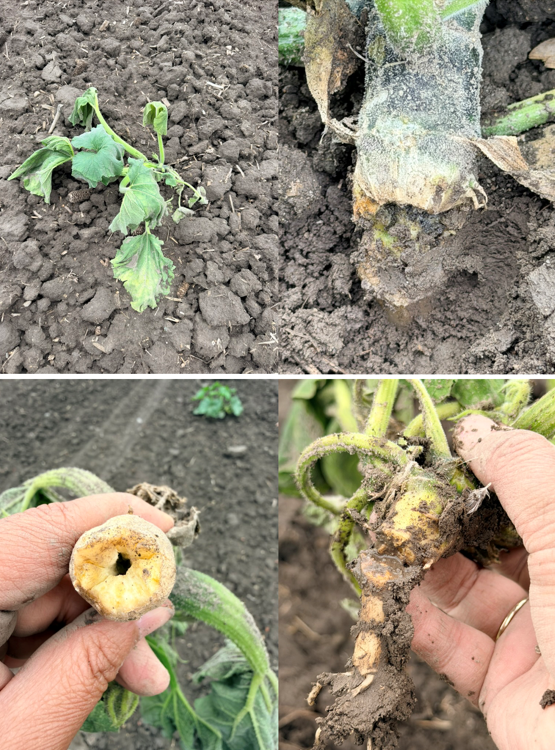
Recently, MSU Plant and Pest Diagnostics had two pumpkin cases showing symptoms of wilt, brittle stems, stem breaks at the soil line, and stunted roots. In some plants, there was aboveground stunting and/or vertical stem split.
Disease and insect/arthropod issues have been ruled out through testing and examination.
This type of injury (brittle stems at soil line, sometimes deformed, stubby or stunted roots) is consistent with seedling root inhibitor herbicide injury (Group 3, e.g., trifluralin, ethafluralin). Wilting and plant decline are the later symptoms as the disconnect between the root and the shoots develops.
While these herbicides are labeled for use in pumpkins and other cucurbit species the following are some instances where we may see this type of injury:
- Plant stress made the crop more susceptible to injury than they normally would be (e.g., cold weather around the time of planting, too much or too little water, high salt exposure, etc.)
- The product is incorporated into the soil in a manner or at a timing inconsistent with the label
- Residual Group 3 herbicides are remaining in the soil from the previous year(s) and combined with this year's application the exposure rate was too high
- Foliar contact occurs at the time of application or through soil splashing
- There was an uneven application of herbicide
- Too much was applied for the given soil type
When it comes to aphids, the right management strategy depends on your crop. This new MSU Extension article explains why suppressing aphid populations and preventing virus transmission require different approaches and how to choose the right tools for each.
Cucurbit downy mildew spores continue to be captured across MSU’s trap network. To date, all spores are clade 2, which affects cucumbers and melons. Clade 1, which affects squash, has not been detected (and only occurs some years in Michigan). Read this article for more information and a list of effective fungicides. As always, you can track the spread of downy mildew with the Cucurbit Downy Mildew forecasting website.
Downy mildew disease on cucumbers in the field has not been verified at this time. As the temperatures moderate, this could change. Fields that are organic or not receiving fungicide applications should be monitored for symptoms.
Powdery mildew on cucurbits seems to be a bit slower in developing this year and scouting is important to catch the very first powdery mildew colonies early. When scouting, focusing on the shaded leaves and the underside of leaves is important. The first foliar sign of powdery mildew is a white powdery growth that frequently begins on the underside of the leaves. Only powdery mildew has a white, talcum-like appearance on leaf surfaces (top or bottom) and stems. By the time that the white colonies of the fungus are noticed on the topside of the leaves, the fungus may already be well-established making control more difficult. If only protectant fungicides (ex. chlorothalonil, mancozeb, copper, sulfur) have been used, the first indication of powdery mildew may be limited to the underside of leaves and escape early detection.
Powdery mildew is most effectively addressed before the disease first appears or just after it has been found through scouting. Scouting is a critical component of powdery mildew management resulting in appropriately timed fungicide sprays while reducing unnecessary applications that are costly and may increase the risk of resistance. Resistance of powdery mildew to certain fungicides has been an ongoing concern for growers and may be contributing to control difficulties.
Now is the time to consider the effectiveness of your current control strategies and plan for next season. Whenever possible, choose a cultivar that has some level of genetic resistance to powdery mildew. This approach along with scouting and the application of either fungicides or biologically based plant protection products can lead to success against powdery mildew. Two different field studies were conducted last year at Michigan State University to guide control recommendations.
Powdery mildew control using fungicides
To determine which fungicides perform best when the cucurbit crop is susceptible to powdery mildew, Michigan State University researchers used the pumpkin ‘Cherokee Bush’. While we used only one fungicide type applied multiple times for each research plot, this approach is not recommended for growers. We conducted the trial in this way to determine which product provided a good level of control even when the cultivar is vulnerable to disease. Once the effective products are identified in the research plots, they can be placed into an overall program that alternates among the active ingredients based on the FRAC code. The FRAC code can be found on the product’s label along with the maximum number of applications that can be made per season. Alternating among the FRAC codes of the fungicides and limiting the number of applications for each specific product is important so that the powdery mildew fungus does not become resistant.
Overall, the fungi responsible for powdery mildew on cucurbits and other specialty crops are well known to develop resistance to highly effective fungicides over time.
Among the fungicides that we tested in 2025, Switch 62.5 WG (FRAC 9+12), Vivando SC (FRAC 50), Prolivo 300 SC (FRAC 50) and Gatten (U13) provided a level of powdery mildew control that was better than the plants that did not receive any fungicide spray at the end of the season. Among the effective fungicides in our trial, Vivando SC was more effective than Switch 62.5 WG and Gatten.
Each of these fungicides should be mixed with a protectant fungicide such as chlorothalonil (M5); Bravo WeatherStik is an example. We also tested Quintec SC (FRAC 13) and Aprovia Top (FRAC 7+13) in an overall program with Prolivo, with each tank-mixed with Bravo WeatherStik, which was also an effective approach.
Powdery mildew control using biologically based products
Choosing a squash cultivar that is not as susceptible to powdery mildew as others can be helpful when using biologically based products. In a 2025 trial, plots treated with Serenade Opti WP or Badge X2 WP had less powdery mildew than the untreated control when used in combination with a cultivar that has intermediate resistance to powdery mildew. At the end of the trial, these products had slowed powdery mildew significantly compared to the plants that were not sprayed. When using biologically based plant protection products, growing a cucurbit cultivar with powdery mildew resistance or tolerance could be helpful.
Phytophthora can be found in some places, especially in areas with a history of the pathogen and in low spots where the recent rains have gathered into pools.
Brassicas and greens
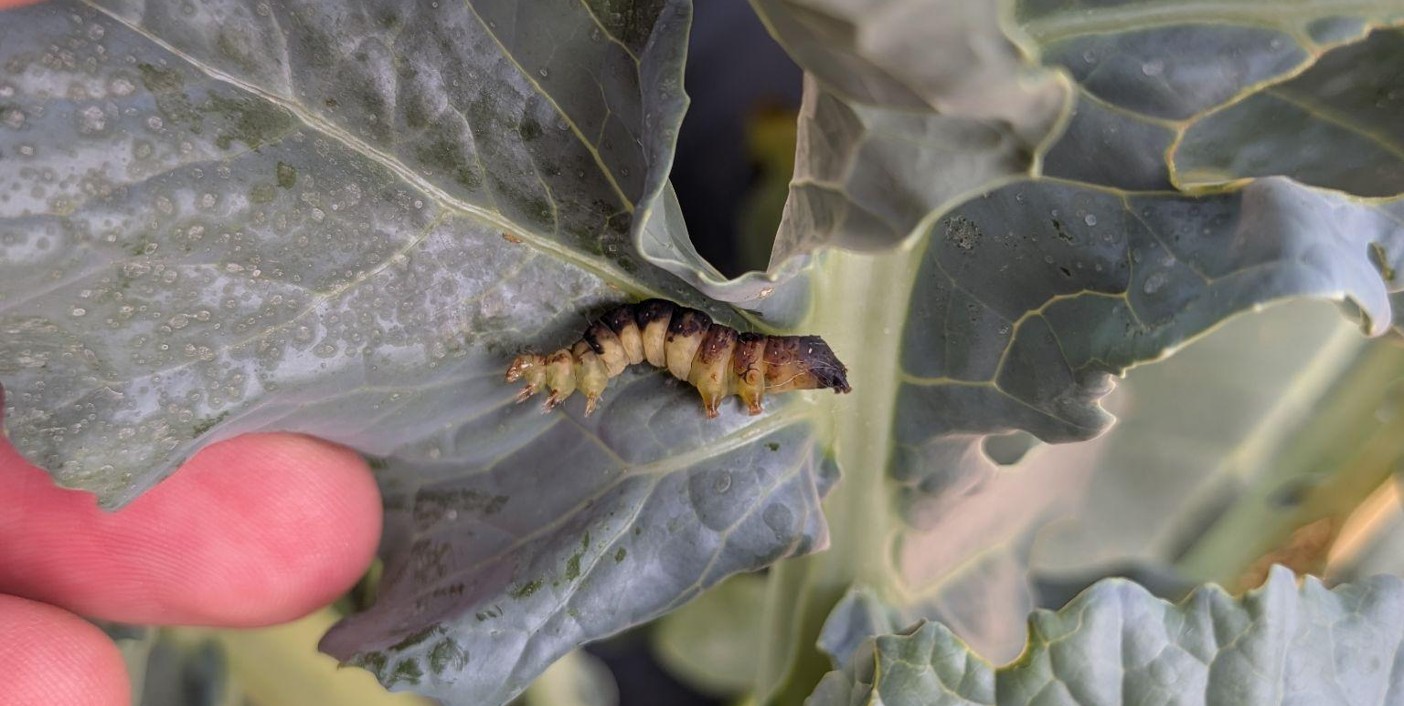
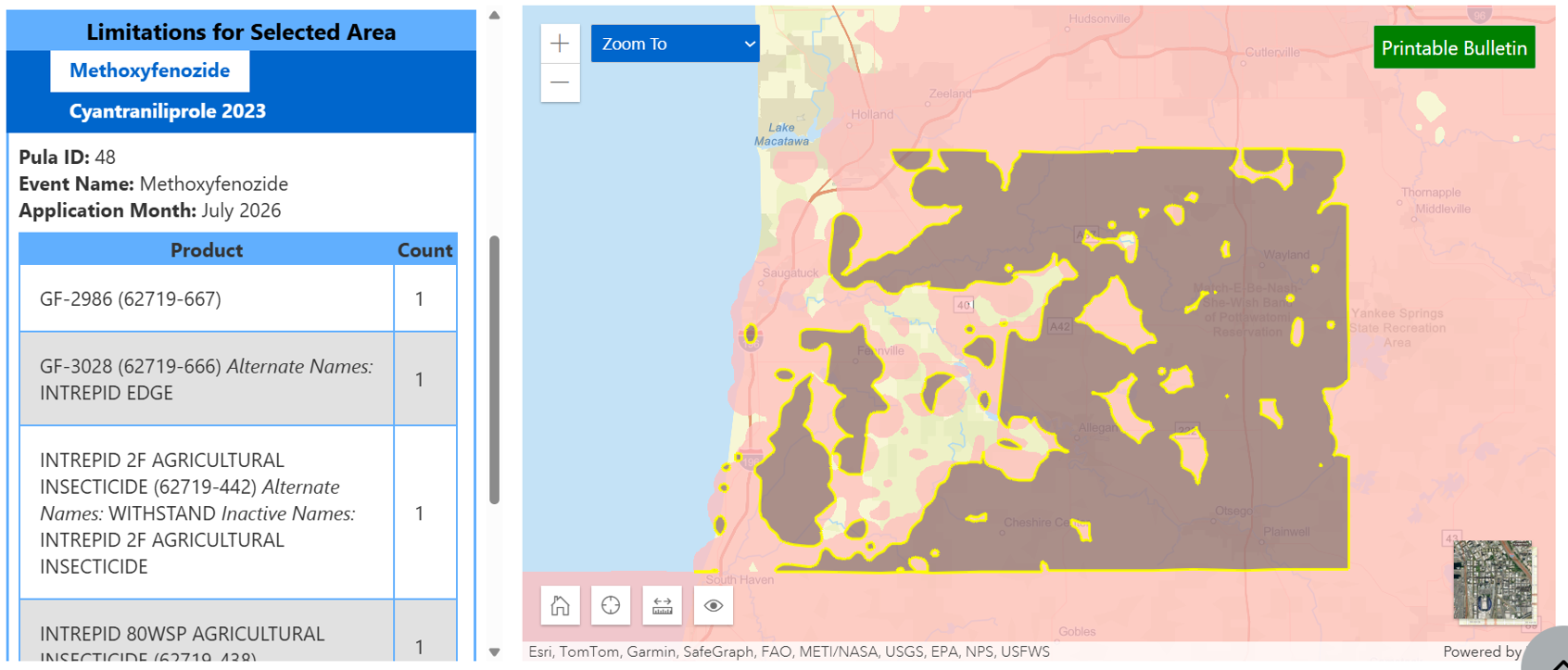
Among the tools available to treat plants for caterpillars, methoxyfenozide (Intrepid) is a heavy hitter that bakes even the large ones. What’s better is that it is selective on caterpillars, conserving the beneficial insects like beetles and wasps. However, methoxyfenozide is one of the ingredients that the Endangered Species Act (ESA) is watching, and you should check the Bulletins Live! Two map to see if you need to be aware of application restrictions. For example, in Allegan County, there are many areas that have ESA language like this: “Within this county, do not apply this product within one mile of sandy habitats that support wild lupine plants.” This is to protect the caterpillar of the Karner blue butterfly from getting roasted along with the loopers, earworms and other pest caterpillars.
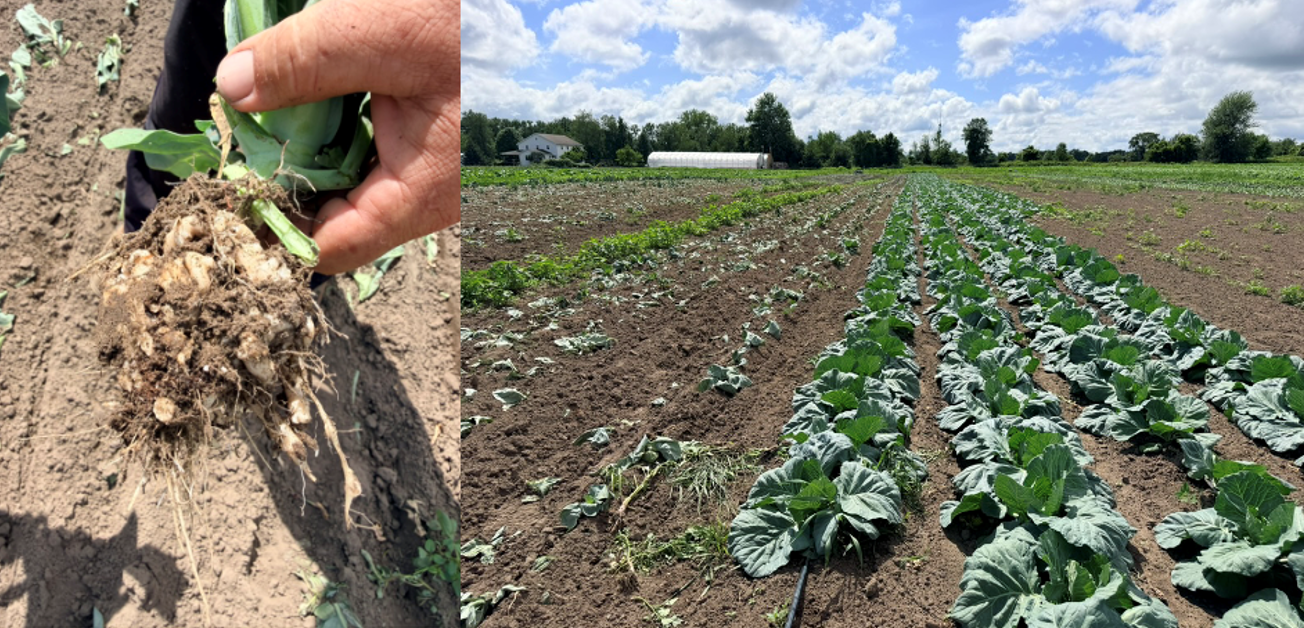
Clubroot has been reported in cabbage. This disease can be a persistent problem because the pathogen survives in the soil for many years. If crop rotation away from cabbage or other brassicas is not a practical option, planting resistant varieties is an effective management strategy.
Fruiting vegetables
Similar to cucurbits, spider mites and thrips can be found. Abamectin (Agri-Mek) is a product that selectively affects mites and thrips. Zsofia Szendrei wrote a good article about mites in tomatoes, outlining several treatment options. For thrips, effective products tend to have broad-spectrum effects on other insects and should be used sparingly and in a double-punch fashion to kill adults and then a second application to clean-up newly emerged larvae. There are several options, including spinetoram (Radiant), methomyl (Lannate), spirotetramat (Movento) and isocycloseram (Incipio). This MSU Extension article has further examples of insecticides and more information for thrips and mite management, especially during hot and dry conditions.
Garlic and onions
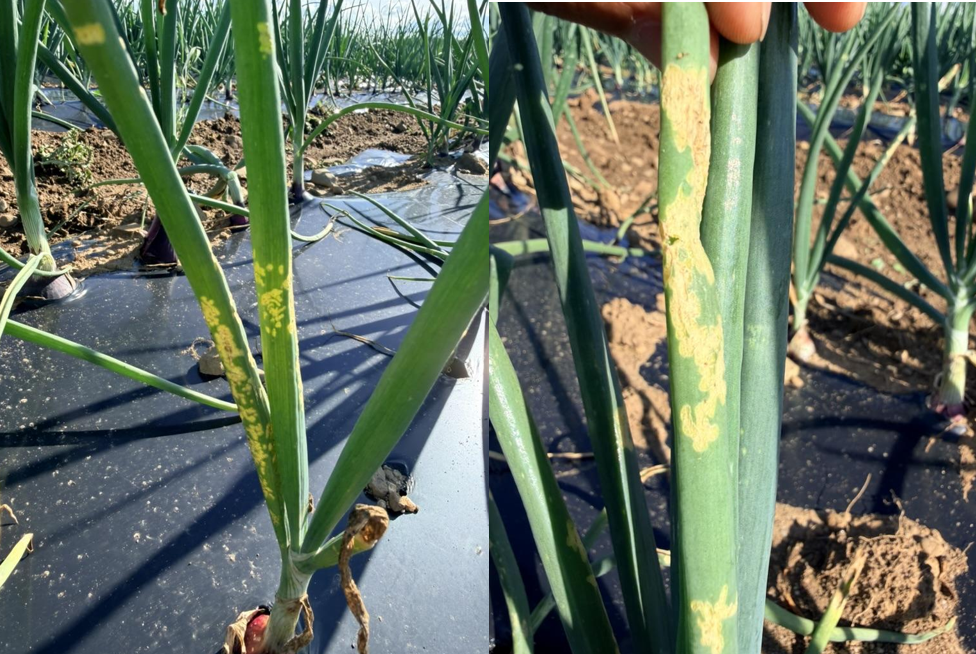
Garlic is being harvested across the region.
Sweet corn
Corn earworm management can be challenging this time of year because spray recommendations depend on both pheromone trap catches and the availability of fresh silks in the surrounding field (dent) corn (read more from Purdue Extension). Early in the season, before neighboring dent corn begins to silk, insecticides should be applied to sweet corn when fresh silks are present and pheromone traps are catching at least one moth per night. Once the surrounding dent corn begins producing fresh silks, moths are more attracted to those fields, so insecticide applications in sweet corn are generally not needed unless trap catches reach 10 moths per night.
After pollination is complete and dent corn silks have dried down, the surrounding field corn becomes less attractive again, and the spray threshold returns to one moth per night. Note, these thresholds were validated for large, wire traps, which catch more moths than cloth ones. There are extension thresholds available online for cloth Heliothis traps, such as in this Vegetable IPM Fact Sheet Overview from Cornell. To learn more, check out this MSU Extension article on using pheromone traps in sweet corn.
Corn earworm is present at modest numbers at traps MSU Extension is monitoring.
Table 1. Corn earworm captures. Total in trap for week1 (avg # per night2).
|
Week |
Ottawa Co.4 |
Oceana Co.4 |
Washtenaw Co.3 |
Saginaw Co.3 |
Lapeer Co.3 |
Genesee Co.3 |
|---|---|---|---|---|---|---|
|
June 28 |
15 (1.5) |
- |
- |
- |
- |
- |
|
July 5 |
15 (1.5) |
0 |
- |
- |
- |
- |
|
July 14 |
- |
5 (0.8) |
0 |
2 (0.2) |
6 (0.8) |
1 (0.1) |
1Total number collected since last trap check; 2The total number divided by the number of nights since the last trap check; 3Cloth Heliothis traps track trends but catch less moths overall; 4Wire Harstack traps capture more moths.
Table 2. Western bean cutworm captures. Total in trap for week1 (avg # per night2).
|
Week |
Ottawa Co. |
Oceana Co. |
Washtenaw |
|---|---|---|---|
|
June 28 |
2 (0.2) |
- |
- |
|
July 5 |
18 (1.8) |
3 (0.01) |
- |
|
July 14 |
- |
22 (0.8) |
16 (4) |
1Total number collected since last trap check; 2The total number divided by the number of nights since the last trap check.
To our south, corn earworm was present but at low numbers in Ohio State University’s trapping network, as of July 5. Western bean cutworm numbers were increasing.
Insect Forecast predicts a low to moderate risk of additional corn earworm migration July 16 and 17.
Tar spot was officially reported for the first time in Michigan on Monday, July 13, in Jackson County. You can track the detection of this disease across the U.S. with the Corn ipmPIPE website. Good resources for tar spot from a field corn perspective include this overview of tar spot biology and a fungicide efficacy table (see also a printable version of a fungicide efficacy table). Cornell also has a nice article from a sweet corn perspective.
A list of fungicides labeled for sweet corn, along with efficacy ratings, from the Crop Production Network:
|
Trade name |
PHI |
Tar spot rating |
|
Aproach |
7 |
Good |
|
Quilt Xcel |
14 |
Good |
|
Trivapro |
14 |
Good-Very Good |
|
Lucento |
30* |
Good |
|
Topguard |
7 |
Good-Very good |
|
Veltyma |
21 |
Very good |
|
Revytek |
21 |
Very good |
|
Delaro |
0 |
Good-Very good |
|
Delaro Complete |
0 |
Very good |
|
Miravis Neo |
14 |
Good-Very Good |
|
Headline AMP |
7 |
Good-Very Good |
|
Adastrio, Forcivo |
14 |
Good-Very Good |
Strawberry
1. Control emerged broadleaf weeds before renovation
Evaluate the field immediately after the final harvest. If broadleaf weeds are taller than the strawberry canopy, apply 2,4-D before mowing, wait approximately three days, and then mow. This allows the weeds to absorb and translocate the herbicide before their foliage is removed. If the weeds are shorter than the strawberry plants, mow first and apply 2,4-D afterward to the exposed weeds. MSU’s 2026 guide lists 2,4-D amine or choline at 1 to 1.5 qt/A for use at renovation. Do not apply after August 1 because late applications may result in misshapen fruit the following season.
For fields dominated by Canada thistle, dandelion, ragweed, groundsel, vetch, milkweed, nightshade, wild carrot, or other susceptible perennial broadleaf weeds, Stinger at 5.3 to 10.7 fl oz/A may be used instead of 2,4-D. Do not add an adjuvant to Stinger. Select either 2,4-D or Stinger based on the weeds present rather than applying both routinely.
2. Control emerged grasses
Annual and perennial grasses should be treated while actively growing. Options include:
- Poast at 1 to 2 pt/A with 1 qt/A crop oil concentrate.
- Select Max at 9 to 16 fl oz/A with 0.25% nonionic surfactant.
- Fusilade DX at 16 fl oz/A with the labeled adjuvant, particularly where perennial grasses such as quackgrass are present.
These products control grasses only and will not control pigweed or other broadleaf weeds.
3. Mow and narrow the rows
After any pre-mowing 2,4-D treatment has had approximately three days to move into the weeds, mow the strawberry foliage just above the crowns, generally leaving about 2 inches of plant material. Narrow matted rows to approximately 8 to 10 inches using a rototiller, cultivator, or disk. Avoid covering the remaining crowns with more than about 1 inch of soil. Early renovation provides more time for runner plants to root and develop flower buds for the following season.
4. Apply residual herbicides after renovation
Apply residual herbicides after mowing and row narrowing, but before new weeds emerge and before substantial new strawberry foliage develops. For broader and longer-lasting control, use one residual herbicide with strong annual-grass activity and one with additional broadleaf activity, where the labels permit the combination.
Grass and small-seeded broadleaf residuals
Prowl H₂O at 1.5 to 3 pt/A controls annual grasses and several small-seeded broadleaf weeds, including pigweeds. At renovation, apply it before new strawberry leaves emerge. Do not exceed 6 pt/A per year.
Dual Magnum at 0.67 to 1.33 pt/A provides residual activity against annual grasses, pigweeds, and yellow nutsedge. Use the lower rate on coarse or sandy soils. Dual Magnum should be applied to moist soil or activated with approximately 0.25 inch of rainfall or irrigation. It generally provides four to five weeks of residual control, so a broadleaf partner is usually needed. Confirm that the current Michigan 24(c) label is active before application.
Devrinol at 6 to 8 lb/A provides residual control of annual grasses and some small-seeded broadleaf weeds. Rainfall or irrigation after application improves control. However, Devrinol may inhibit the establishment of daughter plants, so it may not be the preferred option where rapid runner rooting is the main renovation goal.
Broadleaf residuals
Spartan at 4 to 8 fl oz/A can be applied after mowing at renovation for pigweeds, field pansy, common groundsel, mayweed, woodsorrel, white campion, and wild buckwheat. It should generally be combined with another residual herbicide for broader control. Do not use Spartan on sandy soils containing less than 1% organic matter, and avoid application after substantial new strawberry growth has developed because injury may occur.
Sinbar at 4 to 8 oz/A may be applied to established strawberries after renovation. It controls several annual broadleaf and grass weeds, but strawberry injury and stunting are more likely on light sandy soils. The MSU renovation guidance advises against Sinbar on soils containing less than 1% organic matter or more than 70% sand.
Ultra Blazer can provide additional activity against pigweeds, mustards, and smartweeds where its current label permits renovation use. It has contact activity, so good spray coverage is important, and applications must follow label restrictions intended to minimize strawberry injury.
5. Select the residual program according to the weeds
For fields dominated by annual grasses and pigweeds, a program such as Prowl H₂O followed by or combined with Spartan may provide broader residual control than either herbicide alone.
For fields with annual grasses, pigweeds, and yellow nutsedge, Dual Magnum can provide the grass and nutsedge component, while Spartan or Sinbar can strengthen broadleaf control.
6. Activate the herbicides and continue scouting
Residual herbicides require rainfall or irrigation to move them into the weed-germination zone. Irrigate as directed by the product labels when adequate rainfall is not expected. Continue scouting through the summer because residual activity may decline more quickly on sandy soils, after heavy rainfall, or where later weed flushes occur. Avoid unnecessary tillage after applying residual herbicides because disturbing the soil can break the herbicide barrier and stimulate additional weed emergence.
Suggested renovation sequence
- Complete the final strawberry harvest.
- Identify the dominant weeds.
- If broadleaf weeds are above the strawberry canopy, apply 2,4-D and wait three days.
- Mow strawberry foliage just above the crowns.
- If broadleaf weeds were below the canopy, apply 2,4-D after mowing.
- Apply a grass herbicide if emerged grasses are present.
- Broadcast renovation fertilizer.
- Narrow rows to approximately 8 to 10 inches.
- Apply a residual grass herbicide with a compatible broadleaf residual herbicide.
- Irrigate to activate the residual treatments and promote strawberry regrowth.
- Scout for escapes and remove weeds not controlled by the herbicide program.
Always follow the current product label, including rates, application timing, preharvest intervals (PHI), annual maximums, adjuvant requirements and Michigan-specific supplemental-label restrictions. Herbicide registrations can change, so the label in effect at the time of application takes precedence over Extension recommendations.
Produce Food Safety On-Farm Readiness Reviews
Schedule an On-Farm Readiness Review (OFRR) today for a 2-hour educational visit that takes place during the harvest season and is meant to be casual and low stress! Everything discussed during an OFRR is confidential, and focused on ways a grower can reduce their own risks in relation to produce safety. There is no pressure to take our advice either, we are just here to support you in your produce safety efforts!
Events
- July 21, 2026: Washtenaw TOPP Farm Tours – Whitmore Lake/Dexter/Willis, MI
- July 23, 2026: Beekeeping Workshop – Novi, MI
- July 25, 2026: Beekeeping Workshop - Lansing, MI
- July 30, 2026: Summer Irrigation Workshop - Hickory Corners, MI
- July 31, 2026: Berrien County Organic Agriculture: Tour 3 Value-Added & Agritourism Farms – Sodus/Buchanan/Three Oaks, MI
- August 6, 2026: 2026 Potato Field Day – Lakeview, MI
- August 11, 2026: West Michigan Organic Farm Tour: Explore Farm to Institution Markets from schools to hospitals – Muskegon/Whitehall, MI
- August 11, 2026: Michigan Agricultural Irrigation Water Use Efficiency Program - Lansing, MI
- August 11-12, 2026: Michigan AgroExpo – St. Johns, MI
- August 12, 2026: 30th Annual Center for Excellence Field Day – Clayton, MI
- August 18, 2026: Northwest Michigan TOPP Field Day: Farming for People, Purpose, and Profit – Petoskey, MI
- August 20, 2026: Hillsdale Nutrient Management Field Day – Waldron, MI
- September 3, 2026: Cover Crop Workshop at SVREC- Frankenmuth, MI
- September 3, 2026: Fourth Annual KBS LTAR Field Day - Hickory Corners, MI
- August 28, 2026: Washtenaw Conservation District Field Day – Ann Arbor, MI
- September 9, 2026: Tillage & Soil Health Field Day – Monroe, MI
- September 10-11, 2026: Great Lakes Tek Flex – Benton Harbor, MI
- September 16, 2026: 2026 Midwest Mechanical Weed Control Weed Day – Benton Harbor, MI
- September 22-24, 2026: Farm Science Review 2026 – London, OH
- October 4-6, 2026: Northern Michigan Small Farm Conference – Bellaire, MI
- November 4-6, 2026: Michigan Agritourism 20th Anniversary Convention – Frankenmuth, MI
- December 8-10, 2026: Great Lakes Fruit, Vegetable, & Farm Market Expo – Grand Rapids, MI
This work is supported by the Crop Protection and Pest Management Program (grant no 2024-70006-43569) from the USDA National Institute of Food and Agriculture. Any opinions, findings, conclusions, or recommendations expressed in this publication are those of the author(s) and do not necessarily reflect the view of the U.S. Department of Agriculture.