Michigan vegetable crop report – July 1, 2026
 Print
Print Email
EmailBeat the heat this week by being proactive about human and crop health.
Weather
For the week ending Monday, June 29, temperatures were below 4-8 degrees below normal with rainfall varying from minimal to over 2 inches, with the highest amounts in the northern Lower Peninsula.
- Variably cloudy, hot and humid Wednesday through Thursday with scattered showers and thunderstorms possible to the north. Some strong storms possible to the north Wednesday evening. Daytime heat index values from 105–110 degrees Fahrenheit likely through Thursday. Scattered showers and thunderstorms possible central and southern Michigan late Friday through Sunday with isolated showers possible to the north.
- Precipitation totals reaching 1–1.5 inches in the north decreasing to the south.
- High temperatures generally from near 90 to the north to the mid- and upper 90s to the south Wednesday through Friday, cooling slightly to the low to mid-80s by Sunday into early next week. Low temperatures in the upper 60s to the north to the mid-70s to the south Thursday and Friday, falling back to the 50s to the north to mid-60s to the south this weekend.
- Medium range outlooks call for a continuation of warmer than normal temperatures with a gradual decrease in precipitation totals into mid-July.
Stay safe during high temperatures
Be mindful of taking precautions during the extreme heat this week. Check out this recent Michigan State University Extension article on heat stress prevention and best practices to stay safe in high temperature conditions: Heat stress prevention among farmers heading into Michigan’s summer.
Lime and soil pH
Soil pH impacts the availability of plant macro and micronutrients. For most vegetables on mineral soils, the ideal pH is around 6.5 where nutrient availability is optimized for root uptake. It is common for Michigan field soils to have a lower pH due to the cumulative effects of rain. Rain can leach away alkaline ions from the upper soil profile and rain itself is slightly acidic. So, growers often add crushed limestone or a similar “liming material,” which replaces those basic elements in the soil to neutralize acidity. The rapidity and efficacy of the pH increase depends on the neutralizing value of the liming material that is being used. Also, finer lime particles have more surface area and thus are faster acting.
With that said, effects of lime on raising soil pH are gradual. To a certain extent, you can’t rush the process and must let chemistry do its thing. MSU Extension has several resources on agricultural lime and soil pH; check them out below:
- Understanding soil pH Part I
- Understanding soil pH Part II
- Lime for Michigan Soils (Extension Bulletin E-471)
- Facts about Soil Acidity and Lime (Bulletin E-1566)
- Selecting a liming material – Part 1
- Selecting a liming material – Part 2
Crop updates
Asparagus insights from South Korea
Last week, a group of Michigan State University Spartans attended the International Asparagus Symposium in South Korea. It was an excellent chance to engage in the “big but small” world of asparagus, with connections we hope will serve the industry in years to come.
We learned about changes in production and consumption on a global scale. On the “western hemisphere” side of things, we learned there is some additional new planting going on in Peru after a multi-year pause, as difficulties in some Mexican production regions have made pricing more favorable. It is not clear what the net result will be. On the global consumption side, an international seed rep shared that “countries eat more asparagus as they make more money.” The rep shared data suggesting consumption is increasing in some Asian and Middle Eastern countries, with production increasing in those regions to feed more demand.
In terms of acreage, China is the global leader, even larger than Peru and Mexico. While it does not impact our U.S. market — presumably most of it is for domestic consumption — is interesting to think of it from a research and development perspective, as investment will likely follow acreage. One presenter also shared pictures of prototype harvesters from China. International relationships may become more important than ever.
We also heard about two unfamiliar methods of season extension to capture improved pricing. A grower and seed rep from New Zealand described how their industry experiences challenging returns during the main season. Like Michigan, they also have an annual glut, just at a southern hemisphere time, in October, which depresses price. So, on their farm, they tried an experiment with “reverse harvesting” in a single old field. Spears were not harvested in spring and left to grow into fern for 100 days. The green fern was then mowed and chopped, and harvest commenced. Diameter, root carbohydrate reserves and quality declined over the three year experiment, but a crop budget revealed net returns were improved as pricing was more favorable in late season when domestic product was not available.
Whether or not the system works in colder climates or our market, it is interesting to think about net returns versus gross. In this case, lower volume still gave more money back to the farm, an interesting shift in perspective that could apply to many things (variety choice, for example).
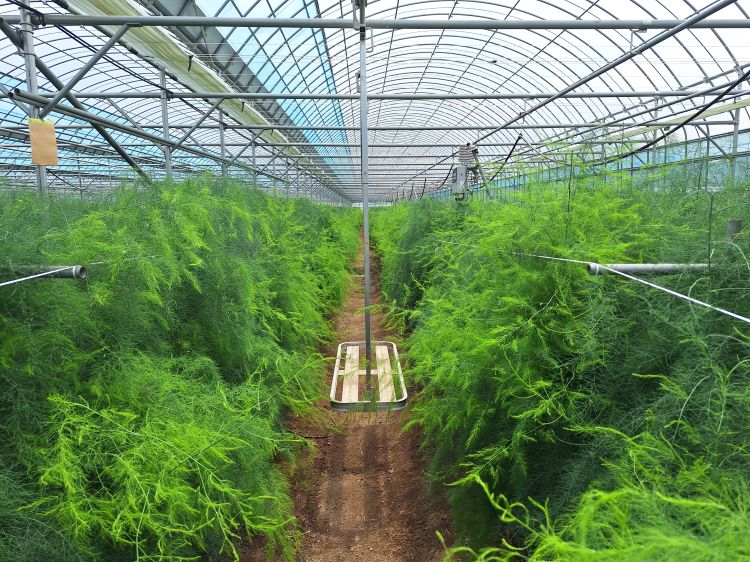
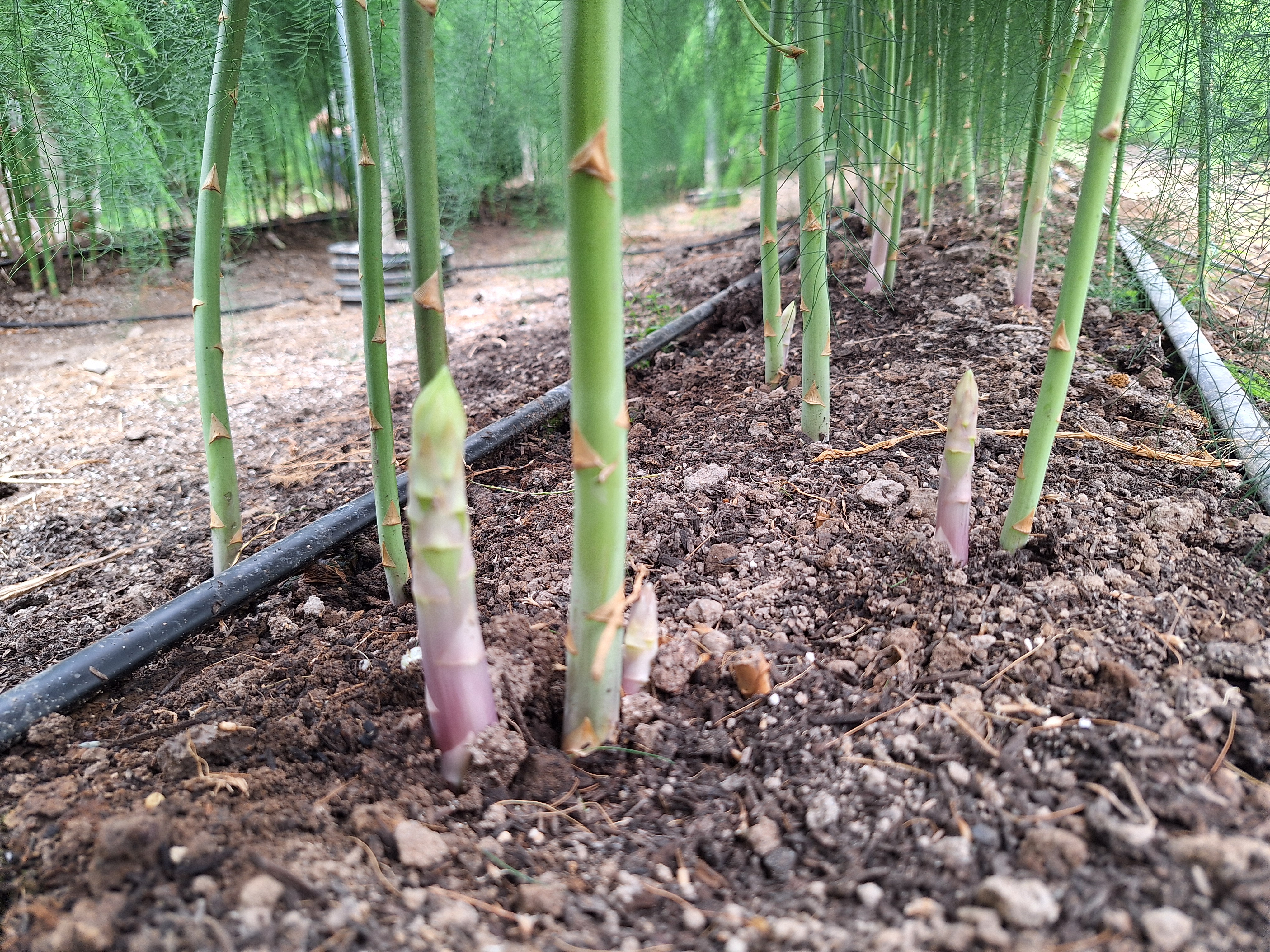
The other system is “mother fern” production, which is being used in Asian countries. Not new, but “new to us.” This labor-intensive approach includes a standard spring harvest, but also a second or even third period. After spring harvest, roughly eight to 10 shoots are let go to fern. The fern is trimmed to about 5 feet at the top, presumably because taller fern just shades the lower leaves. Shoots that come up after this are harvested continuously (picked from the base of the fern). Hedge trimmers are used between rows to allow workers to walk. Very labor-intensive!
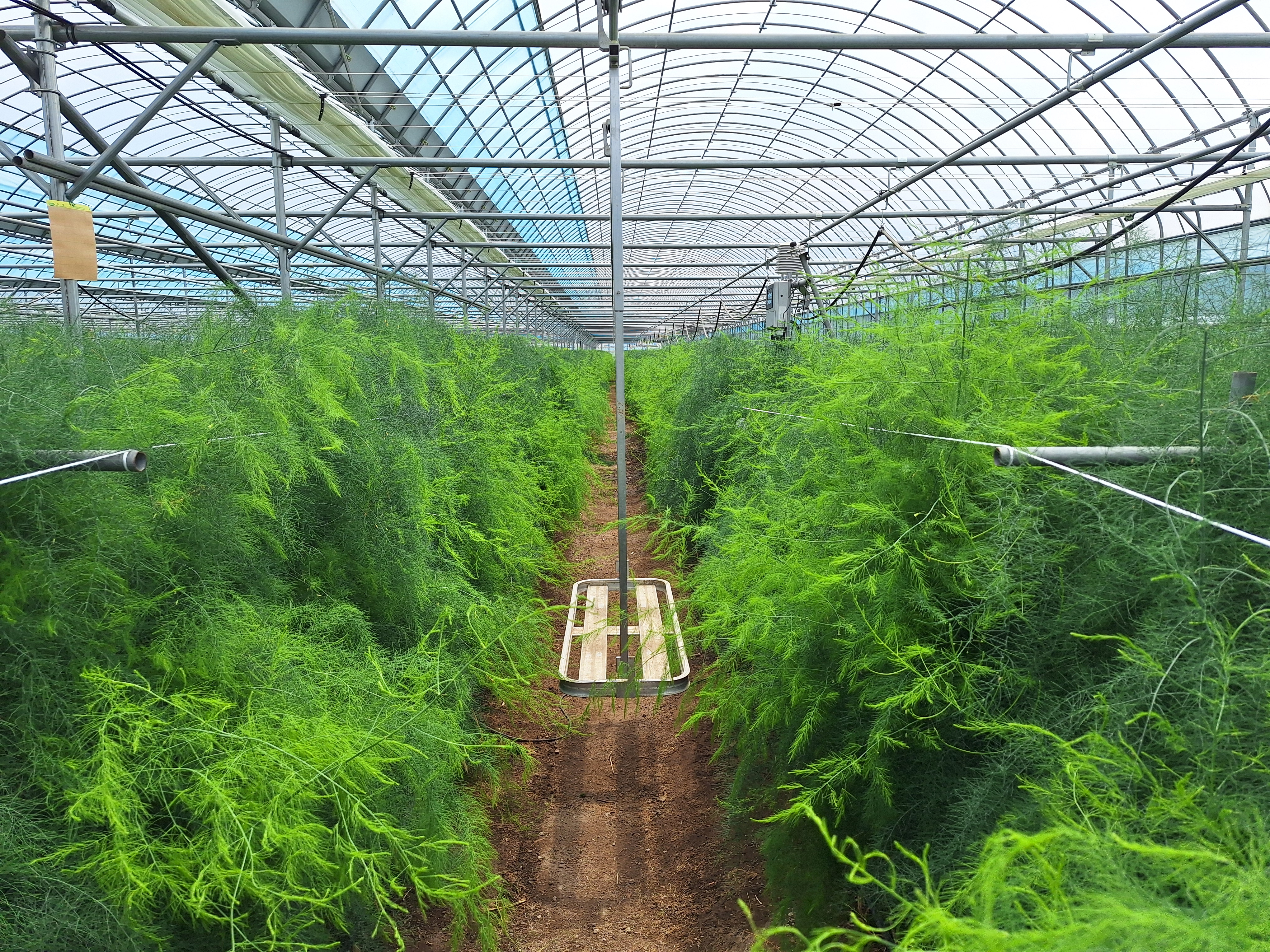
In addition, we had numerous informal conversations that yielded actionable intel that could serve as fodder for future research. We are excited to see what transpires. In this globally small industry, there is a real feeling amongst researchers that we need to stick together to make progress.
Beans and peas
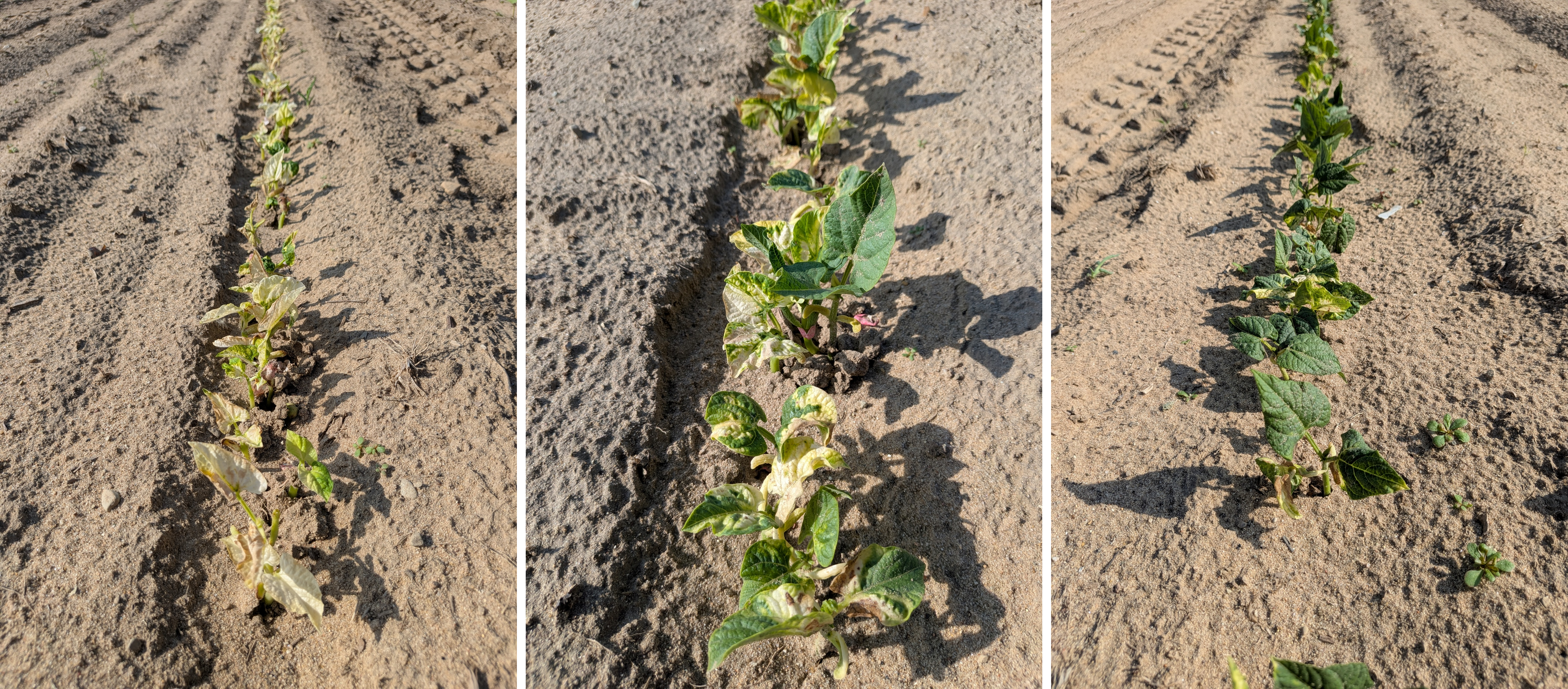
Snap beans and dry beans have a variable response to clomazone (Command), despite being on the label. Six varieties planted in the sandy soils at the Southwest Michigan Research and Extension Center were planted and sprayed with 6.4 fl oz/ac Command on June 16, after which ‘Caprice’ was late to emerge with a full stand, while ‘Bartram’ has not yet worked through the bleaching caused by clomazone. The variety ‘LaSalle’ experienced both a delayed emergence and also a uniform bleaching that it has not yet grown out of. Three experimental varieties showed bleaching initially, but are growing through it. The varieties ‘Capitano’, ‘Dulcina’, and ‘Dragon’s Tongue’ were completely unphased.
Carrots and celery
For celery, scouts reported sighting the first aphid colony of the year. Celery leaftier moths continue to be present. Caterpillars of this pest can become an issue in very hot weather, when they move down from the top leaves into hearts. Variegated cutworm moth captures were also high in some locations.
For carrots and celery, Phytoplasma (aster yellows) was detected in six of the last eight samples collected and tested. Two samples collected on June 22 were from fields approximately 2 miles apart. Note that the infectivity varied, 2.1% in one sample and 6.5% in the other.
Samples continue to be collected by MSU Extension and a scout and tested by MSU Plant & Pest Diagnostics. To receive this information as soon as it is available, sign up for aster leafhopper text alerts.
The percentage of aster leafhoppers in a sample testing positive for phytoplasma:
|
County |
Collection Date |
Infectivity (%) |
|---|---|---|
|
Muskegon |
June 25 |
6.5 |
|
Newaygo |
June 25 |
4.3 |
|
Lapeer |
June 23 |
0 |
|
Ottawa |
June 22 |
2.1 |
|
Ottawa |
June 22 |
6.5 |
|
Newaygo |
June 18 |
6.5 |
|
Oceana |
June 15 |
0 |
|
Lapeer |
June 15 |
6.5 |
Root crops
Potatoes are flowering. Some farms are bunching small carrots, radishes and beets.
Cucurbits
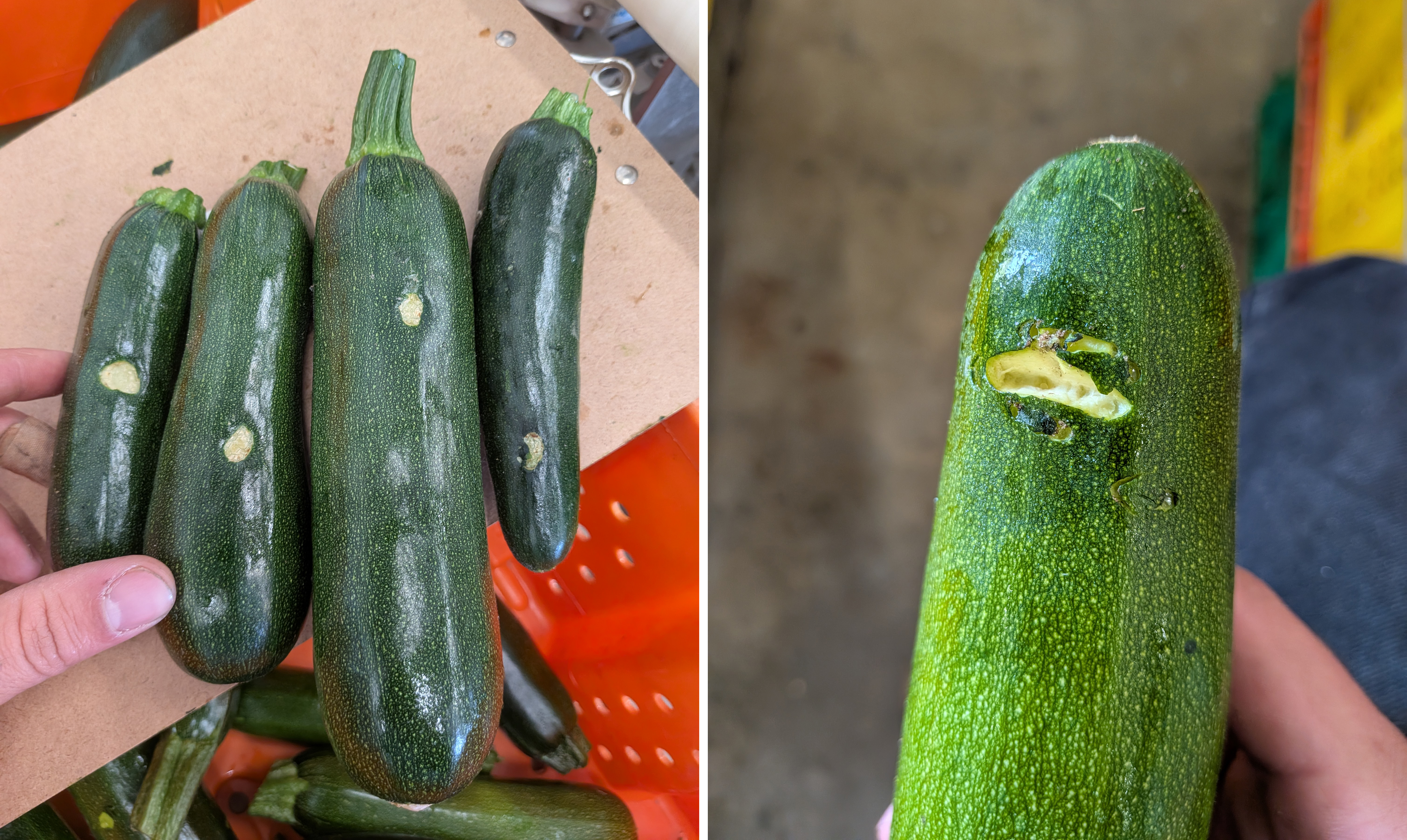
Cucurbit downy mildew spores continue to be captured across Michigan State University’s trap network. To date, all spores are clade 2, which affects cucumbers and melons. Clade 1, which affects squash, has not been detected (and only occurs some years in Michigan). Read this article for more information and a list of effective fungicides.
Brassicas and greens
Leafy greens and brassicas are cool-season crops by nature, and a heat dome like what we are facing can cause crop stress that can result in all sorts of unusual, unwanted phenotypes. Broccoli and cauliflower are particularly susceptible. These heading cole crops are harvested at a point where the flowers are nascent and undifferentiated. Heat stress can tell the plant to go full speed ahead with reproduction, which can result in bolting (going to seed). Other possible disorders can include:
- Riciness — the thousands of little flower buds that make up the nice “curd” or cauliflower head begin to differentiate, resulting in a far less palatable product.
- Brown bead — broccoli flower buds that compose the head die off en masse from the heat, leaving behind regions of brown florets on the head.
- Tip burn — cabbage, lettuce and other leafy vegetables are not immune to the consequences of heat stress. When it comes to tip burn, lack of calcium at growing points is really the culprit. Calcium needs water to move in the plant, and when plants are water stressed from high temperatures, calcium may not make it to the newest leaves, which results in dead tissue on the leaf margins. There may be adequate calcium in the soil, but it is just not reaching the growing leaves.
For more information, see the following sources:
Pseudomonas bacterial leaf spot has been reported in cilantro.
With the onset of high heat, thrips may start to make an appearance. Thrips feed by rasping away the outer layer of plant tissue after which they pierce the exposed area and ingest nutrients. This can show up as scarred areas on leaves. Learn more in the MSU Extension article “Hot, dry weather increases risk of spider mites and thrips in field-grown vegetables.”
Fruiting vegetables
High-tunnel tomato harvests are going strong. While the fruiting vegetables (tomato, pepper, eggplant, etc.) originate from tropical regions and thrive in the heat, excessively high temperatures can disrupt even them. Temperature in the 90s can cause issues like a reduction in photosynthesis as well as pollination issues. Tomatoes can drop flowers or produce pollen that is “tacky” and ineffective at high temperatures. Blossom end rot may be exacerbated by the effects of the heat on water use in the plant and therefore calcium movement. The risk of fruit sunscald may also increase.
Read more about the impacts of excessive heat on tomatoes in this University of Delaware Cooperative Extension article “Tomato Pollination and Excessive Heat.”
Garlic and onions
Growers are gearing up for garlic harvest in southern Michigan. For those who plan to keep garlic for extended storage and use, curing is an integral step. MSU Extension Bulletin E3371 - Organic Garlic Production has some guidelines on curing garlic, as well as numerous other aspects of growing the crop.
Garlic producers should be aware of potential impacts caused by garlic bloat nematode and white rot. Symptomatic plants can be submitted for diagnostic analysis. Additionally, those producing garlic for seed are encouraged to submit samples for preventive screening prior to sale. Samples should include 10 bulbs and, if possible, leave the roots attached.
Sweet corn
Harvest of early sweet corn will begin on some farms soon.
Corn earworm and western bean cutworm were present in low numbers in one west central location MSU Extension is monitoring. At captures of around one earworm moth per night, it is worth protecting silking corn, but tight spray intervals may not be warranted. Pyrethroids can be effective when captures are lower. Products containing chlorantraniliprole or spinetoram are preferred when captures increase.
Table 1. Corn earworm captures. Total in trap for week1 (avg # per night2).
|
Week |
Ottawa Co.4 |
|---|---|
|
June 28 |
15 (1.5) |
1Total number collected since last trap check; 2The total number divided by the number of nights since the last trap check; 3Cloth Heliothis traps track trends but catch less moths overall; 4Wire Harstack traps capture more moths.
Table 2. Western bean cutworm captures. Total in trap for week1 (avg # per night2).
|
Week |
Ottawa Co. |
|---|---|
|
June 28 |
2 (0.2) |
1Total number collected since last trap check; 2The total number divided by the number of nights since the last trap check.
Insect Forecast predicts a moderate risk of additional migration July 1–3. It will be worth checking traps next to silking corn the morning of July 4.
To our south, corn earworm was present but at low numbers in Ohio State University’s trapping network as of June 28. Western bean cutworm numbers were increasing, which is expected given the time of year.
Strawberries
Michigan State University Extension is planning a Strawberry Day on July 8 from 9:30 a.m. to 2 p.m., hosted by River Valley Farms and Corey Lake Orchards. Attendees will learn about renovation, agritourism and pest management in strawberries. Register to attend.
Strawberry Day agenda:
9:30–10 a.m. Gathering at River Valley Farms, coffee and donuts
10 a.m.–12 p.m. Field Day Experience
12–12:15 p.m. Travel to Corey Lake Orchards
12:15–1 p.m. Lunch at Corey Lake Orchards
1–2 p.m. Agritourism Tour
2 p.m. Closing and post-event networking social
For more information, contact Derek Plotkowski (plotkow5@msu.edu; 248-347-3860 ext. 202) or Cheyenne Sloan (sloanche@msu.edu; 269-657-8213).
Produce Food Safety On-Farm Readiness Reviews
Schedule an On-Farm Readiness Review (OFRR) today for a 2-hour educational visit that takes place during the harvest season and is meant to be casual and low stress! Everything discussed during an OFRR is confidential, and focused on ways a grower can reduce their own risks in relation to produce safety. There is no pressure to take our advice either, we are just here to support you in your produce safety efforts!
Events
- July 8, 2026: 2026 Strawberry Day – Three Rivers, MI
- July 21, 2026: Washtenaw TOPP Farm Tours – Whitmore Lake/Dexter/Willis, MI
- July 23, 2026: Beekeeping Workshop – Novi, MI
- July 25, 2026: Beekeeping Workshop - Lansing, MI
- July 30, 2026: Summer Irrigation Workshop - Hickory Corners, MI
- July 31, 2026: Berrien County Organic Agriculture: Tour 3 Value-Added & Agritourism Farms – Sodus/Buchanan/Three Oaks, MI
- August 6, 2026: 2026 Potato Field Day – Lakeview, MI
- August 11, 2026: West Michigan Organic Farm Tour: Explore Farm to Institution Markets from schools to hospitals – Muskegon/Whitehall, MI
- August 11, 2026: Michigan Agricultural Irrigation Water Use Efficiency Program - Lansing, MI
- August 11-12, 2026: Michigan AgroExpo – St. Johns, MI
- August 18, 2026: Northwest Michigan TOPP Field Day: Farming for People, Purpose, and Profit – Petoskey, MI
- August 20, 2026: Hillsdale Nutrient Management Field Day – Waldron, MI
- September 3, 2026: Cover Crop Workshop at SVREC- Frankenmuth, MI
- September 3, 2026: Fourth Annual KBS LTAR Field Day - Hickory Corners, MI
- August 28, 2026: Washtenaw Conservation District Field Day – Ann Arbor, MI
- September 9, 2026: Tillage & Soil Health Field Day – Monroe, MI
- September 10-11, 2026: Great Lakes Tek Flex – Benton Harbor, MI
- September 16, 2026: 2026 Midwest Mechanical Weed Control Weed Day – Benton Harbor, MI
- September 22-24, 2026: Farm Science Review 2026 – London, OH
- October 4-6, 2026: Northern Michigan Small Farm Conference – Bellaire, MI
- November 4-6, 2026: Michigan Agritourism 20th Anniversary Convention – Frankenmuth, MI
- December 8-10, 2026: Great Lakes Fruit, Vegetable, & Farm Market Expo – Grand Rapids, MI
This work is supported by the Crop Protection and Pest Management Program (grant no 2024-70006-43569) from the USDA National Institute of Food and Agriculture. Any opinions, findings, conclusions, or recommendations expressed in this publication are those of the author(s) and do not necessarily reflect the view of the U.S. Department of Agriculture.