Michigan vegetable crop report – July 22, 2026
 Print
Print Email
EmailThe smoke is gone, revealing sunny skies and progressing crops with summer opportunities and challenges.
Weather
The previous week saw temperatures 2-8 degrees above normal with little to no rain in central lower Michigan, to more than two inches in the north.
The smoke blocked the sun, and this changed sun-driven cycles in wind and relative humidity. Typically, sunshine reduces relative humidity as we progress towards noon and heats the air to make it windy. At Sparty’s house, there was moderate smoke, sunlight was reduced by 20%, and daily cycles did not change as much. To the north in Traverse City, there was 50% less sunshine and accordingly less variation in wind and relative humidity. In the eastern Upper Peninsula, sun was reduced by 80%. This completely wiped out the typical daily cycle in wind and relative humidity. They flatlined and did not change during the day. The weather pattern has shifted so smoke is no longer concentrated over us, but it could happen again if weather conditions are right.
This week’s forecast:
- Fair and dry Wednesday through Friday with a gradual warming trend. Scattered showers possible in the north Saturday, spreading south into the lower peninsula Sunday and Monday.
- Minimal rainfall totals except for limited areas.
- High temperatures generally from the low-mid 70s Wednesday, warming to the low-mid 80s this weekend. Low temperatures in the upper 40s in the north to mid-50s S Thursday, increasing to the mid-upper 50s this weekend and the upper 50s to low 60s early next week.
- Medium range and new long lead outlooks generally call for near to above normal mean temperatures and near to below normal precipitation totals.
Vegetable Cover Crop Selector Tool
The Midwest Cover Crop Council website recently updated an online tool for selecting cover crops. Read more about this new resource in the following MSU Extension article:
https://www.canr.msu.edu/news/cover_crop_selection_tool_available_for_michigan_vegetable_farmers
Cyclospora Update
Find webinars and resources that provide an overview of Cyclospora, practical guidance to help prevent contamination and protect your crops throughout the growing season, and the latest updates on the current outbreak.
This video covers the basics of Cyclospora, including its biology, how it spreads, and why it is difficult to detect and remove from produce: https://youtu.be/gKMR4Y2WA6Q.
This video explains how Cyclospora gets on produce, discusses strategies to reduce contamination risks, and reviews resources that can help strengthen your on-farm food safety practices: https://youtu.be/BkzYWFSZUUg.
Crop updates
Asparagus
Between 6-14 Disease Severity values accumulated between July 14-20 at six Oceana County sensors MSU Extension is monitoring. Sensors have been running since the start of July at four locations. A fungicide application would have been due Monday at these locations if nothing had been applied since July 9-12.
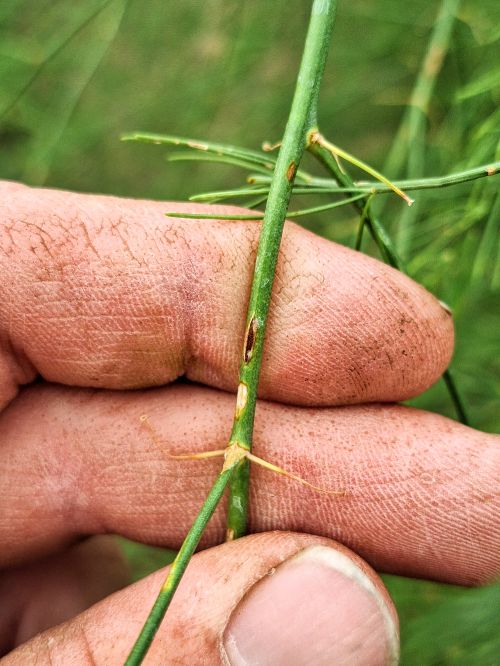
Rust uredospore lesions (see lead photo) were continuing to develop in a rust-affected field that had ferned out early, but adjacent full-season fields had healthy looking fern. In a situation like this, consider being intentional about protecting fields next to the source of inoculum. Tight, weekly intervals including an alternation of azoxystrobin and chlorothalonil, with tebuconazole tank-mixed at labeled intervals, could help. In fields with an existing infection, fungicides will help protect tissue that is still green, which is important, but will not eliminate the problem.
Japanese beetles are out and about clustered along field edges. Acetamiprid, carbaryl and permethrin are all labeled. The challenge is there are many out on the landscape, so fields can be recolonized after existing ones die. Damage from asparagus beetle larvae was also visible where this pest was active.
Carrots and celery
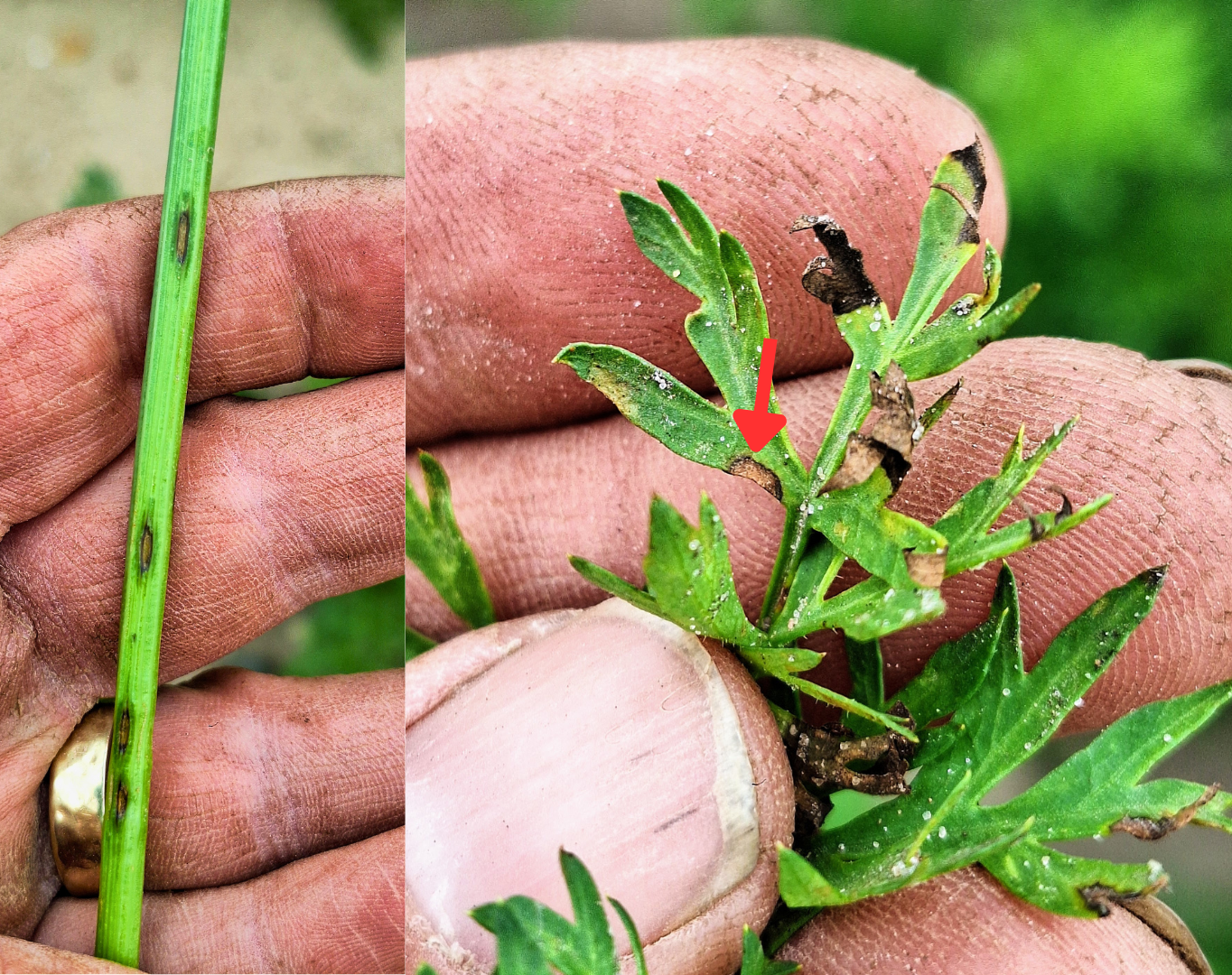
For carrots, between 10-11 Disease Severity Values accumulated from July 14-20 in two Oceana County carrot fields MSU Extension is monitoring. Possible symptoms of Alternaria were visible in some West Central carrots this past Monday, including petiole lesions along with dead, brown lesions that follow the curve of older leaves. Even though it’s been dry, there were some extended dew periods during the heatwave we just passed through.
Highly-effective fungicides that include FRAC 7 modes of action can be applied early in a fungicide program. These include Merivon (FRAC 7,11) Luna Flex (FRAC 3,7) and Luna Sensation (FRAC 7,11). Tank mixing FRAC 7 fungicides with chlorothalonil can slow resistance to this highly effective group. This group can then be included as part of a rotation during the spray season. Rotational partners could include protectants like chlorothalonil as well as the strobilurins (e.g., azoxystrobin, in Quadris and generics, FRAC 11). Just be aware that Luna Sensation and Merivon also contain a FRAC 11 fungicide.
For celery, as onion fields mature and plants begin to lodge, onion thrips may move into nearby celery fields. It’s important to scout celery, paying particular attention to field edges next to onions. If treatment is needed, rotate among insecticides with different modes of action to help preserve their effectiveness and slow the development of resistance. Read more in this MSU Extension article to find specific recommendations.
For carrots and celery, leafhopper samples continue to be collected by MSU Extension and a scout and tested by MSU Plant and Pest Diagnostics. Results for each of the samples are listed below. To receive this information as soon as it is available, sign up for aster leafhopper text alerts.
Phytoplasma infectivity of aster leafhoppers:
|
County |
Collection Date |
Infectivity (%) |
|---|---|---|
|
Oceana |
July 20 |
2.9 |
|
Van Buren |
July 16 |
0 |
|
Ottawa |
July 13 |
4.2 |
|
Oceana |
July 13 |
4.3 |
|
Allegan |
July 12 |
0 |
|
Muskegon |
July 9 |
4.3 |
|
Newaygo |
July 9 |
5.9 |
|
Lapeer |
July 7 |
4.2 |
Cucurbits
Bacterial leaf spots are causing disease on several cucurbit crops (zucchini, hard squash) in various areas. So far, symptoms have been detected on the foliage, but as the season progresses, infections on fruit are also possible. Symptoms of angular leaf spot are in keeping with the common name of this disease, lesions are temporarily bordered by leaf veins creating lesions with angular borders. Other bacterial pathogens create necrotic lesions with more rounded borders and can easily be mistaken for symptoms of fungal leaf spots.
Cucurbit downy mildew spores continue to be captured across Michigan State University’s trap network. To date, all spores are clade 2, which affects cucumbers and melons. Clade 1, which affects pumpkins and squash, has not been detected (and only occurs some years in Michigan). Read this article for more information and a list of effective fungicides. As always, you can track the spread of downy mildew with the Cucurbit Downy Mildew forecasting website. Downy mildew disease on cucumbers in the field has not been verified at this time. As the temperatures moderate, this could change. Fields that are organic or not receiving fungicide applications should be monitored for symptoms.
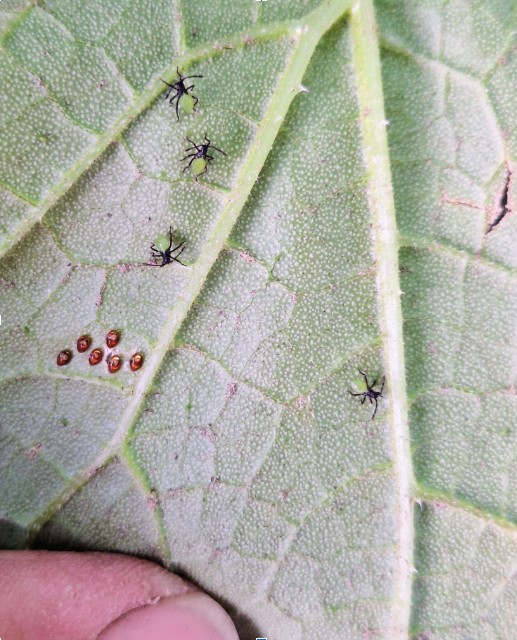
Squash bug eggs have been present for at least a week in an MSU Extension pumpkin trial, but nymphs were just spotted this week. This is a good time to apply insecticide as they are most vulnerable when they are small and still grouped around the egg masses. There are some more selective products available with lower risk to pollinators.
Brassicas and greens
Despite the recent hot, dry weather, soft rot pathogens (Pectobacterium sp.) have caused some recent losses in cabbage. The risk of bacterial soft rots is increased when fields are irrigated with surface water (streams, ponds, etc.). Some damping-off symptoms have been observed in newer plantings.
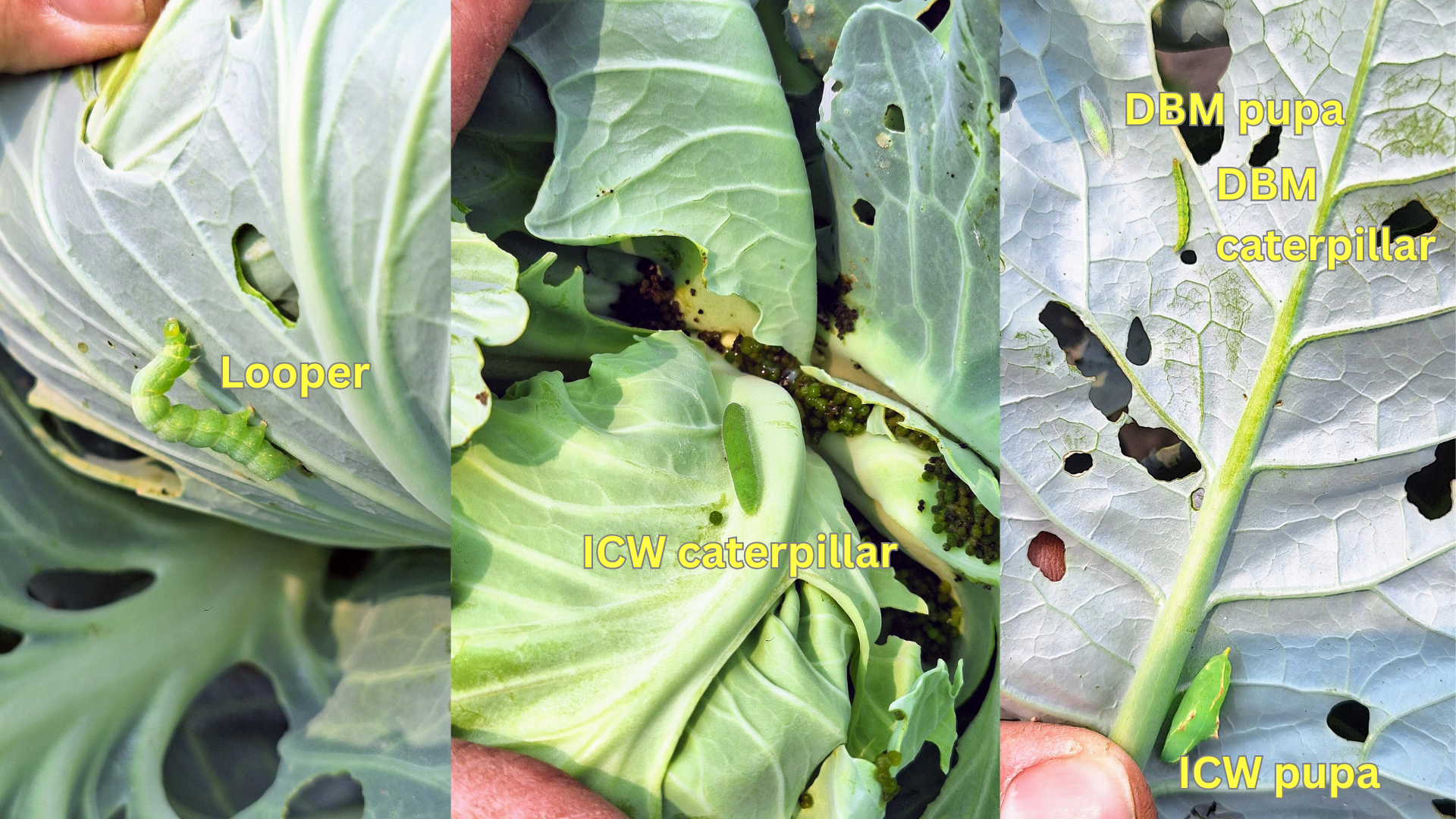
All three species of cabbage-feeding caterpillars were visible on plants in West Central Michigan this week and have their own personality. Imported cabbage worms are larvae of the white butterflies that can be seen everywhere. Cabbage loopers are larvae of moths you won’t see unless you trap for them. Diamondback moths are visible as small, skinny moths along with their wiggly larvae. Imported cabbage worms produce yucky frass that can accumulate in the center of plants. A few imported cabbage worms or loopers can do a lot of damage when they get big and brassicas are heading, while diamondback moth caterpillars take a tag team approach, high numbers can defoliate plants. All can be contaminants. Cabbage looper and imported cabbage worm are controlled by most conventional insecticides including pyrethroids, while diamondback moth may be resistant to this class. For organics, Bt is most helpful for small caterpillars, while spinosad may help especially with big caterpillars or large populations. Here is a link to the “caterpillars in cole crops” MSU factsheet.
Fruiting vegetables
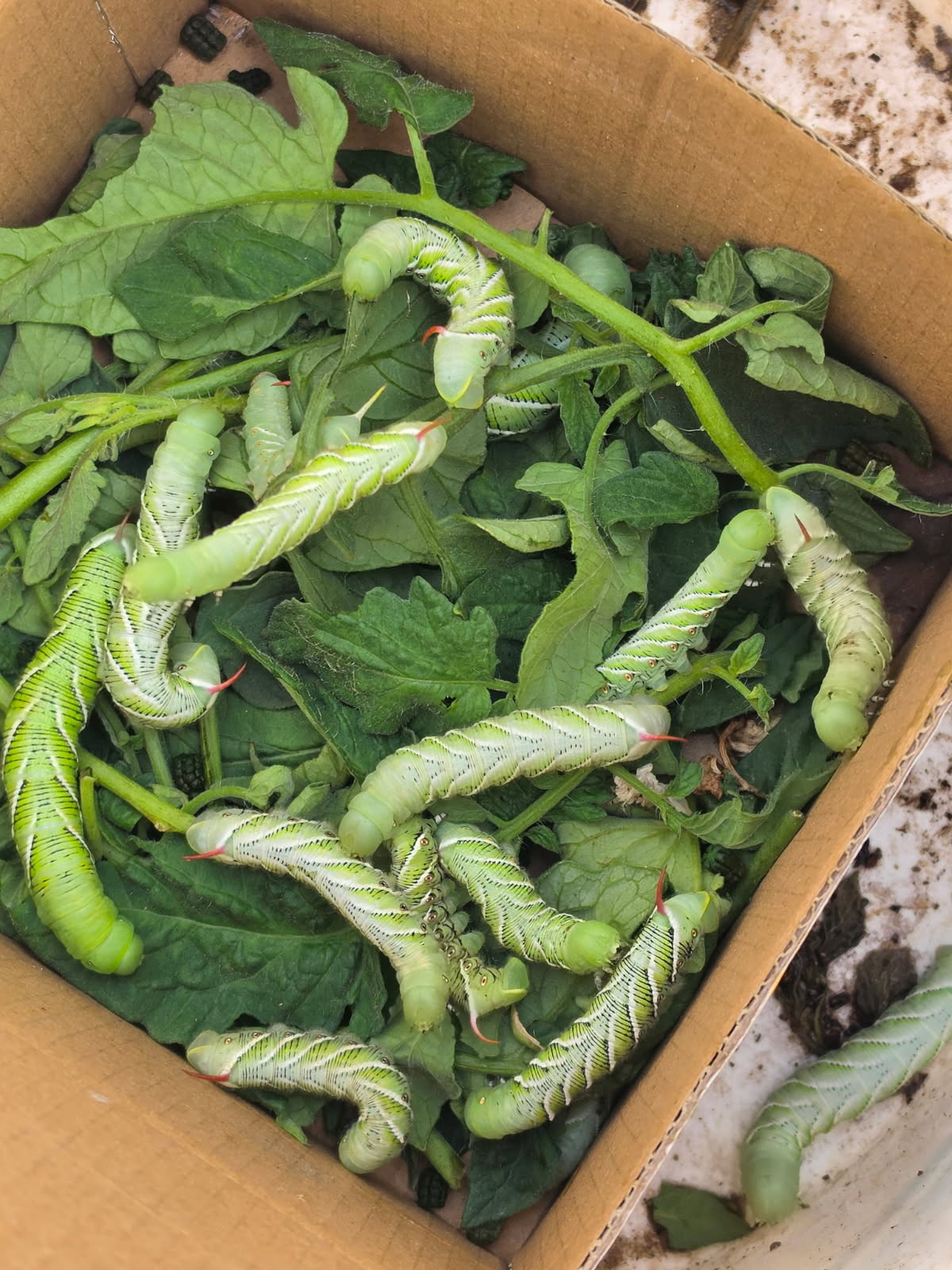
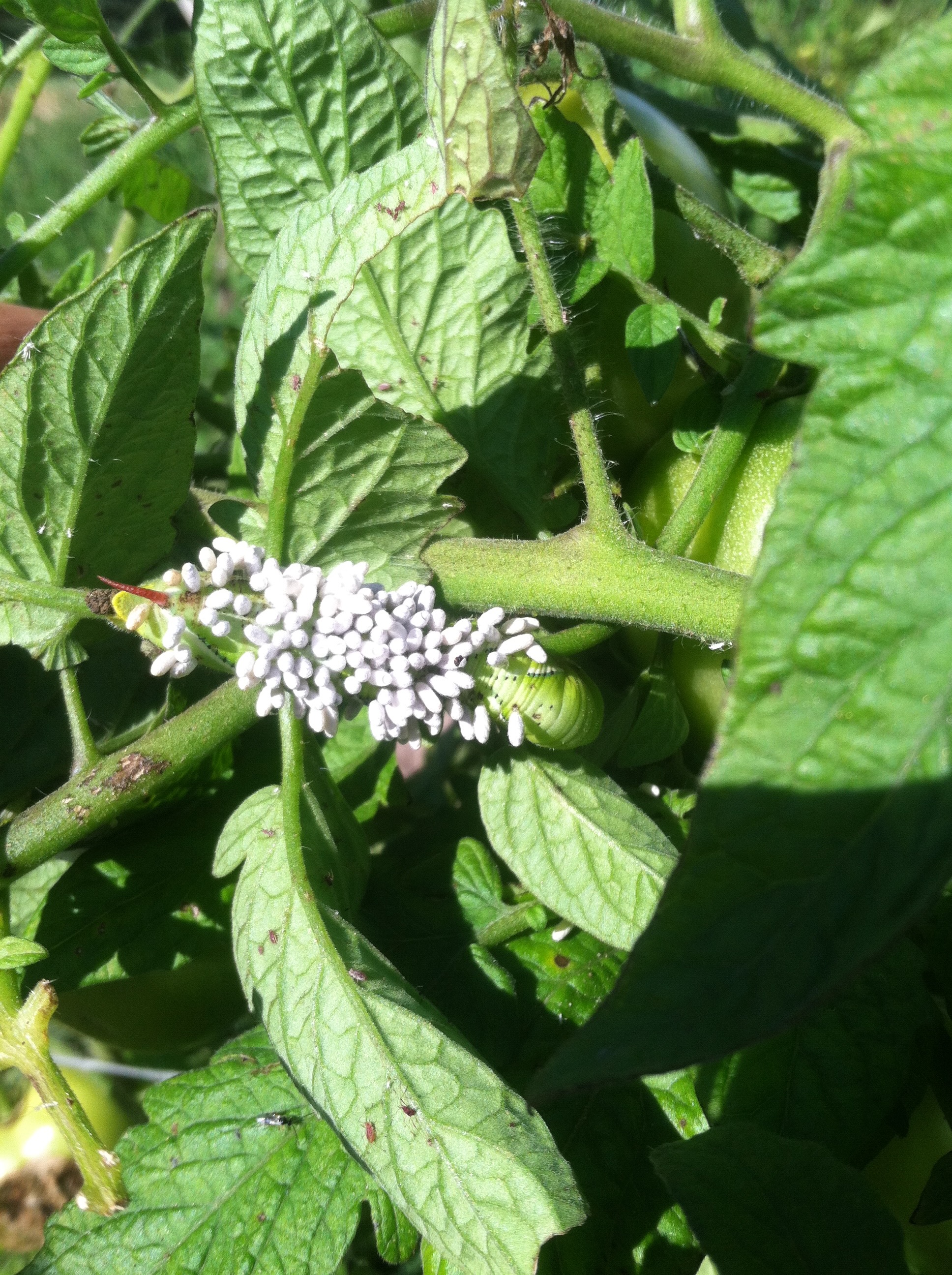
Tomato and tobacco hornworms are among the largest and most recognizable caterpillar pests of tomatoes in Michigan, and they can also feed on peppers, potatoes, and eggplants. Although the caterpillars are well camouflaged, they can quickly defoliate plants and may also feed on green fruit, making regular scouting important. Look for large green caterpillars, dark green or black grenade-shaped droppings, and leaf feeding in the upper canopy. Small larvae are much easier to control than large ones, so early detection is key. If you find hornworms covered with white, rice-like cocoons, leave them in place — they have been parasitized by beneficial wasps that help naturally suppress hornworm populations. Learn more about tomato and tobacco hornworms from an MSU Extension article and this article explains the biology of the parasitoid wasps.
Garlic and onions
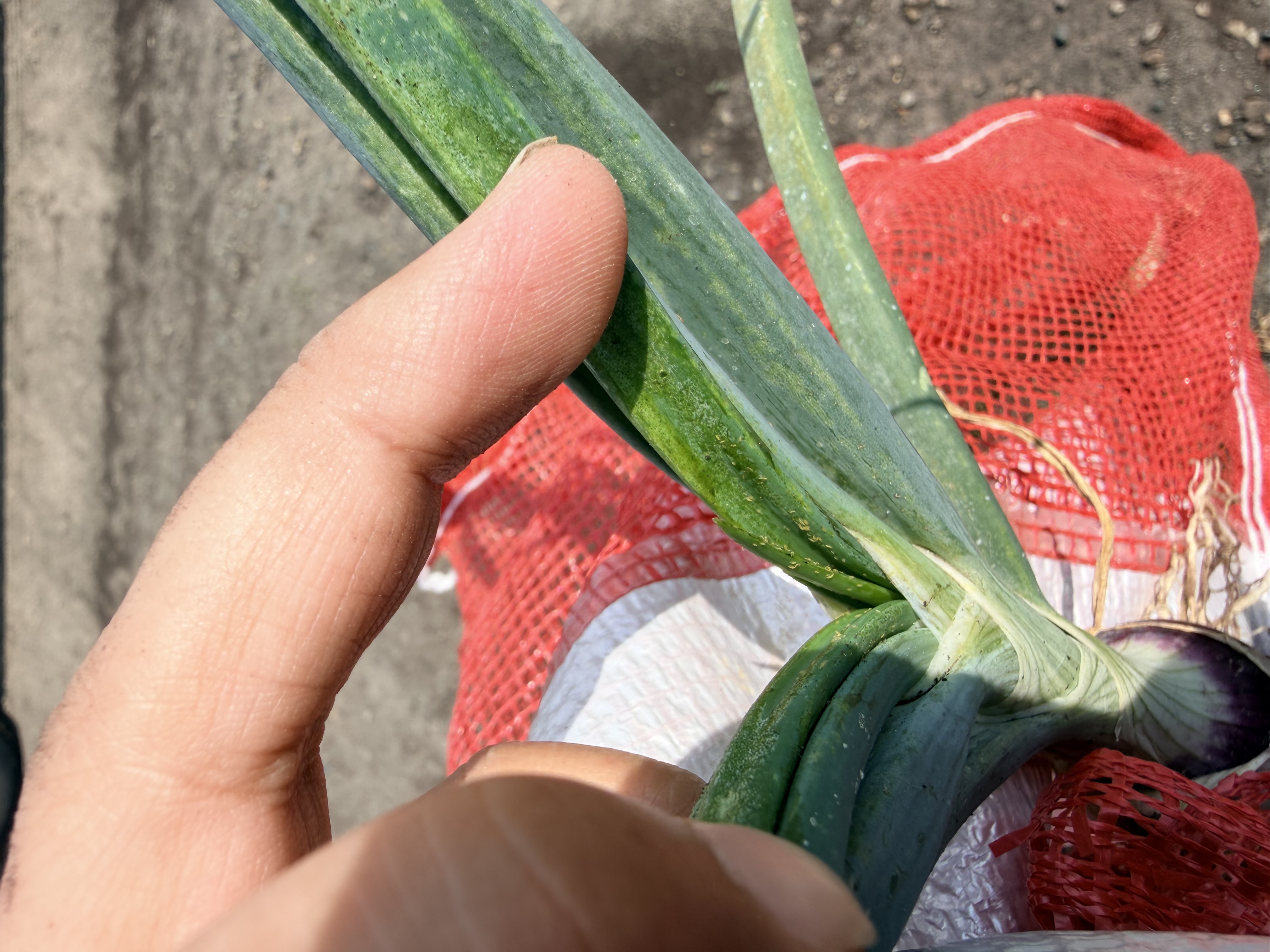
A new insecticide, Vertento, is available for Michigan onions this year. Vertento offers a new mode of action (Group 30) for onion thrips management and gives growers an alternative to repeated use of Radiant. Onion thrips populations are typically highest at this point in the season, and Radiant or Vertento may be appropriate depending on pest pressure and the products used earlier in the spray rotation. Continue scouting fields weekly and base treatment decisions on the average number of thrips per leaf. Learn more in MSU Extension’s updated onion thrips management guidelines.
Root Crops
Potato beetle larvae and adults can still be found. Symptoms on potatoes that resemble hopperburn have been reported. Hopperburn refers to the marginal necrosis of leaves caused by potato leafhopper feeding. Severe levels of feeding can significantly impact plantings. Certain varieties are known to have more resistance to hopperburn than others. Read more in this article from the Maine Organic Farmers and Gardeners Association.
Sweet corn
Sweet corn harvest continues. Bird damage has been reported as a significant issue. Some sunscald has been found on sweet corn husks as a result of recent hot days.
For corn earworm, diamide–pyrethroid mixtures, such as Elevest and Besiege, provide excellent caterpillar control in sweet corn. Diamide-only products are also effective, and include Coragen and Vantacor. The spinosyn spinetoram-in Radiant-can also be effective. Among pyrethroids, there are a variety that can help provide control, though in some trials Hero showed a slight edge. In general, pyrethroids may be helpful when populations are lower (e.g., this time of year), but products including a diamide or spinetoram can be helpful when populations increase (typically August/September).
Corn earworm was present at modest numbers at traps MSU Extension and partner farms are monitoring. Likewise, to our south, corn earworm was present at low numbers in Ohio State University’s trapping network, as of July 19. Insect Forecast predicts little to no risk of additional corn earworm migration over the next five days.
Corn earworm is present at modest numbers at traps MSU Extension is monitoring.
Table 1. Corn earworm captures. Total in trap for week1 (avg # per night2).
| Week | Ottawa Co.4 | Allegan Co.4 | Oceana Co.4 | Washtenaw Co.3 | Monroe Co.3 | Saginaw Co.3 | Lapeer Co.3 | Genesee Co.3 | Midland Co.3 |
|---|---|---|---|---|---|---|---|---|---|
| June 28 | 15 (1.5) | - | - | - | - | - | - | - | |
| July 5 | 15 (1.5) | 0 | - | - | - | - | - | - | |
| July 14 | 15 (1.9) | 5 (0.8) | 0 | - | 2 (0.2) | 6 (0.8) | 1 (0.1) | - | |
| July 21 | - | 19 (2.7) | 8 (1.1) | 0 | 0 | 0 | 0 | 0 | 1 (0.1) |
1Total number collected since last trap check; 2The total number divided by the number of nights since the last trap check; 3Cloth Heliothis traps track trends but catch less moths overall; 4Wire Harstack traps capture more moths.
Western bean cutworm numbers were increasing at two locations. Scouts detected western bean cutworm egg masses in one location, larvae are likely just hatching. Corn that is about to tassel right now (you can feel the tassel in the whorl) is the best place to look. Learn how to scout for western bean cutworm here. The main risk window not covered by corn earworm sprays would be between tassel emergence and silking.
Table 2. Western bean cutworm captures. Total in trap for week1 (avg # per night2).
|
Week |
Ottawa Co. |
Oceana Co. |
Washtenaw Co. |
Monroe Co. |
|---|---|---|---|---|
|
June 28 |
2 (0.2) |
- |
- |
- |
|
July 5 |
18 (1.8) |
3 (0.01) |
- |
- |
|
July 14 |
- |
22 (0.8) |
16 (4) |
- |
|
July 21 |
- |
44 (6.3) |
6 (0.9) |
0 |
1Total number collected since last trap check; 2The total number divided by the number of nights since the last trap check.
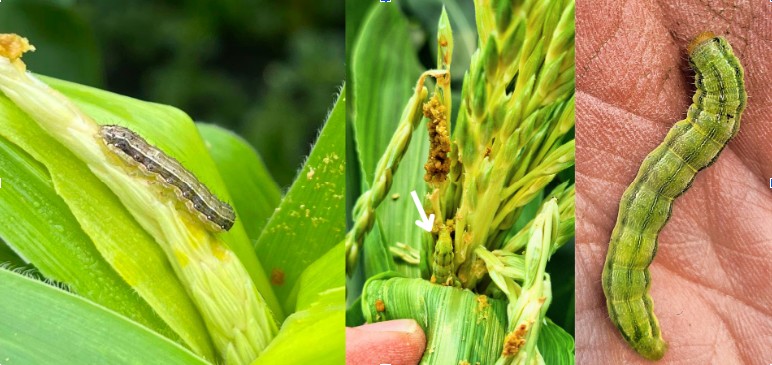
There are some weird things happening in sweet corn whorls and tassels this year! A west Michigan scout and MSU Extension educator found what may be corn earworm larvae feeding in whorls and tassels. This caterpillar is very hairy compared to other species, stripey, and variable in color (brown, yellow, pink, green). This is a nice resource for learning to ID some of the main corn caterpillars.
Produce Food Safety On-Farm Readiness Reviews
Schedule an On-Farm Readiness Review (OFRR) today for a 2-hour educational visit that takes place during the harvest season and is meant to be casual and low stress! Everything discussed during an OFRR is confidential, and focused on ways a grower can reduce their own risks in relation to produce safety. There is no pressure to take our advice either, we are just here to support you in your produce safety efforts!
Events
- July 23, 2026: Beekeeping Workshop – Novi, MI
- July 25, 2026: Beekeeping Workshop - Lansing, MI
- July 30, 2026: Summer Irrigation Workshop - Hickory Corners, MI
- July 31, 2026: Berrien County Organic Agriculture: Tour 3 Value-Added & Agritourism Farms – Sodus/Buchanan/Three Oaks, MI
- August 6, 2026: 2026 Potato Field Day – Lakeview, MI
- August 11, 2026: West Michigan Organic Farm Tour: Explore Farm to Institution Markets from schools to hospitals – Muskegon/Whitehall, MI
- August 11, 2026: Michigan Agricultural Irrigation Water Use Efficiency Program - Lansing, MI
- August 11-12, 2026: Michigan AgroExpo – St. Johns, MI
- August 12, 2026: 30th Annual Center for Excellence Field Day – Clayton, MI
- August 13, 2026: Farming For the Future Field Day – Hart, MI
- August 18, 2026: Northwest Michigan TOPP Field Day: Farming for People, Purpose, and Profit – Petoskey, MI
- August 20, 2026: Hillsdale Nutrient Management Field Day – Waldron, MI
- August 28, 2026: Washtenaw Conservation District Field Day – Ann Arbor, MI
- September 3, 2026: Cover Crop Workshop at SVREC- Frankenmuth, MI
- September 3, 2026: Fourth Annual KBS LTAR Field Day - Hickory Corners, MI
- September 9, 2026: Tillage & Soil Health Field Day – Monroe, MI
- September 10-11, 2026: Great Lakes Tek Flex – Benton Harbor, MI
- September 16, 2026: 2026 Midwest Mechanical Weed Control Weed Day – Benton Harbor, MI
- September 22-24, 2026: Farm Science Review 2026 – London, OH
- October 4-6, 2026: Northern Michigan Small Farm Conference – Bellaire, MI
- November 4-6, 2026: Michigan Agritourism 20th Anniversary Convention – Frankenmuth, MI
- December 8-10, 2026: Great Lakes Fruit, Vegetable, & Farm Market Expo – Grand Rapids, MI
This work is supported by the Crop Protection and Pest Management Program (grant no 2024-70006-43569) from the USDA National Institute of Food and Agriculture. Any opinions, findings, conclusions, or recommendations expressed in this publication are those of the author(s) and do not necessarily reflect the view of the U.S. Department of Agriculture.