Michigan vegetable crop report – July 29, 2026
 Print
Print Email
EmailWarm, dry weather continues as summer harvest expands.
For the past week, mean temperatures were 2-6 degrees below normal for most of the state with some significant rainfall in the northeast and southwestern Lower Peninsula, but other spots left behind. The central lower remains especially dry.
Looking back at the past two months, precipitation has ranged from 50-200% of normal across the state, with a wet tip but dry palm of the mitten. Grand Rapids is about a month’s worth of rain short, typifying conditions in the central lower.
This week’s forecast calls for:
- Fair, dry and gradually warmer Wednesday, July 29, and Thursday. Scattered showers and thunderstorms possible northwest Friday spreading southeast into lower Michigan Saturday. Fair, dry and cooler early next week.
- Precipitation of less than 0.25-0.5 inch for the next week, with most falling over the weekend.
- High temperatures generally from the upper 70s north to low 80s south Wednesday warming to the mid-upper 80s by Friday then cooling back to the upper 70s to low 80s again by early next week. Low temperatures in the low 50s north to upper 50s south Thursday gradually warming to the low-mid 60s by Saturday and then falling back to the 50s to low 60s by early next week.
- Medium range guidance suggests a return of near to above normal mean temperatures into mid-August. Precipitation totals are expected to range from normal to above normal levels.
Crop updates
Asparagus
Between 5-11 disease severity values accumulated between July 21-27 at six Oceana County sensors Michigan State University Extension is monitoring. A fungicide application would have been due Monday, July 27, at these locations if nothing had been applied since July 14-16.
Carrots and celery
For celery, anthracnose is present in some locations. An alternation of Merivon with Bravo + Tilt could be helpful if growers want to target this pathogen. Scouts report elevated numbers of variegated cutworm in traps over the past week, and celery leaftier had been causing some issues. Aphid colonies were present at one location last week, but populations have been slower growing so far this year.
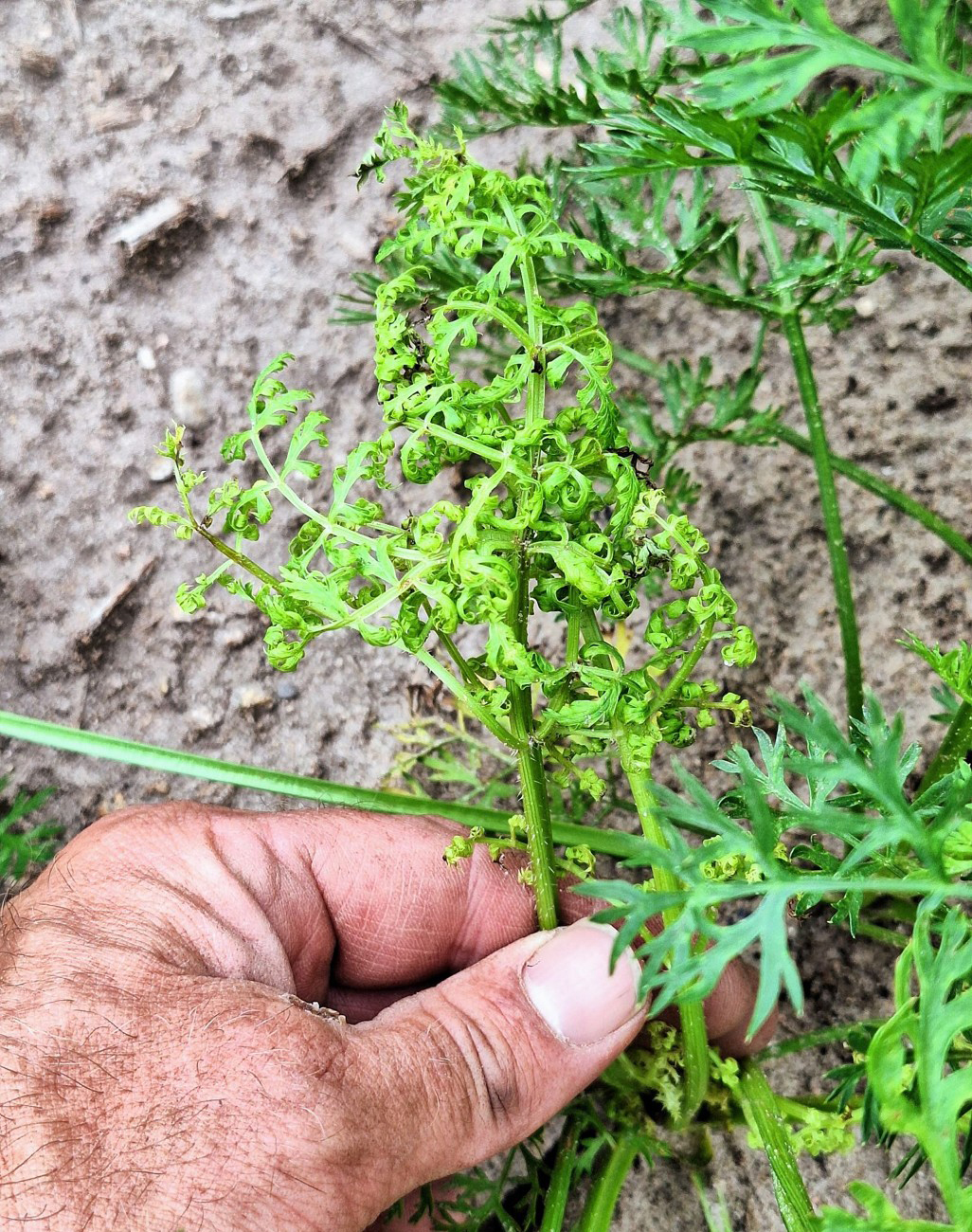
For carrots, foliage can become bronzed/reddish for a variety of reasons. One reason can be aster yellows. If it is aster yellows, the new growth in the center is often distorted, and roots can be hairy. Scattered symptoms are visible in carrot fields now, but that is not uncommon this time of year.
For carrots and celery, leafhopper samples continue to be collected weekly by MSU Extension educators and a scout and tested by MSU Plant & Pest Diagnostics. Results for each of the samples are listed below. To receive this information as soon as it is available, sign up for aster leafhopper text alerts.
Phytoplasma infectivity of aster leafhoppers:
|
County |
Collection Date |
Infectivity (%) |
|---|---|---|
|
Newaygo |
July 23 |
4.2 |
|
Lapeer |
July 21 |
0 |
|
Oceana |
July 20 |
2.9 |
|
Van Buren |
July 16 |
0 |
|
Ottawa |
July 13 |
4.2 |
|
Oceana |
July 13 |
4.3 |
|
Allegan |
July 12 |
0 |
Cucurbits
Melons are being harvested. Large-scale cucumber fields are being machine harvested. Squash bug egg masses are still being found. The threshold for treatment on pumpkins is one egg mass per plant. Read more about it in the MSU Extension article “Squash bugs as pests of cucurbits in Michigan”. One question is whether neem is effective on squash bugs. The short answer is it does not tend to work well. Check out the recent MSU Extension article “Managing cucumber beetles and squash bugs at the same time” for a list of recommended insecticides.
Cucurbit downy mildew spores continue to be captured across Michigan State University’s trap network. To date, all spores are clade 2, which affects cucumbers and melons. Clade 1, which affects pumpkins and squash, has not been detected (and only occurs some years in Michigan). Read this article for more information and a list of effective fungicides. As always, you can track the spread of downy mildew with the Cucurbit Downy Mildew forecasting website. Downy mildew disease on cucumbers in the field has not been verified at this time. As the temperatures moderate, this could change. Fields that are organic or not receiving fungicide applications should be monitored for symptoms.
The heat wave from last week appears to be affecting flower sex ratios in squash across the state with some fields and some varieties less affected than others. Where male flowers are lacking, growers are finding more aborted fruits from female flowers. Where female flowers are fewer, there is nothing for male flowers to pollinate and so fewer fruit can be found.
Fruiting vegetables
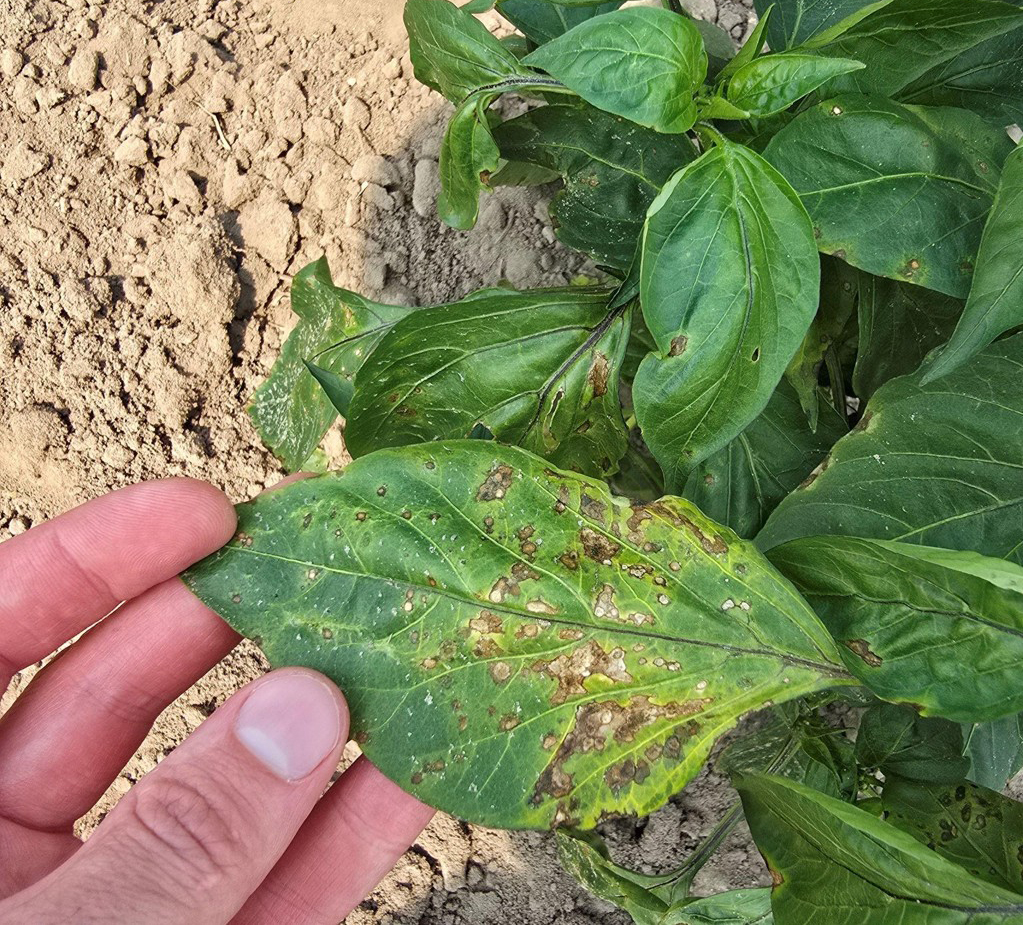
Bacterial spot (Xanthomonas) has been detected in peppers. Starting with quality seed, practicing crop rotation, and practicing good sanitation can all help prevent this pathogen. Hot water seed treatment to disinfect seed prior to planting is another option for reducing the incidence of this seed-borne pathogen. Read more about bacterial spot in this article from University of Minnesota Extension.
Broad mite damage was visible in greenhouse peppers at one location last week. These tiny mites are hard to spot without magnification so sometimes distorted foliage gets blamed on other things. Check out this article for a list of miticides that include broad mites on their label.
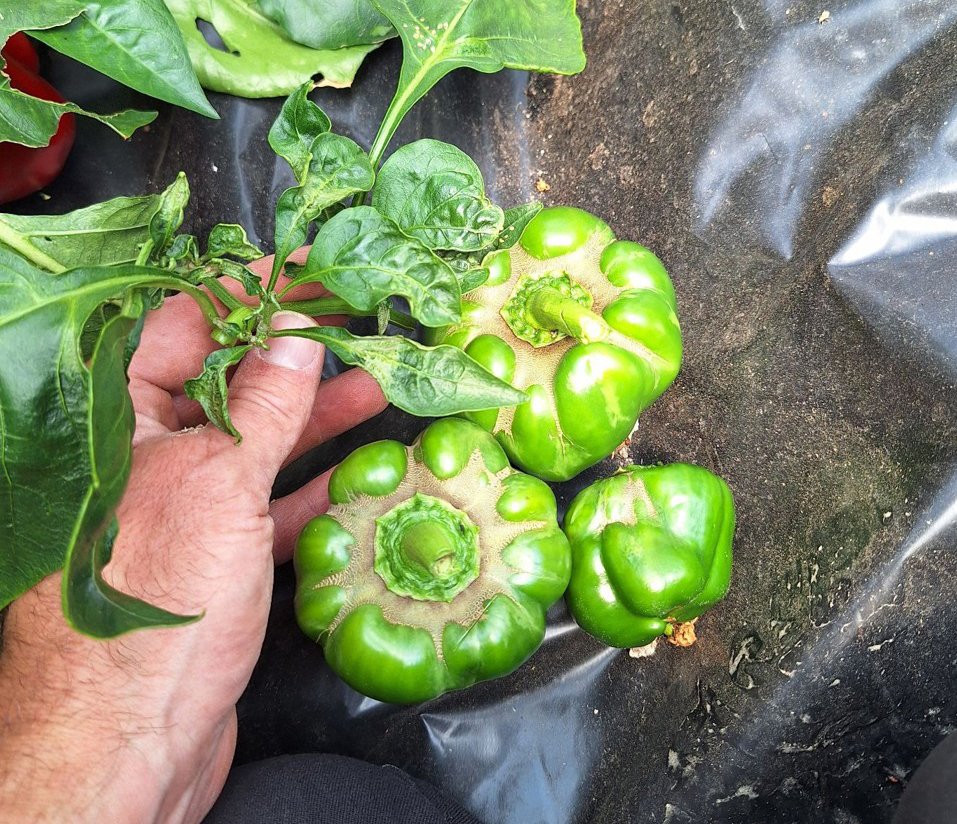
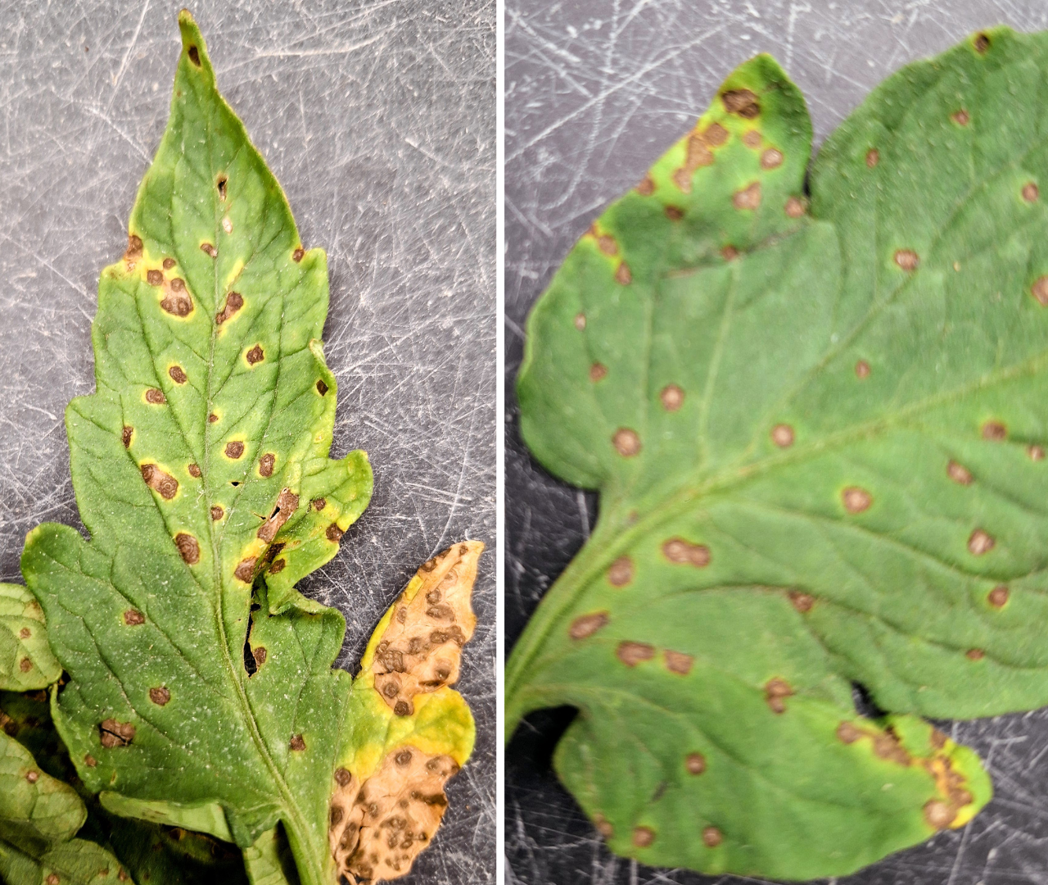
Hail damage has been reported on peppers and tomatoes, among other vegetable crops. Early blight has been reported in tomatoes. Septoria has also been reported. Septoria is a fungal pathogen, lesions produced on tomatoes are circular and typically have lighter colored centers (tan). With a hand lens small, dark spots may be seen in the centers of the lesions, these are pycnidia, the structures in which spores are formed. Note that lesions caused by Septoria are difficult to differentiate from those caused by bacterial pathogens.
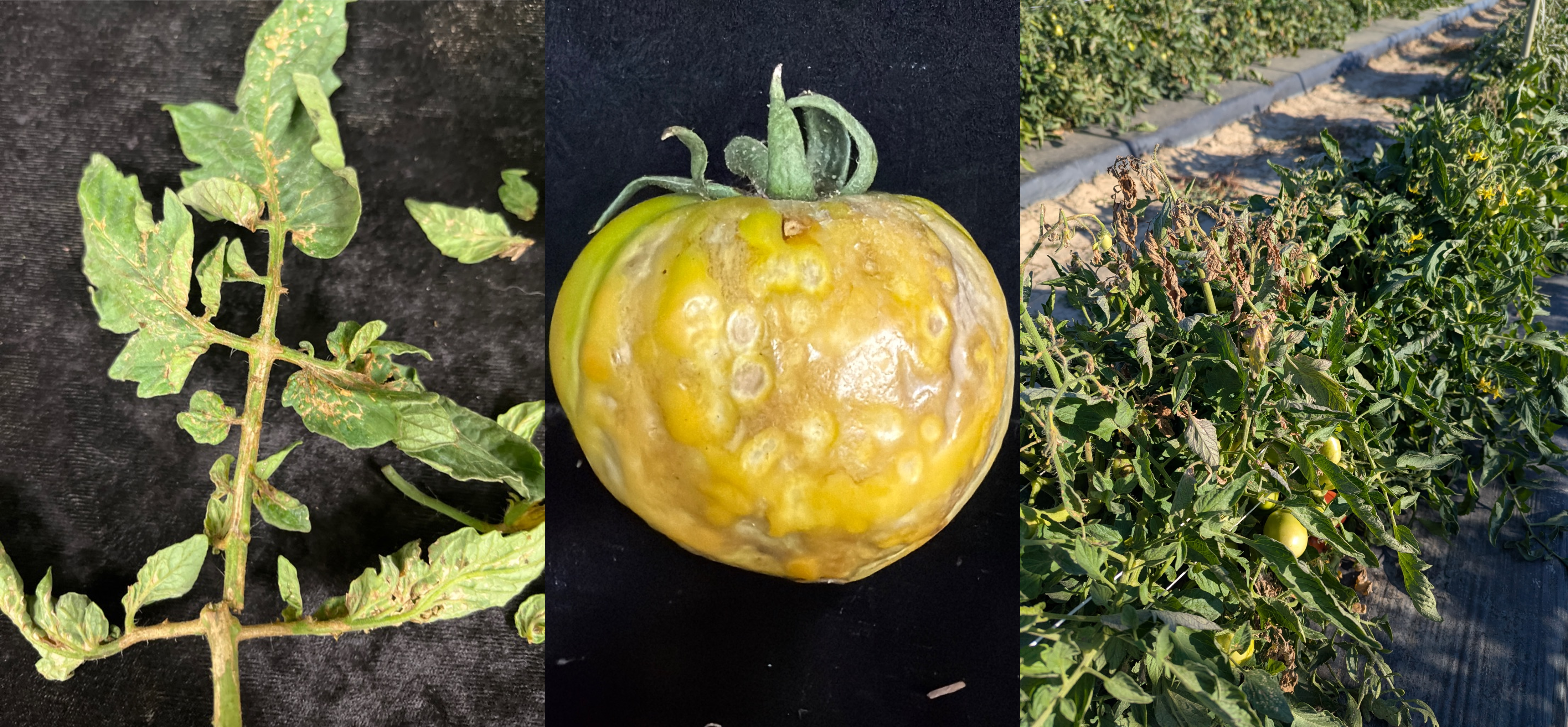
It’s been a thripsy year in Michigan, and it has led to some interesting viral issues. Tomato necrotic spot virus (TNSV) has been an issue for at least one tomato grower. Plant symptoms include puckering tissues around leaf vein junctions, upward curling of leaf edges, leaf edge necrosis, flowers “frying off”, tip dieback and fruit with lumpy ring spots.
This virus, and many others, often start in greenhouses where vegetable transplants share space with ornamental flowers that arrive as cuttings with freeloading thrips that spread it to new plants. However, TNSV can also spread from infected plant sap on hands and tools resulting from any tissue breakage during planting, pruning, trellising and picking.
Infected plants cannot be cured, but the extent of its spread and severity of infection can influence the actions taken to manage it. Small hotspots can be carefully removed, while larger areas can be avoided as long as thrips can be managed.
Sweet corn
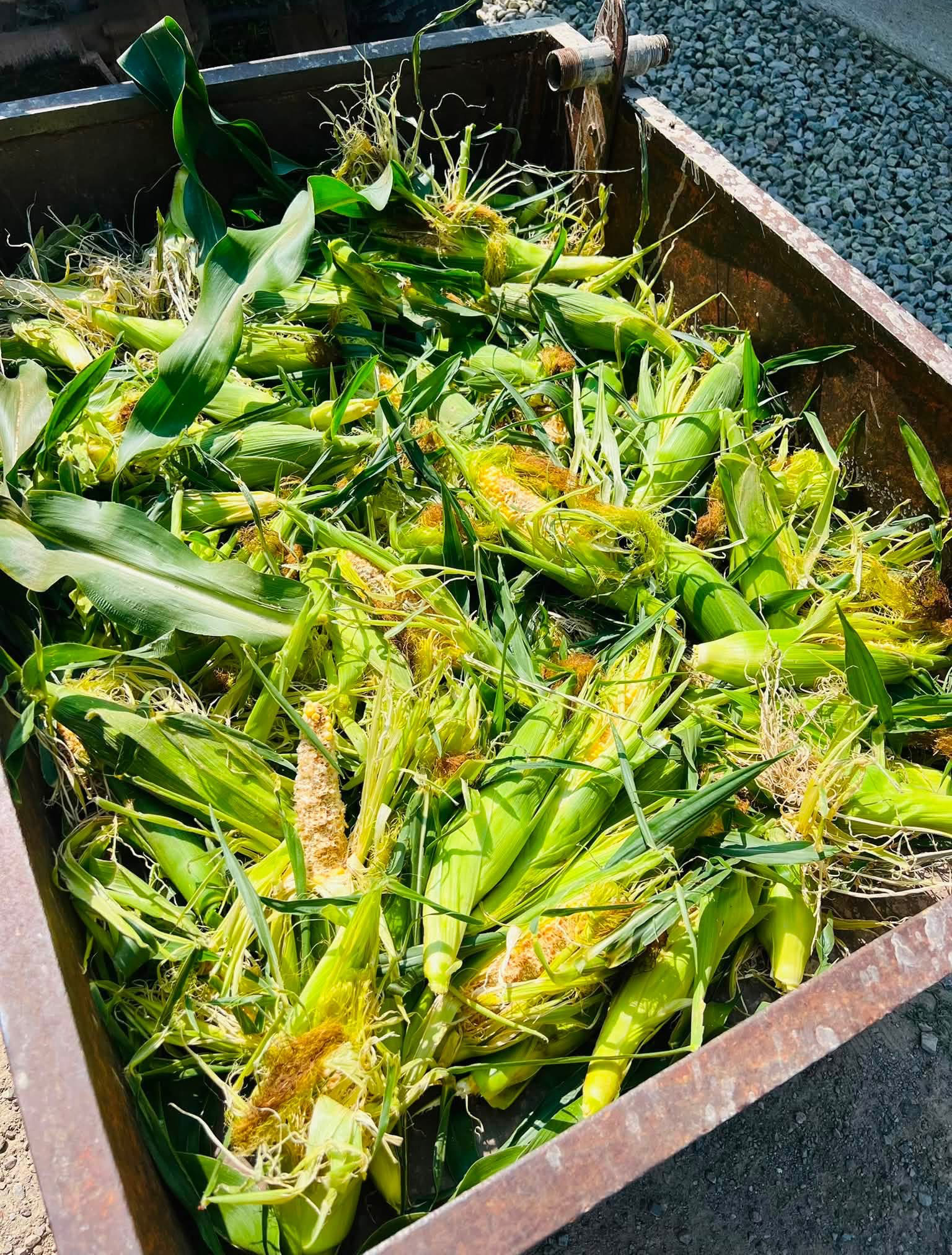
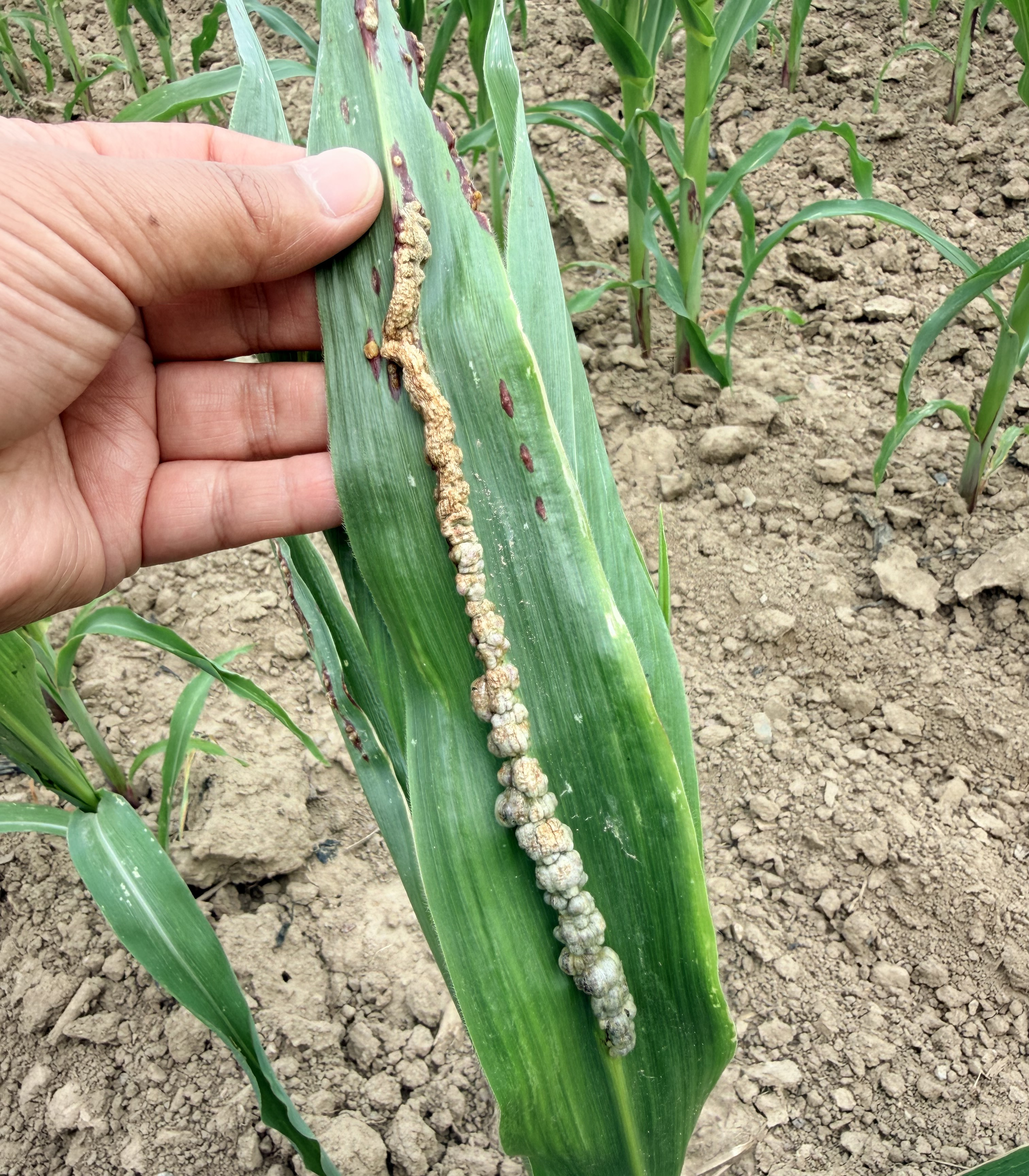
Wildlife damage to sweet corn ears, potentially caused by sandhill cranes, has been reported. Heat and drought stress have resulted in several physiological responses in sweet corn, including premature tasseling when plants are only knee-high, leaf scorching, leaf streaking, and purpling of the leaves and the lower portion of the stem. Corn smut is also being observed in sweet corn, including infections on the leaves.

Corn earworm was present at modest numbers at traps MSU Extension and partner farms are monitoring. A cooperating west central scout reported few worm issues in ears in early sowings so far, with a slight uptick in captures around July 26-27. The big influx has not happened yet.
To our south, corn earworm was present at low numbers in Ohio State University’s trapping network, as of July 26. Insect Forecast predicts little to no risk of additional corn earworm migration over the next five days.
Table 1. Corn earworm captures. Total in trap for week1 (avg # per night2).
|
Week |
Ottawa Co.4 |
Allegan Co.4 |
Oceana Co.4 |
Washtenaw Co.3 |
Monroe Co.3 |
Saginaw Co.3 |
Lapeer Co.3 |
Genesee Co.3 |
Midland Co |
|---|---|---|---|---|---|---|---|---|---|
|
June 28 |
15 (1.5) |
|
- |
- |
- |
- |
- |
- |
- |
|
July 5 |
15 (1.5) |
|
0 |
- |
- |
- |
- |
- |
- |
|
July 14 |
15 (1.9) |
|
5 (0.8) |
0 |
- |
2 (0.2) |
6 (0.8) |
1 (0.1) |
- |
|
July 21 |
10 (1.4) |
19 (2.7) |
8 (1.1) |
0 |
0 |
10 (1.4) |
1 (0.1) |
0 |
1 (0.1) |
|
July 28 |
- |
17 (2.4) |
17 (2.4) |
0 |
0 |
4 (0.6) |
0 |
0 |
1 (0.1) |
1Total number collected since last trap check; 2The total number divided by the number of nights since the last trap check; 3Cloth Heliothis traps track trends but catch less moths overall; 4Wire Harstack traps capture more moths.
Western bean cutworm numbers continued to increase over the past two weeks at two West Central locations, and are also rising to our south in Ohio. Learn how to scout for western bean cutworm here.
Table 2. Western bean cutworm captures. Total in trap for week1 (avg # per night2).
|
Week |
Ottawa Co. |
Oceana Co. |
Washtenaw Co. |
Monroe Co. |
Monroe Co. (Location #2) |
|---|---|---|---|---|---|
|
June 28 |
2 (0.2) |
- |
- |
- |
|
|
July 5 |
18 (1.8) |
3 (0.01) |
- |
- |
|
|
July 14 |
160 (20.0) |
22 (0.8) |
16 (4) |
- |
|
|
July 21 |
265 (37.9) |
44 (6.3) |
6 (0.9) |
0 |
|
|
July 28 |
- |
163 (23.2) |
- |
0 |
2 (0.25) |
1Total number collected since last trap check; 2The total number divided by the number of nights since the last trap check.
Cyclospora resources
Find webinars and resources that provide an overview of Cyclospora, practical guidance to help prevent contamination and protect your crops throughout the growing season, and the latest updates on the current outbreak.
The following video covers the basics of Cyclospora, including its biology, how it spreads, and why it is difficult to detect and remove from produce.
The following video explains how Cyclospora gets on produce, discusses strategies to reduce contamination risks, and reviews resources that can help strengthen your on-farm food safety practices.
Produce Food Safety On-Farm Readiness Reviews
Schedule an On-Farm Readiness Review (OFRR) today for a two-hour educational visit that takes place during the harvest season and is meant to be casual and low stress! Everything discussed during an OFRR is confidential, and focused on ways a grower can reduce their own risks in relation to produce safety. There is no pressure to take our advice either, we are just here to support you in your produce safety efforts!
Events
- July 30, 2026: Summer Irrigation Workshop - Hickory Corners, MI
- July 31, 2026: Berrien County Organic Agriculture: Tour 3 Value-Added & Agritourism Farms – Sodus/Buchanan/Three Oaks, MI
- August 6, 2026: 2026 Potato Field Day – Lakeview, MI
- August 11, 2026: West Michigan Organic Farm Tour: Explore Farm to Institution Markets from schools to hospitals – Muskegon/Whitehall, MI
- August 11, 2026: Michigan Agricultural Irrigation Water Use Efficiency Program - Lansing, MI
- August 11-12, 2026: Michigan AgroExpo – St. Johns, MI
- August 12, 2026: 30th Annual Center for Excellence Field Day – Clayton, MI
- August 13, 2026: Farming For the Future Field Day – Hart, MI
- August 18, 2026: Northwest Michigan TOPP Field Day: Farming for People, Purpose, and Profit – Petoskey, MI
- August 20, 2026: Hillsdale Nutrient Management Field Day – Waldron, MI
- August 30, 2026: Bee Palooza - East Lansing, MI
- September 1, 2026: U.P. Potato Field Day – Chatham, MI
- September 3, 2026: Cover Crop Workshop 2- Incorporating Principles of Regenerative Agriculture to Make My Farm More Resilient and Successful- Frankenmuth, MI
- September 3, 2026: Fourth Annual KBS LTAR Field Day - Hickory Corners, MI
- August 28, 2026: Washtenaw Conservation District Field Day – Ann Arbor, MI
- September 9, 2026: Tillage & Soil Health Field Day – La Salle, MI
- September 10-11, 2026: Great Lakes Tek Flex – Benton Harbor, MI
- September 16, 2026: 2026 Midwest Mechanical Weed Control Weed Day – Benton Harbor, MI
- September 22-24, 2026: Farm Science Review 2026 – London, OH
- October 4-6, 2026: Northern Michigan Small Farm Conference – Bellaire, MI
- November 4-6, 2026: Michigan Agritourism 20th Anniversary Convention – Frankenmuth, MI
- December 8-10, 2026: Great Lakes Fruit, Vegetable, & Farm Market Expo – Grand Rapids, MI
This work is supported by the Crop Protection and Pest Management Program (grant no 2024-70006-43569) from the USDA National Institute of Food and Agriculture. Any opinions, findings, conclusions, or recommendations expressed in this publication are those of the author(s) and do not necessarily reflect the view of the U.S. Department of Agriculture.