Michigan vegetable crop report – June 3, 2026
 Print
Print Email
EmailPicture-perfect conditions for crop establishment.
Weather
The past week and a half has been unusually dry with low humidity. Degree day totals range from a few days behind in the far north to up to a week ahead in the south.
The forecast for the upcoming week:
- Sunny, dry and warm statewide Wednesday, June 3. Scattered afternoon and evening showers possible west upper Michigan Thursday, slowly spreading south and east into lower Michigan by Friday and Saturday. Fair, warm and dry again Sunday through early next week.
- Precipitation totaling 0.5-1 inch through next Wednesday, June 10.
- High temperatures generally in the low to mid-80s Wednesday through Friday, cooling slightly to the upper 70s north to low 80s south this weekend.
- Low temperatures in the 50s Thursday and the 50s north to low 60s south Friday and Saturday before cooling slightly to the 50s to near 60 by early next week.
- Medium range outlooks consistent in calling for warmer than normal weather for the next one to two weeks with normal to below normal precipitation totals.
Be mindful and aware of field crop herbicides, both as a user and a neighbor to users. Post-emergence products are going on corn across the state soon.
Neighboring vegetable news
We all know that knowledge is power when it comes to agriculture and knowledge can be found far and wide. For those curious readers who would like to supplement their perusal of the Michigan vegetable crop report with reports from neighboring states (or provinces), the following is a short list of other regular vegetable reports from the Midwest and Great Lakes region.
- ONvegetables Vegetable Crop Report (Ontario):
- Vegetable Crops Hotline (Purdue Extension)
- Illinois Fruit and Vegetable Newsletter (University of Illinois Extension)
- Weekly vegetable update (University of Minnesota Extension)
- VegNet (Ohio State University Extension)
Summer cover crops
The time for summer cover crops is approaching. Depending on your goals, there is a wide array of single-species and mixes available. Grasses like oats and winter rye can make a simple temporary cover ahead of later plantings, potentially mixed with buckwheat or peas. The winter rye won’t vernalize and will grow about a foot tall and hangout for a while. Sometimes rust can defoliate it later in the season. For a longer-term high density summer cover, sorghum-sudangrass or Japanese millet are good choices. When mixing a legume with sorghum-sudangrass, the grass rate needs to come down to about 25 lb/acre or else it will outcompete the legume.
Cutworm
Black cutworm larvae have been detected in the state over the last few weeks. This is a migratory moth that blows up from the south. Female moths lay eggs on winter annual weeds, like chickweed and deadnettle. Once the weeds die or crops are planted they can then clip seedlings. If you see clipped seedlings, check the soil around the base of the nearest unclipped plants to look for caterpillars, as other things can nip young plants.
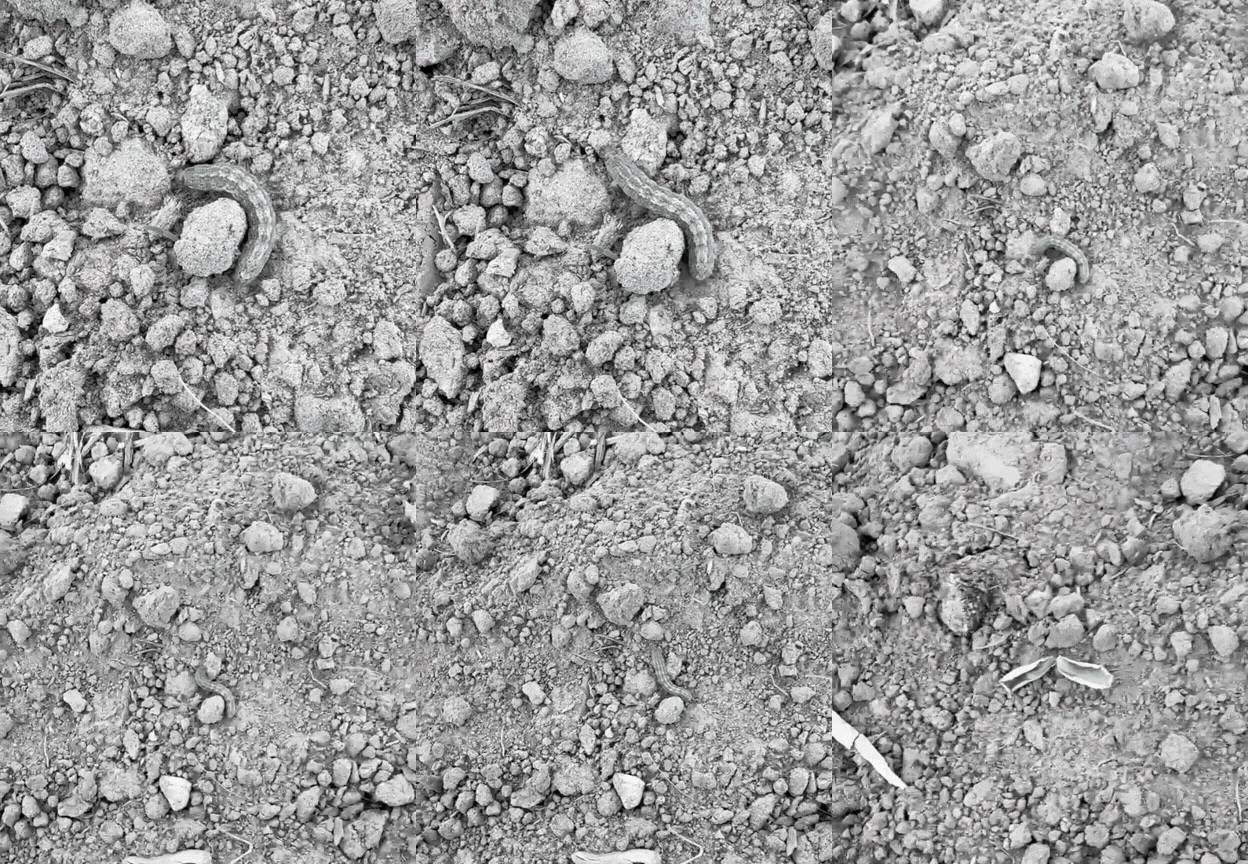
Caterpillars mostly stay in the soil at the base of plants during the day and feed at night. Pyrethroid insecticides are an effective and affordable control option.
There are ways to keep an eye on cutworm risk since it is also a field corn pest. The insect forecast website predicts moth migration (there was a predicted flight into Michigan on May 17 and 18). Ohio State University also has a newsletter reporting on black cutworm trap catches.
Crop updates
Asparagus
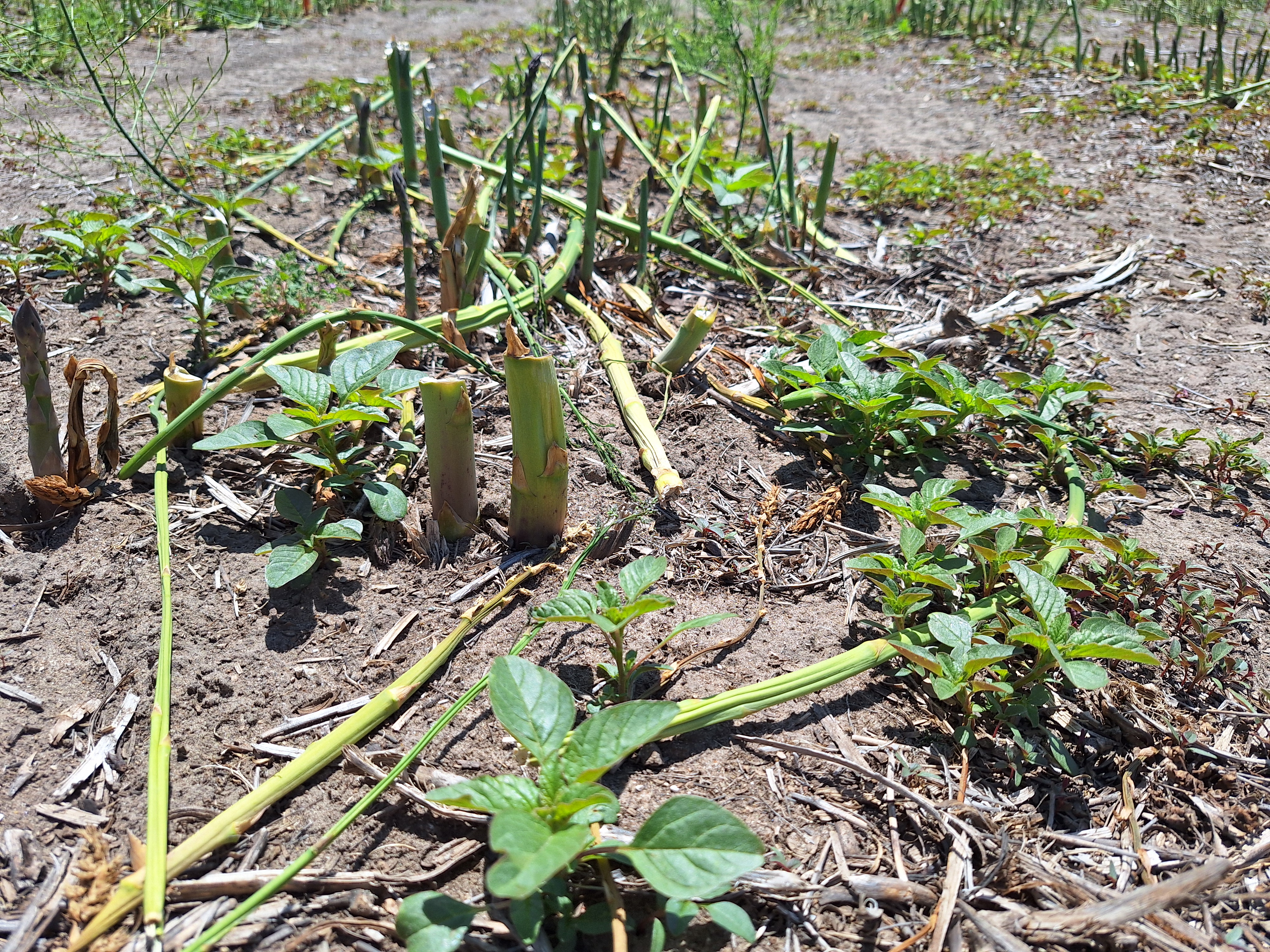
Harvest continues in west central Michigan, and the theme of this season seems to be variability. Overall volume to date is lower on some but not all farms, but there is plenty of high quality asparagus reaching retailers. Part of the variability could be due to last year’s dry fern season since fern growth the previous year sets the stage for the current year’s harvest.
Some farms are irrigating asparagus during harvest. Past work done in collaboration with the Michigan industry shows in-season irrigation can moisten soils to provide cooling when temperatures are high and topsoils are dry. The main effect in trials was on tip quality: cooler temperatures decreased the percentage of spears with spread tips.
Pigweed seedlings are visible in commercial fields, and it is about that time. Preseason herbicides begin to lose their gas and seedlings emerge. Joshua Miranda, PhD, is comparing preseason application of different herbicides-in combination with different adjuvants-to see if any combinations hold back pigweed growth more effectively.
Root crops
Potatoes are being hilled. Colorado potato beetles are active, overwintered adults are laying eggs and small larvae are feeding on plants in many areas of Michigan. The MSU Enviroweather website and app are places where you can follow the Colorado potato beetle degree day model. You’ll have to create an account and this new app allows you to pick a planting date for your potato field and will update the calculation of degree days from that date.
Aster leafhoppers were present in some west Michigan carrot and celery fields on Monday. Infectivity was low in all three samples collected over the last week (Ottawa and Oceana counties). Sign up for aster leafhopper text alerts.
If you are interested in learning more about when aster yellows risk is highest in Michigan, read this new article from Michigan State University Extension. Data collected during the 2024 and 2025 growing seasons show that infective aster leafhopper populations can change dramatically over time, creating short periods of elevated risk for crops such as carrot and celery. Learn how risk patterns differed between years and what these early observations may mean for management decisions.
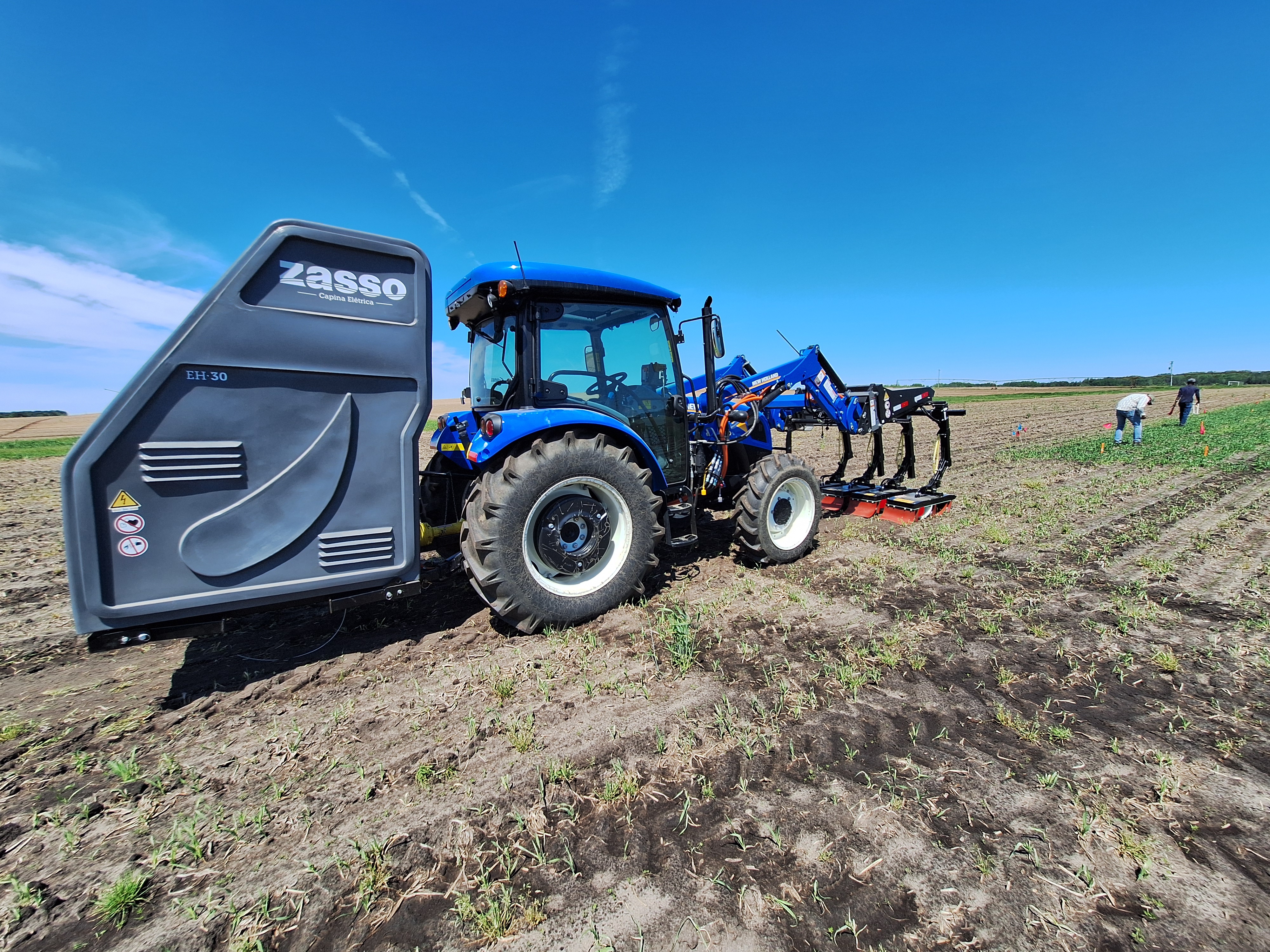
Weed control options in carrots are very limited and typically include a sowing-time application of Prowl followed by post applications of linuron, with metribuzin sometimes applied as well. Joshua Miranda, PhD, of Michigan State University was out this week testing a non-chemical alternative: a between-row weed electrocutor provided by Zasso. It has electrodes that move over the ground between rows and electrocute weed seedlings. One advantage is it does not disturb the soil (and bring up new weed seeds).
It will be interesting to see if and how tools like this can be combined with smart sprayers. With smart sprayers, speed can be a limiting factor if weeds are dense. Perhaps tools like this can take care of weeds between the rows, so smart sprayers can focus in row and move faster. It’s a new world!
Cucurbits
Cucumbers, squash and melons are being transplanted. Pickle planting has started and is ongoing. Pumpkin sowing started in west central Michigan with zucchini planting on tap for farms as well.
Striped cucumber beetles have been mentioned a few times in the weekly reports already this season. These pernicious pests can cause problems in cucurbits all season long and using non-chemical practices to get a handle on the problem can be difficult to say the least. The eOrganic publication, “Managing Cucumber Beetles in Organic Farming Systems,” is a classic article outlining an integrated pest management (IPM) approach to keeping the beetle blues away in organic vegetable production.
Whiteflies in greenhouses can sometimes be a problem, as they can vector several viruses. Here is a handy reference for several viruses and their vectors in cucurbits.
This newly published article from the MSU Extension irrigation team highlights the importance of irrigation for herbicide activity. The timing could not be better, as several pumpkin growers have recently asked about this topic. Take a look at this latest article from the irrigation team on why it is critical for maximizing herbicide effectiveness.
Cucurbit downy mildew spores have been detected in Berrien, Bay, Allegan and Muskegon counties. Read the full story in this recent article from MSU Extension, “Statewide monitoring network for cucurbit downy mildew verifies the 2026 arrival of spores in four Michigan counties.”
Brassicas and greens
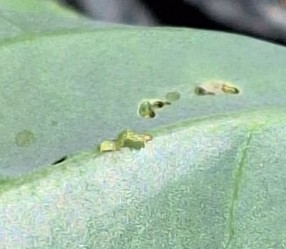
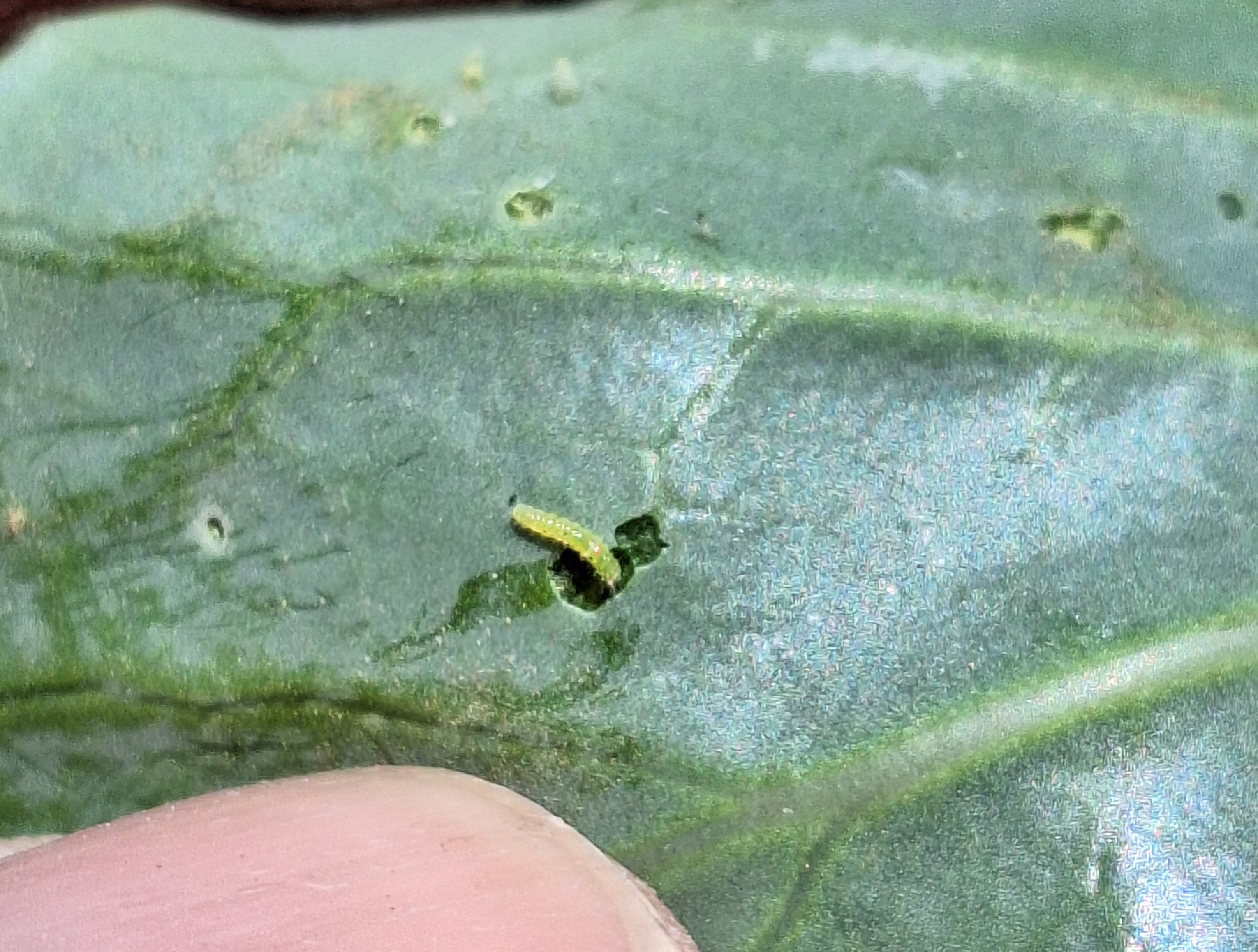
All the different brassicas and leafy greens are being planted. Signs and symptoms of caterpillar activity are being found in cole crops, including the caterpillars themselves. Cabbage maggots are still being reported on some farms.
Diamondback moth, cabbage looper and imported cabbage worm were present in one field MSU Extension checked Monday, but at low levels. When they are very small, it is easiest to identify these caterpillars by how they move. Diamondback moth caterpillars shake like mad when poked. Cabbage loopers form a loop, like an inchworm, when they move. Imported cabbage worm larvae appear more sluggish and don’t shake or loop.
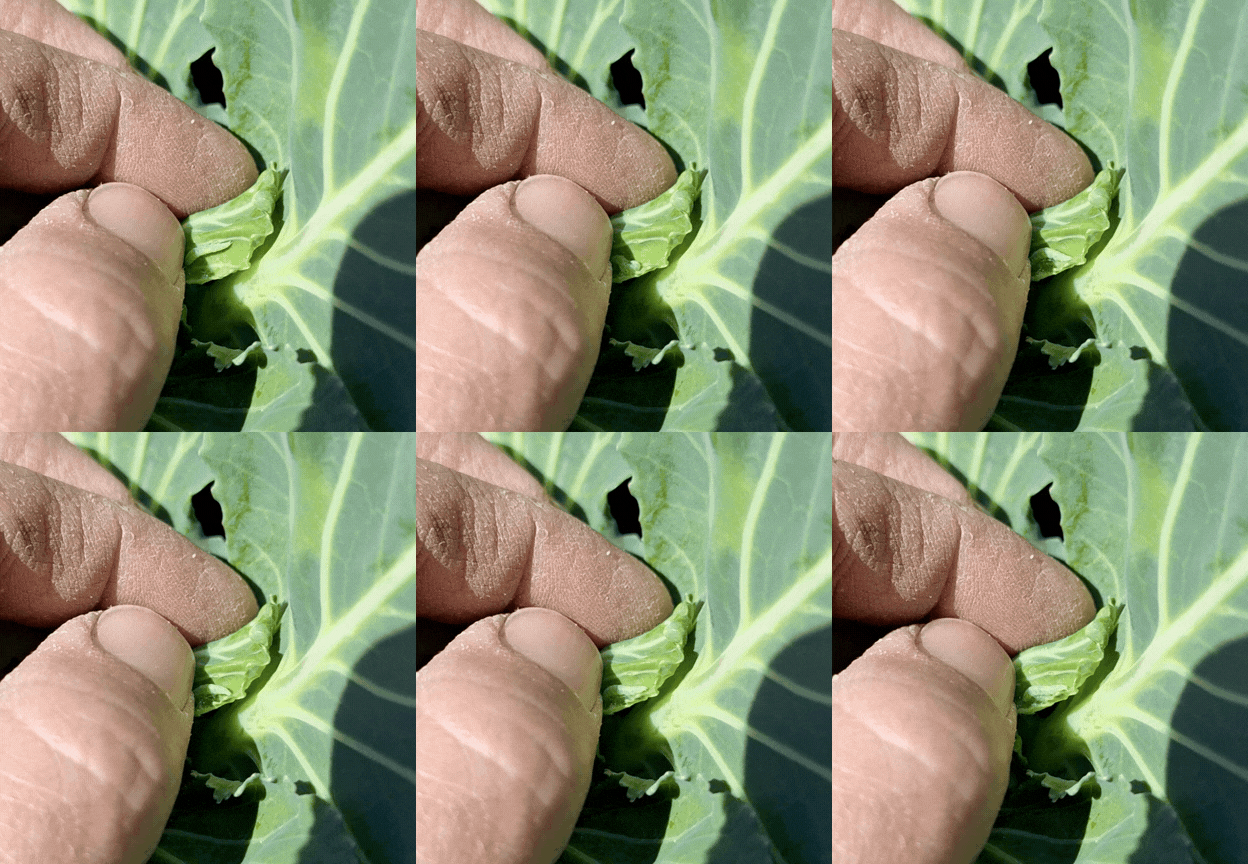
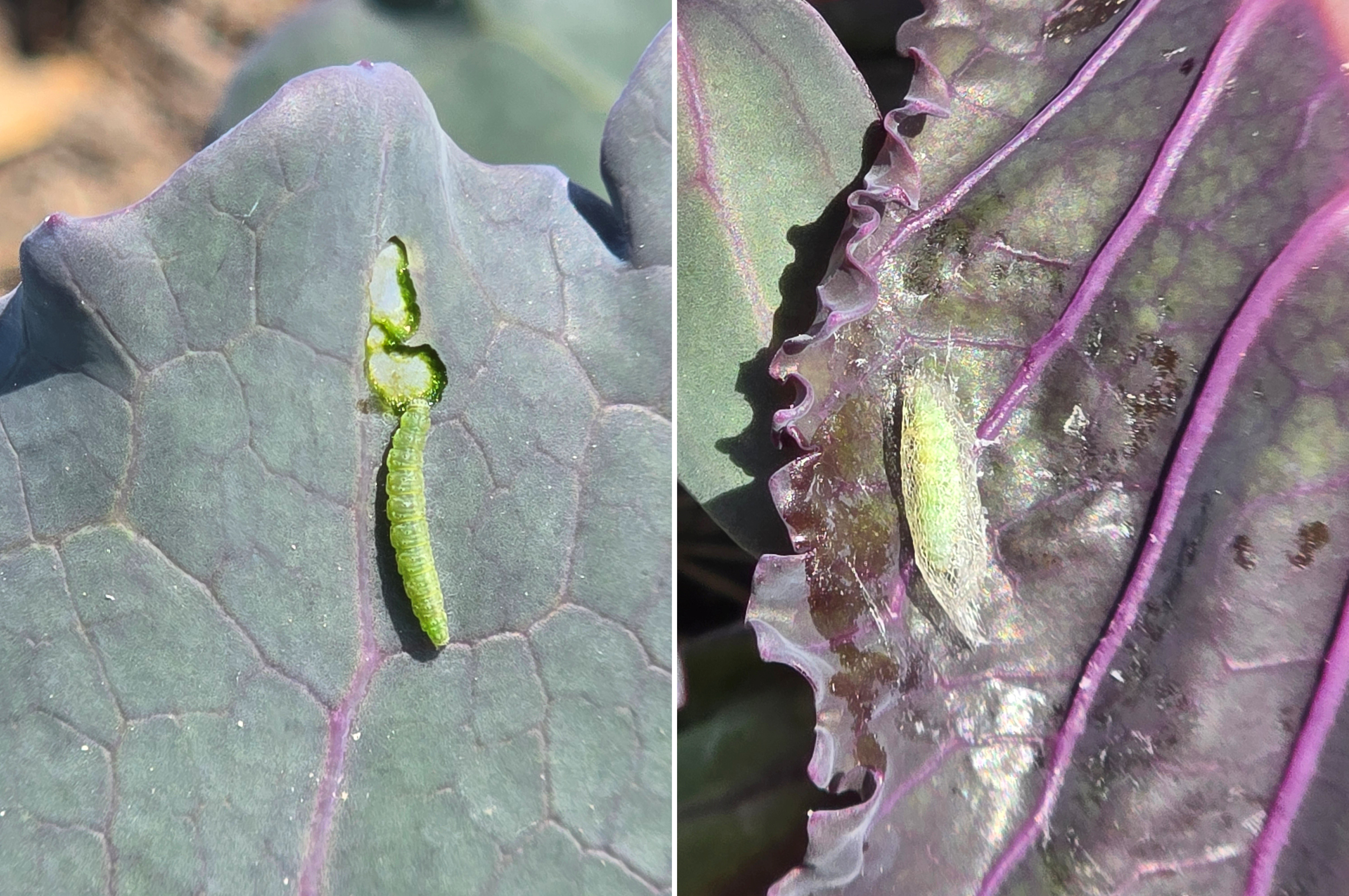
For these caterpillars, Bt products can be effective when caterpillars are small and can conserve beneficials that attack aphids and diamondback moth. Frequency is important as they are most effective on small caterpillars and do not have a long residual. They can be an effective part of both organic and conventional spray programs. Spinosad (e.g., Entrust) is another effective organic option; experience suggests it is a more effective “knockdown” than Bt in organic systems.
For conventional insecticides, pyrethroids can help with imported cabbage worm and cabbage looper, but some diamondback moth populations are resistant. Products containing chlorantraniliprole (e.g., Coragen, Beseige) and spinetoram (e.g., Radiant) are effective for all caterpillars. There are other labeled products; check out the Midwest Vegetable Guide for more.
Legumes
Beans are up and vigorous, and peas are growing pods now. Some seedcorn maggot and mammal damage has been observed.
Fruiting vegetables
Indeterminate high tunnel tomatoes are producing fruit and being pruned regularly. Whiteflies have been reported in hoophouse tomatoes, albeit at low levels. For the ecologically minded grower, introducing biocontrol organisms into the protected culture environment can be met with success. MSU Extension has a comprehensive resource, “Commercially Available Biological Control Agents for Greenhouse Insect and Pest Management,” which lays out the options for these mini defenders and how to optimize for their usage.
There are reports of heat stress from black plastic hurting young plants. If plastic mulch is not tight to the soil, the layer of air trapped between the bed and the mulch can heat up and exit through the planting holes, basically cooking the plant as if it were in an air fryer but with hot air coming up from the bottom. Just another reason why good bed preparation is essential. Read more about this effect and plastic mulches in this old MSU Extension article, “Managing plastic mulches profitably.”
Onions
Onion thrips adults were present in one field of transplanted onions this week, but larvae were scarce. Movento is an effective product in the first thrips spray slot, and is most effective against larvae. In this specific planting, numbers were below threshold. Given all the above, it makes sense to recheck next week and wait to apply Movento.
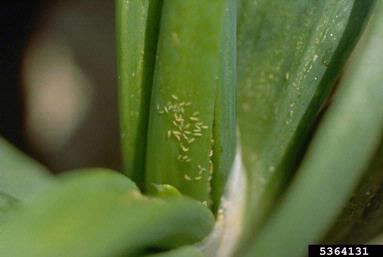
Scouting is the best way to time application of this and all thrips products. Movento should be applied with a penetrating surfactant, should not be tank mixed with chlorothalonil, and should be applied in two back-to-back weekly applications. Read about onion thrips insecticide programs.
Sweet corn
Plantings continue, and emergence is fast. Corn can sometimes compete with grass weeds, and as a grass itself, careful herbicide selection is important. Fortunately, there are many options for post-emergence grass escapes. Here is a list from the Midwest Vegetable Guide. Note that glyphosate (RoundUp), glufosinate (Liberty, Sinate) and sethoxydim (Poast) use depends on the sweet corn variety and cannot be used on just any field of corn.
Strawberries
The harvest of field grown strawberries has begun in the eastern part of the state. Be on the lookout for thrips and their tell-tale signs. Populations are high and damaging in berries this spring. According to Cornell University, if fruit is small, seedy and has a bronze cast, it could be thrips causing it.
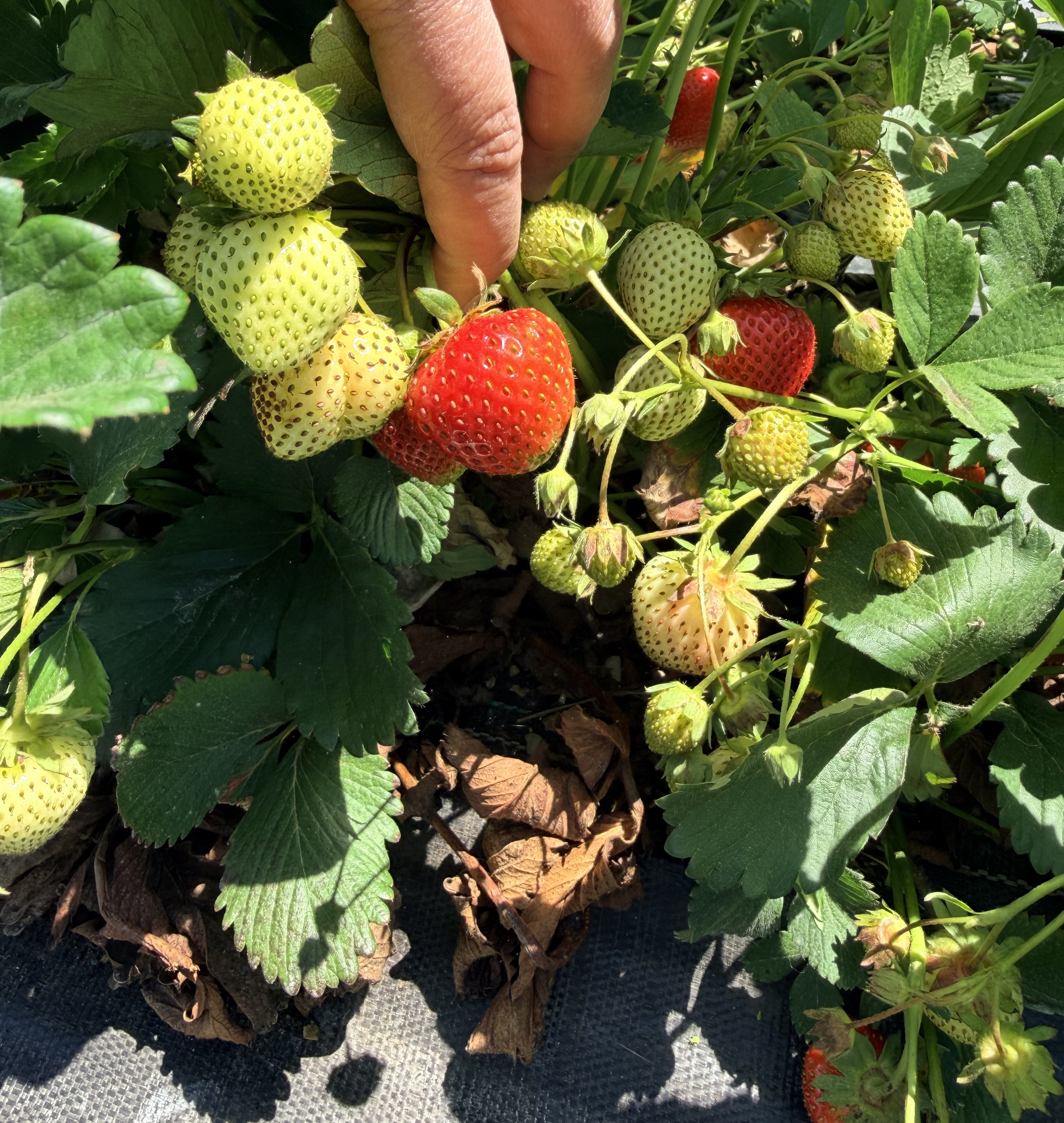
Another tiny pest that can impact strawberry fruits are cyclamen mites. To find them, check attractive plant parts like new leaves, flowers and young fruits under a stereomicroscope. Cyclamen mites (Phytonemus pallidus) are a serious pest of strawberries. They feed in the folds of new leaves and between crevices on the flowers. Their feeding injury causes curling and crumpling of leaves and flowers. This can lead to the production of small fruits, and if the mite populations are high, they can prevent fruiting.
Cyclamen mites can be introduced to the field on greenhouse-raised strawberry starts. The mites become active in the spring when temperatures are above 50 degrees Fahrenheit, and they prefer damp conditions. They can complete their life cycle in less than three weeks in ideal conditions, so their populations can grow quickly once they are established.
Cyclamen mites can be difficult to find because they are extremely small (0.2 mm long). A microscope is needed to confirm the identification. Adults look just like broad mites and can be differentiated by the eggs. Broad mites have small bumps on the eggs, cyclamen mites have smooth eggs. These mites are usually found in large groups, but they hide in small crevices on the plant which makes them challenging to control because it is difficult to reach them with miticides.
Management options for cyclamen mite:
- Hot water treatments can be used to kill cyclamen mites on plugs before planting:
- Dip plugs in hot water of 100 F for 30 minutes or 111 F for 15 minutes (longer treatments or treatments reaching 123 F will damage the plants).
- Predatory mites can be released to consume the cyclamen mites. However, the predatory mites may not survive frost, so they may be a better choice for greenhouses.
- Miticides: Abamectin, diazinon or fenpyroximate can be applied to control cyclamen mites.
- Because cyclamen mites are tiny and hide in crevices of the plants, uniform coverage is important to make contact with the mites.
- Check the label to determine if repeat applications are necessary. Since eggs are present, repeat applications will probably be needed.
- Closely follow the instructions for use to ensure a safe and effective application.
Resources:
- Michigan Fruit Management Guide 2025 (Michigan State University E-154). Strawberries. Early growth - thimble-sized berries. Pgs. 210-214.
- North Carolina State University Extension. Lorena Lopez, Hannah Burrack and Aurora Teonnisson. Cyclamen Mites in Strawberries.
Produce Food Safety On-Farm Readiness Reviews
Schedule an On-Farm Readiness Review (OFRR) today for a 2-hour educational visit that takes place during the harvest season and is meant to be casual and low stress. Everything discussed during an OFRR is confidential and focused on ways you can reduce your own risks in relation to produce safety. There is no pressure to take our advice either, we are just here to support you in your produce safety efforts!
Submit your ideas for 2026 GLEXPO sessions or speakers
The Great Lakes Fruit, Vegetable and Farm Market Expo (GLEXPO) is a premier conference for fruit, vegetable, horticulture and farmer market growers to see and learn about all of the latest research and innovations in farming. The GLEXPO board along with Michigan State University Extension hosts a variety of educational sessions and discussions to further the knowledge and resources growers need to be competitive in today’s markets. The 2026 GLEXPO will be Dec. 8-10 at the DeVos Place in Grand Rapids, Michigan.
The GLEXPO organizers and Michigan State University Extension would like your ideas as we plan future education sessions. We want to hear from growers and industry members about ideas for topics and speakers that you think would be of value to your farming operations as well as other growers. To facilitate this endeavor, the Great Lakes Expo board has created a fillable online form. Ideas can be submitted year-round via the online form. For ideas to be considered for inclusion in the 2026 education program, they must be submitted by June 12, 2026.
Access the form to submit your ideas
For more information on the Great Lakes Expo, visit https://glexpo.com.
Events
- June 10, 2026: Food Grade Grains Field Day at Boyer Livestock – Clarklake, MI
- June 17, 2026: Food-Grade Grains Field Day at Kellogg Biological Station – Hickory Corners, MI
- June 17, 2026: Protecting the Farm: Medicaid & What Farmers Should Know - (Virtual)
- June 18, 2026: Healthy Habitats and Productive Pollinators – Flint, MI
- June 18, 2026: Jackson County Regenerative Ag Field Day - Rives Junction, MI
- June 20, 2026: Michigan Farm Bureau Farmers Teaching Farmers Event – Lansing, MI
- June 22-23, 2026: State of the Western Lake Erie Basin Conference – Adrian, MI
- June 29, 2026: Technical Assistance Provider Training for Pay for Performance Program – Adrian, MI
- June 30, 2026: Monroe Conservation District Hands-On Mushroom Workshop – Temperance, MI
- July 21, 2026: Washtenaw TOPP Farm Tours – Whitmore Lake/Dexter/Willis, MI
- July 31, 2026: Berrien County Organic Agriculture: Tour 3 Value-Added & Agritourism Farms – Sodus/Buchanan/Three Oaks, MI
- August 6, 2026: 2026 Potato Field Day – Lakeview, MI
- August 11, 2026: West Michigan Organic Farm Tour: Explore Farm to Institution Markets from schools to hospitals – Muskegon/Whitehall, MI
- August 18, 2026: Northwest Michigan TOPP Field Day: Farming for People, Purpose, and Profit – Petoskey, MI
- August 20, 2026: Hillsdale Nutrient Management Field Day – Waldron, MI
- August 28, 2026: Washtenaw Conservation District Field Day – Ann Arbor, MI
- September 3, 2026: Cover Crop Workshop at SVREC- Frankenmuth, MI
- September 9, 2026: Tillage & Soil Health Field Day – Monroe, MI
- September 10-11, 2026: Great Lakes Tek Flex – Benton Harbor, MI
- September 16, 2026: 2026 Midwest Mechanical Weed Control Weed Day – Benton Harbor, MI
- September 22-24, 2026: Farm Science Review 2026 – London, OH
- October 4-6, 2026: Northern Michigan Small Farm Conference – Bellaire, MI
- November 4-6, 2026: Michigan Agritourism 20th Anniversary Convention – Frankenmuth, MI
- December 8-10, 2026: Great Lakes Fruit, Vegetable, & Farm Market Expo – Grand Rapids, MI
This work is supported by the Crop Protection and Pest Management Program [grant no 2024-70006-43569] from the USDA National Institute of Food and Agriculture. Any opinions, findings, conclusions, or recommendations expressed in this publication are those of the author(s) and do not necessarily reflect the view of the U.S. Department of Agriculture.