Southwest Michigan fruit update – June 2, 2026
 Print
Print Email
EmailMuch-needed rain expected this weekend!
Tree fruit updates
Apricot trees have medium fruit in central Berrien and Van Buren Counties, with an average of 25 millimeter (mm) fruit size. As fruit begin to approach ripening over the next few weeks, brown rot control becomes the key disease-management priority.
Growers should maintain strong brown rot protection as fruit soften and color. SI fungicides generally provide excellent brown rot control, but product choice should be made with rotation and resistance management in mind. Be sure to check the pre-harvest interval for any material applied, as apricot harvest may arrive sooner than expected once fruit begin to ripen.
Peaches and nectarines continue to size in southwest Michigan, with early cultivars now moving beyond the small-fruit stage and into pit hardening. Plum curculio pressure should begin to decline as fruit enlarge, but blocks with a history of injury, wooded borders, or uneven fruit development should continue to be monitored closely. Where fresh oviposition scars are still being found, insecticide selection should emphasize rapid knockdown of immigrating adults and enough residual activity to protect exposed fruit.
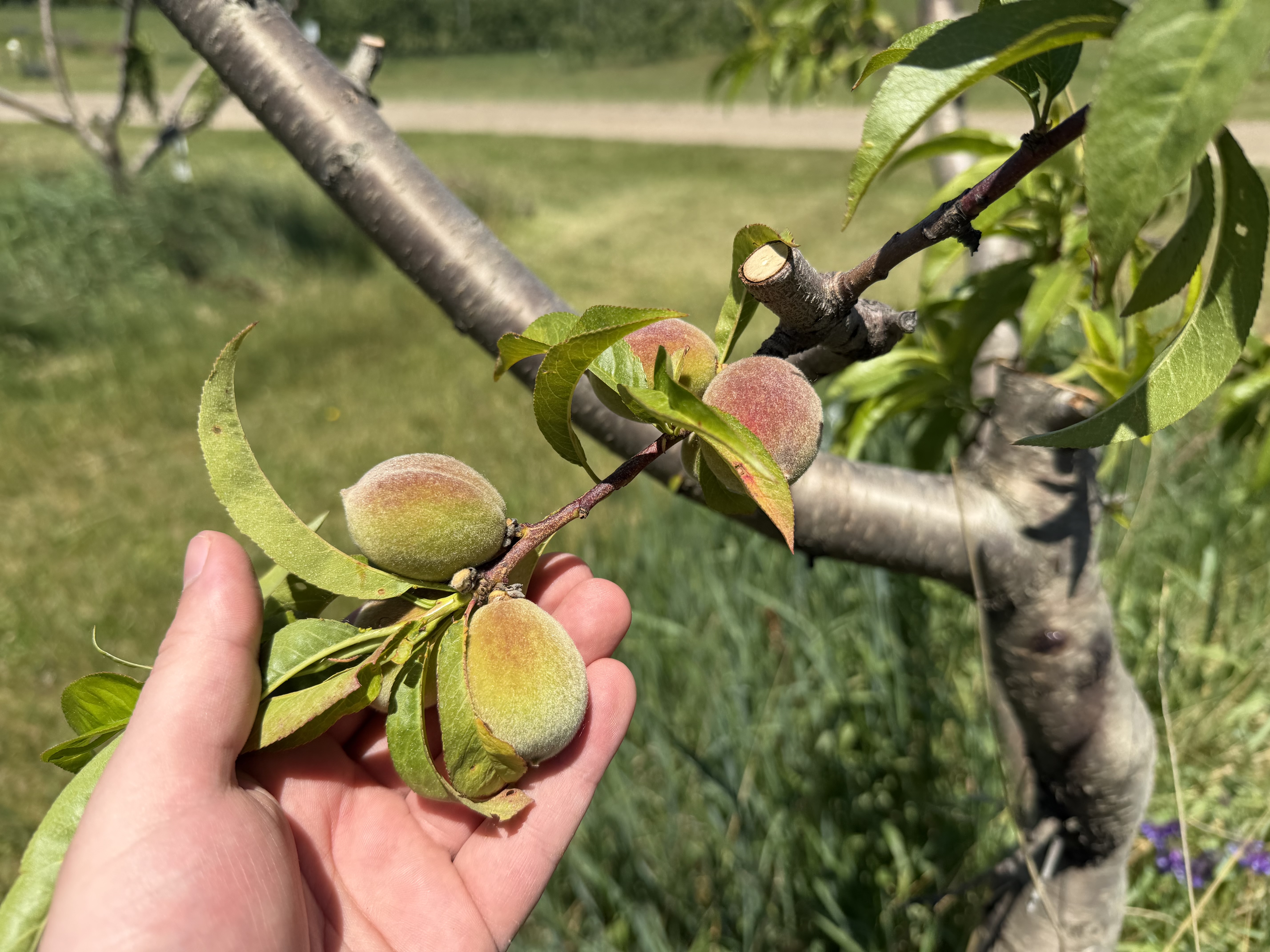
Brown rot is still not the main concern in peaches and nectarines until fruit begin to soften later in the season. For now, disease management should remain focused on maintaining general fruit and foliage protection, especially in blocks with bacterial spot-susceptible cultivars or weather that favors infection.
Lesser peachtree borer flight has begun, with a greater number caught this week than last. Higher-risk peach and cherry blocks should be watched carefully. Risk is greatest where trees have Cytospora cankers, winter injury, pruning wounds, mechanical damage, weak scaffold crotches or a history of borer infestation. Young trees are more susceptible to damage due to their small size relative to the injury. Because of this, preventing damage to young trees is paramount in Michigan. Because larvae tunnel beneath the bark soon after hatch, sprays need to protect the trunk, scaffold limbs and wounded/cankered areas before larvae become established. In blocks requiring treatment, direct sprays to the bark and scaffold zone rather than treating only the outer canopy. Product choices should be rotated by IRAC group where possible, and labels should be checked carefully for crop, timing, rate and pre-harvest restrictions.
Plums are now around 18 mm. Growth has slowed as pits harden.
In cherries, tart and sweet cherry fruit continue to size rapidly across Berrien and Van Buren counties,
with average fruit size near 13 mm in tart cherry and 16 mm in sweet cherry. As tart cherry harvest approaches, management should shift toward preharvest priorities: protecting fruit quality, keeping leaves functional, managing insect contamination risk and maintaining enough flexibility for weather or harvest delays.
Cherry leaf spot remains the main disease concern. Even if pressure has been limited so far, protection should continue through warm, wet periods to prevent early defoliation and protect next year’s crop potential. At this timing, several fungicide classes can fit into programs, including FRAC 3, 7, 11, and M04 materials.
As fruit begin to color and soften, brown rot and spotted wing drosophila risk become more important. Warm rain, cracking, bird injury, and harvest delays can quickly increase losses. Growers should pay close attention to coverage, spray intervals, rainfastness, resistance management, and pre-harvest intervals, especially as picking windows get closer.
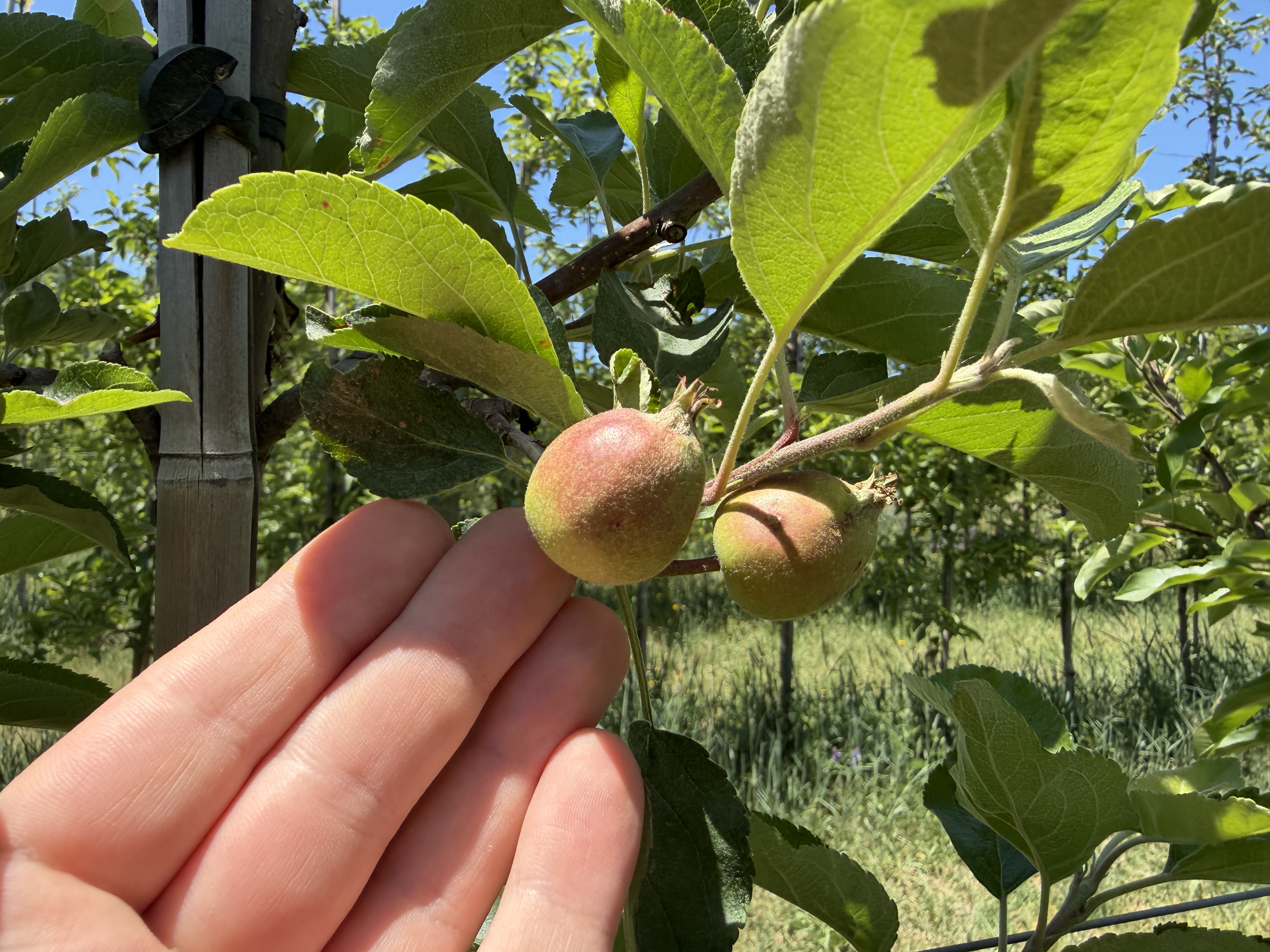
Apple fruitlets are sizing across the region and are generally between 18 and 25 mm. Primary apple scab spore release is finished, marking the end of the primary scab period. Blocks with clean primary scab control should be moving into lower scab risk, while blocks with visible lesions may still produce secondary scab infections that can spread to fruit and foliage. When conditions are marginal, the MSU Enviroweather apple scab model remains useful for identifying infection windows and refining spray timing.
Powdery mildew risk is elevated this week with the warmer temperatures. Captan does not provide powdery mildew control, so captan cover sprays alone are not sufficient where mildew is active or where susceptible cultivars are present. QoI, SDHI, and SI fungicides provide stronger mildew activity. For resistance management, these materials should be tank mixed with a protectant fungicide, such as EBDCs, where labels and crop stage allow.
Codling moth should now be managed according to biofix and accumulated degree days, with product choice matched to the life stage being targeted. Programs aimed at eggs are timed earlier; biofix + 100 DD, while most larvicides are aimed at the egg hatch period beginning around biofix + 200-250 DD. For much of Southwest Michigan, we are between ovicidal and larvicidal timing.
In higher-pressure blocks, early ovicidal timing should be followed by larvicidal coverage as hatch begins. In lower-pressure blocks, the first larvicide timing may be delayed closer to 350 DD, with additional applications based on trap counts, fresh injury, and block history. After treatment, cumulative trap counts should be reset so follow-up decisions reflect new moth activity rather than pressure that has already been addressed.
Codling moth programs should rotate modes of action across generations. A practical rule is to keep one chemical class within the first generation, then switch to a different class for the second generation. Premix products require extra accounting because they contain more than one active ingredient class. Materials that target larvae, including diamides, spinosyns, neonicotinoids, avermectins, granulosis virus products, and other labeled options, depend heavily on timing, ingestion, and coverage before larvae enter fruit. Pyrethroids and organophosphates are generally poor fit choices at this point because of resistance concerns and the risk of disrupting mites and beneficial insects.
For information about apple fruit thinning, see the scouting report from May 12, 2026 and visit the following resources from Michigan State University Extension:
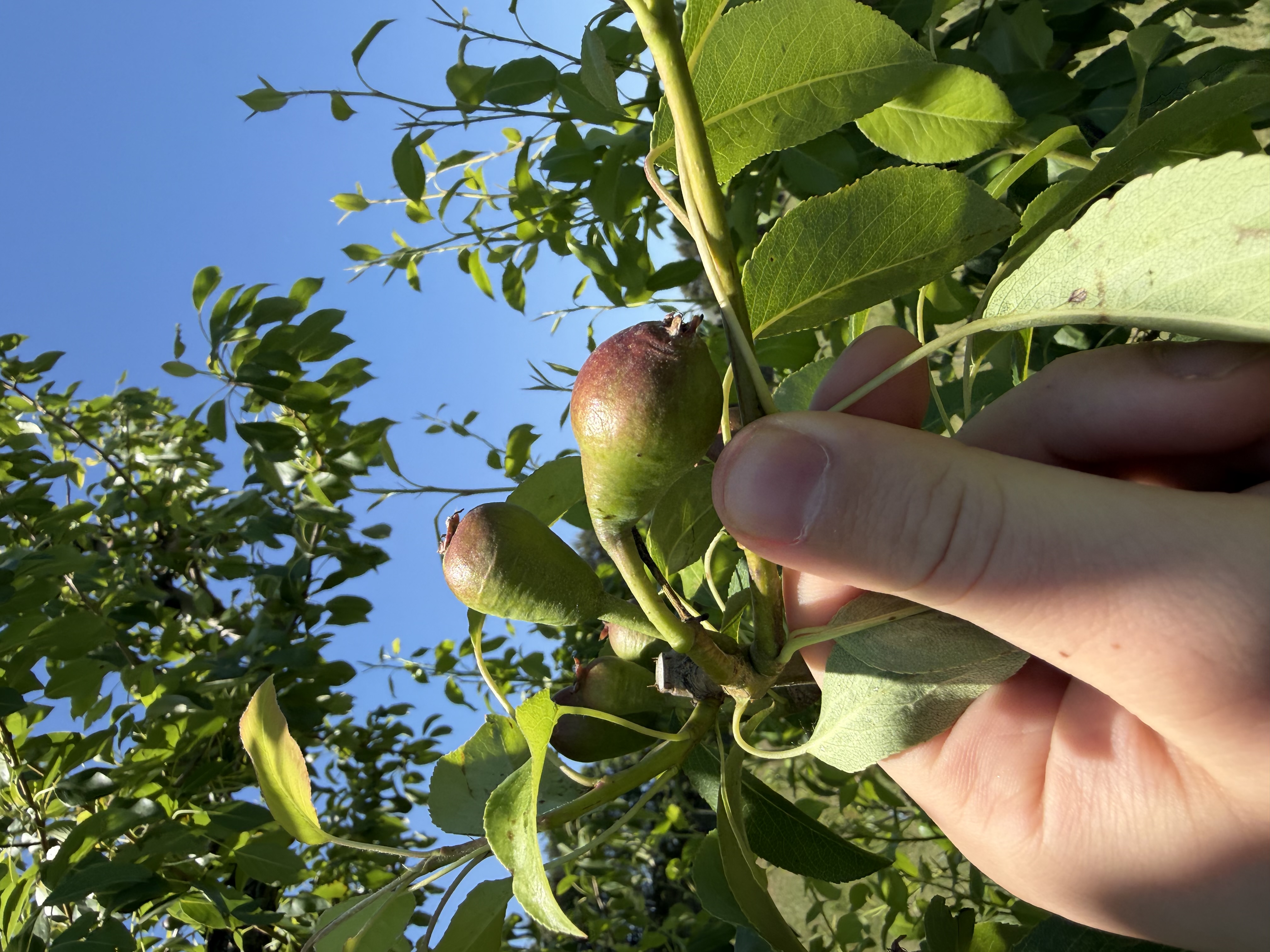
Pear fruit are sizing rapidly across Southwest Michigan, with many blocks now in the 20-25 mm diameter range. Fruit are moving beyond the early post-bloom insect window, and plum curculio activity has largely ended for this timing. Fresh injury should still be noted if found, but management attention should now shift toward pests and diseases that can continue building through early summer.
Primary pear scab risk has largely ended now that primary spore discharge is complete. Blocks with clean early-season control can begin moving out of primary scab management. However, blocks with visible lesions should continue to be watched for secondary scab development. If lesions are present, secondary infections can continue during wetting events and may still threaten fruit and foliage.
Pear psylla should be the main insect focus moving forward, especially in blocks with a history of pressure. Summer populations can build quickly on new shoot growth and management is much easier before colonies become well established. Scout for adults, eggs, and early nymphs, and pay close attention to honeydew development, which can lead to fruit marking and sooty mold later if populations are allowed to build.
Growers should also continue general scouting for lingering injury from tarnished plant bug, green fruitworm and early leafroller feeding.
Small fruit updates
Grapes bloom is underway in southwest Michigan. Early hybrid wine grapes such as Marquette and Brianna are at or near full bloom. Concord and Niagara bloom has begun in the last couple of days in select locations. Widespread juice grape bloom is expected this week. Vinifera wine grapes are at 12 inches of growth or more, with clusters beginning to separate.
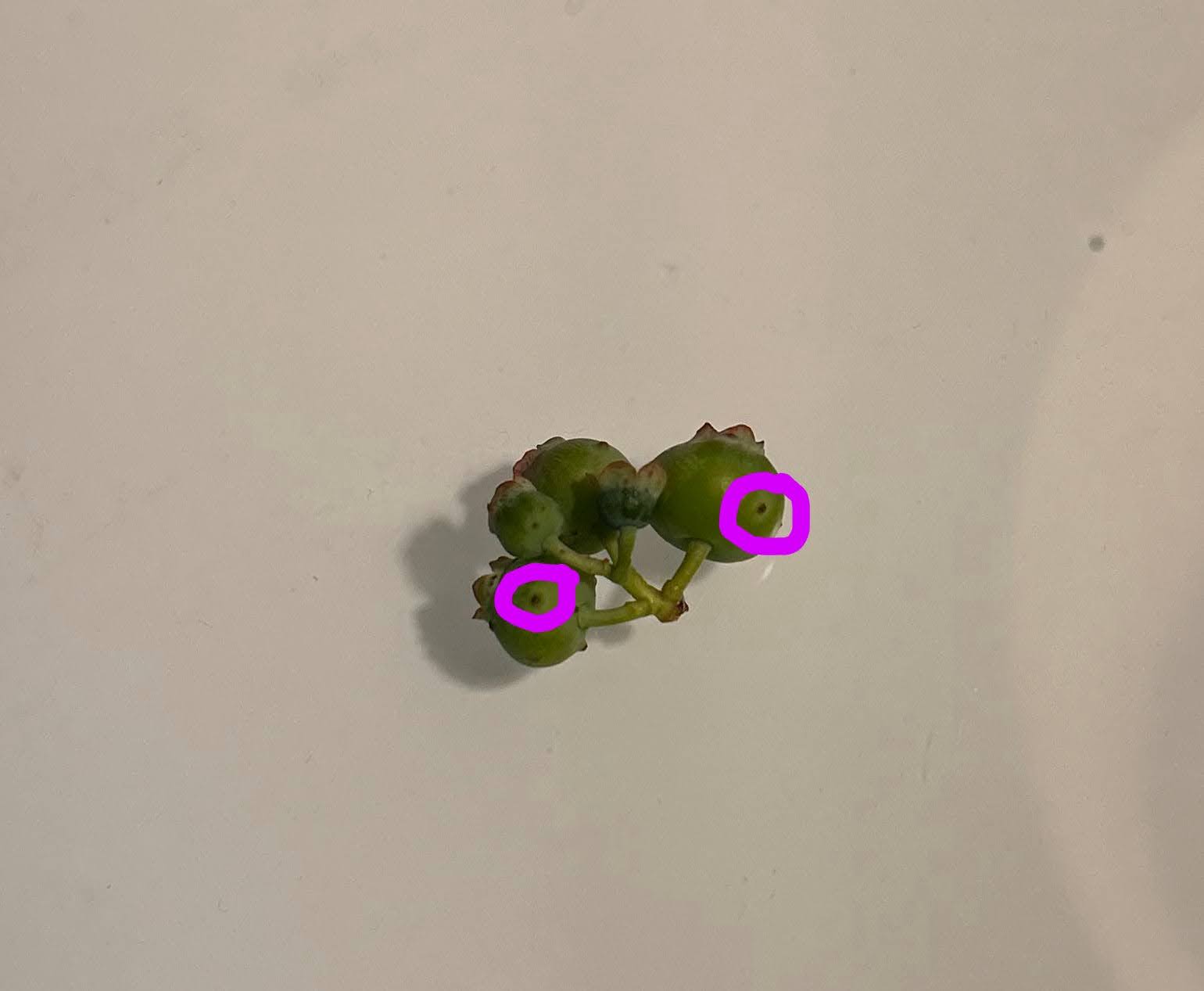
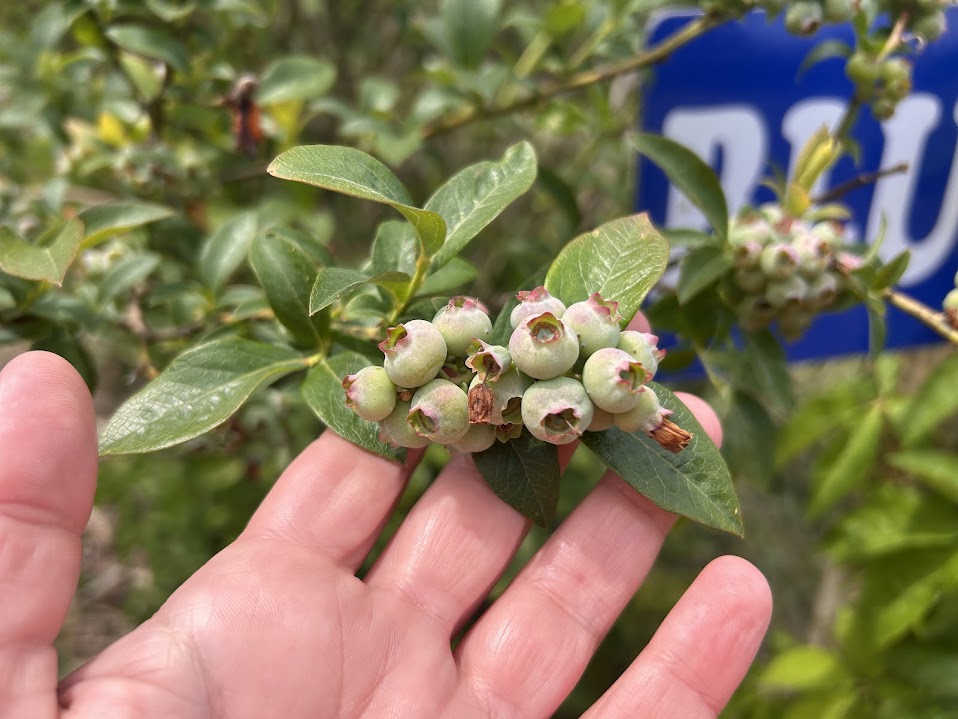
Blueberry are sizing through southern Allegan County. Damage from flower thrips has been observed in various fields across the region. Monitoring for cherry fruitworm and cranberry fruitworm is in progress. Cranberry fruitworm was caught at TNRC and they are setting the biofix for May 16/17, 2026.
Enviroweather models are estimated 50% emergence of blueberry gall wasp by May 25 from Berrien County through Van Buren County. Traps should be put out for blueberry maggot. SWD are been caught at TNRC, mostly males. Make sure your irrigation systems are up and running, especially if you primarily rely on drip. We are likely going to have a drier summer. This timeof year is a great time to walk the fields and scout for viruses.
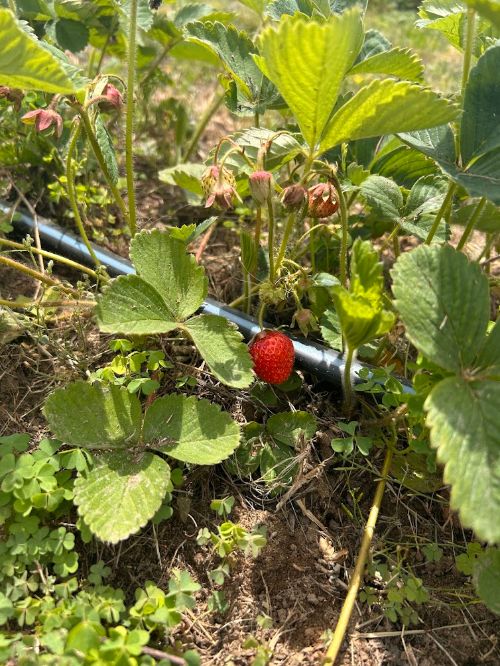
Strawberry fruits are being harvested! Growers are focused on controlling leaf spot, preventing fruit rots and picking berries. Some growers are finding thrips damage on their fruit. Thrips damage in strawberries looks like bronzing with extra seediness.
Bramble leaves are emerging. Growers are controlling powdery mildew and raspberry sawfly. Raspberry borer has been observed at fields in VanBuren County.
Upcoming meetings
The 2026 Strawberry Field Day is taking place July 8 in Three Rivers, Michigan. Sign up to attend.
This year, we are hosting Tuesday Night Fruit IPM meetings. They take place in person at the Southwest Michigan Research and Extension Center in Benton Harbor and online via Zoom. The meetings cover phenology, insect and disease progression and selected topics from experts in Extension. These meetings cover small fruit for southwest Michigan and tree fruit for southwest and southeast Michigan. The meetings start at 5:30 p.m. and occur weekly until June 24. Sign up for the online option. Past meeting recordings are available online via MSU Mediaspace.
This work is supported by the Crop Protection and Pest Management Program (grant no 2024-70006-43569) from the USDA National Institute of Food and Agriculture. Any opinions, findings, conclusions, or recommendations expressed in this publication are those of the author(s) and do not necessarily reflect the view of the U.S. Department of Agriculture.