Cercospora leaf spot of sugarbeet
June 17, 2026 - Emily Weedon, Alexandra Gray, Linda Hanson, and Jaime Willbur; Michigan State University and USDA-ARS
 Print
Print Email
EmailIntroduction
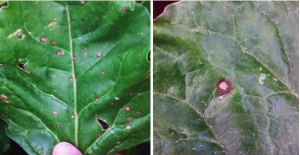
Cercospora leaf spot (CLS), caused by the fungus Cercospora beticola, is the most important foliar disease of sugarbeet in the Michigan growing region. Left unmanaged, CLS can cause yield losses of five or more tons per acre and reduce sugar levels by up to three percentage points. Increased concentrations of impurities, as well as storage losses, have also been associated with CLS. Yield and quality losses can be expected when leaves have one or more spots per square inch (Figure 1). While the disease has been well managed historically, the development of resistance to several fungicide classes has made leaf spot control more challenging in recent years.
Symptoms
Foliar symptoms
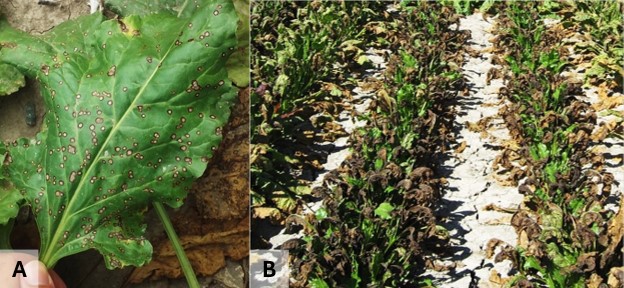
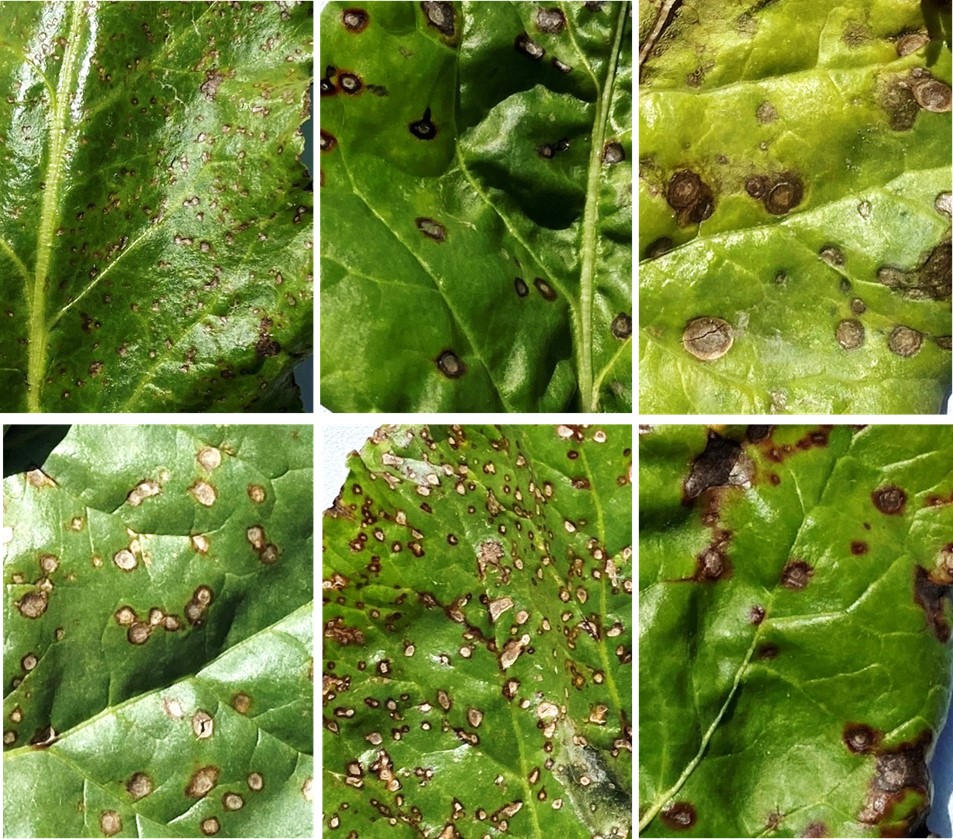
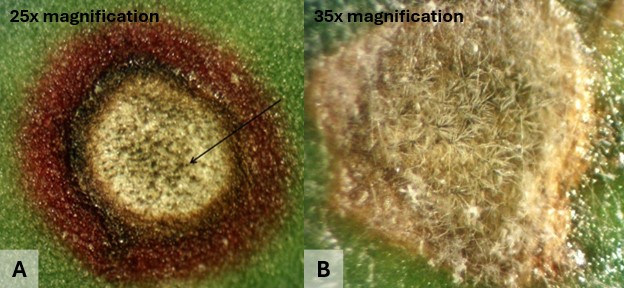
Disease often appears first on older leaves and progresses to newer leaves. CLS typically results in circular leaf spots or lesions that are approximately 1/8 to 3/16 inches in diameter and have tan to ashen grey centers with a dark reddish-purple to brown border. Across varieties, however, CLS lesions may be a wide range of sizes and colors (Figure 2). The centers of mature spots contain small black dots (Figure 3A), which are spore-bearing structures called pseudostromata. In favorable humid conditions, these produce silver, needle-like spores (Figure 3B). Sporulation can often be observed using a magnifying glass or hand lens after placing symptomatic leaves in a humid environment or moist chamber for 24 to 48 hours. Severe infections can cause lesions or spots to coalesce, resulting in premature leaf death and plant defoliation.
Disease
Pathogen
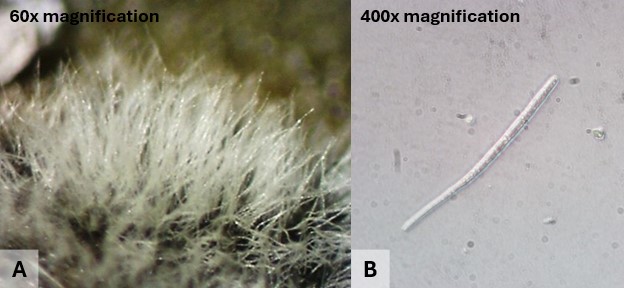
Cercospora beticola is a fungus and produces abundant needle-like conidia (asexual spores) from the pseudostromata within mature leaf spots (Figure 4A). Spores are typically clear or colorless at high magnification with a straight to slightly curved shape and at least 3 cell walls or septa (Figure 4B). C. beticola infects plants in the Chenopodiaceae family. This includes sugar beet, table beet, chard, and spinach, as well as closely related weed hosts such as lambsquarters, goosefoot, and pigweed. It also may occasionally infect plants in other families, such as safflower, chrysanthemum (Asteraceae), and celery (Apiaceae).
Disease cycle
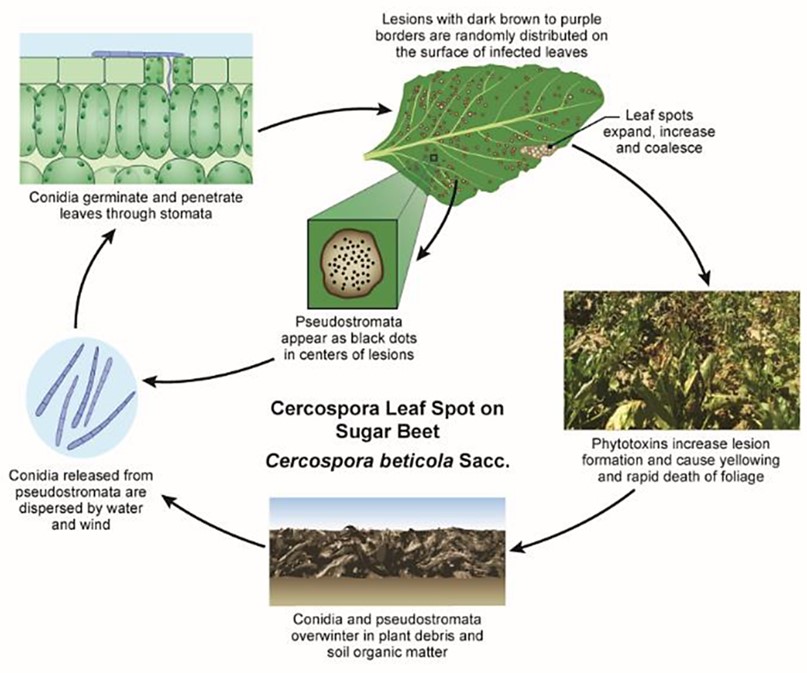
Cercospora leaf spot is a polycyclic disease, meaning C. beticola produces multiple cycles of sporulation and infection in one season (Figure 5). The fungus overwinters in the soil on decomposing beet leaves and weed residues and can survive for at least two years. Fungal growth is typically activated by warm, humid conditions in early spring. Infectious spores (conidia) are produced from infected material and dispersed via rain splash and wind. These spores generally have a short range, with most moving within ten feet of the source, but some can move as far as 300 feet (100 meters). In highly favorable conditions, spores deposited on leaves can infect the foliar tissue in under 24 hours and form leaf spots in seven to ten days. As the disease persists, new leaf spots will produce spores and infect surrounding leaves and nearby sugarbeet hosts.
This cycle of infection continues until conditions are no longer favorable for disease development. In a typical year, leaf spot season in Michigan begins at the end of June and will continue until sometime between the middle of September and the beginning of October.
Favorable conditions for disease
Weather plays a critical role in the development of CLS. Daytime temperatures between 75-90°F and nighttime temperatures above 60°F, coupled with at least 10-12 hours of leaf wetness (rain or dew) are optimal conditions for disease. Studies have shown that C. beticola growth can also be activated by cooler temperatures (50°F), however, warmer temperatures approaching 95°F slow CLS development significantly. While areas that experience high humidity (>90%) are at an increased risk for disease, humidity above 60% can also allow some infection and spore production to occur.
Integrated disease management
Host resistance
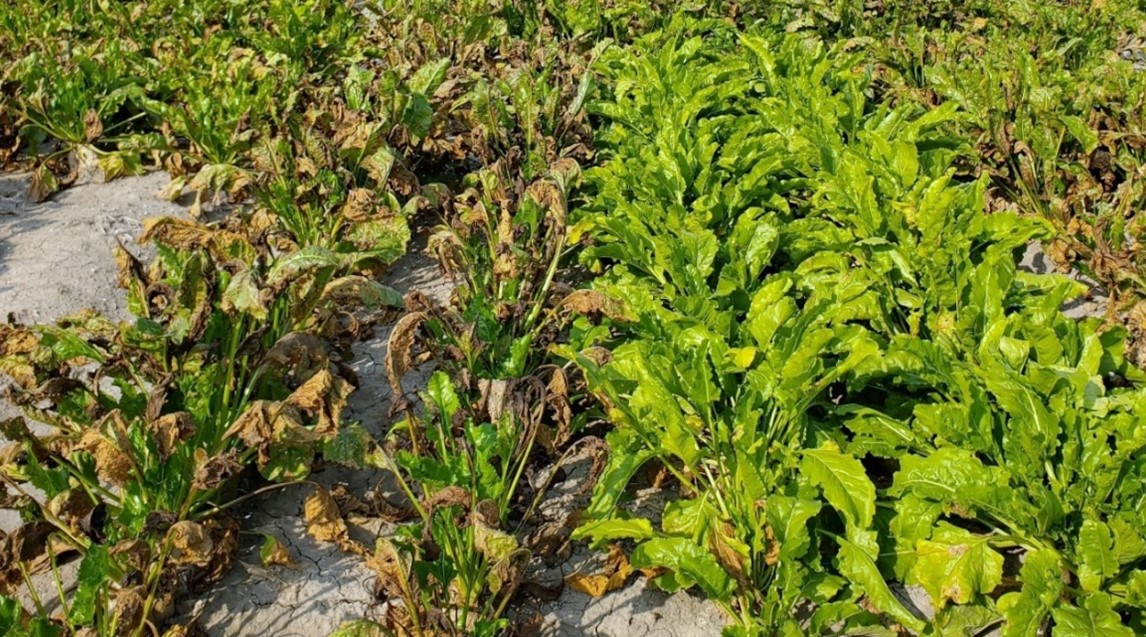
Planting resistant varieties of sugarbeet is very important for decreasing the severity of CLS, as well as slow the rate of disease progression in a field (Figure 6). The variety resistance that is currently available is not recommended as a standalone management strategy, and should be paired with timely chemical applications to most effectively manage CLS. However, planting resistant varieties allows for some flexibility in the application timings and provides an additional layer of protection against disease development when planted complementary to chemical applications. Highly resistant commercial varieties (containing the CR+ trait) were previously available and grown locally, however, resistance-breaking C. beticola strains were widely observed in Michigan in 2024. CLS resistance, especially durable resistance relying on multiple genetic sources, remains a primary consideration of the Michigan Sugar Company variety approval process.
Additionally, it is recommended to consider variety resistance to both Cercospora and Alternaria leaf spot when selecting varieties if planting in areas impacted by both diseases. For more information about variety resistances, visit the current Michigan Sugarbeet Research & Education Advisory Council (REACh) Variety Trial Results (https://www.michigansugar.com/growing-production/).
Cultural practices
There are a number of different farming practices which can help to decrease the severity of CLS in a fields. A minimum crop rotation of three years is recommended, and a longer rotation will benefit a CLS management program. Fields with a history of beet plantings are typically major sources of disease inoculum, so it is best practice to avoid planting besides a field that has had sugarbeet planted in them a year previous. If it cannot be avoided, it is recommended to scout that edge of the current field regularly, as this area will be more prone to CLS infection. A buffer strip of about 300 feet with another crop such as soybean can help to decrease the risk posed by this inoculum source. Tillage and plowing of beet residue can help to destroy CLS inoculum, but there is a risk of soil erosion. Common weeds such as pigweed and lambsquarters can harbor the disease. Managing these weeds in rotational crops may help to reduce initial inoculum and CLS severity.
Fungicides
The application of fungicides is important for managing Cercospora leaf spot in Michigan sugarbeet fields. As such, it is vital that the appropriate testing be done to monitor the efficacy of these fungicides within an integrative management program.
In Michigan, fungicide sensitivity screening has been ongoing since 2010 to research and monitor the development of fungicide resistance in sugarbeet fields. In recent years, resistance has been identified in isolates of C. beticola to multiple active ingredients including pyraclostrobin (QoIs, or quinone-outside inhibitors), several triazoles (also referred to as DMIs, or demethylase-inhibitors, including difenoconazole, mefentrifluconazole, prothioconazole, and tetraconazole), and triphenyltin hydroxide products (organo-tin) (Figure 7). Additionally, cross resistance for the triazoles has been reported to multiple chemistries. Thiophanate-methyl (benzimidazoles) resistance has remained high in recent years as well. For more information about the current local field testing results, visit the Michigan Sugarbeet Research & Education Advisory Council (REACh) Research Results (https://www.michigansugar.com/growing-production/resources/research-information/).
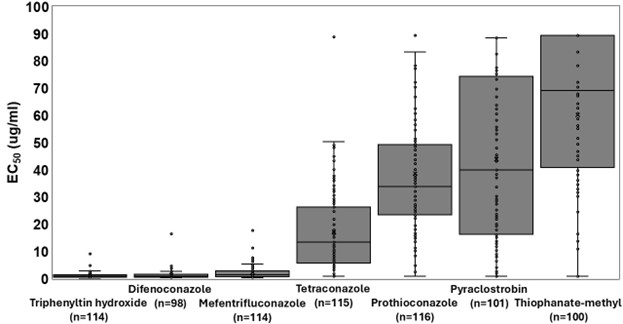
Overall, triazole fungicides are effective products for managing CLS. Since cross resistance has been reported, it is good practice to diversify triazole applications (e.g., Provysol, Inspire XT, and Proline), as the same active ingredient should not be used more than once per season. Due to the high prevalence of resistance development with strobilurin fungicides, these products are not recommended for leaf spot management. Pre-mixes with strobilurin active ingredients (e.g. Delaro or Priaxor) should not be applied more than once per season and tank-mixed with other modes of action. Benzimidazole resistance is highly prevalent in C. beticola and A. alternata isolates, and are not recommended to be applied by themselves. Organo-tin fungicides (e.g. AgriTin, Minerva Duo, or Super Tin) are very effective against leaf spot. To preserve efficacy of existing chemistries, use of tank-mix partners is highly recommended, e.g., EBDC (ethylene bisdithiocarbamates; e.g. Koverall, Manzate Max, or Penncozeb) or coppers. For more information about current recommended tank mixes and best application practices, refer to the Michigan Sugar Grower Guides and Research Reports (https://www.michigansugar.com/growing-production/).
Risk zones
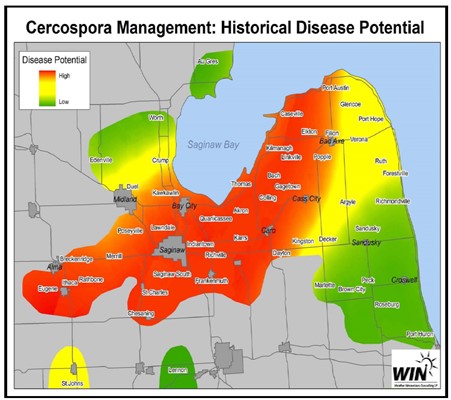
In Michigan, there have historically been three distinct CLS risk management zones (Figure 8). Red zones have a high risk of Cercospora infestations, yellow zones are at a moderate risk, and green zones have a lower CLS risk. It is recommended that growers in red zones pay additional attention to CLS, as they are at the greatest risk for disease severity. Resistant varieties should be planted in red zones whenever possible, and cultural practices should be focused on reducing CLS inoculum. It is important that an effective spray program be followed.
It should be noted that while the green and yellow zones are at a lower risk of Cercospora leaf spot, they are still at a high risk of Alternaria leaf spot. To provide maximum protection, variety selection and spray schedules in these regions should be geared toward management of both diseases.
Application timing
To provide the most effective leaf spot management, it is recommended that the first chemical applications be applied before spots first appear on leaves to minimize yield losses. Daily and cumulative disease severity values (DSVs), determined by the BEETcast Cercospora infection model, are available on the Weather INnovations website (www.michiganbeets.com/dsv.cfm) and are vital metrics for monitoring disease. The risk map provided shows the risk of CLS across the growing regions of Michigan (Figure 8).
Typical thresholds for initiation of fungicide programs have ranged from 35-55 cumulative DSVs, however, these are largely dependent on production practices and varietal resistance to CLS. BEETcast thresholds have often been met between mid-June to mid-July. However, research in the Great Lakes region indicates that the presence of aerial Cercospora spores also influences first infections and may help support fungicide timing practices. Follow-up applications should be determined by the shorter of BEETcast DSVs or number of days since the last application, often 10-14 days depending on the product. When managing CLS, it is generally best practice to apply fungicides sooner rather than later. If there is a chance that an application will be missed on the scheduled day, it should be done the day before to ensure coverage.
To provide adequate leaf spot control, it is important that proper application techniques be followed. Information about the most current spray recommendations including nozzle selection and coverage improvement, refer to the Michigan Sugar Grower Guides (https://www.michigansugar.com/growing-production/).
References
Draycott, P.A. 2006a. Introduction. Pages 1-8 in: Sugar Beet. (Ed.) Draycott A.P. Blackwell Publishing, Oxford, UK. FRAC code list. Fungicide Resistance Action Committee. 2022. https://www.frac.info/docs/default-source/publications/frac-code-list/frac-code-list-2022--final.pdf?sfvrsn=b6024e9a_2
Franc, G.D. 2010. Ecology and epidemiology of Cercospora beticola. Pages 7-19 in: Cercospora Leaf Spot of Sugar Beet and Related Species. (Eds.) Lartey R.T., Weiland J.J., Panella L., Crous P.W., and Windels C.E. American Phytopathological Society, St. Paul, MN.
Harveson, R.M, Panella, L., and Lewellen, R.T. 2009. History of Beet Production and Usage. Pages 1-2 in: Compendium of Beet Diseases and Pests, 2nd Ed. (Eds.) Harveson R.M., Hanson L.E., Hein G.L. American Phytopathological Society, St. Paul, MN.
Jacobsen, B.J., and Franc, G.D. 2009. Cercospora leaf spot. Pages 7-10 in: Compendium of Beet Diseases and Pests, 2nd Ed. (Eds.) Harveson R.M., Hanson L.E., Hein G.L. American Phytopathological Society, St. Paul, MN.
Khan, J., Del Rio, L.E., Nelson, R., Rivera-Varas, V., Secor, G.A., and Khan, M.F.R. 2008. Survival., dispersal., and primary infection site for Cercospora beticola in sugar beet. Plant Dis. 92:741-745.
Kirk, W., Hanson, L., Franc, G., Stump, W., Gachango, E., Clark, G., et al. 2012. First report of strobilurin resistance in Cercospora beticola in sugar beet (Beta vulgaris) in Michigan and Nebraska, USA. New Dis. Rep. 26:3.
McKay, M.B., and Pool, V.W. 1918. Field studies of Cercospora beticola. Phytopathology. 8:119-136. Michigan Sugar Company. 2020. Fungicides available for Cercospora and Alternaria. Page 51 in: Growers’ Guide for Producing Quality Sugarbeets. https://www.michigansugar.com/wp-content/uploads/2020/03/2020-Michigan-Sugar-Grower-Guide.pdf.
Pool, V.W. and McKay, M. 1916. Climatic conditions as related to Cercospora beticola. J. Agric. Res. 6:21-60.
Rosenzweig, N., Hanson, L.E., Mambetova, S., Jiang, Q., Guza, C., Stewart, J., Trueman, C.L., and Somohano, P. 2020. Temporal population monitoring of fungicide sensitivity in Cercospora beticola from sugarbeet (Beta vulgaris) in the upper Great Lakes. Can. J. Plant Pathol. 42:469-479.
Ruppel, E.G. 1986. Cercospora leaf spot. Pages 8-9 in: Compendium of Beet Diseases and Insects. (Eds.) Whitney E.D., and Duffus J.E. American Phytopathological Society, St. Paul, MN.
Secor, G.A., Rivera, V.V., Khan, M., Gudmestad, N.C., and Weiland, J.J. 2010.
Sensitivity of Cercospora beticola to foliar fungicides in the Red River Valley of North Dakota and Minnesota. Pages 213-233 in: Cercospora leaf spot of sugar beet and related species. (Eds.) Lartey R.T., Weiland, J.J., Panella, L., Crous, P.W., and Windels, C.E. American Phytopathological Society, St. Paul, MN.
Weiland, J., and Koch, G. 2004. Sugarbeet leaf spot disease (Cercospora beticola sacc.). Mol. Plant Pathol. 5:157-166.