


Community Voice Guide for Farmers Markets and Nutrition Assistance Programs
Farmers markets offer valuable opportunities to increase access to healthy foods in community settings.
By using supportive resources and real-world examples, community champions can strengthen access to nutritious food choices at local farmers markets through nutrition assistance programs.
Many farmers and farmers markets participate in food access and nutrition assistance programs, including:
- Supplemental Nutrition Assistance Program (SNAP)
- Double Up Food Bucks
- Women, Infants & Children (WIC) Produce Connection
- Senior Project Fresh
- Produce prescription programs
These programs provide incentives — such as coupons or market credit — for community members who receive or qualify for food assistance. Participants can use these incentives to purchase fresh fruits and vegetables, along with select other eligible food items, at farmers markets and farm stands.
The Community Voice Guide for Farmers Market and Nutrition Assistance Programs, based on Michigan State University Extension’s Six-Step Model to Community Change, is designed to support community champions in this work. The guide helps communities move from identifying food access needs to taking action and sustaining long-term impact through effective use of nutrition assistance programs at farmers markets.
Here's how:
Step 1: Identify the need
To identify if there is a need for increased access to food assistance programs at your local farmers market, try the following:
Check the Michigan Farmers Market Association’s tool to locate your local farmers market and see which food assistance benefits and incentives they accept.
Visit your local farmers market and observe the following:
What types of vendors are at the market (produce, food trucks, flowers or baked goods)?
Who is visiting the market?
Is there signage stating what types of food assistance/food incentive programs farmers accept?
After visiting your local farmers market, reach out to the market manager and set up a meeting. Consider asking:
How has the market changed over the years? What have you seen in terms of different vendors and market customers?
What feedback from vendors and customers do you get?
What food benefit programs does the market participate in? Why do they participate in these programs or why don’t they?
What has been the market manager’s experience with applying for or setting up food assistance/incentive acceptance programs?
Would they and the farmers be open to help in getting these programs running? If yes, could they connect you with farmers/growers who do not currently participate in food benefit programs? If yes, what resources would help them succeed?
Tools for identifying the need: Visit the Identify the Need Guide and Worksheet for more on guiding questions, ideas and examples of how to clarify a specific need, why it matters and what benefits it could have for community members.
Step 2: Bring people together
In order to make positive change last longer, identify two to four people in addition to the market manager who care about improving food access and who have an influence in your community. A good place to start is with other people who work at the market such as farmers/growers or vendors. Share your goal and ask if they would be willing to meet. As a team, consider the following questions:
What is the need we are trying to address? What possible solutions are there?
What is one realistic change we can try? Start small, like introducing one nutrition assistance program at the market rather than all of them at once.
Who is missing from this team? Identify other stakeholders such as city officials, volunteers and market visitors who also have a shared interest in your goal and can help identify resources to get started.
Tools for bringing people together: Use the Bring People Together Guide and Worksheet to identify people to include in your action team.
Step 3: Explore what’s working
Reviewing what’s working and what could be done better at your farmers markets, as well as other local markets, can help you pinpoint specific changes to try making first. You can use real-life examples to explore what food assistance benefits programs can be made available at farmers markets and how communities throughout Michigan have implemented them.
Ideas for putting what's working into place
Below are real changes famers markets have made, some in partnership with MSU Extension. Use these to help spark ideas for change in your farmers market.
Idea 1: SNAP & Double Up Food Bucks
Source: Learn to use your bridge card at select farm markets and produce stands
People who receive monthly Supplemental Nutrition Assistance Program (SNAP) benefits can use them at farmers markets to purchase non-prepared food items like fresh fruits, vegetables, meat, milk, eggs, cheese and even seeds to plant and grow their own vegetables. By also using Double Up Food Bucks, participants can double the amount of fruits and veggies they bring home from the farmers market.
In order to accept SNAP benefits, a farmers market must submit an application to the Food and Nutrition Administration (FNA) to become an authorized retailer. The Michigan Farmers Market Association guide, “Accepting SNAP Bridge Cards at Michigan Farmers Markets”, will walk a market through the entire process.
The Fulton Street Farmers Market is one example of a market that allows visitors to use a Michigan Bridge Card at their market.
Idea 2: WIC Produce Connection
Source: Using WIC Cash Value Benefits at Farmers Markets and Roadside Stands
WIC Produce Connection is a nutrition assistance program that serves people who are pregnant, post-partum and breastfeeding/chestfeeding, as well as infants and children up to age 5. The program promotes locally grown fruits and vegetables from authorized growers, farmers markets and authorized roadside stands in Michigan. WIC EBT cards holders will use e-benefits to purchase fresh produce from authorized growers at a farmers market or authorized roadside stands. In addition, clients can also use their monthly WIC Cash Value Benefits (CVB) at authorized growers.
For more information, check out:
Contact 800-942-1636, Option 2 or MDHHS-ProduceConnection@michigan.gov to request an application
The Davison Farmers Market is one of the many local markets that supports the WIC Produce Connection program.
Idea 3: Senior Project Fresh (SPF)
Senior Project Fresh (SPF) helps older adults eat more fruits and vegetables while supporting local farms. The program runs from May 1 to October 31 each year, and participants can receive free nutrition education and up to $25.00 in electronic benefits on a card or smart phone to purchase Michigan grown fruits, vegetables, herbs and honey.
Growers/farmers who want to participate in the program as vendors must grow and sell local produce at a roadside stand or farmers market. They can visit the Michigan Department of Health and Human Service Senior Project Fresh website to fill out a farmer application (older adults interested in applying for benefits use the same website but fill out the older adult application).
The Green Boots Veteran Community Horticulture Marketplace is one of the many local markets that supports the Senior Project Fresh program.
Idea 4: Produce prescription programs
Produce prescription programs throughout Michigan help residents access healthy food and nutrition education if they are experiencing food insecurity or diet-related chronic disease. Healthcare professionals may “prescribe” fruits and vegetables to support improved health outcomes. Eligible participants get market tokens or coupons to purchase fruits and vegetables at local farmers markets. They can also learn about fresh produce available at local farmers markets and how to use available produce to support better health.
Michigan Produce Prescription Coalitions and MIFMA provide additional resources and best practices on implementing produce prescription programs.
One example of such a program is The Upper Peninsula Food As Medicine (UPFAM) program, where participants can get additional coupons for use in a farmers market by participating in local nutrition, cooking and food preservation classes.
Tools for exploring what's working
Use the Explore What’s Working Guide and Worksheet to guide you through this conversation.
Visit other markets in nearby communities to see how they support accepting food assistance benefits at their market. Speak with market managers and farmers/growers to learn more about the process for participating. Use MIFMA's Find a Farmers Market search tool, where you can narrow your search based on nutrition assistance program availability to locate specific markets that might help you learn how to reach your goal.
Check out Michigan State University Extension’s Stories of Change for more ideas.
Step 4: Gather resources
Here are some trusted resources to get you started on planning, implementing, and sustaining your work. Each resource offers tools and examples that can be adapted to fit the needs, capacity and culture of your team.
Michigan State University farmers market resources
Food Budgeting website: Visit the Stretch Your Benefits webpage to learn about food assistance programs, including those offered at farmers markets, that are available to Michigan residents.
Removing barriers for families: For example, MSU Extension worked with Mama’s Lexington Farmers' Market to introduce a lactation tent to support families who attend the market.
Seasonal produce availability guides: Available for the Upper Peninsula and Lower Peninsula to see when fresh fruits, herbs and vegetables are grown in Michigan and most likely ready to buy at your local farmers market.
Other farmers market resources
Accepting SNAP Bridge Cards at Michigan Farmers Markets: The Michigan Farmers Market Association guide to will walk a market through the entire process of becoming an authorized retailer to accept SNAP benefits.
Prescription for Health Program Implementation Guide: Developed by The Prescription for Health program at Washtenaw County Health Department to help other organizations who are interested in replicating their evidence-based program.
Senior Project Fresh Program Implementation Resources: The Michigan Department of Health and Human Services provides information for program participants, farmers, and community partners.
Tools to gather resources: Use the Gather Resources Guide and Worksheet to focus your goals and find reliable resources to help you implement your change.
Step 5: Make a plan and act
Keep your plan simple to start; choose one goal, pick one strategy, communicate the planned and assigned tasks clearly and test outcomes for four-to-six weeks. When making a plan, consider the following:
1: Choose the system you want to improve. For example, is the market as a whole able to apply to enroll as part of a nutrition assistance program, or do individual vendors need to apply?
2: Pick one clear goal in the specific setting. This helps prevent the process from feeling overwhelming and supports steady progress.
3: Choose a win that is realistic. Markets and farmers may only be able to enroll in one nutrition assistance program at a time. Or you may only get one vendor to enroll in a program. That still increases community access to healthy food choices and is still a win to be celebrated.
4: Make the change last. Look for ways to build change into everyday practice in these three main categories:
Policy: written documents that share expectations and consistent messages with staff and community stakeholders regarding program goals and practices.
Systems: routines and schedules that make nutrition assistance programs easier to maintain.
Environment: spaces and equipment that support the use of nutrition assistance programs.
To make changes to those areas last in the long-term, use sustainability strategies. You may use all of the below, or may choose just one or two as you are starting out:
Leadership commitment: visible support, shared expectations, and follow-through.
Clear ownership: maintenance is integrated into a specific job description or an existing team's official responsibilities.
Training and onboarding: new staff learn the approach as part of normal onboarding or professional development.
Communication and reinforcement: reminders, signage, shared norms, and consistent messaging are used with staff, families, and other stakeholders.
Tools for making a plan and taking action: Use the Make a Plan and Act Guide and Worksheet to map out an action plan and identify simple steps to start.
Step 6: Reflect and share what you learned
Reflect on the change made: what worked, what felt realistic and what might you adjust moving forward. Reflection helps you strengthen your approach and builds momentum over time. Sharing what you learn can also help others see what is possible.
Some simple reflection questions include:
What worked well?
What challenges came up and what helped?
What would make this easier to continue?
What is one next step to keep going or expand the change?
Tool for reflecting and sharing: Use the Reflect and Share Guide and Worksheet to help you tell your story of change.
Farmers Markets Key Resources
All key resources below are free to use and share. Additional resources can be found under the "Step 4: Gather resources" section.
Food Budgeting - Stretch Your Benefits
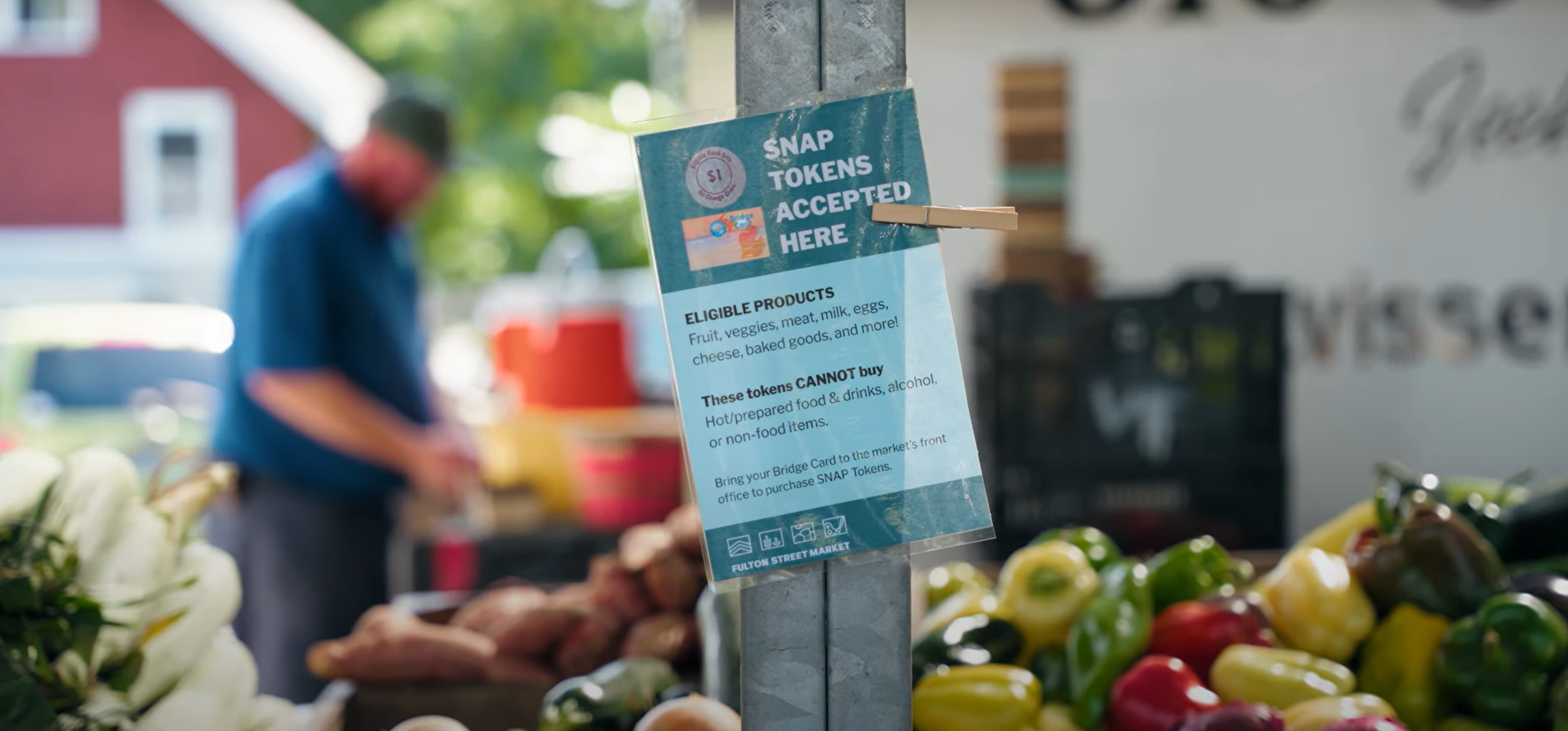 Additional food assistance benefit resources and tools that will help make the most of benefits at farmers markets, roadside stands and beyond.
Accepting SNAP Bridge Cards at Michigan Farmers Markets
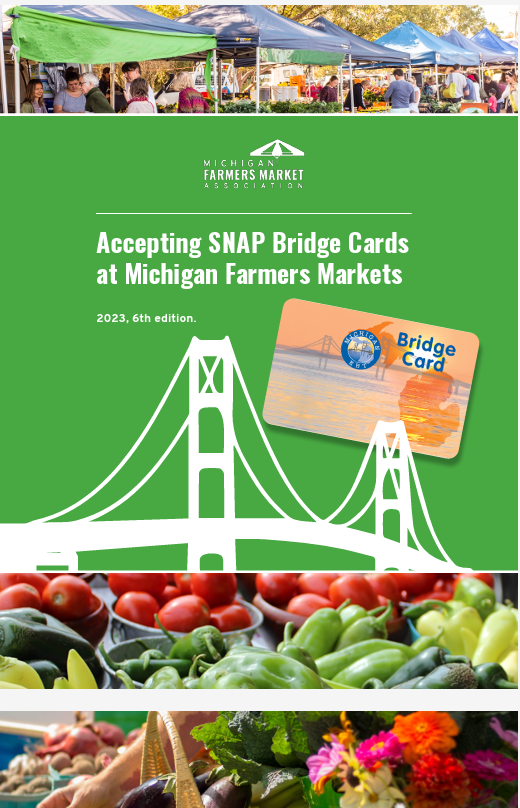 The Michigan Farmers Market Association guide to will walk a market through the entire process of becoming an authorized retailer to accept SNAP benefits.
Prescription for Health Program Implementation Guide
Developed by The Prescription for Health program at Washtenaw County Health Department to help other organizations who are interested in replicating their evidence-based program.
 Print
Print Email
Email