Food Pantries

Discover ways to offer more fresh, healthy food to pantry clients through client-choice methods and garden to pantry partnerships.

This site is currently under development and is not yet launched. If this site is ready to be launched, please contact webadmin@anr.msu.edu.

Client Choice Food Pantries


Download or Share the Complete Client Choice Food Pantry Guide

In a client-choice model, pantry clients select the foods they want, rather than receiving a pre-packaged box.

Benefits of a client‑choice model include:

  • Healthier eating at home: Clients can choose foods that fit their cultural traditions, dietary needs, and personal preferences.
  • Preserved dignity: Choice allows clients to decide what is best for themselves and their families.
  • Less food waste: When clients select items they know they will use, fewer foods go uneaten.
  • More meaningful volunteer interactions: With less time spent pre‑packing boxes, volunteers can focus on welcoming clients and offering support.

This resource is designed for community champions who want to improve access to healthy food in food pantries by implementing a client choice model. Many of the tools included here draw from the evidence-based Voices for Food MyChoice Pantry Toolkit.

Use the Client Choice Food Pantry Guide to find tips for getting started, practical examples, and reliable tools to implement a client choice model. This guide follows MSU Extension’s six-step model to Community Change to help you move from identifying a need to taking action and sustaining changes:

Step 1: Identify the Need

Before moving to a client‑choice pantry model, take time to understand your pantry’s readiness for change.

  • Gather input from people at your pantry. Ask clients, volunteers, and staff what they think about how the pantry currently works. Find out what foods are available, what foods are used most, and how clients would prefer to choose foods in the pantry.

  • Observe daily operations. Spend time observing the pantry on a typical day. Notice which foods clients often select or leave behind, and how volunteers interact with clients during distribution. These observations can help highlight what is working and what could be improved.

Tools for Identifying the Need:

  • Watch the video Choice Pantry Model in Lake County to learn why Bread of Life Food Pantry implemented a client choice pantry model.

  • Use the Identify the Need Guide and Worksheet for more questions, ideas, and examples of how to clarify a specific need, why it matters, and what benefits it could have for staff, volunteers, and clients.

  • Consider a short client survey using questions from the MyChoice Pantry Toolkit: Appendix C: Optional Questions to gain a deeper understanding of client preferences and experiences.

Step 2: Bring People Together

Pull together an action team by identifying two to four people who care about client choice and who have influence in your pantry. This could include food pantry directors, staff, volunteers, volunteer coordinators, clients, donors, or others.

Tools for Bringing People Together:

  • Use the Bring People Together Guide and Worksheet to brainstorm which people to include in your action team.

  • Consider completing the Organizational Readiness to Implement Change (ORIC) Assessment with your action team. The ORIC measures how ready your team is to make a change, like adopting a client choice model. A high score means people think the change is important and are motivated. A lower score may mean people don't understand why the change is needed. In this case, more communication and relationship-building may be needed to build buy-in before implementing a client choice model food pantry.

Step 3: Explore What's Working

Whether you’re already offering some choice to clients or you’re starting from scratch, you’re probably doing some things that can help you be successful with taking the next step. Review what’s working and what could be done better to pinpoint specific changes that can move you toward a client choice model. This assessment can happen through guided discussion with your action team or through a formal, research-based evaluation tool.

Tools for Exploring What's Working:

  • Use the Explore Options Guide and Worksheet to guide you through this conversation. Then, use the MyChoice Pantry Scorecard to assess what promising client-choice practices you may already be using in your pantry and where to focus your efforts and action planning.

  • This would also be a good opportunity to collect your clients’ ideas for changes using the MyChoice Pantry Toolkit: Appendix C: Optional questions to ask pantry client perceptions if you have not already used this tool.

Note: The healthy food assessment portions of the MyChoice Pantry Scorecard were developed using the United States Department of Agriculture and Department of Health and Human Services’ 2015-2020 Dietary Guidelines for Americans. The Guidelines are updated every five years and have changed since this tool was developed. The reference to MyPlate in questions 1 and 7 can be omitted, but the focus on encouraging eating a variety of food groups remains the same. Likewise, if you are not working with a USDA-funded partner to do this work, you can omit question 15. Other questions and best practices in the Toolkit and Scorecard still apply.


Putting It into Practice: Examples of What’s Working in Other Pantries

After reviewing your own pantry’s strengths, it can be helpful to look at how other sites have made successful changes. Client‑choice pantries have been implemented across the United States, each tailored to its community and space. These examples can help spark ideas as you plan your next steps.

Idea 1: Offer Choice

Interior view of a grocery store with shelves and refrigerated units.

How: Encourage clients to remove their own items from shelves, as they would in a grocery store setting. Alternatively, using a “shopping list” that clients fill out to allow them to choose their selections that a pantry staff/volunteer can pull, if a full “grocery store” setup is not possible.

Example: The Little River Band of Ottawa Indians designed a grocery‑store‑style layout for their food distribution site in Manistee County. Photo: Caitlin Lorenc


Idea 2: Organize Layout by Food Group

A grocery store aisle with shelves of canned and jarred food and banners reading

How: Organize and label pantry shelves by color-coded food groups using signs or stickers. Food groups include fruits, vegetables, protein, grains, dairy, combination foods, and miscellaneous. Place posters on food pantry shelves to show the food group and number of items each client may take, based on family size.

Example: Love in Action Food Club in Ottawa County organized items by food group and posted signage with tips on how to add them to meals. Photo: Amy Prins


Idea 3: Train Staff and Volunteers

How: To enhance the grocery store-like experience, include training on how to offer respectful customer service. To encourage healthy choices, provide staff and volunteers with nutrition information they can share with clients.


Idea 4: Nudge for Nutrition

Cans of fruits on a supermarket shelf with a sign suggesting fruit in 100% juice or water.

How: Creatively market healthy foods by placing healthier options in more visible, easy-to-reach areas; making less healthy choices less visible, or promoting healthier choices through signage, taste tests, or food samples. Offer recipes and samples for foods that clients may be less familiar with or that don’t get selected as often.

Example: The Love in Action Food Club in Ottawa County posted “shelf talkers” with suggestions for how clients can select healthier foods. Photo: Amy Prins


Idea 5: Make it Accessible

A cart with fresh produce against a wall with

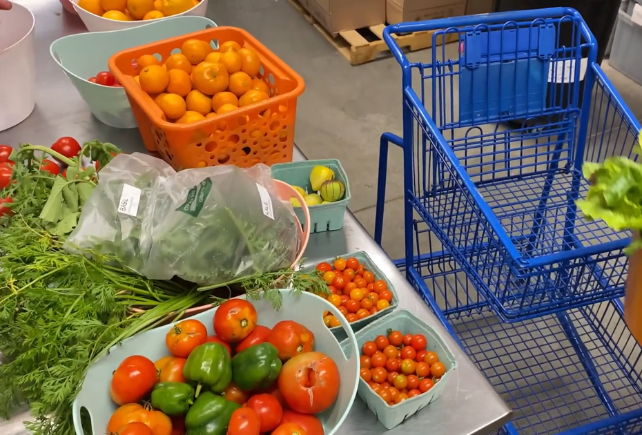
How: A client‑choice model requires clients to move around the pantry, which can be challenging for some. Ensure that clients have an easy way to carry and bag their selections by providing shopping carts, grocery bags or totes, or assigning volunteers to be guides who can help clients select their food.

Example: ECHO His Love MANNA Food Pantry in Manistee County added grocery carts that could be easily used by clients with limited mobility. Photo: Caitlin Lorenc

Step 4: Gather Resources

Gathering resources can help you plan, implement, and sustain your work.

Tools for Gathering Resources:

  • Use the Gather Resources Guide and Worksheet to focus your goals and find reliable resources to help you implement your change.

  • Use these additional resources to guide specific changes to your pantry:

    • Offer choice: Shopping list template from MyChoice Toolkit or Bread of Life Pantry shopping list example

    • Organize layout by food group: Foods by food group list for inventory

    • Nudge for nutrition: Food Pantry Shelf Talkers

    • Train staff and volunteers: Cook Healthy, Spend Less email course for volunteers, staff, and/or clients, MSU Extension Nutrition Basics

    • Offer taste tests/samples: MSU Extension Recipes website, Cooking Matters Recipe Finder

Step 5: Make a Plan and Act

The next step is to make a simple plan and try one change.

Tools for Making a Plan and Acting: Use the Make a Plan and Act Guide and Worksheet to map out an action and identify simple steps to start.

Step 6: Reflect and Share What You Learned

After you try a change, reflect on what worked, what felt realistic, and what you might adjust moving forward. Reflection helps you strengthen your approach and builds momentum over time. Sharing what you learn can also help others see what is possible.

Simple reflection questions:

  • What worked well?

  • What challenges came up and what helped?

  • What would make this easier to continue?

  • What is one next step to keep going or expand the change?

Many change efforts fade out because they depend on one motivated person. The strongest changes are the ones that become part of how an organization operates.

Sustainability strategy examples:

  • Leadership commitment: Early in the process, secure buy-in from board members, managers, and volunteer coordinators. Include them in your action team and include a plan for showing visible support for the change, shared expectations, and follow-through in your action plan.

  • Clear ownership: Make sure your action plan specifies who is responsible for a task or change.

  • Integration into existing routines: Built into schedules, inventory systems, workflows, or staff meetings.

  • Training and onboarding: New staff learn the approach as part of standard onboarding and are provided with nutrition resources and a one-pager explaining the approach.

  • Communication: Share expectations with donors and request donations that meet your health criteria.

Tools for Reflecting and Sharing: The Reflect and Share Guide and Worksheet can guide you through this step.