


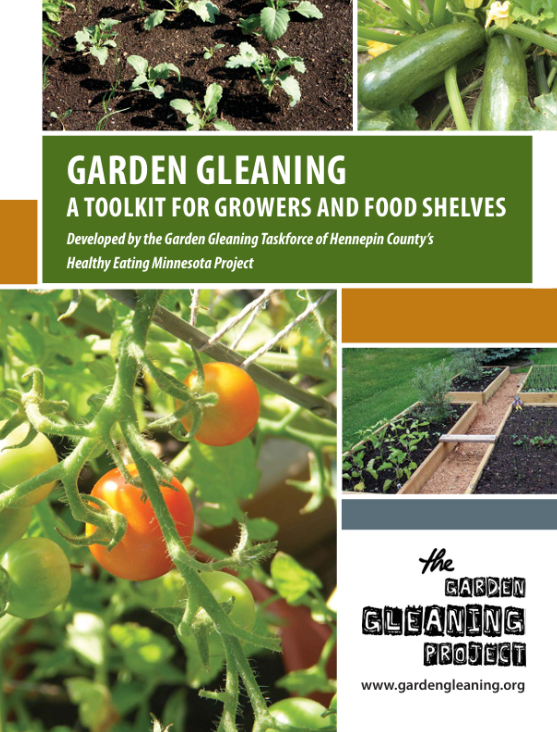
 This Minnesota resource shares tips for gardeners and pantries (called “food shelves”) on starting a donation garden program.
Community Change Guide for Garden to Food Pantry Partnerships
A garden to pantry (or donation garden) model is a system where gardeners grow, harvest and donate fresh produce to a food pantry or food bank.
Benefits of the donation garden method include:
- Increased access to healthy food for community members experiencing food insecurity.
- Stronger relationships between food pantries, community members and food donors.
- Less food waste by getting more garden harvest to people who need it.
- Support of local food production.
Who is this guide for? This guide is designed for community champions who are food pantry staff or volunteers. It offers ideas for increasing the availability of fresh fruits and vegetables in their organization by partnering with community donation gardens. Gardeners looking for tips on donating to food pantries can visit the Community Gardens page.
Read how The Giving Garden provides fresh produce to a local food pantry in Kalamazoo County: Food bank gardening with surprising yields.
Use this Community Change Guide for Garden to Food Pantry Partnerships for tips, examples, and tools to launch a garden to pantry program in your community. This guide follows Michigan State University Extension’s Six-Step Community Change Model to help you move from identifying a need to making and sustaining changes.
Step 1: Identify the need
Before you move forward, think about why a garden to pantry partnership makes sense for your organization and community. Maybe a local gleaners’ group reached out, or clients have asked for more fresh produce. Maybe a volunteer is interested in starting a garden onsite. Consider how your clients could benefit from donated garden produce. A quick survey or casual conversation can help you learn what types of produce clients want. Reflect on feedback you’ve already heard from staff, volunteers, clients and community partners.
Tools for identifying the need
Use the Identify the Need Guide and Worksheet for more questions, ideas and examples of how to clarify a specific need, why it matters and what benefits it could have for staff, volunteers and clients.
Watch Improving Nutrition Security: Garden to Food Club to learn about how a partnership between the U Dig It Community Garden and Lakeshore Food Club in Mason County grew from a youth garden to a donation program.
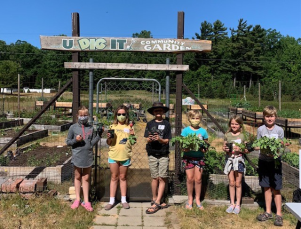
Image Source: Students harvested radishes from the U Dig It! Youth garden and donated them to the Lakeshore Food Club in Mason County. Photo credit: Kendra Gibson
Step 2: Bring people together
Pull together an action team. Involve people who influence pantry operations as well as those most impacted by the potential changes. This could include food pantry staff and volunteers, Extension Master Gardeners, financial donors, home gardeners, pantry clients, local farmers or others connected to your community.
Tools for bringing people together
Use the Bring People Together Guide and Worksheet to brainstorm who to include in your action team.
Changing a system, built environment or policy requires buy-in from those who will implement and those who will be impacted by it. Consider completing the Organizational Readiness to Implement Change (ORIC) Assessment with your action team. The ORIC measures how ready your organization is to make a change such as adding garden produce to the pantry. A high score means people think the change is important and are motivated. A lower score may mean people don't understand why the change is needed. In that case, more communication and relationship-building would be needed to build buy-in before implementing the change.
Step 3: Explore what’s working
Whether you’re already receiving some local produce or starting fresh, you likely have strengths you can build on. Review what’s working and what could be done better. Pinpoint specific changes that can move you toward a garden to pantry model. Identify what capacity you have for making changes – in terms of storage and physical spaces, logistics, staffing and funding. This assessment can happen through guided discussion with your action team.
Ideas for putting what's working into practice
After reviewing your own pantry’s strengths and opportunities, it can be helpful to look at how other sites have made successful changes. Garden to pantry partnerships have been implemented across Michigan, each tailored to its community and space. These ideas can help spark discussions as you plan your next steps.
Idea 1: Designate a coordinator.
Recruit a volunteer or staff member to coordinate communication between gardeners and the pantry. Have them find community partners by reaching out to local Master Gardeners, gleaners’ organizations, the farmers market, other food pantries and food banks or your local MSU Extension office to get connected with potential donation gardens. As the main point of contact for this change, a coordinator can help keep efforts organized and build stronger and more consistent partnerships.
Idea 2: Create or update your donation policy.
Fresh fruits and vegetables have different food safety requirements than shelf-stable foods. Make sure garden donors understand how to meet your quality and food safety requirements by sharing these guidelines or your own donation policy with producers. The Fresh Produce Donation Guidelines for Gardeners from Michigan State University Extension can help you think through food safety expectations to share with gardeners.
Idea 3: Assess and update storage capacity.
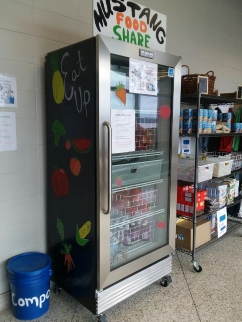
Fresh produce may take up more space than canned goods. Some fresh produce will need to be refrigerated if it won’t be distributed right away. Consider if you need to rearrange your pantry layout to make room for this change, and if you have the capacity to refrigerate perishable items.
If you don’t have refrigeration space, ask gardeners to only donate produce that is safe to store at room temperature. Examples include potatoes, onions and winter squash. Some foods like zucchini or tomatoes are safe to store at room temperature for a few days. Just make sure that your space can safely store the foods you get from gardeners before you start asking for donations.
Alternately, coordinate with gardeners so that they deliver fresh produce right before your regular distribution time and hand it out the same day. Tip: Ask your garden to pantry coordinator to manage this step!
Example: When Munising Middle and High School started a school food pantry in Alger County, a community coalition secured a fridge from a local business to store fresh produce.
Photo credit: Vicki Ballas
Idea 4: Train staff and volunteers on new practices.
Include safe handling of fresh produce in your volunteer and staff training. Michigan State University Extension offers trainings on food safety for food pantry volunteers and staff. Reach out to an MSU Extension Food Safety Educator in your area for resources or to schedule a training.
Idea 5: Get the word out.
Advertise with local news outlets and community organizations that you accept garden produce from home gardeners. As an example, in Manistee County, the Food Access Strategy Team and Spirit of the Woods Garden Club launched the Grow a Row Manistee program. Through this initiative, gardeners grew an extra row of garden produce to donate to local food pantries. With help from Michigan State University Extension, this pilot project was widely advertised through newspaper articles, social media and an in-person seed swap. The group also created a Facebook page to post information about the initiative with the community.
Idea 6: Grow fresh food onsite.
.jpeg?language_id=1 "step 3 Trinity Lutheran summer 2024 (2).jpeg")
Start a small onsite garden and engage community members to tend and harvest produce. This can be as simple as growing herbs in an existing garden bed, or more extensive changes like building raised beds or converting a lawn into a vegetable garden. Visit the [Community Gardens] resource page for more tips on how to do this.
Example: Trinity Lutheran Church in Hillsdale County installed raised garden beds next to the church. The beds provided fresh greens for their food pantry clients.
Photo credit: Kevin Knapp
Tool for exploring what’s working
Use the Explore What’s Working Guide and Worksheet to take you through this conversation.
Check out Michigan State University Extension’s Stories of Change for more ideas.
Step 4: Gather resources
Gathering resources can help you plan, implement, and sustain your work.
Michigan State University garden to pantry resources
Donate excess produce from your garden to food banks and food pantries is an article that shares how to find pantries in your area that welcome produce donations, and how to minimize food safety risks when doing so.
Food Pantry Safety - It's Your Job is a free online course designed for volunteers and staff of food pantries that shares laws, regulations and applicable food science that apply to food pantries.
Fresh Produce Donation Guidelines for Gardeners bulletin lists steps for selecting, handling, storing and transporting garden to pantry produce.
Michigan Fresh What's in Season can help you know what Michigan-grown fresh fruits, herbs and vegetables are in season in different parts of the state.
Other garden to pantry resources
Food Safety by Type of Food from the federal Food Safety Inspection Service shares safe handling techniques that keep foods safe and prevent food poisoning.
Garden Gleaning: A Toolkit for Growers and Food Shelves is a Minnesota resource that shares tips for gardeners and pantries (called “food shelves”) on starting a donation garden program.
Sample Healthy Food Donation Policy from the Health and Wellness Coalition of Wichita demonstrates how you can write a food donation policy that meets healthy food standards.
United Dairy Industry of Michigan’s Food Pantry Grant Program funds the purchase of refrigeration units to improve pantry refrigeration capacity.
Tool for gathering resources: Use the Gather Resources Guide and Worksheet to focus your goals and find reliable resources to help you implement your change.
Step 5: Make a plan and act
The next step is to make a simple plan and try one change. Use the Make a Plan and Act Guide and Worksheet to map out an action and identify simple steps to start.
Step 6: Reflect and share what you learned
After you try a change, reflect on what worked, what felt realistic and what you might adjust moving forward. Reflection helps you strengthen your approach and builds momentum over time. Sharing what you learn can also help others see what is possible.
Ask these simple reflection questions.
What worked well?
What challenges came up and what helped?
What would make this easier to continue?
What is one next step to keep going or expand the change?
If your change is working, consider sharing it with others. Even a short message at a meeting, email or informal conversation can help build buy-in and encourage wider participation.
Consider these sustainability strategies.
Leadership commitment: Early in the process, secure buy-in from board members, managers and volunteer coordinators. Include them in your action team and set shared expectations.
Clear ownership: Make sure your action plan specifies who is responsible for a task or change. Designating a garden to pantry coordinator can help ensure accountability and open communication.
Integration into existing routines: Build donation drop-off and sorting into schedules. Share produce donation metrics in staff meetings to celebrate success. Schedule distribution days to line up with growers’ harvest days.
Training and onboarding: During onboarding, provide new staff with resources like the garden donation policy and safe fresh produce handling training.
Donor communication: Share your expectations with donors and request donations that meet your criteria.
Evaluation: Build program evaluation into your work from the beginning so that you have a story to share with potential donors or funders in the future. Common metrics to use for this type of program include:
pounds of food donated
number of volunteers or volunteer hours spent supporting the program
number of clients who receive fresh produce
Tool for reflecting and sharing: The Reflect and Share Guide and Worksheet can help you through this step.
Garden to Food Pantry Key Resources
All key resources below are free to use and share. Additional resources can be found under the "Step 4: Gather resources" section.
Pantry Food Safety-It's Your Job!
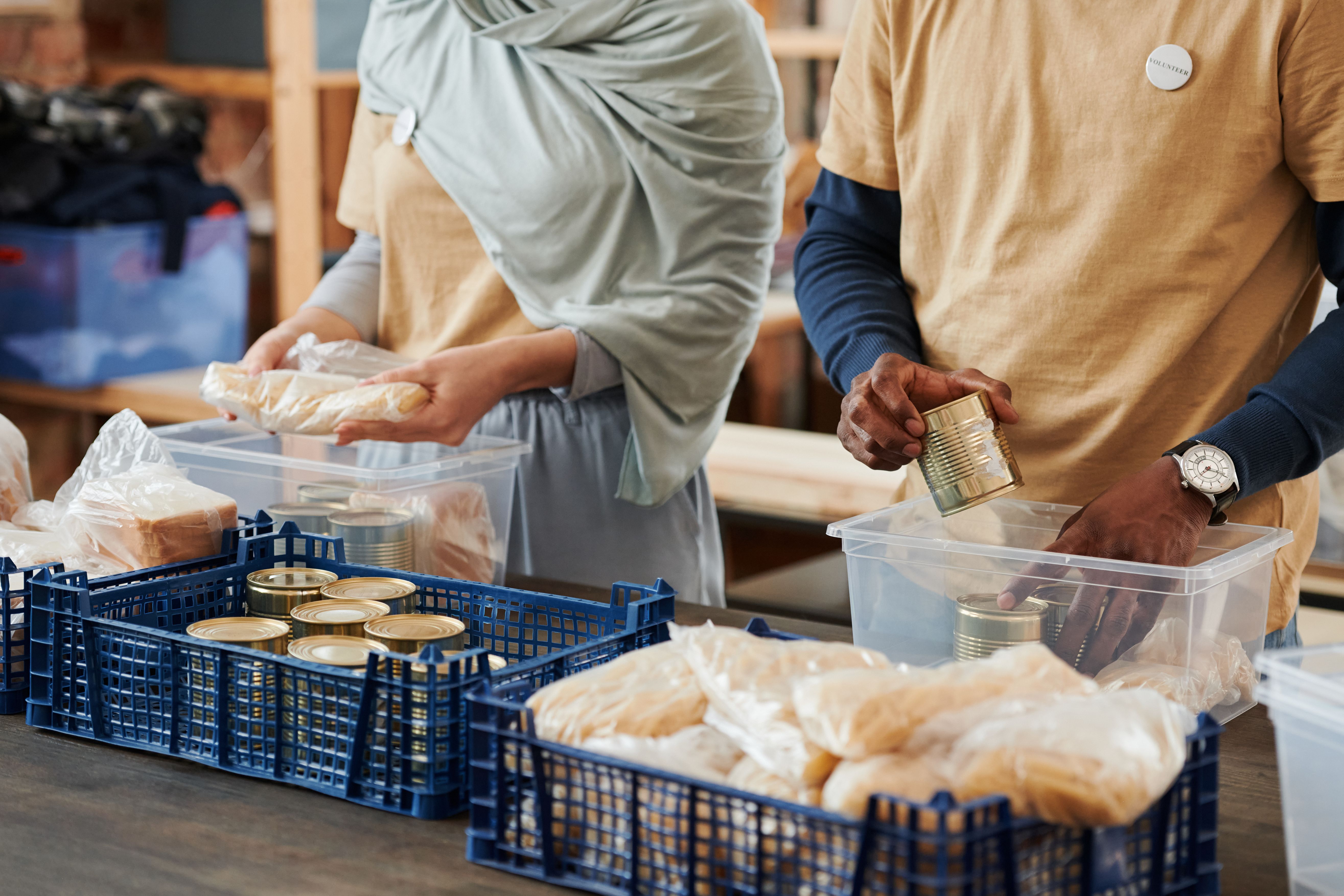 Food Pantry Safety - It's Your Job is a free online course designed for volunteers and staff of food pantries that shares laws, regulations and applicable food science that apply to food pantries.
Garden Gleaning: A Toolkit for Growers and Food Shelves
Fresh Produce Donation Guidelines for Gardeners
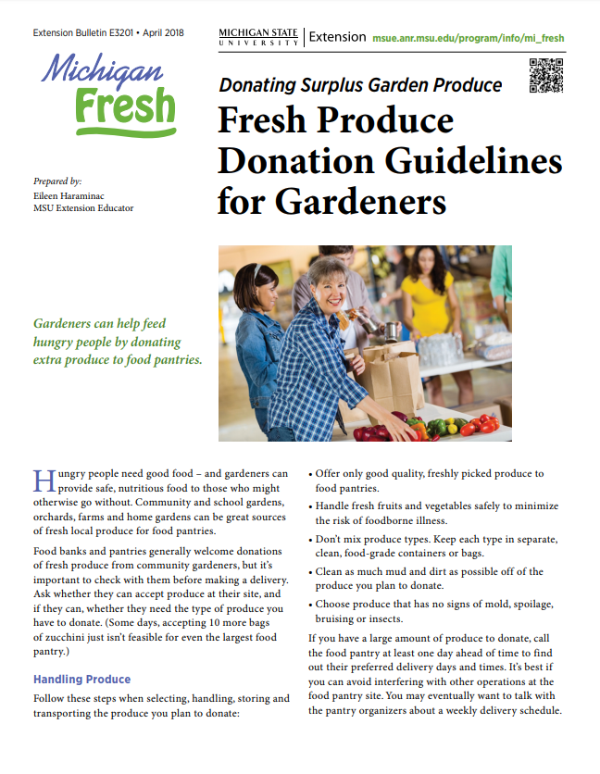
This resource provides guidelines for donating food from your school or community garden.
 Print
Print Email
Email