


Tribal Community Health Resources
This resource page shares examples of ways to support tribal community health through access to healthy, culturally relevant food and physical activity opportunities.
In Michigan, this work includes collaboration with the 12 federally recognized Tribes in the state, Tribal Colleges, urban Indian groups, inter-Tribal organizations and community members. Examples shared here reflect the needs and traditions specific to Anishinaabe communities in Michigan, also known as the “Three Fires Confederacy” of Odawa, Ojibwe, and Potawatomi peoples.
All resources below are free to use and share. Organizations are encouraged to share these resources with families, include them in classes or newsletters, and use them as part of outreach, education or client support efforts.
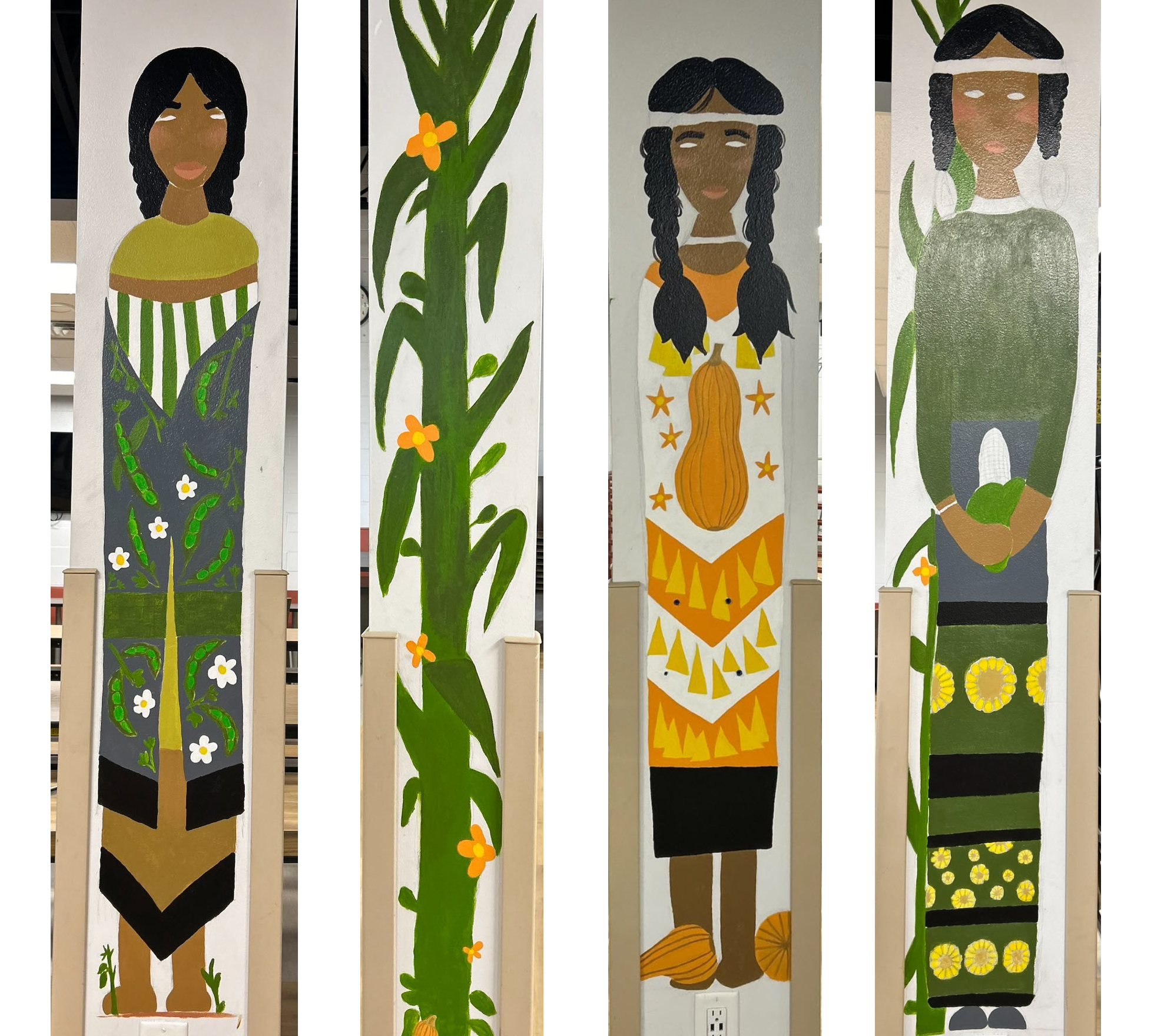
Example of tribal partnership work in K-12 school wellness
With funding from the Building Healthy Communities grant and coaching from an MSU Extension instructor, Hannahville Nah Tah Wahsh School introduced Indigenous food taste testing, creative menu names and murals of traditional foods to the school cafeteria.
Art students painted “Three Sisters” and sunflower murals in the school cafeteria. Photo credit: Amber Hayward
Examples of tribal partnership work at farmers markets
Example 1: Tribal health centers can participate in produce prescription programs as health care providers. As the largest Tribe in the Upper Peninsula with health clinics across seven counties, the Sault Ste. Marie Tribe of Chippewa Indians (Sault Tribe) improved healthy food access for its citizens by referring patients to the Upper Peninsula Food as Medicine Program. Participants received coupons to spend on fresh produce at local farmers markets. They got extra incentives if they completed a nutrition course taught by MSU Extension.
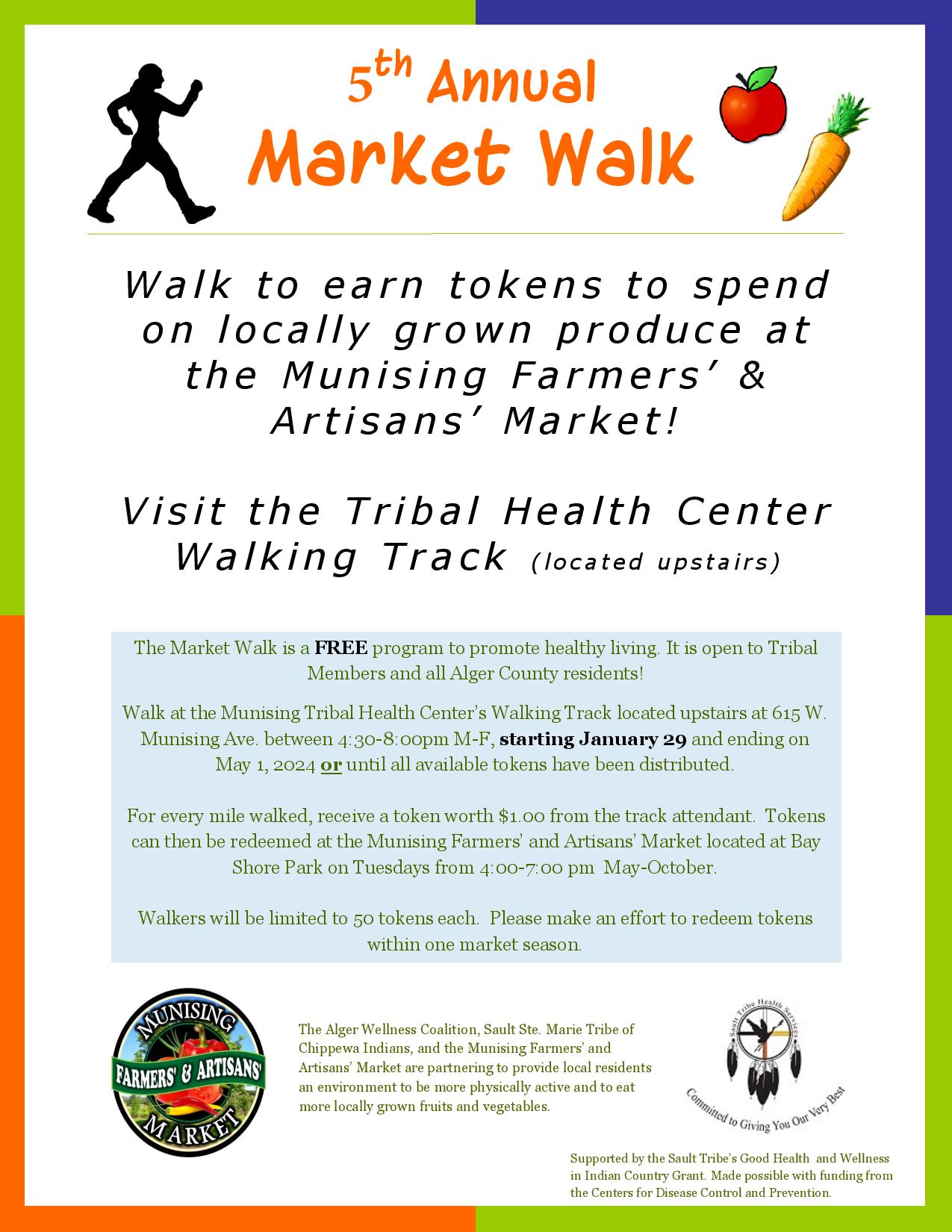
Example 2: The Sault Tribe and MSU Extension worked to encourage physical activity and improve fresh food access by starting the Sault Tribe Market Walk program. Participants earned a $1 token for every mile they walked at the Tribal Health Center’s indoor track. They could redeem the tokens to purchase fresh produce at the summer farmers market.
Photo: Recruitment flyer for the Sault Tribe Market Walk program
Examples of tribal partnership work around food access
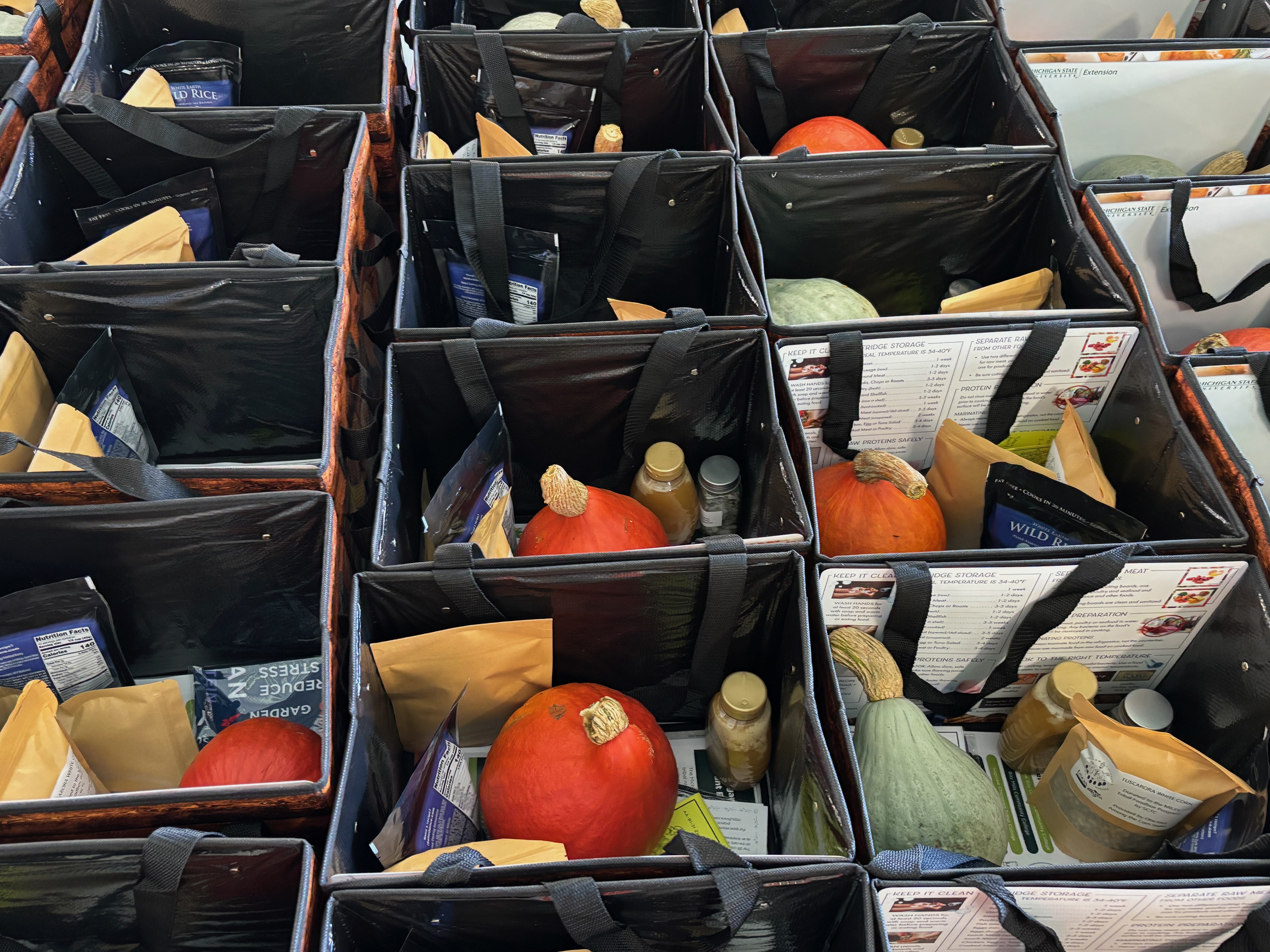
Example 1: In Michigan, local traditional foods like wild rice or maple syrup can be hard to find or expensive. Tribal food box distribution programs can directly connect traditional foods with community members. Sourcing foods from Indigenous producers has an added benefit of supporting local Indigenous food systems and availability of traditional foods in the long-term. As a collaboration of the Michigan Inter-Tribal Land Grant Extension System (MILES), MSU Extension and Michigan’s three Tribal Colleges partnered to distribute traditional foods to elders and families through a tribal food box program.
Photo credit: Erin Tigue
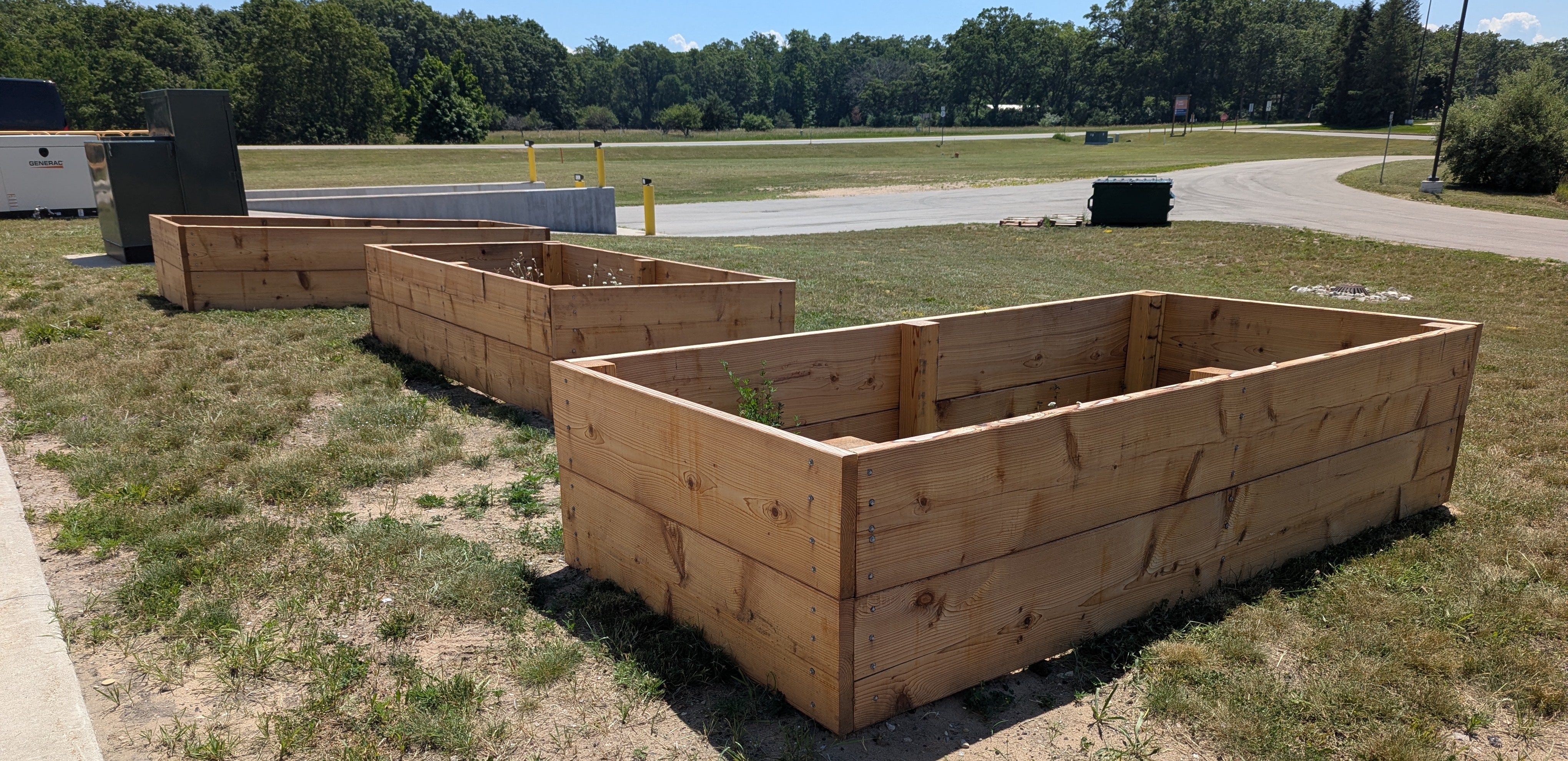
Example 2: Tribal members who need food assistance can participate in the Food Distribution Program on Indian Reservations (FDPIR) instead of the Supplemental Nutrition Assistance Program (SNAP). Partnering with a distribution site to switch to a client-choice pantry model highlighting healthy Indigenous foods or growing a garden at the pantry can enhance recipients’ access to healthy foods. The Little River Band of Odawa Indians (LRBOI) FDPIR site in Manistee partnered with MSU Extension to build onsite garden beds for cooking classes and food for clients.
Photo credit: Caitlin Lorenc
For more resources on gardening in tribal communities, check out these Gitigaan (Garden) Kits from the MSU Federally Recognized Tribal Extension Program.
Examples of tribal partnership work around physical activity
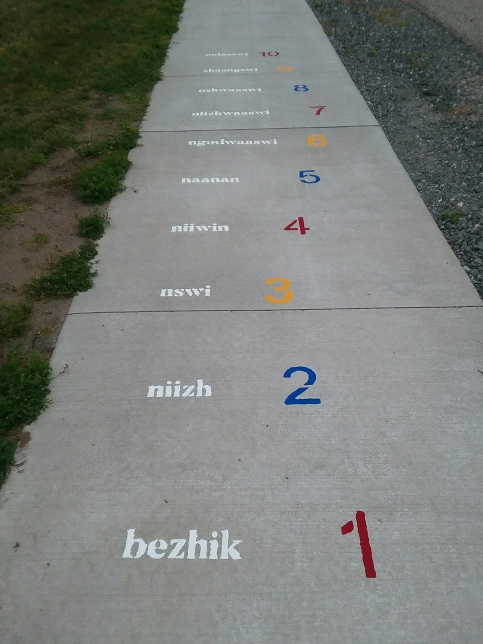 Example 1: MSU Extension and the Sault Tribe partnered to paint physical activity stencils in outdoor community spaces, such as this sidewalk at the Tribal Housing Community Center. Including Ojibwe words with the stencils helped encourage traditional language learning alongside physical activity.
Photo credit: Vicki Ballas
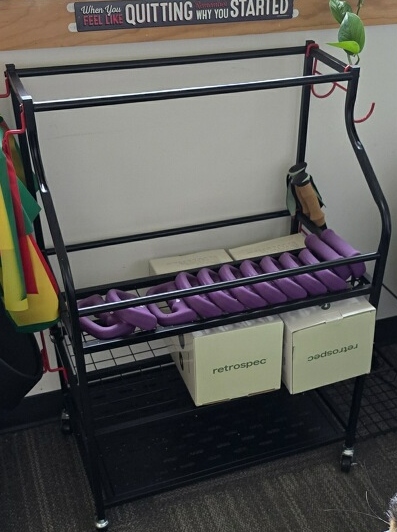 Example 2: The Little River Band of Odawa Indians Aki Community Center in Benzie County improved physical activity access by purchasing small exercise equipment for Elders’ use. Equipment included hand weights, stabilizer balls, resistance bands and a storage cart.
Photo credit: Caitlin Lorenc
Examples of cooking with indigenous foods
Using or adapting cooking class recipes to include Indigenous foods is a simple way to improve access to and knowledge of Indigenous food ways. The Inter-Tribal Council of Michigan, MSU Extension and four Tribes collaborated to adapt a hands-on cooking class and include more Indigenous foods. Try these adapted recipes.
Featured articles
- Joseph K. Lumsden Bahweting Celebrates Traditional Foods with Boat to School Week
- Michigan Land Grants work to expand tribal members' access to traditional foods
- MSU Extension and tribal partners highlight Indigenous foods through Cooking Matters program
Featured video
Tribal community health resources
Michigan State University tribal community health resources
- Federally Recognized Tribal Extension Program
- Food Access to Food Sovereignty Workbook: A Spectrum of Food Systems Change
- Gitigaan Kits and Gardening Resources
- Lessons Learned from Implementing Culturally Sensitive Adaptations to a Nutrition Education Program in Four Anishinaabe Communities
- Michigan Inter-Tribal Land Grant Extension System
- Miijim (Food) Cards
- MSU Tribal Extension website
- Reciprocal Research: A Guidebook to Centering Community Partnerships with Indigenous Nations
- Webinar on Food Sovereignty and the Role of Extension
Other tribal community health resources
- Anishinaabek Cooking Resources from Inter-Tribal Council of Michigan’s
- Cooking Healthier with FDPIR Foods from First Nations Development Institute
- Food Distribution Program on Indian Reservations (FDPIR) Sharing Gallery
- Food Farmacy: A Guide for Offering Produce Prescription Programs in Native Communities
- Food Sovereignty Assessment Tool from First Nations Development Institute
- Maawndoonganan Anishinaabe Resource Manual (K-12 curriculum resources)
- Native Farm to School Resource Guide from First Nations Development Institute
- Tribal Elder Food Box Program from Feeding America Eastern Wisconsin
 Print
Print Email
Email