


Community Change Guide for School Nutrition and Healthy Food Access
Schools that promote healthy eating help set their students up for success.
Students who regularly eat nutritious foods at school are more likely to have:
- Higher test scores and academic performance.
- Fewer behavioral issues.
- Healthier bodies and habits.
- Stronger food security.
This resource is designed for community champions who want to promote nutritious food choices in K-12 school settings.
Use this Community Change Guide for School Nutrition and Healthy Food Access to find tips for getting started, practical examples and reliable tools to make meaningful nutrition changes in school settings. This guide follows Michigan State University Extension’s Six-Step Community Change Model to help you move from identifying a need to taking action and sustaining changes.
Here's how:
Step 1: Identify the need
To identify a need in your school setting, you can:
Talk to students, staff and other people who spend time there.
Ask what barriers to accessing nutritious foods exist.
Observe what’s happening throughout the day and take notes.
Review existing policies and practices, such as how much seat time students have at lunch or how special events are celebrated.
There are many opportunities that may be found exploring what is happening in your school setting. Examples of areas that may be improved include classroom policies, cafeteria practices and food waste.
Tool for identifying the need: Use the Identify the Need Guide and Worksheet for suggested questions, ideas, and examples of how to clarify a specific need, why it matters and what benefits it could have for staff, volunteers and clients.
Step 2: Bring people together
Change is more likely to happen and last longer when it is supported by a group of people. A team helps build shared buy-in, coordinate next steps and keep progress moving forward.
Identify two-to-four people who care about the issue and have influence in the setting you want to improve. Depending on your focus, this could include administration, classroom teachers, food service staff, school nurses, after-school staff, building leaders, parents, students or community volunteers.
Invite interested team members to participate in a meeting. It may be helpful to ask some questions to get started, such as:
What is the need we are trying to address?
How will we communicate the goal and encourage participation?
Who will help support the change, so it does not rely on one person?
Tool for bringing people together: Use the Bring People Together Guide and Worksheet to identify people to include in your action team.
Step 3: Explore what’s working
Across Michigan, districts, schools and classrooms are making meaningful nutrition changes using practical strategies that last. See below for ideas.
Idea 1: Cafeteria share tables
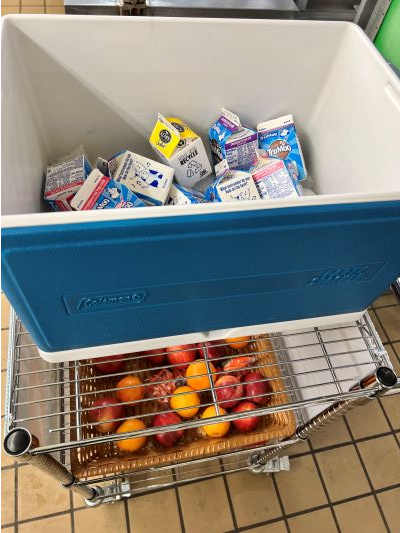
Share tables are most often used in cafeteria settings of K-12 schools. A “share table” is a space where students can leave certain uneaten foods so that they can be redistributed to other students or back into the cafeteria food system. This can result in less food waste and increased food security. Depending on your goals and procedures, you may need to work with your health department to ensure food safety standards are met.
In one Michigan school, Richardson Elementary of Oscoda, the food service department implemented a share table to reduce waste. They followed protocols to receive clearance from the health department and put food safety measures into place, such as posting rules that food must be unopened and uneaten and having a cooler to keep milk at appropriate temperatures. This allowed food to be put back into the food service system and served again to students.
Photo credit: Michelle Luttrell
Idea 2: Taste tests
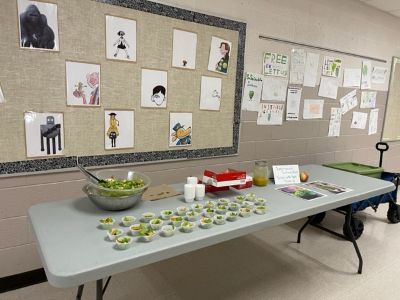
Taste tests can be used for many reasons: to introduce students to new foods, to test new cafeteria items or to encourage partnerships with local food producers. It can be a fun way to give students a voice and promote healthy eating. The food item is typically served as a small portion and paired with a survey in which students rate its taste, texture, etc. or simply if they would eat it again. Survey styles include sticker boards and short paper forms. It is an approachable and affordable way for cafeteria staff, teachers or nutrition and health educators to introduce food to students.
At Kingsley Area Schools, a teacher that grew lettuce in their classrooms partnered with food service staff to taste test the produce. They used the support of Michigan State University Extension staff to set up a lunchtime session where students and staff could try a recipe using the lettuce. To engage students more, a sustainable science class created promotional signs. A salad was served in small taster cups, and verbal feedback was collected. Students and staff enjoyed the opportunity to try a new, healthy recipe, and future collaborative events were planned.
Photo credit: Michelle Smith
Tool for exploring what's working
Use the Explore What’s Working Guide and Worksheet to guide you through this conversation.
Check out Michigan State University Extension’s Stories of Change for more ideas.
Step 4: Gather resources
Once you have chosen a goal and first step, try using trusted resources to help you plan, implement and sustain your work. Each resource below offers tools and examples that can be adapted to fit the needs, capacity and culture of your school.
Michigan State University school nutrition resources
These resources provide background information and practical, actionable ideas that help districts, schools and classrooms bring healthy food access and nutrition to their communities.
School garden support
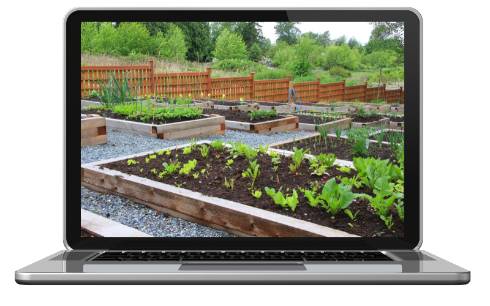
Michigan State University Extension's Community Food Systems provides a list of school garden resources, funding suggestions and technical advice. They also offer Starting a School or Community Garden: Essential Steps for Success, a free online training course for beginning school and community gardens.
Local school wellness policies
Local wellness policies are federally mandated documents that outline a school district’s rules and regulations regarding student wellbeing. They can be a good place to document and enforce work that your school or district is doing to make food more nutritious and accessible. They can also highlight the work you are doing in areas like farm to school, gardening and cafeteria practices. Michigan State University Extension's School Wellness Policy webpage walks through the steps to update a district local wellness policy.
Other school nutrition resources
These sources provide background information and practical, actionable ideas that help districts, schools and classrooms bring healthy food access and nutrition to their communities.
Reducing food waste: share tables, waste audits
The goal of a share table is to redistribute appropriate school meal foods to reduce waste. It may be helpful to first complete a waste audit to help with planning. The following resources help walk schools through this process:
Illinois Food Scrap & Composting Coalition: Composting for Schools
Illinois Extension: Share Table Toolkit for Schools
U.S. Environmental Protection Agency: A Guide to Conducting Student Food Waste Audits
World Wildlife Fund: Be a Food Waste Warrior
Food access: school pantries, backpack programs
Bring healthy foods to families who could use support with programs directly into the school. Food access programs often rely on the support of local food suppliers or non-profits. Some schools have full-scale pantries, while others have a small closet with emergency items. Another option is after-school backpack meals or snacks. To get started, take a look at these resources:
Feeding America: School Food Pantry Program
No Kid Hungry: Promising Practices for Starting and Maintaining a School Food Pantry
Farm to school: gardening, local foods
Farm to school is a popular concept that includes sourcing local foods, connecting with farmers, gardening and more. There are many ways to approach improving nutrition through these methods. To get ideas, check out the following tools:
Michigan State University Center for Regional Food Systems: Farm to School programming and Michigan network
National Farm to School Network: Get Started
Center for Ecoliteracy: Digging In: Farm to School Activities, Case Studies and Resources
United States Department of Agriculture (USDA): Farm to School Procurement Guide, additional resources and fact sheets
Healthy foods: menu updates, vending machines, policies
A focus on healthy foods can range from simple swaps (new menu items introduced and encouraging signage posted) to large system changes (alternative breakfast models and school policies). Inspiration can be found from many sources, including:
The Lunchbox: Salad bar resources
Foodcorps: Taste Test Guide
United Dairy Industry of Michigan: Smoothies in Schools
Healthy celebrations
School celebrations are often associated with treats and unhealthy foods. Healthy celebration interventions promote nutritious or non-food options in place of these. Often, this is accomplished through a policy written and shared with parents from individual classrooms, schools or districts. The policies state a reason, give examples of preferred items (fruit, toys, pencils) and how it will be enforced. Sometimes, classes or schools will opt to choose one day a month for celebrations or create other opportunities for acknowledging special events.
Action for Healthy Kids: Healthy and Active Parties
Alliance for a Healthier Generation: Celebrations
Tool for gathering resources: Use the Gather Resources Guide and Worksheet to focus your goals and find reliable resources to help you implement your change.
Step 5: Make a plan and act
Once you have identified your needs, built a team, explored options and reviewed reliable resources, the next step is to make a simple plan and try one change.
Tool for making a plan and acting: Use the Make a Plan and Act Guide and Worksheet to map out an action plan and identify simple steps to start.
Step 6: Reflect and share what you learned
After you try a change for four-to-six weeks, take a few minutes to reflect on what worked, what felt realistic and what you might adjust moving forward. Reflection helps you strengthen your approach and builds momentum over time. Ask your team:
What parts of the change worked well or as planned?
What challenges came up? How did they make you feel?
What would make this easier to continue in the future?
What is one next step you can take to maintain this change?
If your change is working, consider sharing it with others. Even a short message at a meeting, email or informal conversation can help build buy-in and encourage wider participation. It is also a good time to think about how you will continue to keep success alive.
Tool for reflecting and sharing: Use the Reflect and Share Guide and Worksheet to help with this step.
School Nutrition Key Resources
All key resources below are free to use and share. Additional resources can be found under the "Step 4: Gather resources" section.
Starting a School or Community Garden: Essential Steps for Success Course
Share Table Toolkit for Schools
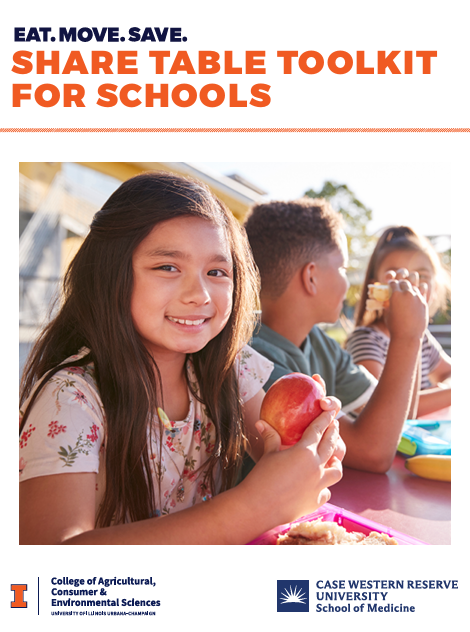 The goal of a share table is to redistribute appropriate school meal foods for reducing food waste and food security. The Share Table Toolkit for Schools is based on research and a multi-state pilot study involving university partners and SNAP-Ed.
Farm to School
 Farm to school is a popular concept that includes sourcing local foods, connecting with farmers, gardening and more. There are many ways to approach improving nutrition through these methods.
 Print
Print Email
Email