A Q&A with Author Nessa Richman: Food Policy Councils: Building Civic Engagement and Community Well-Being
 Print
Print Email
EmailGet to know author Nessa Richman prior to her upcoming book talk on September 25, 2026 at Michigan State University!
What is a food policy council? The Michigan Local Food Council Network defines them as a group of representatives, community members, and stakeholders from many sectors of the food system. These councils, sometimes known just as food councils, are formed to organize, define, and amplify the needs and voices of their communities surrounding issues of food security, sustainability, equity, and accessibility.
Colleen Matts and Lindsey Scalera, both of Michigan State University Center for Regional Food Systems (CRFS), are co-leads of the Statewide and Regional Food Systems Plans National Community of Practice (NCoP). This community of practice brings together leaders from across the U.S. around current and emerging food system plan efforts to share knowledge and strengthen local and regional food systems. As a learning opportunity for community members in Michigan and in collaboration with the Michigan Local Food Council Network, Matts and Scalera invited author Nessa Richman to share about her new book, Food Policy Councils: Building Civic Engagement and Community Well-Being (Routledge 2026), that explores how food policy councils can build community power.
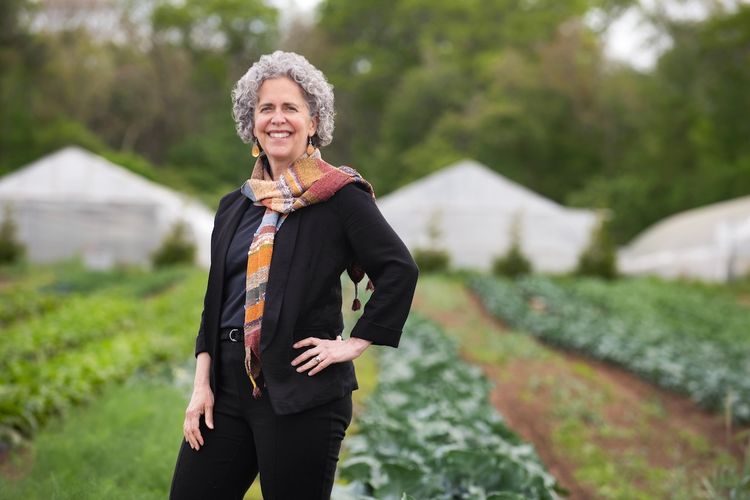
Matts and Scalera first connected with Richman in relation to farm to institution efforts nearly a decade ago. At that time, Matts and Scalera were co-leading the Michigan Farm to Institution Network while Richman was part of Farm to Institution New England (FINE). She had launched the Farm to Institution Metrics Collaborative with members like CRFS that were leading state-level networks alongside shared measurement or tracking efforts and could benefit from learning from each other and amplifying their work and impact through coming together more regularly. Today, Richman is the Executive Director of the Rhode Island Food Policy Council and Adjunct Faculty at the University of Rhode Island.
“We look forward to hosting Nessa this fall,” Scalera said. “It will be a wonderful opportunity to connect her findings with engaged food policy councils and community members in Michigan and beyond. “
On September 25, 2026, CRFS will host a book talk and panel with Richman called Growing Resilience: How Food Policy Councils are Building Civic Engagement and Community Well-Being. During the event, Richman will share practical strategies and actionable, research-based tools for building a more equitable, resilient local food system. This free, in-person event will also feature stories from local food policy councils through a panel conversation and engage the audience in what truly works for building resilient, sustainable food systems.
This local session will be followed by a national virtual learning session on Thursday, November 19, 2026 at 3:00 PM EST as part of the Statewide and Regional Food Systems National Community of Practice. In this session, co-hosted with Food Policy Networks, participants will learn strategies for how Food Policy Councils can develop, support, implement, and evaluate the implementation of local food plans while increasing civic engagement and community well-being.
Get to know Richman prior to September’s event through the Q&A below!
What inspired you to write this book? What was your writing process like?
Richman: I wrote this book because I want the food system to be fair and accessible. I want everyone to have the food they need. I want people to have food that keeps them healthy. I know that there are a lot of people out there who care about these challenges in their communities – people committed to transforming their local food systems for generations to come. Doing that work takes adequate resources and effective programs. It also takes policy. I was inspired to write this book because I want to help local food systems leaders leverage policy to create a more just and resilient local food system.
I started by talking to the leaders in the field who have inspired me. There are so many food systems leaders doing amazing things across the country in both urban and rural areas. They promoted and supported new supply chains during COVID. They ensured (and are still ensuring) that even if immigrants no longer feel safe visiting food pantries they still have food to eat. Then I read more than 100 peer-reviewed papers and reports focused on food policy networks, multisectoral governance, food systems transformation, and other related topics. After that, I started writing! Finding time to write around a demanding full-time job seemed impossible at first, but with a detailed outline and regular writing time before work each day, after a few months, I had written a book!
What do food policy councils need in order to do their job well? What did you learn?
Richman: We all interact with the food system, and primarily through our wallets. While changes in spending habits can and do change the food system incrementally, they don’t tend to significantly move it toward justice and resilience. That’s why policy is important – if done well, it can play a mediating role in solving big societal problems.
To do this work well, food policy councils need to reach out and connect with the community. Successful food policy councils are always working to find new allies to add to a diverse group of stakeholders actively deliberating food system challenges. We can’t solve the community's problems without hearing the voices of affected community members. In other words, the membership must be as diverse as the community itself.
We need to “do power differently”. To bring together people with diverse ideas, experiences, and skills and work effectively, there must be procedures for sharing power and responsibility — otherwise pre-existing power dynamics can be a problem. That means everyone needs to know that their voice matters when they walk in the door. Everyone is busy. Why show up if your presence doesn’t make a difference?
We need to stick together. A core team of members is essential for a council to be effective and sustainable. Members will have varying levels of capacity to engage – that shouldn’t be a surprise. Offering different levels of engagement, without attaching more value to some roles than others, is critical to equitable engagement. This also means that we need to stay connected to other networks – other councils in the US and beyond.
I’ve also learned that food policy council leaders benefit from working with each other and talking about their challenges! Each food policy council is different, so while a book is perfect for some types of learners, thanks to support from a generous funder I’m also able to run three interactive online courses this fall, and to offer three individual coaching sessions each month.
What should people know about getting involved in their local food policy council?
Richman: Getting involved in a food policy council offers opportunities for new relationships, connecting across differences with groups as diverse as farmers, emergency food providers, food waste management companies, and environmental justice advocates. When a food policy council offers strong participatory opportunities, members can make new connections to help solve food system challenges. At the highest level, food policy councils and their membership – which is just another way of saying anyone who cares enough about the food system to get involved – are actively creating new partnerships, developing shared tactics, and taking actions that advance their shared vision for the future.
Join us on September 25, 2026 for the event at Erickson Hall on Michigan State University’s scenic campus!
This event is hosted by the Michigan State University Center for Regional Food Systems through the Statewide and Regional Food Systems Plans National Community of Practice (NCoP) and the Michigan Local Food Council Network. This event is also sponsored by the MSU Sustainable Agriculture and Food Systems program and the Stuckman Chair in Food Economics and Policy.
This work is funded by grants from the Michigan Health Endowment Fund and the W.K. Kellogg Foundation.