Michigan vegetable crop report – June 17, 2026
 Print
Print Email
EmailAs the official start of summer approaches, vegetable growers are still planting some crops and tending to others.
Weather
The past week saw temperatures 3-8 degrees above normal, with some parts of the western lower seeing 2 inches of rain. Hail was reported from central lower Michigan.
- Mostly sunny early Wednesday with increasing cloudiness during the day. Showers and thundershowers developing in southwestern and western areas during the afternoon, spreading northeast into the evening and overnight hours. Some severe storms possible to the south with heavy rainfall. totals. Some lingering showers northeast Thursday morning, otherwise variably cloudy and breezy elsewhere. Mostly sunny and dry Friday and Saturday. Variably cloudy with scattered showers possible Sunday.
- Precipitation for the coming week totaling up to 3 inches in the southern lower tapering to less than 0.5 inch in the Upper Peninsula.
- High temperatures generally from the mid- and upper 60s north to low 70s south Wednesday through Friday, warming to the mid to upper 70s by Sunday. Low temperatures in the mid- to upper 40s north to 50s south Wednesday through this weekend.
- Medium range outlooks call for cooler than normal temperatures with normal to above normal precipitation totals.
Resources for cut flower producers
For weed management questions, contact Debalina Saha, PhD, in the Department of Horticulture at MSU at sahadeb2@msu.edu.
For disease management questions, contact Mary Hausbeck, PhD, Department of Plant, Soil and Microbial Sciences at MSU at hausbec1@msu.edu.
The MSU Extension Floriculture and Greenhouse Crop Production website offers numerous resources. The Experts tab provides information on specialists and educators, including their backgrounds and areas of expertise.
Innovative agronomy tools and resources
Nicolle Ritchie, field crops agronomist educator with Michigan State University Extension, recently wrote a series of articles detailing innovative agronomy tools and resources. Many of these resources are also relevant for commercial vegetable growers (not to mention many vegetable farms will grow grain crops in rotation). Find a list of the articles in this series below:
- Innovative agronomy tools and resources: Equipment
- Innovative agronomy tools and resources: Pests
- Innovative agronomy tools and resources: Pesticides
- Innovative agronomy tools and resources: Farm business
- Innovative agronomy tools and resources: On-farm research
- Innovative agronomy tools and resources: Weather
Crop updates
Asparagus
Asparagus harvest continues, with shutdown herbicide applications next on tap. Check out last week’s report for a brief summary of options. Talk with consultants now to get a plan in place if you have not already.
Young fields that were shut down after a few weeks of harvest are branching and starting to fern out, a good time to apply a first cover of fungicide. For purple spot, azoxystrobin or the protectants–chlorothalonil or mancozeb–can help. Tebuconazole is the main rust-specific material.
It is frustrating when a new asparagus planting does not seem to be emerging as fast as it should. Unfortunately, there is little that can be done except to rule factors in our out. First, it could be the weather. Dry conditions lead to non-uniform flushes of fern, with some buds sending up shoots early with later flushes after rains. Flooding isn’t good either. Also, when asparagus shoots experience a hard freeze, it can take a while for new ones to emerge.
Planting depth, soil type and compaction can also interact. If crowns are planted too deep, or the soil used to fill in the furrow is compacted, emergence may be spotty. Typical planting depths are 8-10 inches for sandy soils and 6-8 inches for heavier soils. In addition, to alleviate issues it can be helpful to do two partial fills instead of burying the crowns all at once, something more important on heavier soils. If it is planting depth, check the row ends where the plow is just going down (and furrows are shallower). If emergence is better there, it could be a clue.
Salt injury from overapplication of in-furrow fertilizer is also a possibility. Hiccups with pumps or calibration can lead to more being in contact with crowns. Pathogens are a possibility but are hard to pin down.
In all these cases, a shovel can be a good tool. Dig up crowns from spots with no, low or good emergence. Are the crowns dead in “skips” or are there shoots coming? How do the crowns from slow emerging spots look compared to faster emerging ones? Any difference in depth between different scenarios? In the end, the main goal is to learn what, if anything, you might do differently next time. And give the crowns a chance; asparagus is a hardy plant.
Carrots and celery
For celery, scouts report finding some variegated cutworm moths in pheromone traps near to the most advanced celery in west central Michigan. Celery leaftier moths have also been spotted. Caterpillars of this pest are more of an issue in hot years, when caterpillars can move to celery hearts. Aphid colonies have not been detected yet. Aster leafhopper numbers have been relatively low to date, with a few spots having higher counts.
Overall, the incidence of aster yellows (“infectivity”) in aster leafhoppers has been relatively low in samples to date, compared to last year. Sign up for aster leafhopper text alerts.
The following table shows the percentage of aster leafhoppers in a sample testing positive for aster yellows:
|
County |
Date |
Infectivity |
|
Allegan |
June 8 |
0% |
|
Oceana |
May 18 |
4.2% |
|
Oceana |
May 26 |
0.0% |
|
Oceana |
June 1 |
4.2% |
|
Oceana |
June 8 |
1.4% |
|
Oceana |
June 15 |
0.0% |
|
Lapeer |
May 26 |
0.0% |
|
Lapeer |
June 4 |
0.0% |
|
Lapeer |
June 15 |
6.5% |
|
Muskegon |
June 3 |
2.1% |
|
Muskegon |
June 11 |
0.0% |
|
Newaygo |
June 3 |
0.0% |
|
Newaygo |
June 11 |
0.0% |
|
Ottawa |
May 27 |
0.0% |
Root crops
At the Southwest Michigan Research and Extension Center, vegetable crops educator Ben Phillips has been planting carrots and other root vegetables and leafy greens to get a better understanding of their quirks and to increase marketability and capabilities of the farm and its staff for research work on the sub 5-acre scale. The following are his observations thus far.
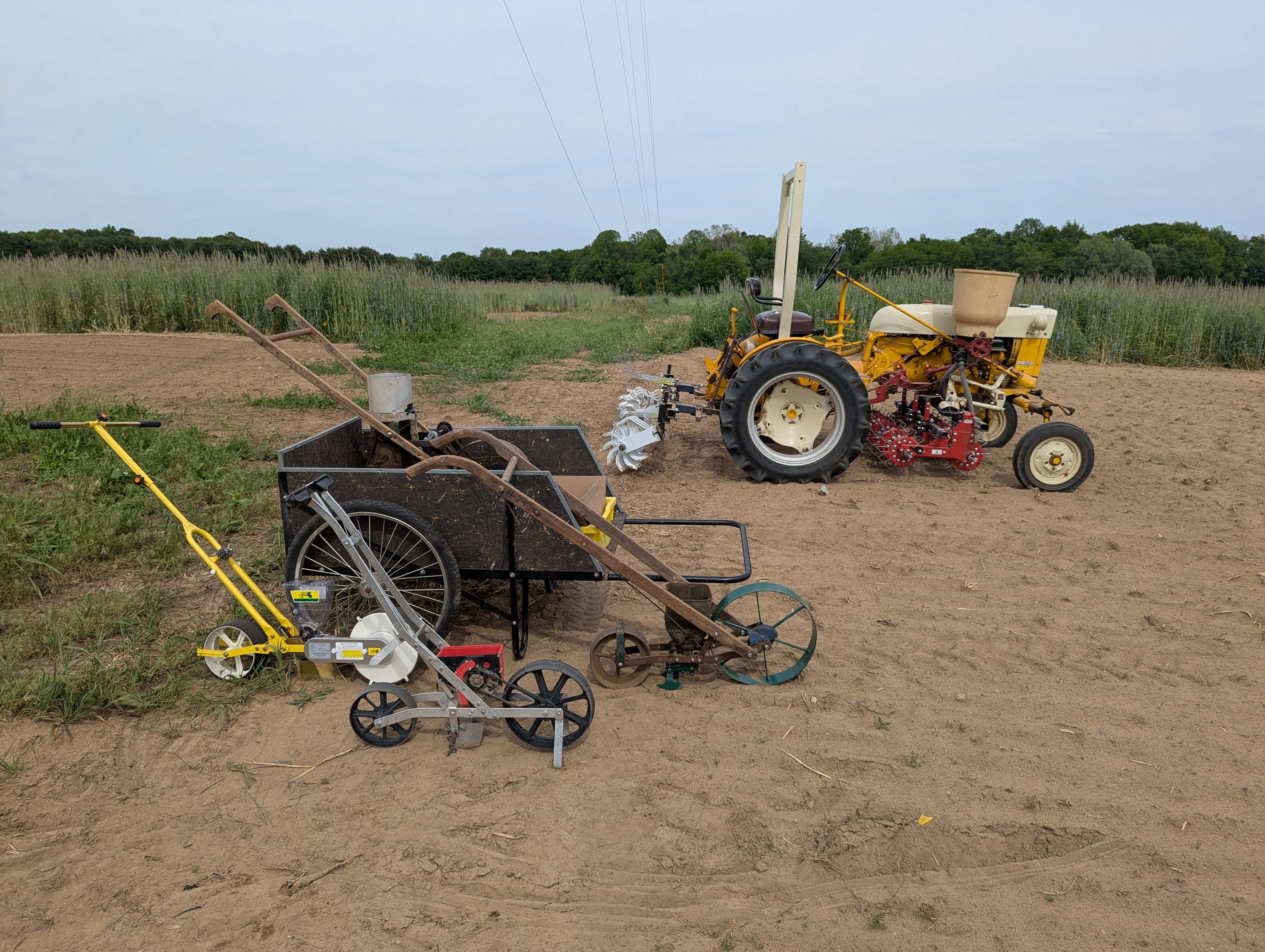
Using several types of push seeders and settings, and several varieties, I planted every two weeks for 10 weeks and managed weeds with a Tilmor basket weeder between the rows followed by Thiesen tine wire weeders directly over the row, flanked by Lilliston-style rolling cultivators for the wheel tracks. With the ample rain this spring, emergence occurred without much fuss, but a Sumisansui SumiRain 50 was used to irrigate as needed, and also to fertigate. If you are curious about the Sumisansui irrigation system, check out this report on Sumisansui rollup irrigation systems from earlier this year.
The simplest and easiest establishment has come from an Earthway seeder using the broccoli plate (1002-24), which spaces seeds about 1-inch apart, and usually drops one to three seeds. This lightweight tool makes seed-swapping easy and leaves a thick line of seedlings that can be thinned later. The Planet Jr also makes a thick line, comparable to the Earthway, but is a pain to swap seed due to its weight and hopper arrangement, but I like the seed size range offered by just three plates. The Jang, when used as recommended, works too well and results in fairly thin plantings. But the Jang plants more thickly by adjusting the singulating brush and removing the moleskin seed guide. One can find 3D print files for both the Jang and the Earthway to modify or replicate rollers and plates, but take care to use a plastic that is anti-static and can handle direct sunlight without softening.
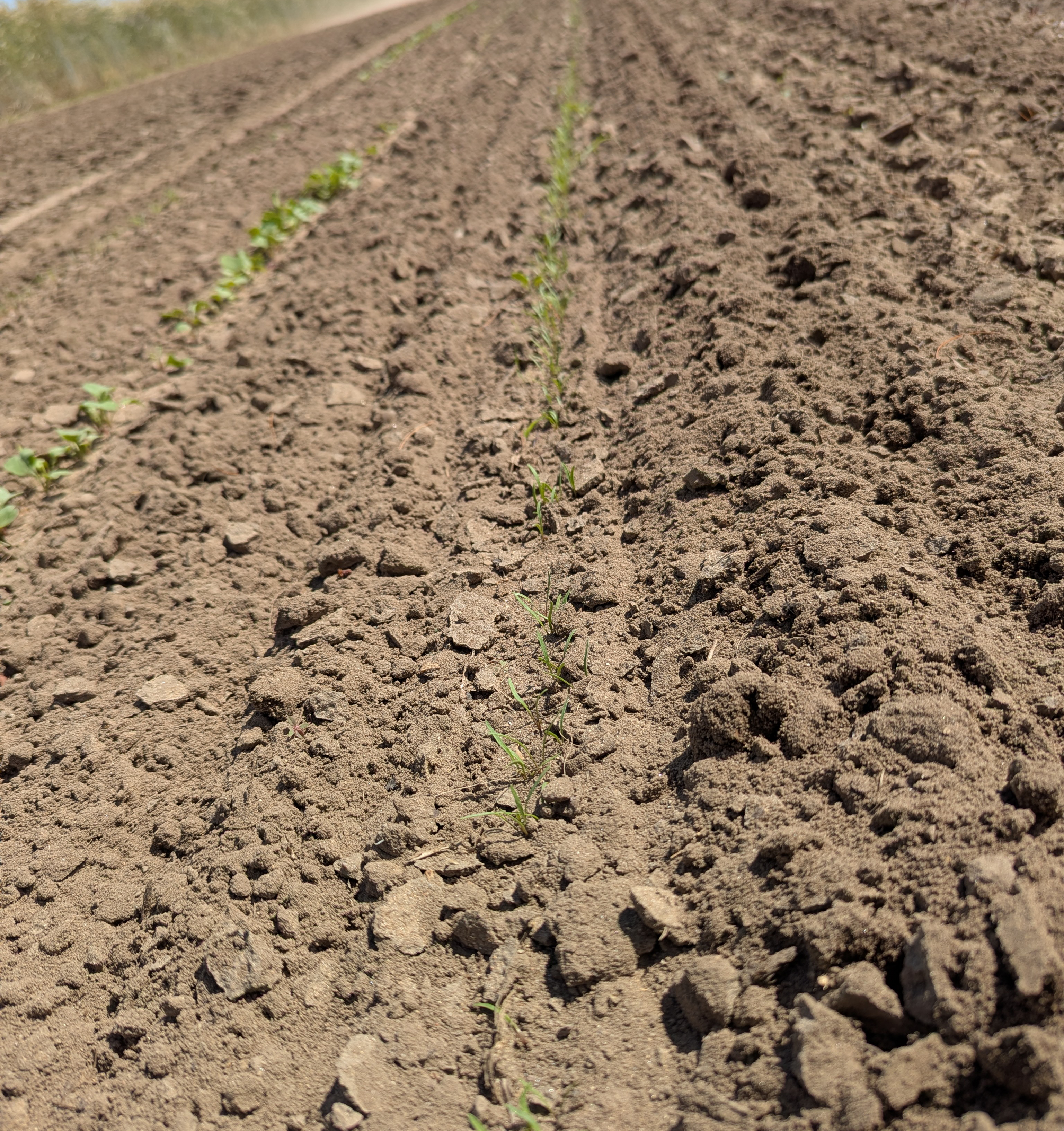
As for the weed control approach, the basket weeder has been working great. However, bed prep plays a role in effectiveness. For one planting I rototilled before planting, which caused the seeders to make deep trenches in the fluffy soil. As seedlings emerged, they were protected from wind by the trench, and perhaps it had some marginal water-capture effect. But as competing weeds emerged the basket weeder collapsed this trench and buried the young seedlings. Direct-seeded lettuce, with its flat and squat cotyledon architecture, is particularly susceptible to this.
So, packing or rolling the beds is important for later cultivation. However, the tine weeders bury young seedlings even on flat and packed ground, and I suspect they also dislodge seed when used prior to emergence based on thin and patchy stands where I got impatient. I now adjust the aggressiveness of the tines based on the emergence and seedling stage.
It takes about five weeks before crops are ready for full strength tine work from this particular type of tine/wire. Since April 15, the plots have been cultivated five times, and hand-weeded once while thinning.
Cucurbits
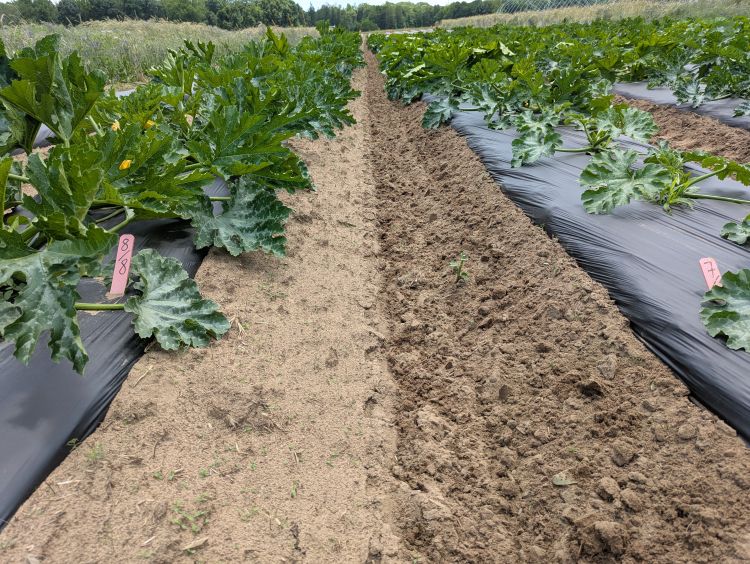
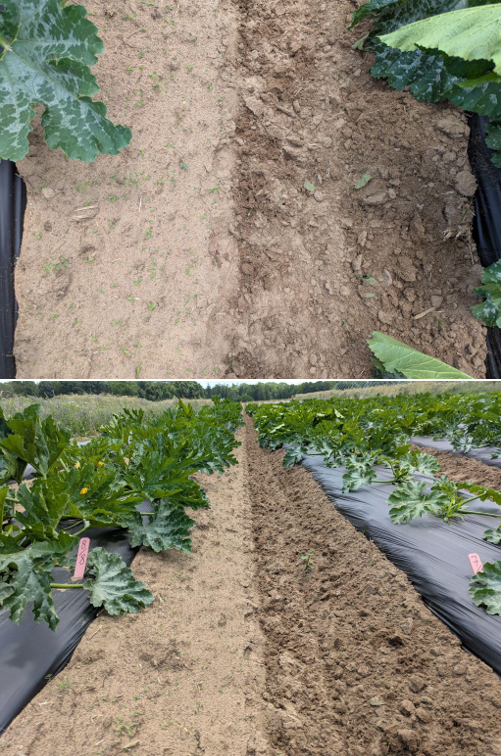
Cucumbers, squash and melons have been planted. Pumpkin planting has started. Depending on your tractor clearance and crop stage, finger weeders and a gang of spiders, like a Lilliston, make a good combo for row middles. Squash bug eggs are being seen earlier than noticed in previous years.
Cucurbit downy mildew spores have been detected in spore trap air samples in Berrien, Bay, Allegan and Muskegon counties. Read the full story in this recent article from MSU Extension, "Statewide monitoring network for cucurbit downy mildew verifies the 2026 arrival of spores in four Michigan counties.”
New technology enhances the downy mildew early warning system. The use of recently developed molecular diagnostics coupled with microscopy ensures the accurate confirmation of this pathogen from our spore trap air samples. We can distinguish the downy mildew pathogen that infects cucurbits from the downy mildew pathogen that infects other crops such as hop. Without the use of these new tools, we could mistake the hop downy mildew (which overwinters) for a downy mildew from a totally different crop resulting in a false positive.
Another important feature of our alert system is the ability to tell growers which cucurbits will be targeted by the arriving downy mildew spores. For instance, in past years, only Clade 2 of the cucurbit downy mildew pathogen has been detected in the air. Clade 2 most commonly infects cucumber and melon. Clade 1 has not been detected in the state in recent years meaning that growers of pumpkins, squash and zucchini do not need to be concerned about downy mildew on their crops. However, each week’s positive samples are tested to determine whether Clade 1 and/Clade 2 have been detected so that growers can know if and which cucurbit crops are at risk from this highly destructive pathogen.
Phytophthora on squash has developed as a result of the increased temperatures along with recent rains. Early symptoms include plant wilting. As a reminder for those who have fields with a history of Phytophthora, MSU has a series of fact sheets on managing Phytophthora in various vegetable crops. Check out the list of publications on the Hausbeck Plant Pathology Research Lab website.
Brassicas and greens
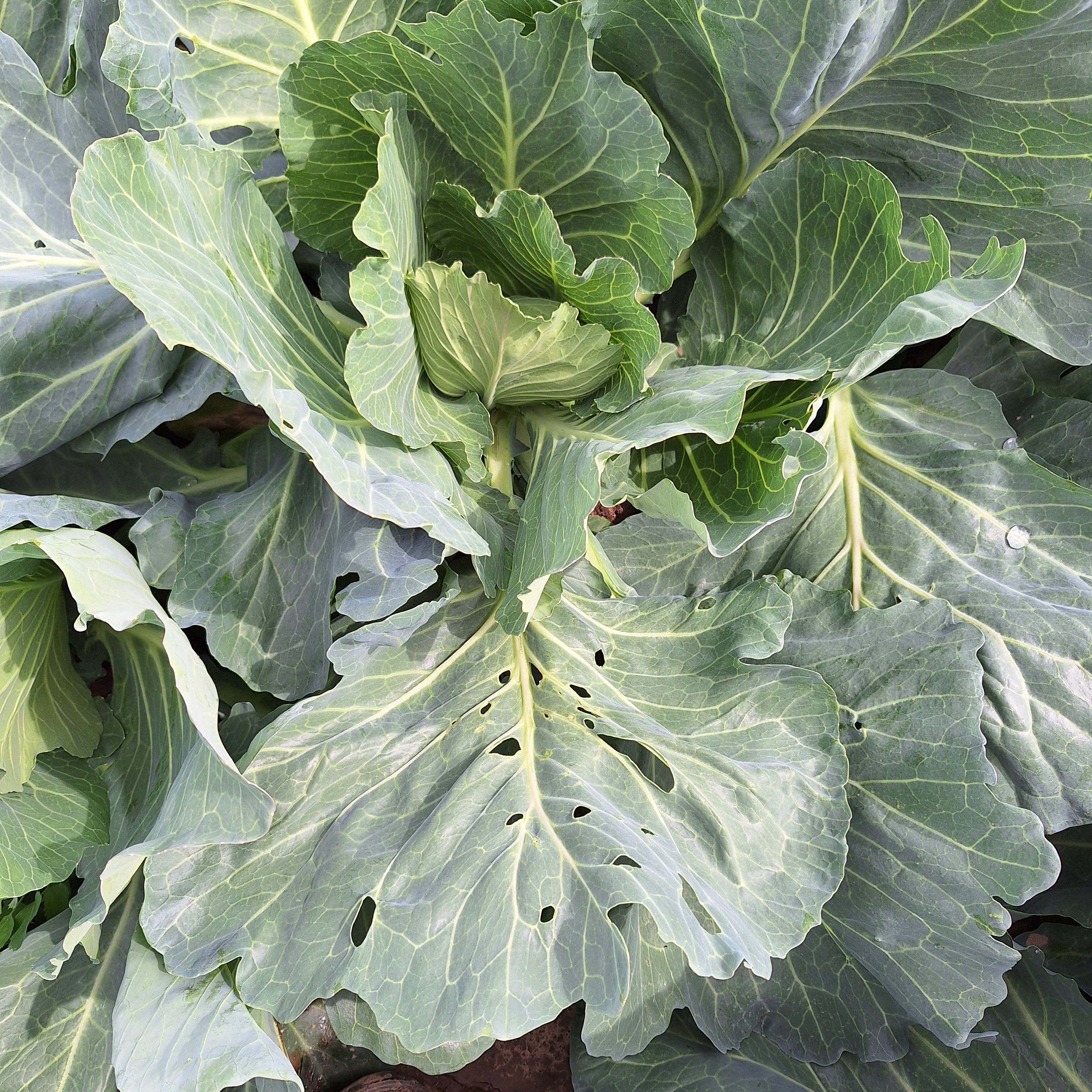
Scouting at the Southwest Michigan Research and Extension Center showed an abundance of parasitic wasps and aphid mummies, ladybeetle adults and larvae, and lacewing eggs. For every aphid found, there were three or four signs of the good guys working. Caterpillars are active, and suspected wirestem symptoms have been reported. Root aphids have been reported on chard as well as beets and zinnia.
Caterpillars continue to be present in cole crop plantings. Thresholds can provide a rough guide to help interpret what you are seeing, and its impact on yield. For heading brassicas, plants can tolerate some damage prior to heading or floret formation. At this stage, the main damage comes from defoliation as caterpillars are not feeding on the harvestable commodity, and plants can tolerate some holes without yield loss. This is why “textbook” thresholds are relatively higher early.
This could be a good time to use “narrow spectrum” insecticides such as Bt or non-pyrethroid conventional insecticides, which conserve beneficials. As heads and floret form, caterpillars can directly damage the harvested commodity, and thresholds decrease. Highly effective products can be used approaching, at and through this point to limit damage. Things can change rapidly in hot weather, so this approach requires frequent scouting, but it could save sprays and help conserve beneficials that stave off pests like aphids. On the farm it is all a matter of what there is time for!
The following table shows the thresholds for caterpillar management in cabbage, from Vegetable Insect Management (Foster and Flood editors, 2005).
|
Cabbage stage |
Diamondback moth caterpillars |
Imported cabbageworm and cabbage looper |
|
Transplant to cupping |
50% with at least 5 larvae per plant |
30% with caterpillars |
|
Cupping to early head |
50% with at least 5 larvae per plant |
20% with caterpillars |
|
Early head to harvest |
10% with at least 1 larva per plant |
10% with caterpillars |
The following table shows the thresholds for caterpillar management in broccoli and cauliflower, from Vegetable Insect Management (Foster and Flood editors, 2005).
|
Broccoli or cauliflower stage |
Diamondback moth caterpillars |
Imported cabbageworm and cabbage looper |
|
Transplant to first curd |
40% with caterpillars |
20% with caterpillars |
|
First curd to harvest |
10% with caterpillars |
10% with caterpillars |
|
Early head to harvest |
10% with at least 1 larva per plant |
10% |
Fruiting vegetables
Protective sprays have been going on in southwest Michigan over the last week. Transplanting continues, as well as trellising. Hoophouse tomato picking has started on some farms.
Fine-tuning transplant production is a continuous process in seeing what works for your farm’s context. Seedlings that are too small are more vulnerable to being lost to the elements or pests, while those that are too big at planting may experience greater transplant shock. Root systems in the plug must be robust enough to get off to a good start in the field but not allowed to grow too long to the point of being root bound. Refer to the MSU Extension article “Transplant production: Timing and crop types” for more details on transplant production.
A new article from MSU Extension on mite problems in tomatoes is now available. The article describes the symptoms caused by spider mites, broad mites, and tomato russet mites, and provides guidance on scouting, diagnosis, and management to help growers identify mite problems early and make informed management decisions.
Garlic and onions
Lower garlic leaves are starting to die as the plants make a final push toward bulb development. Symptoms resembling garlic bloat nematode damage in garlic have been reported.
Stemphylium leaf blight has become the most important foliar disease of onion producers in Michigan and is caused by a fungal pathogen of the same name (Stemphylium vesicarium). The first symptoms of Stemphylium leaf blight can be difficult to diagnose. Tip burn can be caused by herbicide damage but can also be an entry point for this pathogen. The brown spots of Stemphylium leaf blight are small at first but increase in size, extending down the leaf. These elongated lesions can look like bacterial stalk and leaf blight and sending a plant sample to a university diagnostic lab can help. In healthy onions the oldest onion leaves die first. The mid-season loss of green leaves is typical of Stemphylium leaf blight and without healthy leaves, bulb size and yields are reduced.
It’s important that a fungicide program to protect the onion’s foliage from Stemphylium leaf blight begin when plants are young (by the 3- to 5-leaf stage) and include highly effective products at the front end of the season to prevent the pathogen from becoming too well established. Protecting the onion leaves early helps to ensure that the plants can reach maturity and achieve their full yield potential.
Early field research from Michigan State University showed that the Stemphylium leaf blight pathogen is resistant to the strobilurin (FRAC 11) group of fungicides (azoxystrobin, picoxystrobin, pyraclostrobin, and trifloxystrobin). However, other fungicides can effectively limit Stemphylium leaf blight and include Omega SC (FRAC 29), Luna Tranquility SC (FRAC 9, 7), Miravis Prime SC (FRAC 12, 7), Tilt SL (FRAC 3), and Luna Experience SC (FRAC 3, 7). The FRAC number(s) represent the mode of action that each fungicide uses against the Stemphylium pathogen.
To keep the Stemphylium pathogen guessing so that it doesn’t become resistant to currently effective fungicides, it’s important to alternate among products with different FRAC codes. In our research plots we test one Stemphylium fungicide at a time (often in alternation with Bravo WeatherStik SC) to best evaluate the fit that any particular Stemphylium fungicide could have in an overall program.
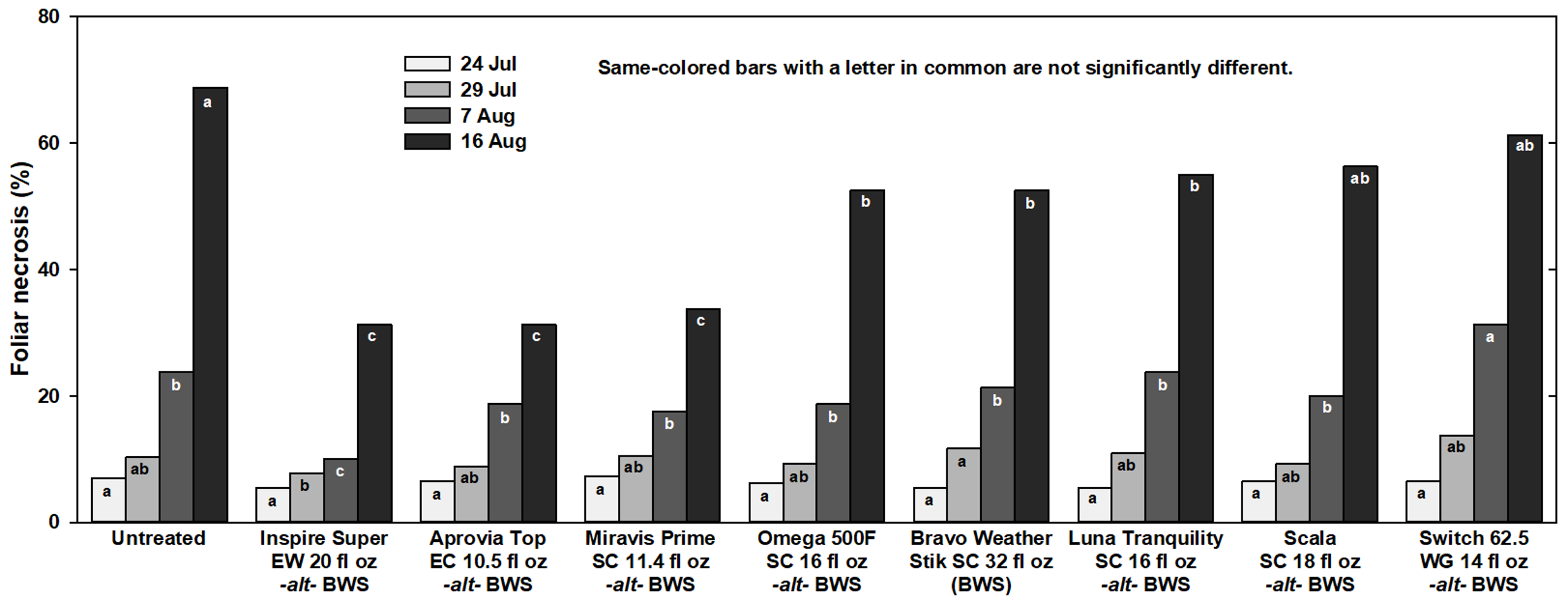
Our 2025 fungicide field trial results with ‘Bradley’ showed that all fungicide treatments controlled Stemphylium leaf blight compared to the onions that were not treated except for Scala SC (FRAC 9) and Switch 62.5 WG (9, 12) (each were alternated with Bravo WeatherStik SC) (see Fig. below). The treatments that were most effective in limiting foliar disease included Inspire Super EW (FRAC 3, 9), Aprovia Top EC (FRAC 3, 7), and Miravis Prime SC (FRAC 12, 7)(each alternated with Bravo WeatherStik SC). The fungicides Omega 500F (FRAC 29) and Luna Tranquility SC (FRAC 9, 7) (each alternated with Bravo WeatherStik SC) or Bravo WeatherStik SC (FRAC M5) (only) provided a moderate level of control compared to the other products included in this study.
Sweet corn
Early plantings are at tassel.
Strawberries
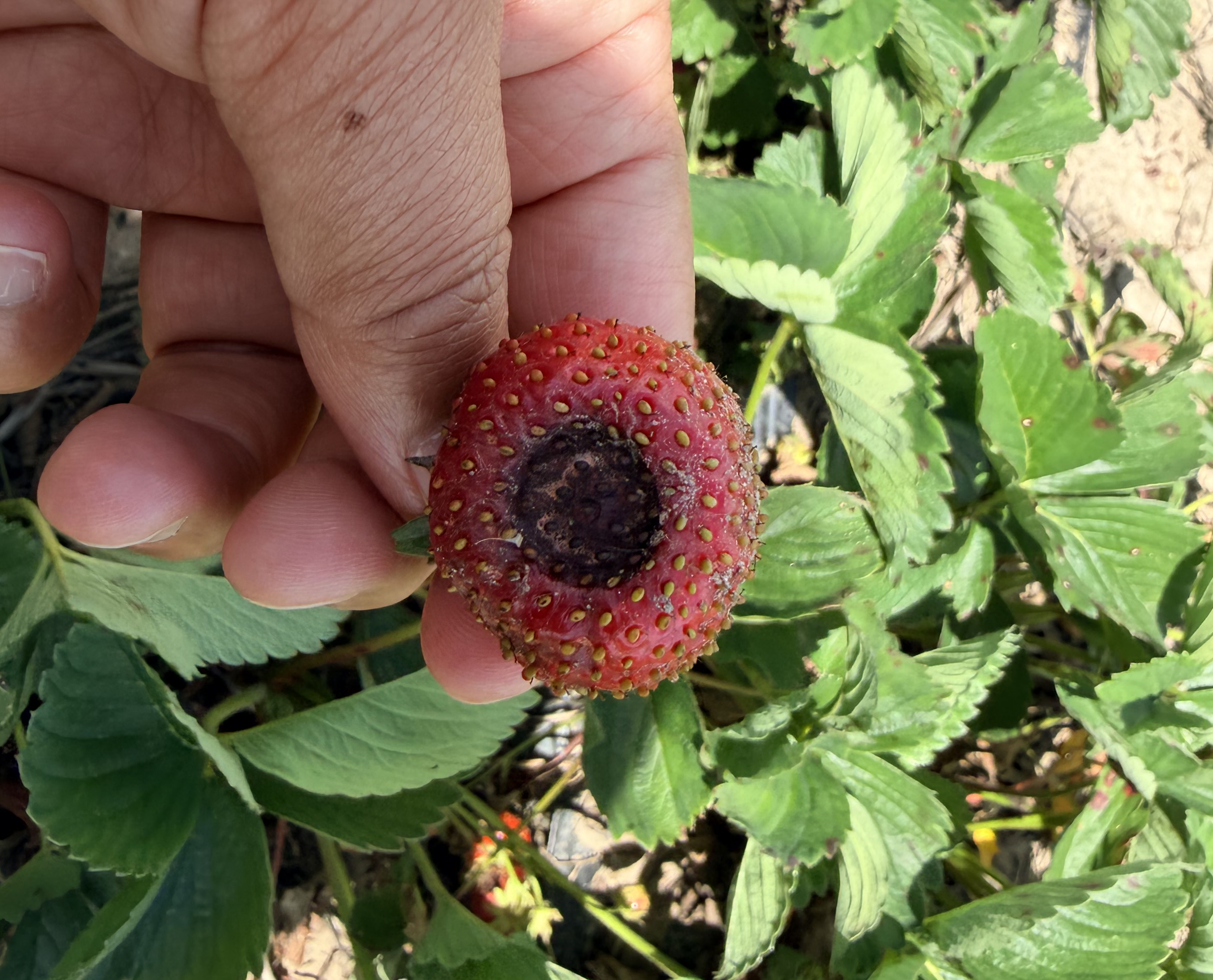
Strawberries are at their peak, but frequent weather interruptions have made timely harvesting a challenge. Despite these conditions, many farms continue to offer already picked and u-pick strawberry opportunities.
Pest alert!
Thrips parvispinus
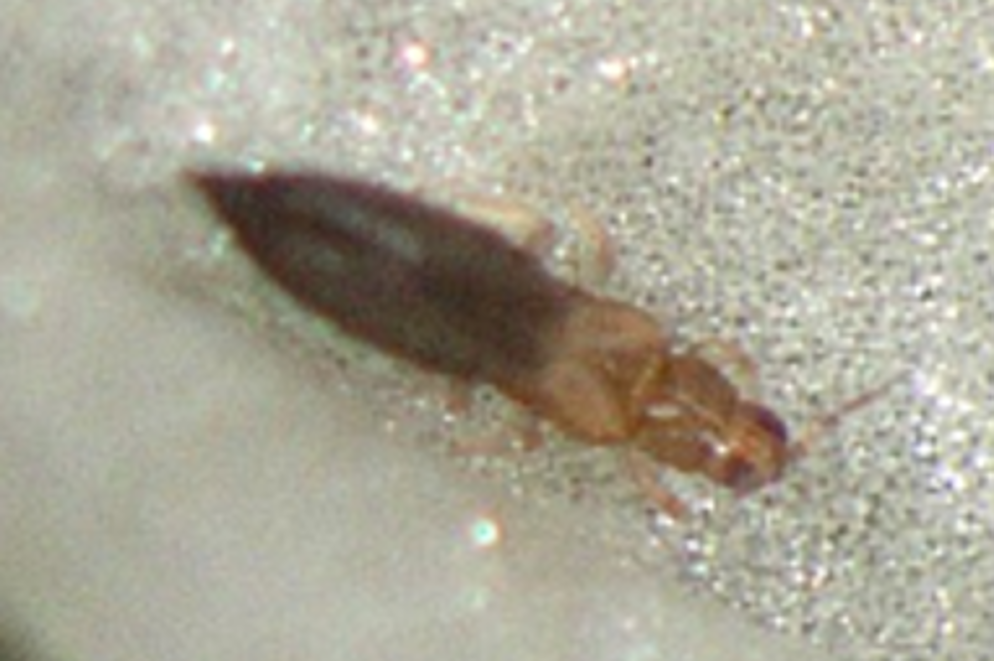
Thrips parvispinus is a newer regulated pest that should be reported to the Michigan Department of Agriculture and Rural Development (MDARD) when identified. It is present in some of the production states so the focus is on incoming stock, but it can be found on other plants in the greenhouse.
This pest has a broad host range. We are still learning about new hosts, so hosts cannot be used for identifying the species. In vegetables and fruits, it has been found on legumes, nightshades, cucurbits, shallots and strawberries. In ornamentals, it has been found on many hosts.
Injury from thrips parvispinus is similar to that of other thrips but can be more severe. In some cases, it may be confused with broad mites. Symptoms include:
- Rasping injury: causes discoloration, small holes and tattered edges
- Distortion: curling, pinched edges on leaves, twisting, narrow leaves
- Scarring/russeting on leaves, stems, fruits
- Capable of transmitting viruses, but no reports yet
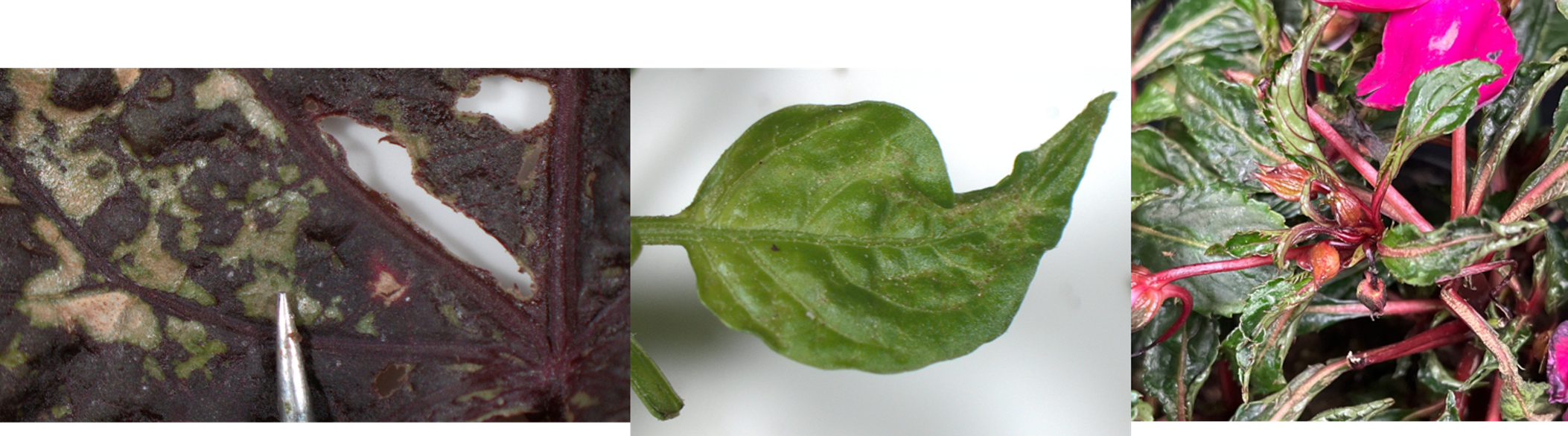
Because of its broad host range and similar-looking injury to that of other pests, if you find an injury that looks like a thrips injury and you find brown thrips, take a closer look. The coloration of the females can be seen with a hand lens or stereo microscope, but identification requires adult females and must be done under a compound microscope.
If found and identified, report the pest to MDARD (MDA-Info@michigan.gov or MSUBugHelp@msu.edu) and provide your or your client’s contact information. MDARD will reach out with guidance.
MDARD has recently assessed this pest and has shared the following:
- If found on stock entering Michigan – may issue a Rejection Notice to the shipping state’s department of agriculture and the supplier
- If found on annuals – prevent sales or transportation of plants out of state
- If found on perennials – collect specimens for confirmatory ID, restrict the stock from sale or movement out of the greenhouse, recommend isolation to contain, and recommend a spray rotation to kill the pests. May require a second inspection to confirm eradication before selling the plants again.
Produce Food Safety On-Farm Readiness Reviews
Schedule an On-Farm Readiness Review (OFRR) today for a 2-hour educational visit that takes place during the harvest season and is meant to be casual and low stress. Everything discussed during an OFRR is confidential and focused on ways you can reduce your own risks in relation to produce safety. There is no pressure to take our advice either, we are just here to support you in your produce safety efforts!
Events
- June 17, 2026: Food-Grade Grains Field Day at Kellogg Biological Station – Hickory Corners, MI
- June 17, 2026: Protecting the Farm: Medicaid & What Farmers Should Know - (Virtual)
- June 18, 2026: Healthy Habitats and Productive Pollinators – Flint, MI
- June 18, 2026: Jackson County Regenerative Ag Field Day - Rives Junction, MI
- June 20, 2026: Michigan Farm Bureau Farmers Teaching Farmers Event – Lansing, MI
- June 22-23, 2026: State of the Western Lake Erie Basin Conference – Adrian, MI
- June 25, 2026: Beekeeping Workshop - Novi, MI
- June 29, 2026: Technical Assistance Provider Training for Pay for Performance Program – Adrian, MI
- June 30, 2026: Monroe Conservation District Hands-On Mushroom Workshop – Temperance, MI
- July 8, 2026: 2026 Strawberry Day – Three Rivers, MI
- July 21, 2026: Washtenaw TOPP Farm Tours – Whitmore Lake/Dexter/Willis, MI
- July 23, 2026: Beekeeping Workshop – Novi, MI
- July 25, 2026: Beekeeping Workshop - Lansing, MI
- July 30, 2026: Summer Irrigation Workshop - Hickory Corners, MI
- July 31, 2026: Berrien County Organic Agriculture: Tour 3 Value-Added & Agritourism Farms – Sodus/Buchanan/Three Oaks, MI
- August 6, 2026: 2026 Potato Field Day – Lakeview, MI
- August 11, 2026: West Michigan Organic Farm Tour: Explore Farm to Institution Markets from schools to hospitals – Muskegon/Whitehall, MI
- August 11, 2026: Michigan Agricultural Irrigation Water Use Efficiency Program - Lansing, MI
- August 11-12, 2026: Michigan AgroExpo – St. Johns, MI
- August 18, 2026: Northwest Michigan TOPP Field Day: Farming for People, Purpose, and Profit – Petoskey, MI
- August 20, 2026: Hillsdale Nutrient Management Field Day – Waldron, MI
- September 3, 2026: Cover Crop Workshop at SVREC- Frankenmuth, MI
- September 3, 2026: Fourth Annual KBS LTAR Field Day - Hickory Corners, MI
- August 28, 2026: Washtenaw Conservation District Field Day – Ann Arbor, MI
- September 9, 2026: Tillage & Soil Health Field Day – Monroe, MI
- September 10-11, 2026: Great Lakes Tek Flex – Benton Harbor, MI
- September 16, 2026: 2026 Midwest Mechanical Weed Control Weed Day – Benton Harbor, MI
- September 22-24, 2026: Farm Science Review 2026 – London, OH
- October 4-6, 2026: Northern Michigan Small Farm Conference – Bellaire, MI
- November 4-6, 2026: Michigan Agritourism 20th Anniversary Convention – Frankenmuth, MI
- December 8-10, 2026: Great Lakes Fruit, Vegetable, & Farm Market Expo – Grand Rapids, MI
This work is supported by the Crop Protection and Pest Management Program (grant no 2024-70006-43569) from the USDA National Institute of Food and Agriculture. Any opinions, findings, conclusions, or recommendations expressed in this publication are those of the author(s) and do not necessarily reflect the view of the U.S. Department of Agriculture.