Finish strong: Marketing strategies to increase food and beverage sales in Q4 2026
 Print
 Email
Insights from the Michigan State University Product Center.
October through December can be one of the most important sales periods of the year for small food and beverage companies. Between Halloween, Thanksgiving, Small Business Saturday, holiday entertaining, gift giving and New Year's celebrations, consumers have many more reasons to purchase specialty foods and beverages. The challenge is standing out.
Small businesses may not have the advertising budgets of national brands, but they have advantages large companies often cannot duplicate: a local story, personal relationships with customers, product authenticity and the ability to move quickly.
Here are practical strategies Michigan food and beverage entrepreneurs can put to work during the remainder of 2026.
1. Stop selling a product and start selling an occasion
During Q4, think about why someone would buy your product right now.
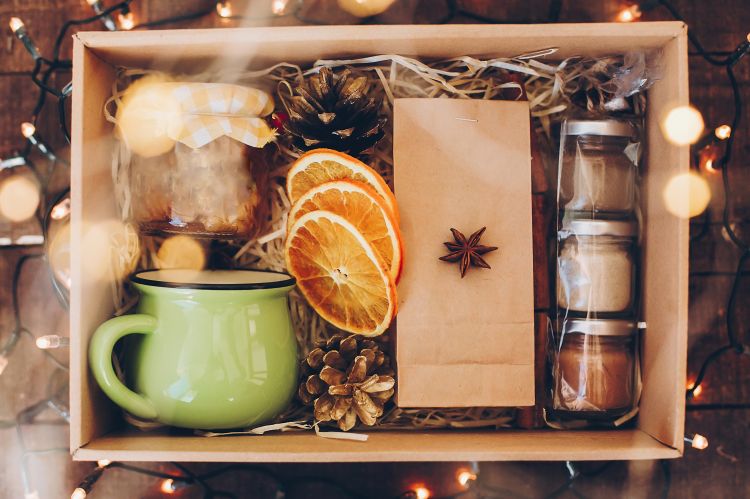
A jar of salsa can become part of a game-day gathering. Coffee can become a host gift. Jam can become part of a holiday brunch. Hot sauce can become a stocking stuffer. Granola can become an easy breakfast for holiday guests. Crackers, cheese and condiments can become the foundation of a Michigan-made gift box.
Review your products and identify three or four Q4 occasions that are a natural fit. Build your social media, email and merchandising around those occasions rather than repeatedly posting “Buy our product.” Customers need help imagining where your product fits into their lives.
2. Create bundles that make gift buying easy
Instead of automatically discounting individual products, try increasing the value of the purchase. For example, if your normal product sells for $9.99, consider combinations such as:
- Three-product holiday sampler: $27.99
- Four-product gift set: $39.99
- Michigan-themed gift box: $49.99
- Corporate gift package with a personalized card
These are examples rather than prescribed price points. Calculate your actual product, packaging, labor, fulfillment, and retailer costs before establishing the final price. The Michigan State University Product Center, through MSU Extension, has a helpful spreadsheet to help clients calculate product costs.
Product bundles offer another advantage: they introduce customers to more of your product line. A shopper who arrives looking for one flavor may leave with three.
3. Make “Michigan-made” part of the story
Michigan shoppers have plenty of opportunities to support local businesses throughout the holiday season. For example, a 2025 article by Matt Heffner for Awesome Mitten walks through the “26 best towns in Michigan for Shopping Local During the Holiday Season.” Make your Michigan connection easy to see.
Tell customers:
- Where the business is located
- Who founded it and why
- Whether Michigan ingredients are part of the product
- How the product is made
- What makes the product or recipe distinctive
- Where customers can find it locally
Be precise with claims. “Made in Michigan,” “Michigan-owned,” and “made with Michigan-grown ingredients” communicate different things. Use the description that accurately represents your business and product.
4. Put Small Business Saturday on your calendar
In 2026, Small Business Saturday falls on November 28, immediately following Black Friday on November 27. Don't limit the promotion to one social media post on November 28.
In Early November: Tell your business story.
In Mid-November: Introduce your holiday products and bundles.
Thanksgiving week: Tell customers exactly where products can be purchased.
On Small Business Saturday: Give followers a clear reason to act.
Afterward: Thank customers and remind them that shopping local continues through December.
5. Give retailers something to promote
If your product is already being sold through independent grocers, farm markets, specialty stores or gift shops, make your retailer's job easier.
Create a simple Q4 promotional package that can include:
- Product photographs
- Short product descriptions
- Suggested social media copy
- Holiday recipes or serving ideas
- Your company's story
- Promotional signage
- Sampling ideas
- QR codes linking to recipes or product information
Then promote the retailer from your own channels. Messages like, “Looking for our products in Grand Rapids? Find us this weekend at Fulton Street Farmers Market and on the shelves at Bridge Street Market” are effective. Don’t expect the retailer to generate all the customer traffic during the busy holiday season.
6. Get the product into customers' mouths
Offering samples can remove one of the biggest hurdles in acquiring new customers because customers can determine if they like the product or not. Consider adding in-store demonstrations, holiday markets, special events and other sampling opportunities to your Q4 calendar where appropriate and where applicable food-safety and retailer requirements can be met.
Sampling should also lead somewhere. Have a way for customers to immediately:
- Identify the product they tasted
- Purchase it
- Find it again later
- Follow your business or join your email list
That last step matters because a customer acquired during the holiday season can become a repeat customer in 2027.
7. Consider holiday markets strategically, not just enthusiastically
Michigan has substantial holiday-market activity. Detroit Eastern Market, for example, has additional 2026 holiday markets scheduled for November 24 and 29 and December 6, 13 and 20, with the November 24 market focused primarily on food vendors and later Sunday markets featuring Michigan-made gift options.
Markets can create sales and brand exposure, but revenue alone does not tell you whether an event was worthwhile. After an event, calculate:
Event profit = Sales − product cost − booth fee − labor − travel − sampling/promotional expenses
Also capture email subscribers, wholesale inquiries and future customers when possible. A $1,500 sales day may sound successful, but profitability provides a much better picture.
8. Use short-form video to show the people behind the package
Use your smartphone to capture videos or photos of:
- Packing holiday orders
- Making or preparing the product
- Introducing the founder
- Showing a new seasonal flavor
- Building a gift box
- Demonstrating a recipe
- Showing where ingredients come from
- Restocking a local retailer
A useful rule for content is show, teach, then sell. Instead of, “Our holiday gift boxes are available now!” Try instead, “Need a Michigan-made gift for the person who is impossible to shop for? Here's what we're putting into this year's gift box…”
Then show the products.
9. Don't overlook business-to-business gifting
Consumers are not your only potential Q4 customers. Businesses, real estate agents, financial professionals and other organizations may need gifts for employees, customers or partners. Food and beverage products can work particularly well because they are consumable and can be combined into packages.
Develop a simple corporate offer that clearly states your:
- Package choices
- Price per package
- Minimum order, if applicable
- Personalization options
- Ordering deadline
- Pickup, delivery or shipping options
Then contact prospective buyers directly rather than hoping they happen to discover the offer on social media.
10. Turn December shoppers into January customers
Perhaps the biggest missed opportunity of Q4 happens after the sale. Put something in the package that gives customers a reason to return: a QR code for recipes, an invitation to join your email list, information about other products, or an appropriate future-purchase offer.
Also think about the gift recipient. The person eating your product may never have heard of your company because somebody else bought it for them. Make your brand name, website and reorder information easy to find.
Don't wait until December!
For businesses that haven't developed a Q4 plan yet, there is still time, but simplify.
Pick:
- One audience
- One or two holiday offers
- Three important selling occasions
- A handful of marketing channels you can manage consistently
Then measure what happens. Track sales by product and channel, average order value, promotion redemptions, email-list growth and retailer reorders. Keep notes about which events, bundles and messages generated results. That information can make your 2027 holiday plan much stronger.
The goal isn't to participate in every holiday promotion or social platform. It is to make it easy for the right customers to discover your product, understand why it makes a great purchase or gift, and know exactly where to buy it.
For Michigan's food and beverage businesses, the fourth quarter represents more than three months of sales. Done well, it can introduce customers to a local brand that they continue purchasing long after the holiday decorations come down.
About the MSU Product Center
MSU Extension and the MSU Product Center leverages MSU’s extensive expertise in food, agriculture, and natural resources to help entrepreneurs define, develop, and successfully launch innovative products. Through business counseling, technical assistance, educational programming, and market access opportunities, the MSU Product Center plays a critical role in strengthening Michigan’s food and agriculture economy.
To learn more about the MSU Product Center and its programs, visit canr.msu.edu/productcenter.