


Preparing powdered infant formula safely in an emergency
 Print
Print Email
EmailLearn how to safely prepare and store powdered infant formula if tap water becomes unsafe to drink during an emergency.
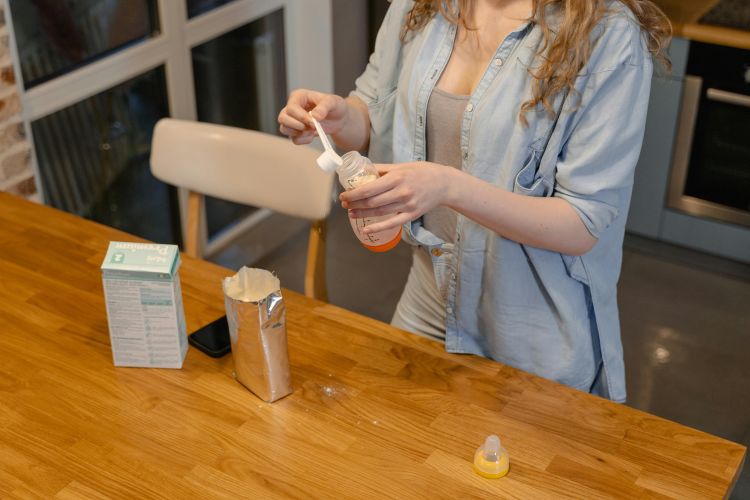
During an emergency, breastfeeding is the safest way to feed your baby according to the U.S. Centers for Disease Control and Prevention (CDC). However, if you are not breastfeeding, the CDC also recommends using ready-to-feed (RTF) infant formula for your baby during an emergency when your tap water becomes unsafe to drink. RTF is a sterile, liquid formula that is ready to use without adding water and is the safest formula choice during emergencies for babies less than 2 months old, babies born prematurely or babies with a weakened immune system.
Powdered infant formula may be your only option, so in this situation follow these steps to prepare it safely.
STEP 1:
Clean the area you will use to prepare the formula, such as the countertops and sink. Wash your hands with soap and water. If there is no water available, or it is not safe, use hand sanitizer with at least 60% alcohol. Use a clean bottle, and make sure the formula is not expired.
STEP 2:
Use bottled water to prepare the formula until your health department says tap water is safe to drink. If bottled water is not available, learn how to treat water to make it safe for drinking. This is only an option if the water does not contain fuel, radioactive materials or toxic chemicals.
There are some extra steps you need to follow during an emergency when preparing formula for babies younger than 2 months old, babies born prematurely, or babies with a weakened immune system. To make sure your baby isn’t harmed by bacteria like Cronobacter, the formula must be mixed with very hot water. Bring safe drinking water to a boil and then wait 5 minutes before mixing with the measured infant formula. Wait for the formula to cool before feeding. Test the temperature before feeding your baby by putting a few drops of formula on your wrist- it should feel warm but not hot.
STEP 3:
Measure out the exact amount of bottled water and formula listed on the formula container instructions using measuring cups. Measure the water first and then add the infant formula.
STEP 4:
With the lid on the bottle, shake the bottle to mix the formula. Do not stir. It is not necessary to warm the formula, but if desired you can put the bottle into a bowl of warm water that was bottled or treated. Avoid getting water into the bottle or nipple. Test the temperature before feeding your baby by putting a few drops of formula on your wrist- it should feel warm but not hot. Never use a microwave to warm formula as it can destroy vital nutrients and create hot spots that may burn the infant.
STEP 5:
After feeding, use soap and safe water to thoroughly clean the bottle and nipple. If your baby is sick or younger than 2 months old, you will also need to sanitize the bottle and nipple after cleaning it at least once a day. More information on cleaning and sanitizing infant feeding items during an emergency is available in this MSU Extension article.
More important tips for using baby formula in emergencies:
- Use the prepared formula within 2 hours of preparing it. If you cannot feed it to your baby within 2 hours, store it in the refrigerator and use it within 24 hours.
- After you start feeding your baby the prepared infant formula, throw out anything left after 1 hour from the start of feeding. Leftovers cannot be kept in the refrigerator for later. Avoid preparing more than your baby will eat in the bottle, to not waste your supply.
- During a power outage with no working refrigerator, prepare new formula for each feeding.
- If formula cans were exposed to unsafe water, have rust, dents, broken seals or puffy ends, throw them out.
- Keep formula lids and scoops clean and dry and store the scoops inside the cans.
For answers to your safe food and water questions, call MSU Extension's Food Safety Hotline at 1-877-643-9882. For more information on food safety, visit MSU Extension's Safe Food & Water website.