Southwest Michigan fruit update – May 27, 2026
 Print
Print Email
EmailWarm and dry weather is incoming.
Tree fruit updates
Apricot trees have small fruit in central Berrien and Van Buren counties, with an average of 17 millimeter (mm) fruit size. This week is the last control window for Plum Curculio. Damage is now visible in fruit. More information on control of PC can be found in this MSU Extension article, which includes a table of insecticide options.
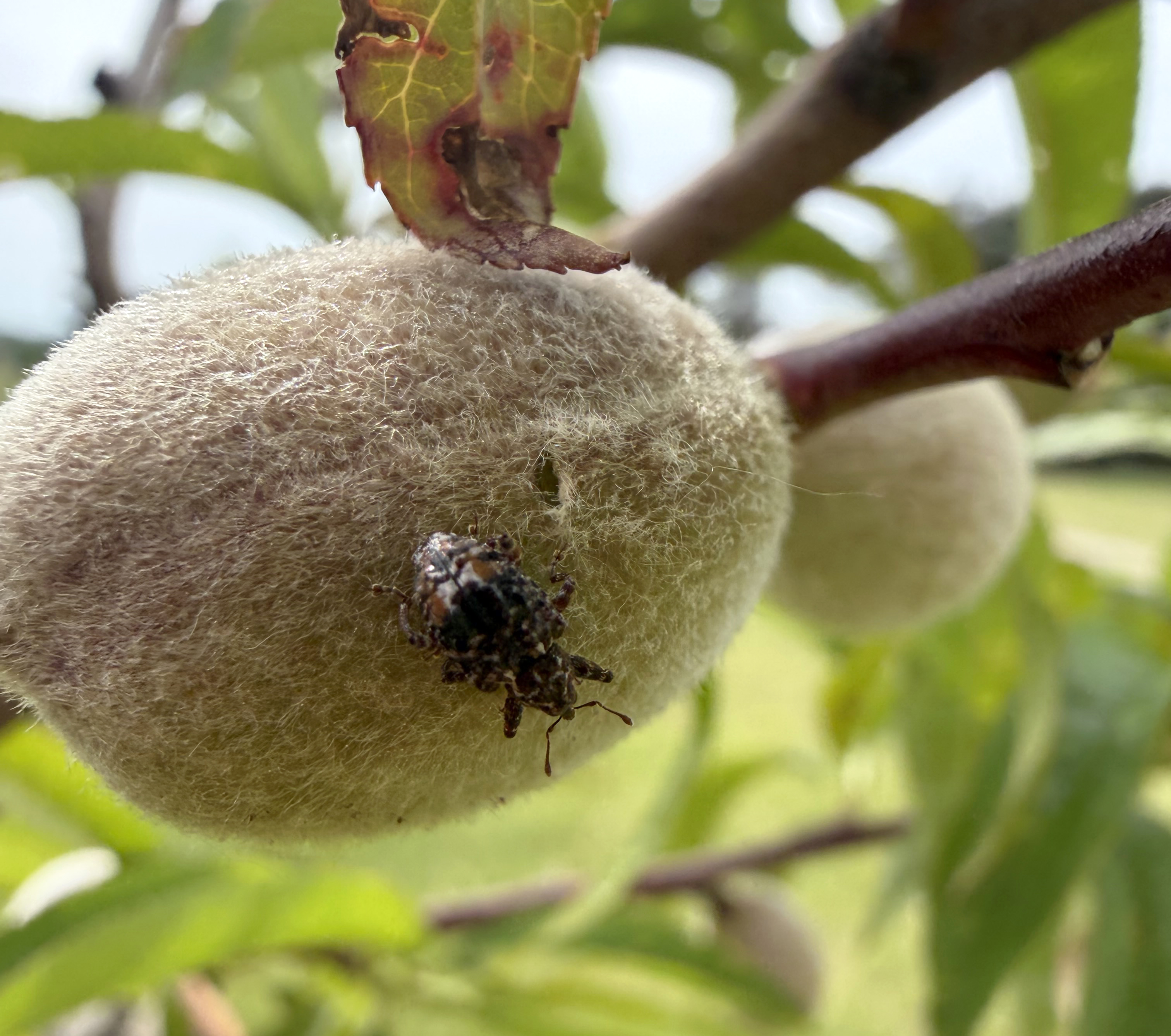
Peaches and nectarines are sizing, with early cultivars approaching 16 mm.
Brown rot is not a major concern until fruit begin to soften later in the season.
Selecting an insecticide for plum curculio should prioritize rapid knockdown of immigrating adults combined with enough residual activity to protect exposed fruit during the oviposition window. This week is the last timing to use a neonicotinoid to protect fruit from oviposition.
The first lesser peachtree borer was caught this week, indicating adult emergence has begun. Lesser peachtree borer overwinters as larvae beneath bark and in wounded tissue, then emerges as a clearwing moth that mates and lays eggs in cracks, pruning wounds, Cytospora cankers, winter-injured bark and other damaged areas on peach and cherry trees. Because larvae quickly tunnel under the bark after hatch, control is aimed at protecting the trunk, scaffold limbs and cankered areas during adult flight and egg hatch, before larvae are established inside the tree.
Product choices should be rotated by IRAC group where possible. IRAC 3A pyrethroids can provide activity against adults and young larvae but may disrupt beneficial mites and should be used carefully. IRAC 28 diamides and other labeled borer materials can also fit into rotation programs, depending on crop, timing and label restrictions. Mating disruption can reduce pressure where deployed across sufficient acreage before sustained flight, but it does not replace attention to canker management and tree wounds.
Blocks with Cytospora, winter injury, mechanical damage or a history of borer problems should be considered higher risk, and sprays should be directed to the bark and scaffold zone. For a full size tree, 1 gallon of spray solution should be directed to the crown and lower scaffolds, including full coverage of the trunk.
Plums are now around 14 mm and sizing.
In cherries, tart and sweet cherry fruit continue to size rapidly across Berrien and Van Buren counties, with the average tart cherry at 11.5 mm and the average sweet cherry at 15 mm. Protecting cherries against leaf spot is critical during warm, wet periods. Thus far, conditions have not favored rapid leaf spot development, though increased temperatures this week make adequate coverage critical. At this timing, many fungicide classes are effective, including 3, 11, 7 and M04. More information on cherry leaf spot can be found in this article from MSU Extension.
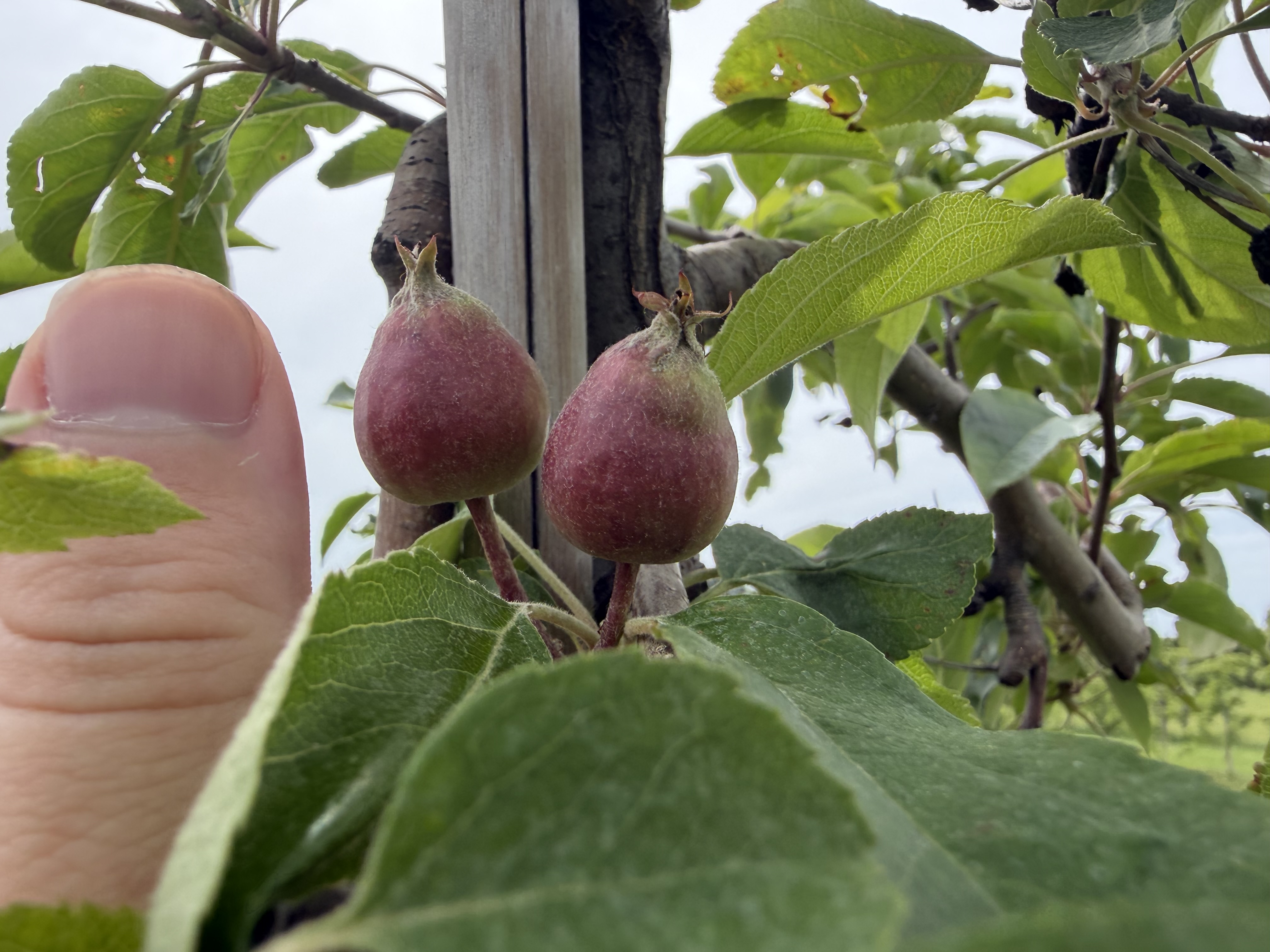
Apple fruitlets are sizing and between 12 and 15 mm. Most thinning has been completed in southwest Michigan.
Primary apple scab spores have all been ejected, marking the end of primary scab. If control of primary scab was not adequate, leftover spores will produce secondary scab infections, which can infect fruit. SDHI fungicides remain strong choices for primary scab management. When conditions remain marginal, the MSU Enviroweather apple scab model is especially useful for identifying infection windows and refining spray timing.
This week has a high risk of powdery mildew, driven by the high temperatures. For controlling powdery mildew, Captan does not have activity, thus captan covers are not sufficient alone to control powdery mildew. Instead, Qol, SDHI and SIs provide good control. For resistance management, tank-mix with a protectant fungicide (half rates of Captan or EBDCs).
Plum curculio remains the primary insect concern, particularly during warm, humid weather and in orchards bordered by woods where movement into blocks is often greater. Continue scouting fruitlets for fresh, crescent-shaped oviposition scars. Other early-season injuries may still be visible, including damage from tarnished plant bug, green fruitworm, European apple sawfly and early leafroller feeding. Any follow-up insecticide decision should be based on fresh injury, trap captures or scouting observations, and whether the crop remains susceptible.
Plum curculio programs should be built around rotating IRAC groups rather than repeatedly leaning on one chemistry class. Imidan/phosmet, IRAC 1B, remains one of the strongest standard options for post-bloom PC control. Pyrethroids, IRAC 3A, including products such as Brigade, Asana, Danitol, Lambda-Cy and related materials, can provide good activity, but they are often more disruptive to beneficial insects and mites and should be used carefully, especially as temperatures rise. Neonicotinoids, IRAC 4A, such as Actara and Assail, are also strong plum curculio materials and are useful rotational partners.
Premix products such as Cormoran, IRAC 4A + 15, and Minecto Pro, IRAC 28 + 6, add additional rotation options, while diamides in IRAC 28, such as Exirel and Verdepryn, provide another useful mode of action. Other effective alternatives include Apta, IRAC 21A and Avaunt/Avaunt eVo, IRAC 22A. For organic or low-residue programs, materials such as Surround and biological products may help suppress injury, but they depend heavily on coverage, residue maintenance, and repeated applications during the migration and egglaying window.
Overall, plum curculio control is strongest when applications are timed to fresh injury risk and warm, humid movement periods, while rotating among IRAC groups to reduce resistance pressure and preserve secondary pest balance.
For information about apple fruit thinning, see the scouting report from May 12, 2026 and visit the following resources from Michigan State University Extension:
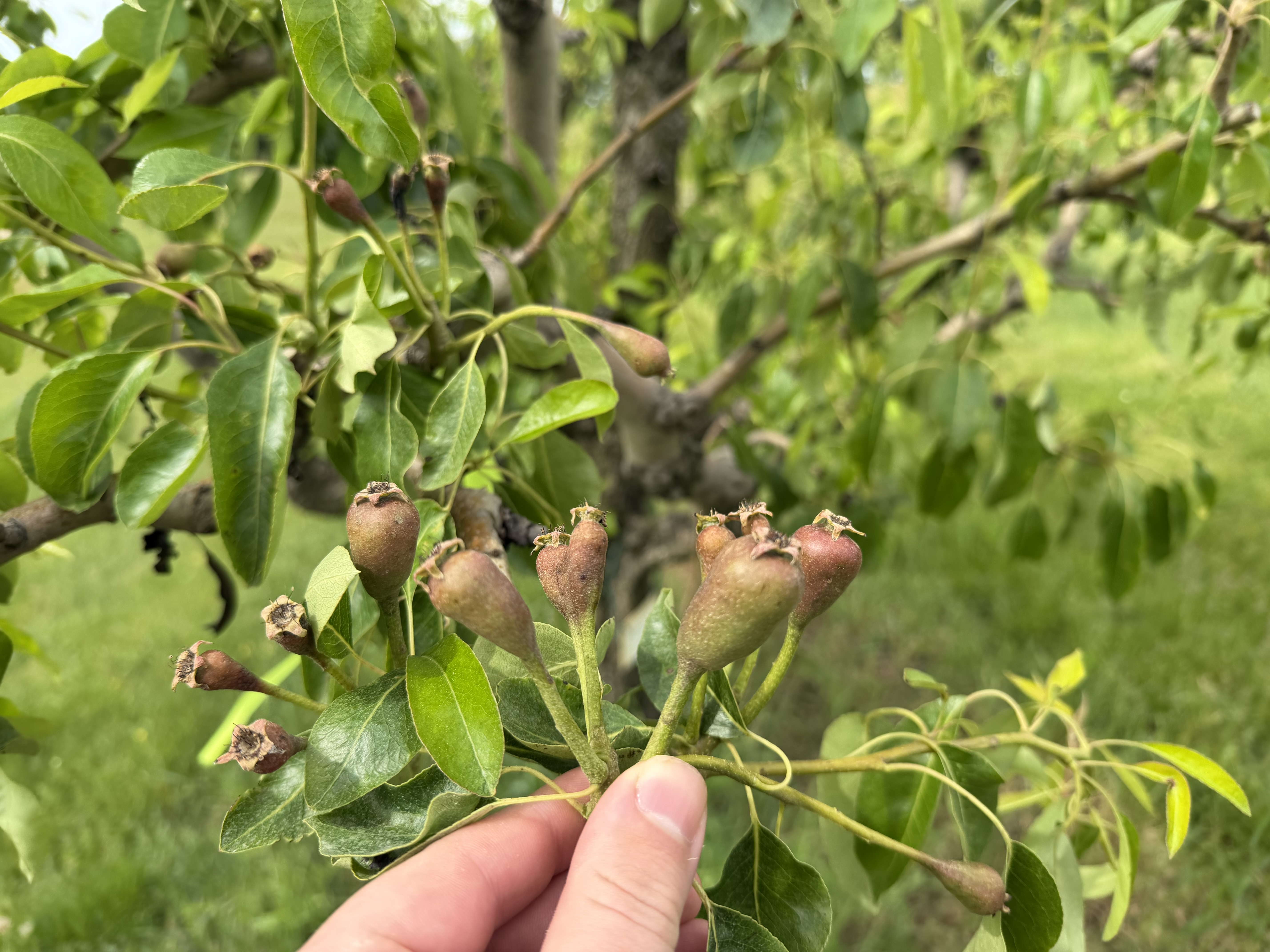
Pear fruit are sizing rapidly across Berrien, Van Buren and Allegan counties, with many blocks now in the 12–16 mm range. Primary scab risk has largely ended now that primary spore discharge is complete, but blocks with imperfect early-season control should continue to be watched for secondary scab development. If lesions are present, additional fungicide coverage may be needed to prevent secondary spread during wetting events.
Insect scouting should remain focused on plum curculio, tarnished plant bug, green fruitworm and pear psylla. Pear psylla deserves close attention as summer populations begin building on new shoot growth, especially in blocks with a history of pressure. Scout for adults, eggs and early nymphs so follow-up management can be timed before populations become established and harder to suppress later in the season.
Small fruit updates
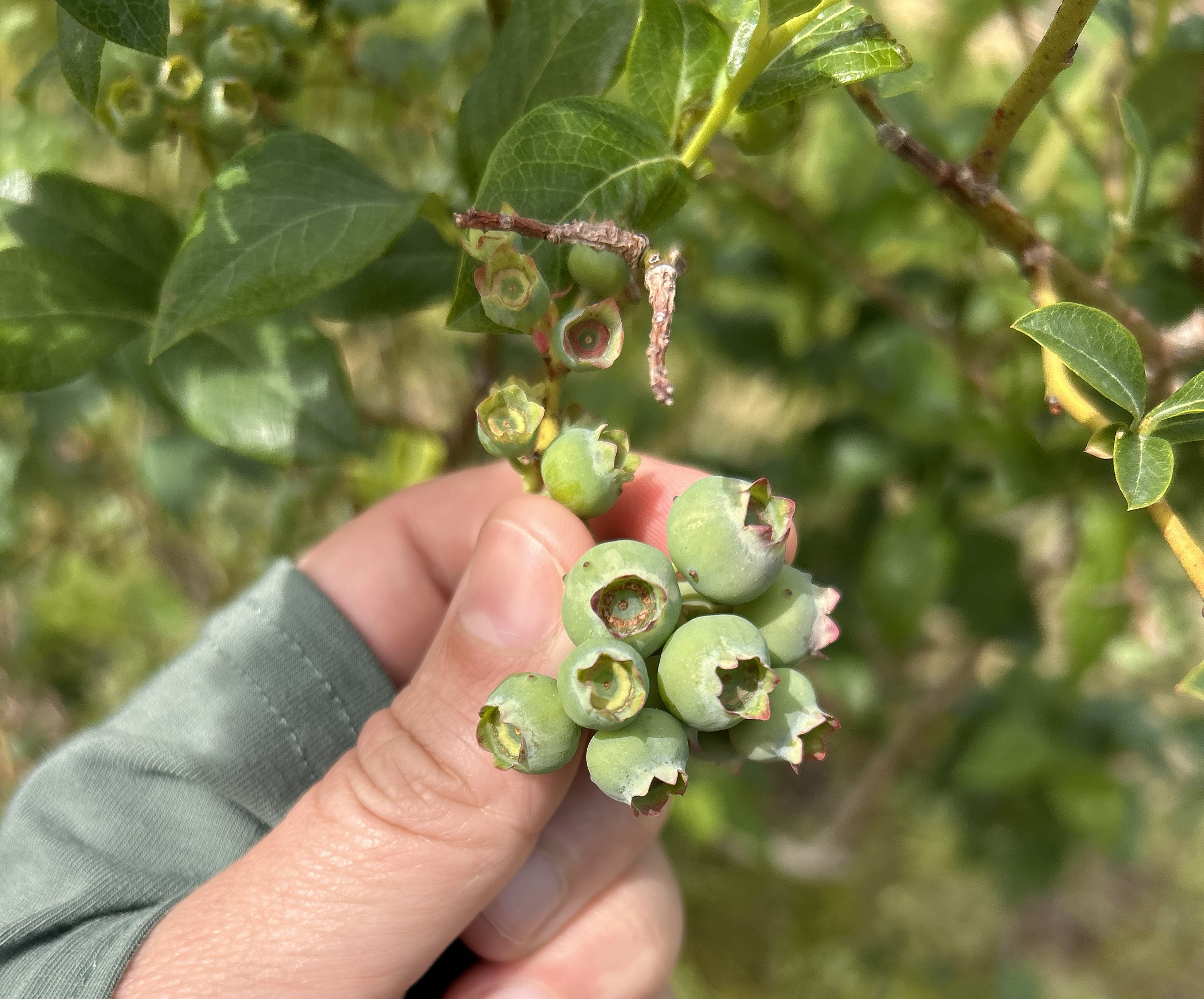
Grapes berry moth decreased slightly in catches since last week. We are still watching out for wild grape bloom. In Berrien County, Vinifera grapes that were not hurt by the freezes are at 12-inch shoots, hybrids are over 1-foot shoots and immediate pre-bloom, and concord primaries are out.
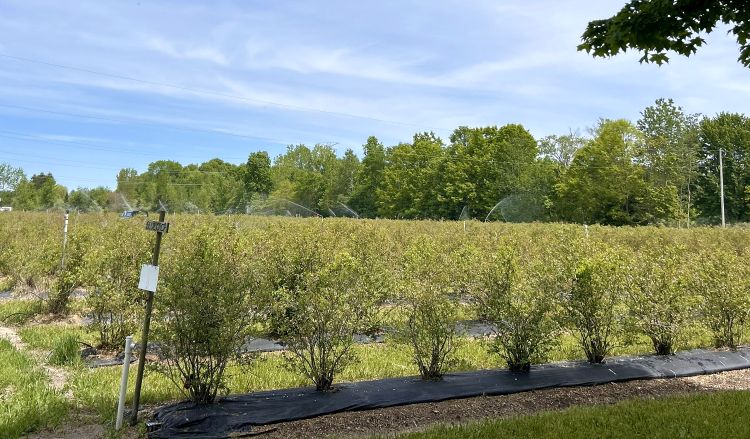
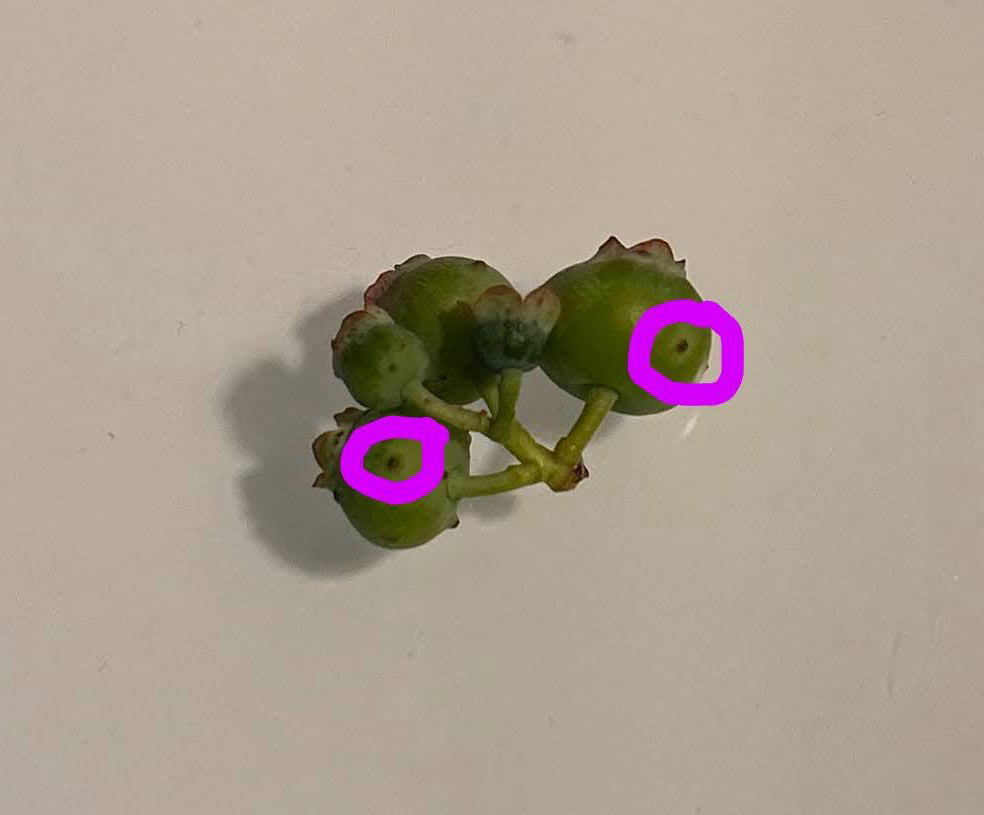
Blueberry are sizing through Van Buren County and at petal fall in southern Allegan County. Damage from flower thrips has been observed in various fields across the region (see the following photo).
Monitoring for cherry fruitworm and cranberry fruitworm is in progress. Cranberry fruitworm was caught at the Trevor Nichols Research Center and they are setting the biofix for May 16–17. Enviroweather models are estimated 50% emergence of blueberry gall wasp by May 25 in Berrien County through Van Buren County.
Fertilization typically begins around bloom, which is ending. Make sure your irrigation systems are up and running, as we are likely going to have a drier summer. This is a great time of year to walk the fields and scout for viruses.
Strawberry fruits are developing. Growers are focused on controlling leaf spot and preventing fruit rots. Harvest has begun in southern Berrien County with growers in Van Buren County expecting to pick by the end of the week.
Bramble leaves are emerging. Growers are controlling powdery mildew and raspberry sawfly.
Upcoming meetings
The 2026 Strawberry Field Day is taking place July 8 in Three Rivers, Michigan. Sign up to attend.
This year, we are hosting Tuesday Night Fruit IPM meetings. They take place in person at the Southwest Michigan Research and Extension Center in Benton Harbor and online via Zoom. The meetings cover phenology, insect and disease progression and selected topics from experts in Extension. These meetings cover small fruit for southwest Michigan and tree fruit for southwest and southeast Michigan. The meetings start at 5:30 p.m. and occur weekly until June 24. Sign up for the online option. Past meeting recordings are available online via MSU Mediaspace.
This work is supported by the Crop Protection and Pest Management Program (grant no 2024-70006-43569) from the USDA National Institute of Food and Agriculture. Any opinions, findings, conclusions, or recommendations expressed in this publication are those of the author(s) and do not necessarily reflect the view of the U.S. Department of Agriculture.