Southwest Michigan field crops update – August 20, 2026
 Print
Print Email
EmailSeed corn approaches harvest. Potato growers met to discuss late blight identification and management in response to last week’s confirmation of late blight in St. Joseph County.
Weather
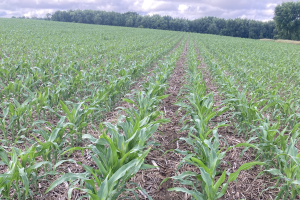
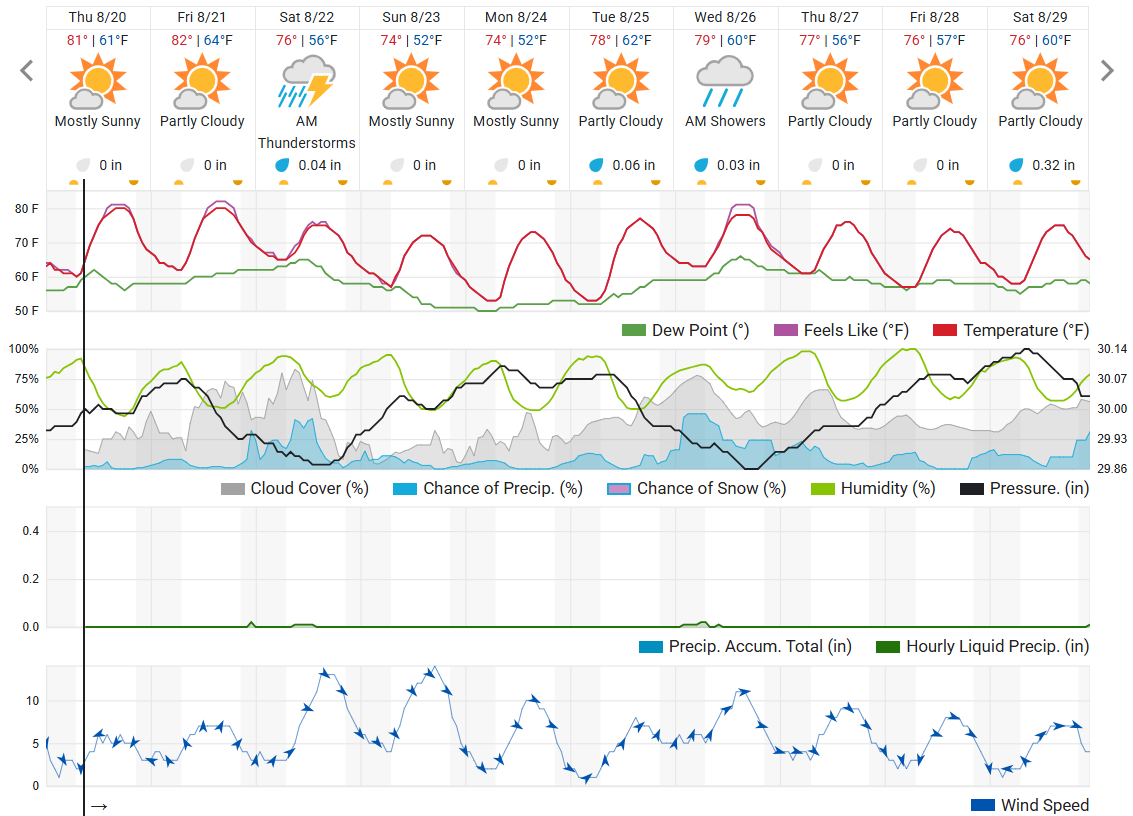
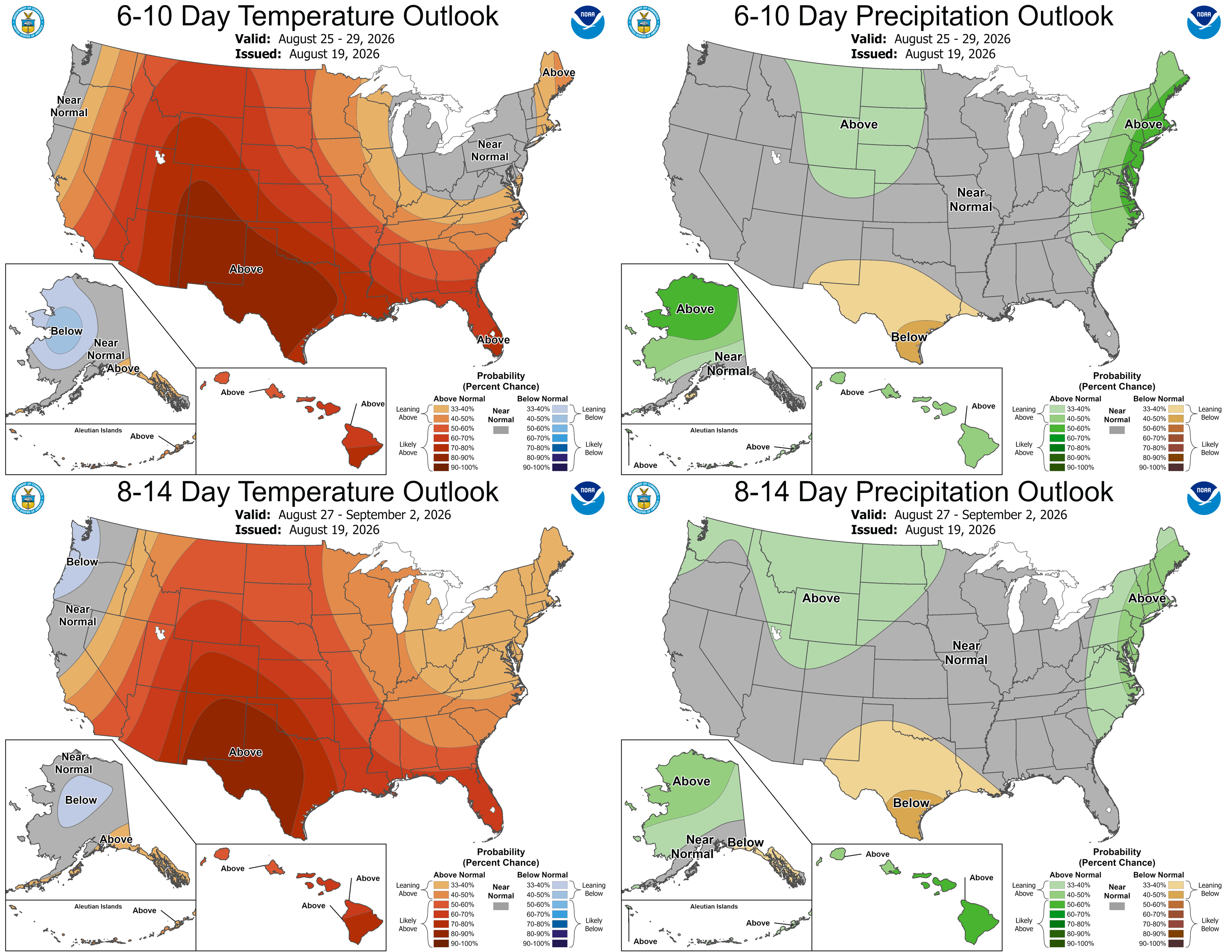
A rainy weekend and drizzly early week brought moisture and high humidity to southwest Michigan, causing weeds and diseases to progress within the canopy. Temperatures have been mostly moderate and will cool somewhat heading into the weekend. Scattered showers on Saturday, Aug. 22. and the middle of next week are expected to provide only negligible precipitation.
Crops and pests
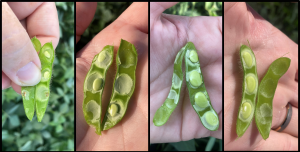
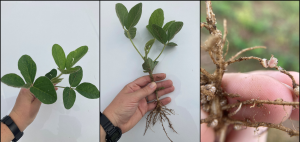
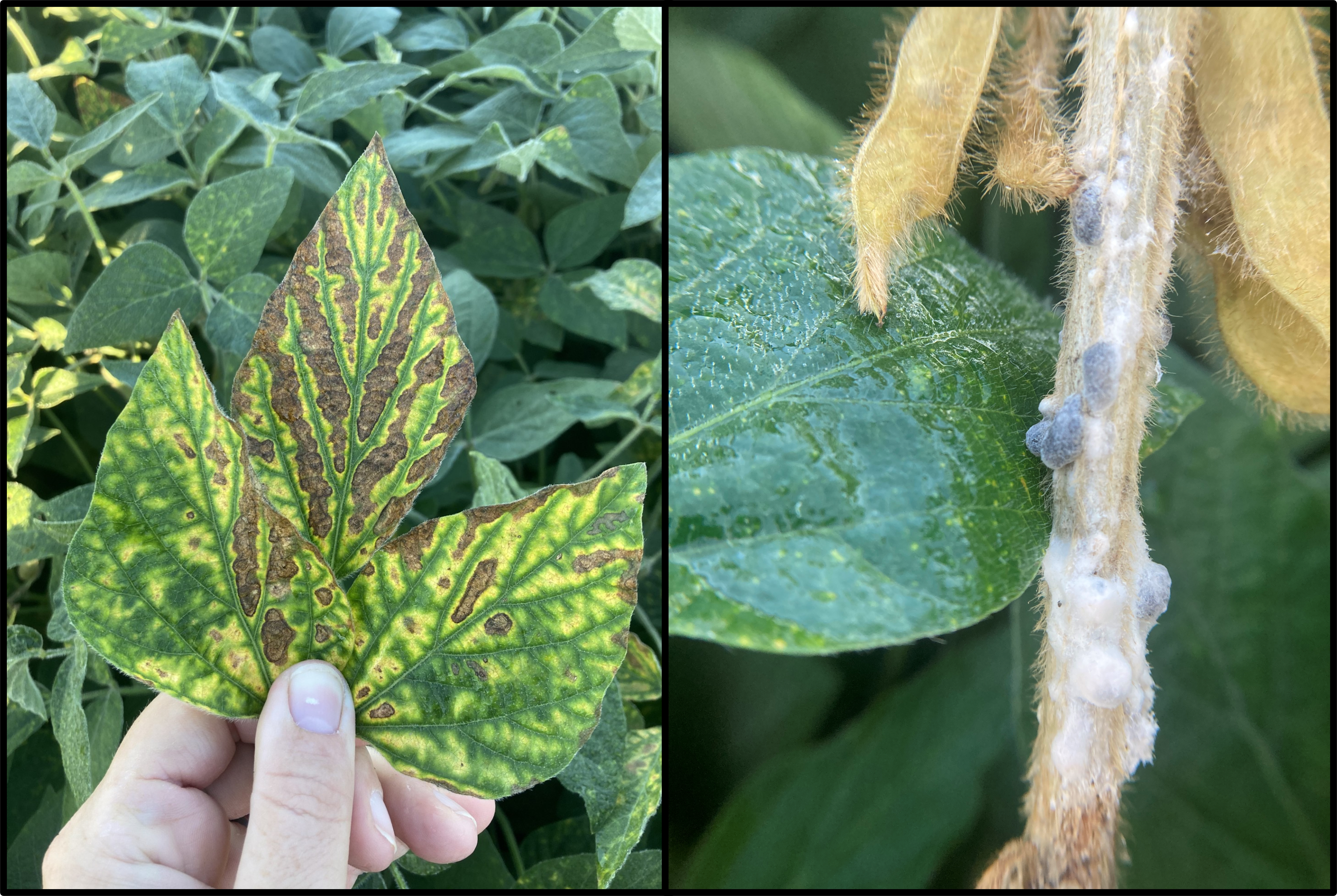
Full-season soybeans continued in R5 (seed fill). Symptoms of white mold, sudden death syndrome (SDS) and brown stem rot have started to show, although the window for managing them has closed. Watch out for red crown rot, which is a disease not yet confirmed in Michigan that looks similar to SDS and brown stem rot. If you suspect red crown rot, submit a sample to the Michigan State University Plant and Pest Diagnostics Lab. Michigan Soybean Committee and the United Soybean Board will cover the diagnostic fees. You can also request a soybean sampling kit.
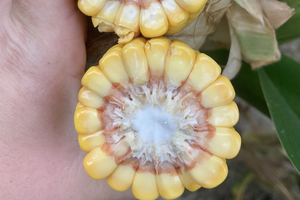
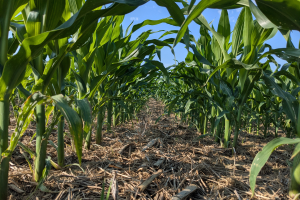
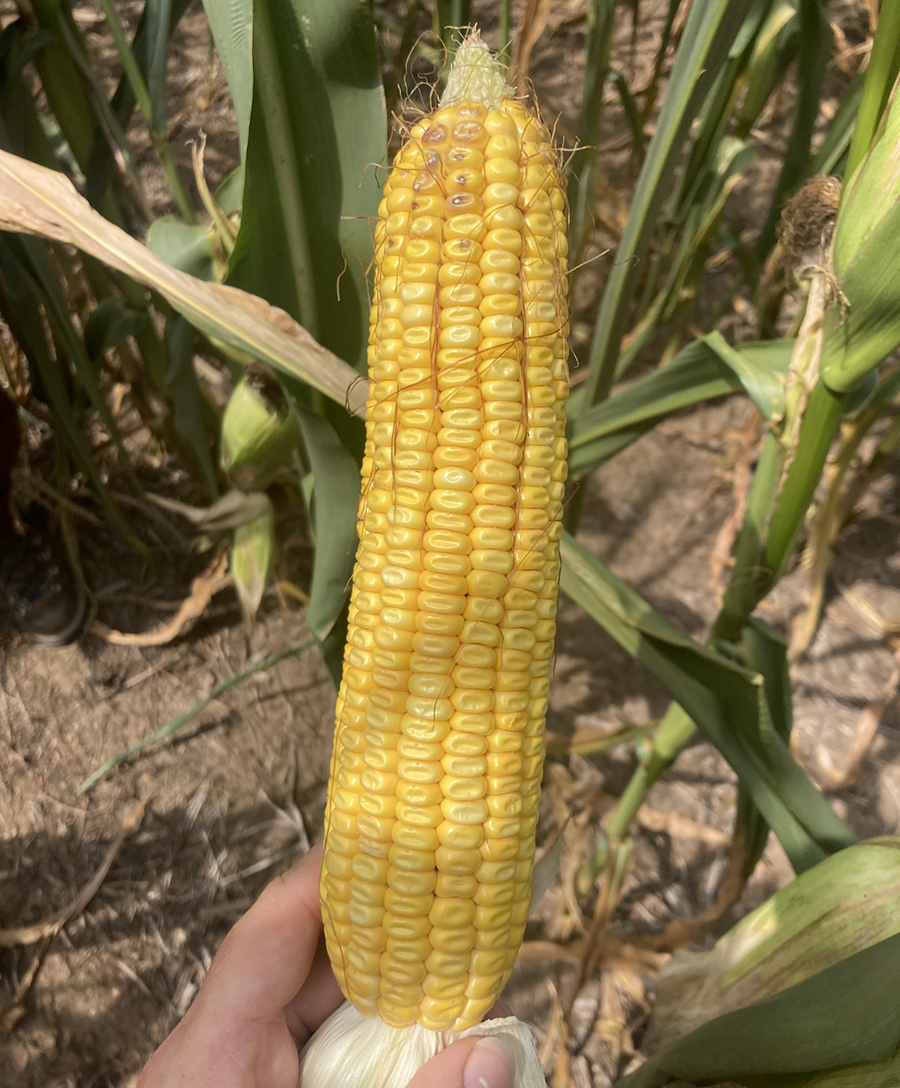
Corn continued in kernel development stages. At R3 (milk), the fluid within the kernel becomes milky as starches accumulate. R4 (dough) has a pasty consistency, and at R5 (dent), the outside edge of the kernel has an indent. Seed corn harvest approaches as fields senesce or receive defoliant applications.
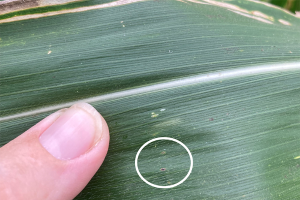
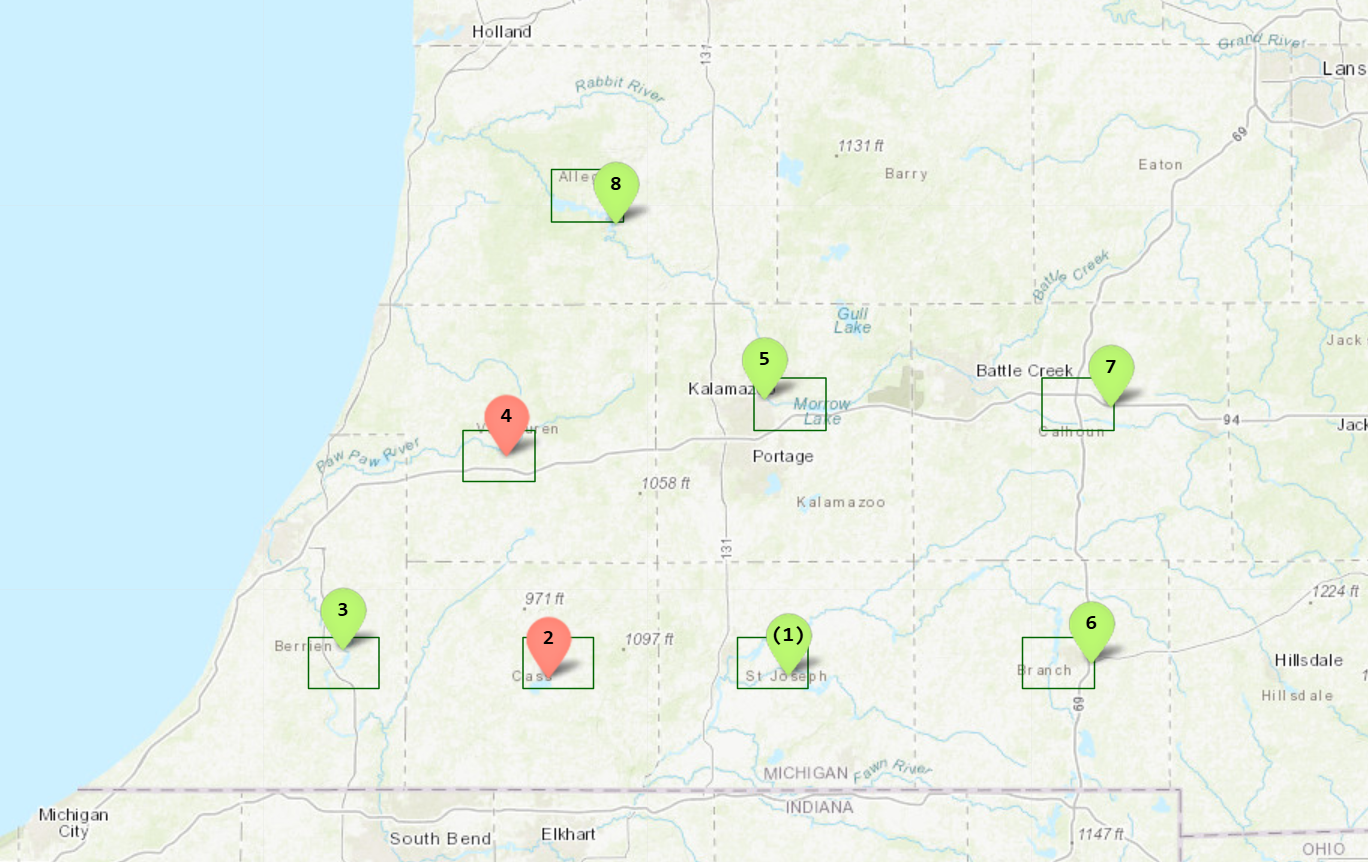
Continue to scout for tar spot and evaluate crop risk as kernels develop. Tar spot fungicide applications are most profitable when applied between R1 (silking) and R3 (milky kernel) in corn. According to the Crop Risk Tool, the risk of tar spot development and/or progression was low to moderate over the past week.
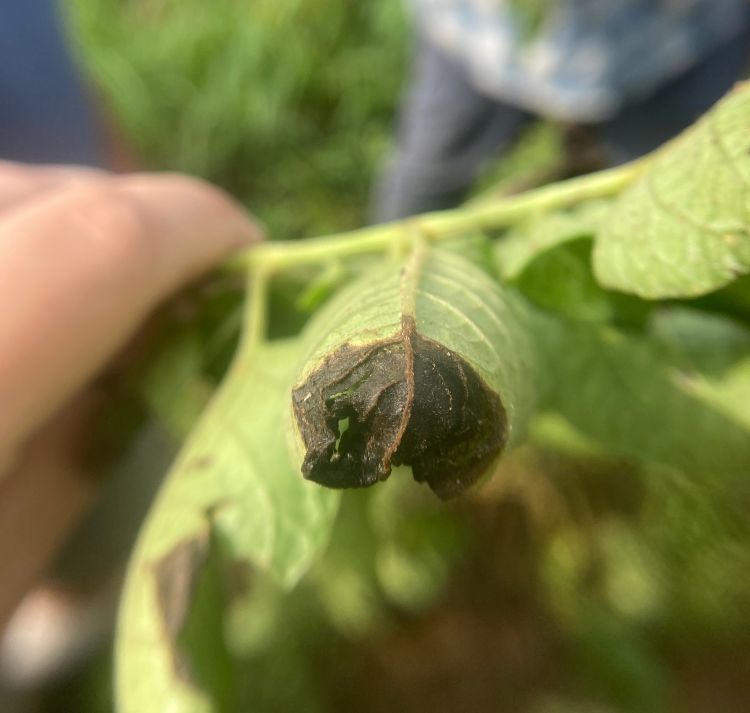
Late blight was found in St. Joseph County potatoes last week. This highly infectious and destructive disease is a major concern for potato growers. Appropriate chemical responses went out immediately, and the population has been managed to prevent spread.
While the ideal situation is to have no late blight outbreaks in Michigan, this also means that many agronomists, crop consultants and potato producers have little to no experience identifying it in person. As such, the farm with the late blight detection generously hosted an in-person identification and management meeting, organized by crop consulting company Mid-Michigan Agronomy, who detected and genotyped the late blight last week. Agronomists from all St. Joseph County commercial potato growers were present, as well as crop scouts and producers from other counties, an industry representative and Michigan State University Extension.
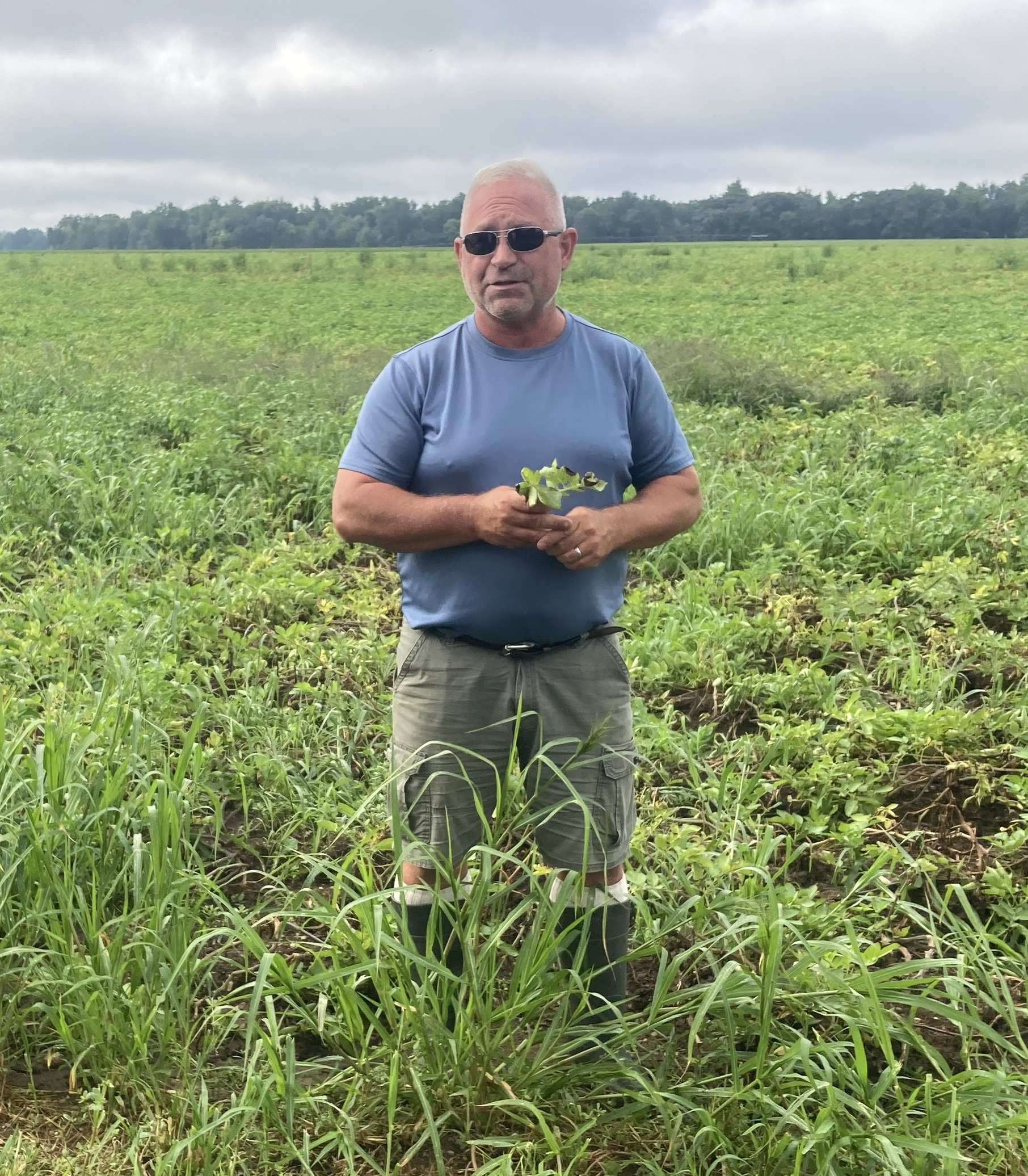
While late blight’s sporulation pattern can be diagnostic, the sporulation is only visible under certain environmental conditions. Other diagnostic clues for late blight identification include black (not brown or gray) lesions that can spread across veins and curling or twisting inward of the lesion. For more photos and information on the late blight risk over the past week, check out the article “Current status of potato late blight in Michigan – August 18, 2026”. To reduce late blight spread, use bleach to decontaminate footwear and clothing between fields.
.jpg?language_id=1)
Irrigation and water use
Corn and soybeans remain at peak water use, requiring approximately 1.3 inches of water per week (0.19 inches per day approximately). Maintaining adequate soil moisture during these critical growth stages is important to minimize water stress and protect yield potential.
Potato water use at pre-senescence and maturity is low. Pre-senescence requires 0.35 inches per week and maturity approximately 0.12 inches of water per week.
Rainfall this week is expected to be variable, with little to moderate precipitation across the region. Account for effective rainfall when scheduling irrigation to avoid over-irrigation and continue monitoring irrigated soybean fields for increased white mold risk, particularly when wet and humid conditions persist.
To improve irrigation management, consider using irrigation scheduling tools such as the free and updated MSU Irrigation Scheduling Mobile App, available for Apple and Android devices. The app provides field-specific irrigation recommendations based on crop growth, weather, and soil type.
This year, weekly crop water use updates will continue to be shared through the Southwest Michigan Crop Updates, and for added convenience, updates will also be sent through direct email and text messages. If you would like to see an additional location included in the report, please contact Angie Gradiz at gradizme@msu.edu or 531-249-4956.
The table below summarizes estimated crop water use (inches per week) for major irrigated field crops across Michigan's primary irrigated regions.
Estimated weekly crop water use for field crops in Michigan (inches per week) for the week of Aug. 17–23, 2026:
|
Crop |
Growth stage |
Constantine |
Berrien Springs |
Entrican |
Hart |
|
Reference ET |
1.18 |
1.21 |
1.17 |
1.2 |
|
|
Corn |
V14 |
1.3 |
1.33 |
1.29 |
1.32 |
|
Corn |
VT, Silk, Blister, Dough, Begin Dent |
1.3 |
1.33 |
1.29 |
1.32 |
|
Corn |
Full Dent |
1.18 |
1.21 |
1.17 |
1.2 |
|
Soybeans |
R2 (Full bloom) |
1.3 |
1.33 |
1.29 |
1.32 |
|
Soybeans |
R3 (Begin pod) - R4 (Full pod) |
1.3 |
1.33 |
1.29 |
1.32 |
|
Soybeans |
R5 (Begin seed) - R6 (Full seed) |
1.3 |
1.33 |
1.29 |
1.32 |
|
Potatoes |
Bulk |
0.71 |
0.73 |
0.7 |
0.72 |
|
Potatoes |
Pre-Senescence |
0.35 |
0.36 |
0.35 |
0.36 |
|
Potatoes |
Maturity |
0.12 |
0.12 |
0.12 |
0.12 |
Field Crops Virtual Breakfast Series
Best management practices for establishing new hay fields, presented by Kim Cassida, was the topic for the MSU Extension Field Crops Virtual Breakfast this week. Planting date, seedbed preparation and residue management are important factors for successful stand establishment. More information on forage establishment, management and more can be found on the MSU Forage Connection website.
Recordings of this and all the Virtual Breakfast meetings are closed-captioned and available at the Field Crops Virtual Breakfast webpage and the MSU Extension Field Crops Team social media platforms: Facebook, Spotify, Mediaspace, YouTube, Apple Podcasts and Twitter/X.
This work is supported by the Crop Protection and Pest Management Program (grant no 2024-70006-43569) from the USDA National Institute of Food and Agriculture. Any opinions, findings, conclusions, or recommendations expressed in this publication are those of the author(s) and do not necessarily reflect the view of the U.S. Department of Agriculture.