Michigan vegetable crop report – August 5, 2026
 Print
Print Email
EmailWarm, dry weather continues as summer harvest expands.
Weather
For the past week, temperatures were close to normal with highly variable precipitation. Central and eastern Upper Michigan saw the most rain, with drought strengthening in parts of Lower Michigan.
- Variably cloudy Wednesday, Aug. 5, with scattered showers and thundershowers possible in the northern Lower Peninsula, spreading southeast into the southern Lower Peninsula overnight and in the southeast Thursday. Mostly fair Friday and Saturday with an isolated shower possible. Scattered showers and thunderstorms possible once again to the north late Sunday, spreading southward into the Lower Peninsula Monday and Tuesday.
- Weekly total precipitation ranging from light totals in the eastern Upper Peninsula to more than 1.5 inches in the southern lower.
- High temperatures generally from the mid-upper 70s north to the low-mid 80s through the weekend. Low temperatures in the 50s north to low and mid-60s south through the weekend.
- Medium range outlooks generally call for an active storm track through the region with near to above normal precipitation totals and near normal mean temperatures.
Farmers and their bookkeepers wanted for a short interview
Are you or your bookkeeper frustrated with your farm accounting software? Are you searching for the right fit for your farm? We want to hear from you both! Michigan State University Extension is seeking farmers and their bookkeepers who are willing to participate in a brief phone interview or online survey about their experiences with farm accounting software. Your insights can help us develop educational resources that better serve farm businesses. This will take less than 15 minutes of your time. If you're willing to share your experiences, we'd love to connect with you!
Interested? Take this quick survey or provide your contact information so that we can call you when it’s most convenient for you.
Do you need more fertilizer or just more water?
Extended dry periods and stretches of high heat have been common this summer. Even with irrigation available, meeting crop water demand can be a challenge under these conditions.
Since plants require soil water to absorb and transport nutrients, both chronic and intermittent moisture stress can produce symptoms similar to some nutrient deficiencies. These can be puzzling if you didn’t catch the more obvious signs of water stress like wilting, drooping or curling leaves.
Lower (older) leaf yellowing and eventually necrosis (browning/death) around the leaf tip and margins can be common under dry conditions. These are similar to potassium (K) deficiency symptoms. In fact, in many cases it is a plant K deficiency, just due to insufficient soil moisture limiting K solubilization and uptake rather than not enough K in the soil.
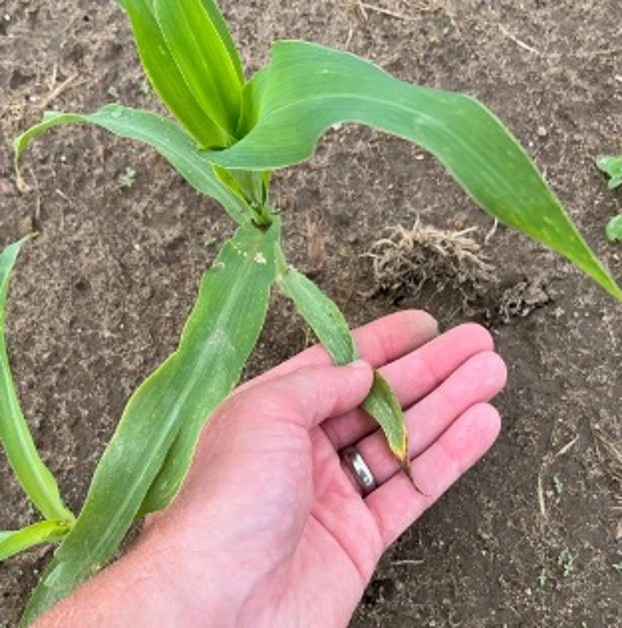
Lower leaves may scorch and die entirely or end up with irregular necrotic areas around the margins that can be signs of past periods of more extreme wilting.

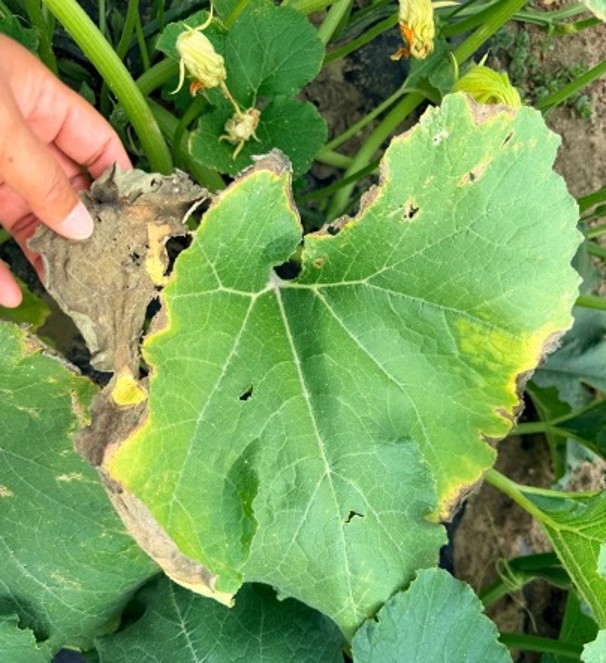
We usually associate “purpling” with phosphorus (P) deficiency symptoms, but purpling (the accumulation of anthocyanins) can be produced under many stress conditions, including drought. Again, the causal mechanism may in fact be limited soil P solubility or root access with limited moisture.
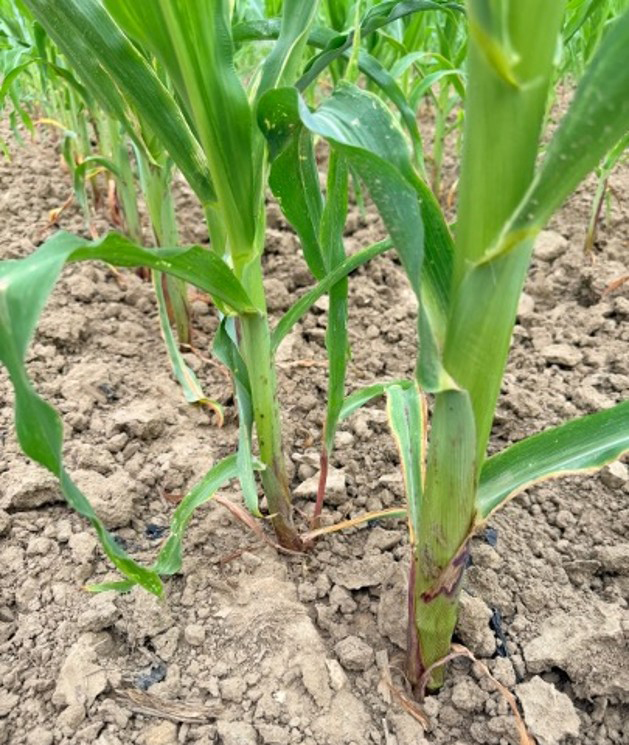
Dry soils can also limit both plant uptake and mineralization of nitrogen (N) and sulfur (S) from soil organic matter. This can manifest as more general stunting and chlorosis (yellowing) of lower leaves first (for N) or beginning towards newer leaves (for S). Tip burn and blossom end rot are also conditions associated with the plant’s ability to move water through the plant to supply calcium to rapidly growing tissues.
Fertilizer may be warranted, but make sure you’ve considered the impacts of recent weather and your irrigation management practices as possible explanations first.
Crop updates
Asparagus
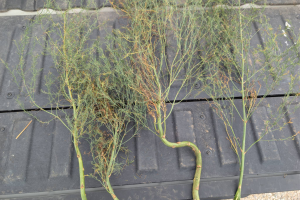
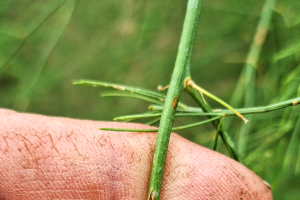
Between 11-15 disease severity values (DSVs) accumulated between July 28 and Aug. 3 at five Oceana County sensors MSU Extension is monitoring. A fungicide application would have been due Monday at these sites if nothing had been applied since July 24–27. Azoxystrobin can be considered during periods of rapid DSV accumulation. Tank mixing it with a protectant like chlorothalonil can help with resistance management.
Brassicas and greens
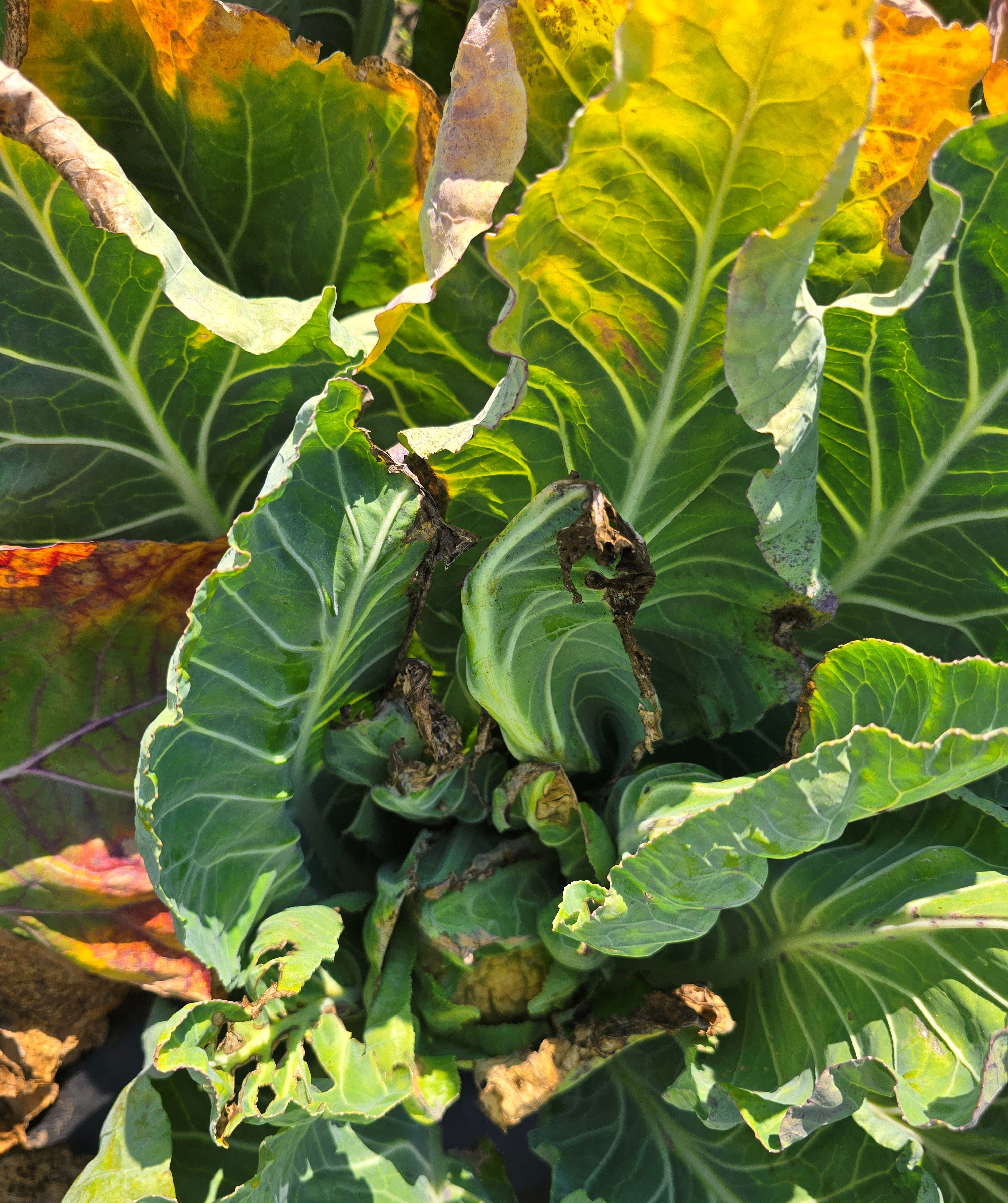
Tip burn has been reported in cole crops, including cauliflower. Tip burn is caused by a localized calcium deficiency at the leaf edges when movement of this nutrient in water is limited. Fluctuations in moisture are a common cause and varieties can vary greatly in their susceptibility to this disorder. Check out this Cornell University website to see which cabbage and cauliflower varieties may be more resistant to tip burn.
Minor thrips damage has been noted in cabbage.
Beans
Carrots and celery
For celery, scouts detected new aphid colonies in different plantings this week, even on young celery. Selective insecticides such as Beleaf (flonicamid) and Fulfill (pymetrozine) can provide effective aphid control in celery with less impact on beneficial insects. In contrast, broad-spectrum products such as pyrethroids, including Brigade (bifenthrin), can kill aphid predators and parasitoids. Movento (spirotetramat) is also selective, but when used for aphid control in celery, it must be tank-mixed with a penetrating surfactant to be effective. Check the Midwest Production guide for a more complete list of insecticides for aphids in celery.
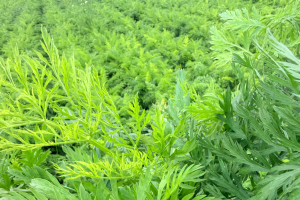
For carrots, 9 and 14 DSVs accumulated between July 28 and Aug. 3 at two Oceana County sensors MSU Extension is monitoring. A fungicide application would have been due Monday if nothing had been applied since July 24 or 27 at these locations. Effective fungicides including Merivon or the Luna series could be considered in a period of rapid DSV accumulation.
For carrots and celery, leafhopper samples continue to be collected weekly by MSU Extension and a scout and tested by MSU Plant and Pest Diagnostics. Results for each of the samples are listed below. To receive this information as soon as it is available, sign up for aster leafhopper text alerts. Things are slowing down, so sampling is also coming to a close.
Phytoplasma infectivity of aster leafhoppers:
|
County |
Collection Date |
Infectivity (%) |
|---|---|---|
|
Lapeer |
August 3 |
0 |
|
Oceana |
August 3 |
0 |
|
Lapeer |
July 30 |
0 |
|
Oceana |
July 28 |
0 |
|
Ottawa |
July 28 |
0 |
|
Newaygo |
July 23 |
4.2 |
|
Lapeer |
July 21 |
0 |
|
Oceana |
July 20 |
2.9 |
Cucurbits
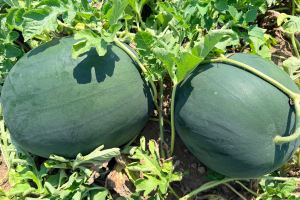
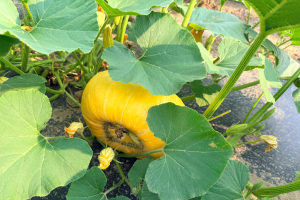
Bacterial wilt has been reported in cucumbers. Other bacterial issues have also been seen on pumpkins. Squash vine borer has been reported as a problem this year. Organic control of this pest is elusive, but some trials have shown that Bt products or spinosad could help. However, they would have to be on the stem when tiny caterpillars hatch; once caterpillars are in the vine, insecticides cannot reach them. Row cover can physically exclude egg-laying female moths but may also block pollinators from visiting cucurbit flowers depending on the timing.
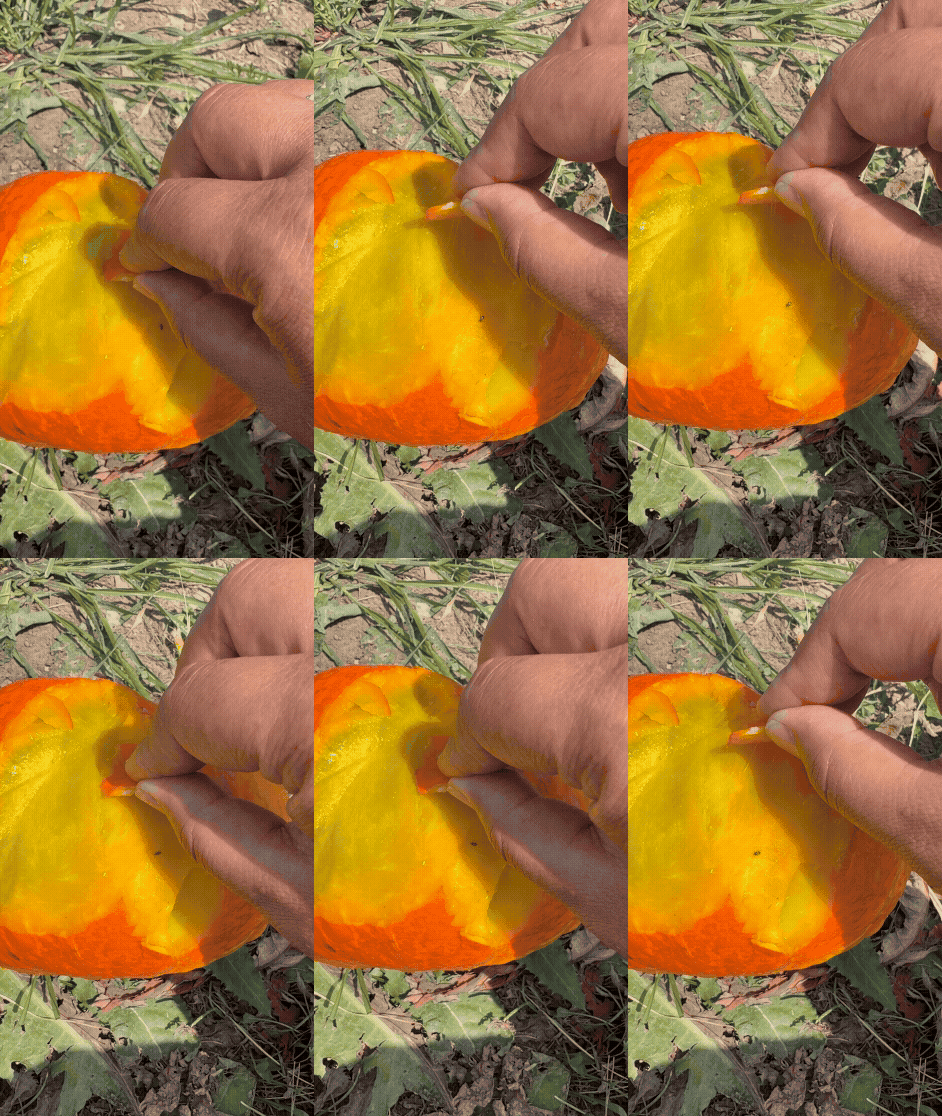
Cucurbit downy mildew spores continue to be captured across Michigan State University’s Trap Network. To date, all spores are clade 2, which affects cucumbers and melons. Clade 1, which affects pumpkins and squash, has not been detected (and only occurs some years in Michigan). Read this article for more information and a list of effective fungicides. As always, you can track the spread of downy mildew with the Cucurbit Downy Mildew Forecasting website.
The first symptoms of cucurbit downy mildew disease on cucumber plants in a commercial field planting were verified in LaGrange County, Indiana on July 29, 2026. Michigan growers should expect to see the first field downy mildew symptoms in the next few days given the nearby outbreak in Indiana and the recent milder temperatures and rainfall. Check the latest article on downy mildew.
Fruiting vegetables
Yellow shoulder has been reported in field tomatoes. Thrips and stink bug damage are beginning to show up in field tomatoes and peppers.
Sweet corn
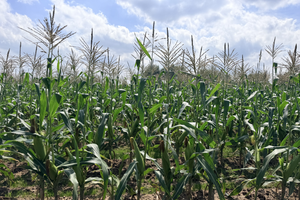
Corn smut is popping up on many farms. Corn earworm was present at modest numbers at traps MSU Extension and partner farms are monitoring.
To our south, corn earworm was present at very low numbers in Ohio State University’s trapping network, as of Aug. 2. Insect Forecast predicts a low risk of additional corn earworm migration the nights of Aug. 5 and 7.
Table 1. Corn earworm captures. Total in trap for week1 (avg # per night2).
|
Week |
Ottawa Co.4 |
Allegan Co.4 |
Oceana Co.4 |
Washtenaw Co.3 |
Monroe Co.3 |
Saginaw Co.3 |
Lapeer Co.3 |
Genesee Co.3 |
Midland Co |
|---|---|---|---|---|---|---|---|---|---|
|
June 28 |
15 (1.5) |
|
- |
- |
- |
- |
- |
- |
- |
|
July 5 |
15 (1.5) |
|
0 |
- |
- |
- |
- |
- |
- |
|
July 14 |
15 (1.9) |
|
5 (0.8) |
0 |
- |
2 (0.2) |
6 (0.8) |
1 (0.1) |
- |
|
July 21 |
10 (1.4) |
19 (2.7) |
8 (1.1) |
0 |
0 |
10 (1.4) |
1 (0.1) |
0 |
1 (0.1) |
|
July 28 |
10 (1.7) |
17 (2.4) |
17 (2.4) |
0 |
0 |
4 (0.6) |
0 |
0 |
1 (0.1) |
|
August 4 |
4 (0.8) |
- |
13 (1.9) |
0 |
2 (0.3) |
2 (0.2) |
0 |
0 |
1 (0.1) |
1Total number collected since last trap check; 2The total number divided by the number of nights since the last trap check; 3Cloth Heliothis traps track trends but catch less moths overall; 4Wire Harstack traps capture more moths.
Western bean cutworm numbers declined at two west Michigan locations. The peak of this one-generation pest is over, and numbers also declined in Ohio’s trap network. Learn how to scout for western bean cutworm.
Table 2. Western bean cutworm captures. Total in trap for week1 (avg # per night2).
|
Week |
Ottawa Co. |
Oceana Co. |
Washtenaw Co. |
Monroe Co. |
Monroe Co. (Location #2) |
|---|---|---|---|---|---|
|
June 28 |
2 (0.2) |
- |
- |
- |
- |
|
July 5 |
18 (1.8) |
3 (0.01) |
- |
- |
- |
|
July 14 |
160 (20.0) |
22 (0.8) |
16 (4) |
- |
- |
|
July 21 |
265 (37.9) |
44 (6.3) |
6 (0.9) |
0 |
- |
|
July 28 |
37 (6.2) |
163 (23.2) |
- |
0 |
2 (0.25) |
|
August 4 |
8 (1.6) |
31 (1.9) |
- |
0 |
1 (0.14) |
1Total number collected since last trap check; 2The total number divided by the number of nights since the last trap check.
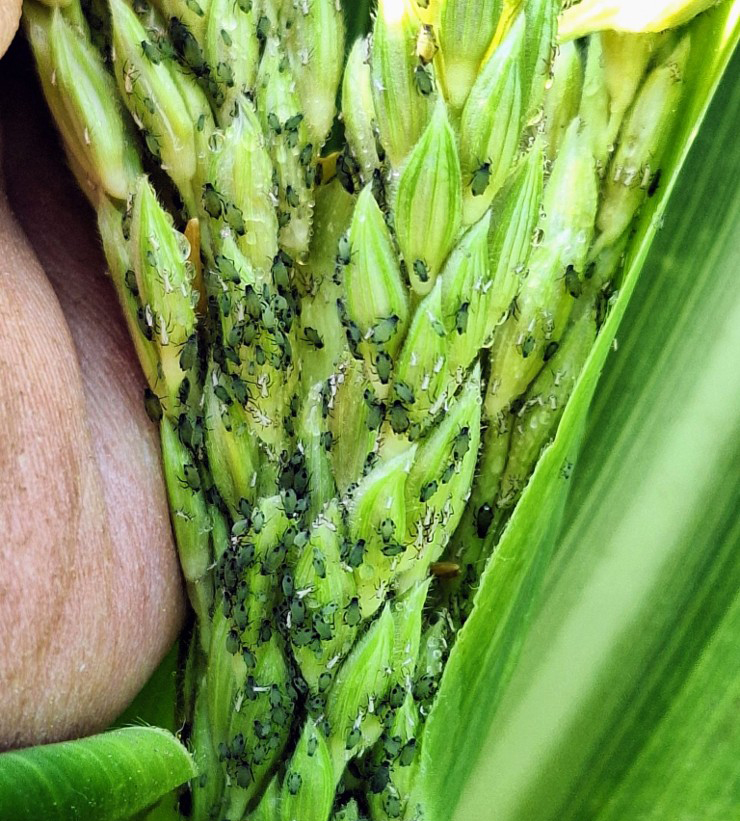
West central Michigan scouts reported an influx of corn leaf aphid, ranging from corn with tassels still in the whorl to row tassel. It’s possible these aphids lifted off and took flight from high populations that developed to our south in the Corn Belt. Very high populations can coat tassels with sticky honey dew. In field corn, this has been reported to interfere with pollination if populations are pervasive and abundant. In sweet corn, aphids could possibly serve as a contaminant if they, or their honey dew, develop on the ears.
Brigade (bifenthrin) has activity against both aphids and corn earworm. Other products could include Assail (acetamiprid), which does not help with corn earworm, or Lannate (methomyl), which has some caterpillar activity but is not a preferred product for earworm. Note the Lannate label has warnings that some varieties are susceptible to injury. Beneficials also readily colonize infested plants to eat aphids.
Cyclospora resources
Find webinars and resources that provide an overview of Cyclospora, practical guidance to help prevent contamination and protect your crops throughout the growing season, and the latest updates on the current outbreak.
The following video covers the basics of Cyclospora, including its biology, how it spreads, and why it is difficult to detect and remove from produce.
The following video explains how Cyclospora gets on produce, discusses strategies to reduce contamination risks, and reviews resources that can help strengthen your on-farm food safety practices.
Produce Food Safety On-Farm Readiness Reviews
Schedule an On-Farm Readiness Review (OFRR) today for a two-hour educational visit that takes place during the harvest season and is meant to be casual and low stress! Everything discussed during an OFRR is confidential, and focused on ways a grower can reduce their own risks in relation to produce safety. There is no pressure to take our advice either, we are just here to support you in your produce safety efforts!
Events
- August 11, 2026: West Michigan Organic Farm Tour: Explore Farm to Institution Markets from schools to hospitals – Muskegon/Whitehall, MI
- August 11, 2026: Michigan Agricultural Irrigation Water Use Efficiency Program - Lansing, MI
- August 11-12, 2026: Michigan AgroExpo – St. Johns, MI
- August 12, 2026: 30th Annual Center for Excellence Field Day – Clayton, MI
- August 13, 2026: Farming For the Future Field Day – Hart, MI
- August 18, 2026: Northwest Michigan TOPP Field Day: Farming for People, Purpose, and Profit – Petoskey, MI
- August 20, 2026: Hillsdale Nutrient Management Field Day – Waldron, MI
- August 30, 2026: Bee Palooza - East Lansing, MI
- September 1, 2026: U.P. Potato Field Day – Chatham, MI
- September 3, 2026: Cover Crop Workshop 2- Incorporating Principles of Regenerative Agriculture to Make My Farm More Resilient and Successful- Frankenmuth, MI
- September 3, 2026: Fourth Annual KBS LTAR Field Day - Hickory Corners, MI
- August 28, 2026: Washtenaw Conservation District Field Day – Ann Arbor, MI
- September 9, 2026: Tillage & Soil Health Field Day – La Salle, MI
- September 10-11, 2026: Great Lakes Tek Flex – Benton Harbor, MI
- September 16, 2026: 2026 Midwest Mechanical Weed Control Weed Day – Benton Harbor, MI
- September 22-24, 2026: Farm Science Review 2026 – London, OH
- October 4-6, 2026: Northern Michigan Small Farm Conference – Bellaire, MI
- November 4-6, 2026: Michigan Agritourism 20th Anniversary Convention – Frankenmuth, MI
- December 8-10, 2026: Great Lakes Fruit, Vegetable, & Farm Market Expo – Grand Rapids, MI
This work is supported by the Crop Protection and Pest Management Program (grant no 2024-70006-43569) from the USDA National Institute of Food and Agriculture. Any opinions, findings, conclusions, or recommendations expressed in this publication are those of the author(s) and do not necessarily reflect the view of the U.S. Department of Agriculture.