


 What is Aerobic Activity?
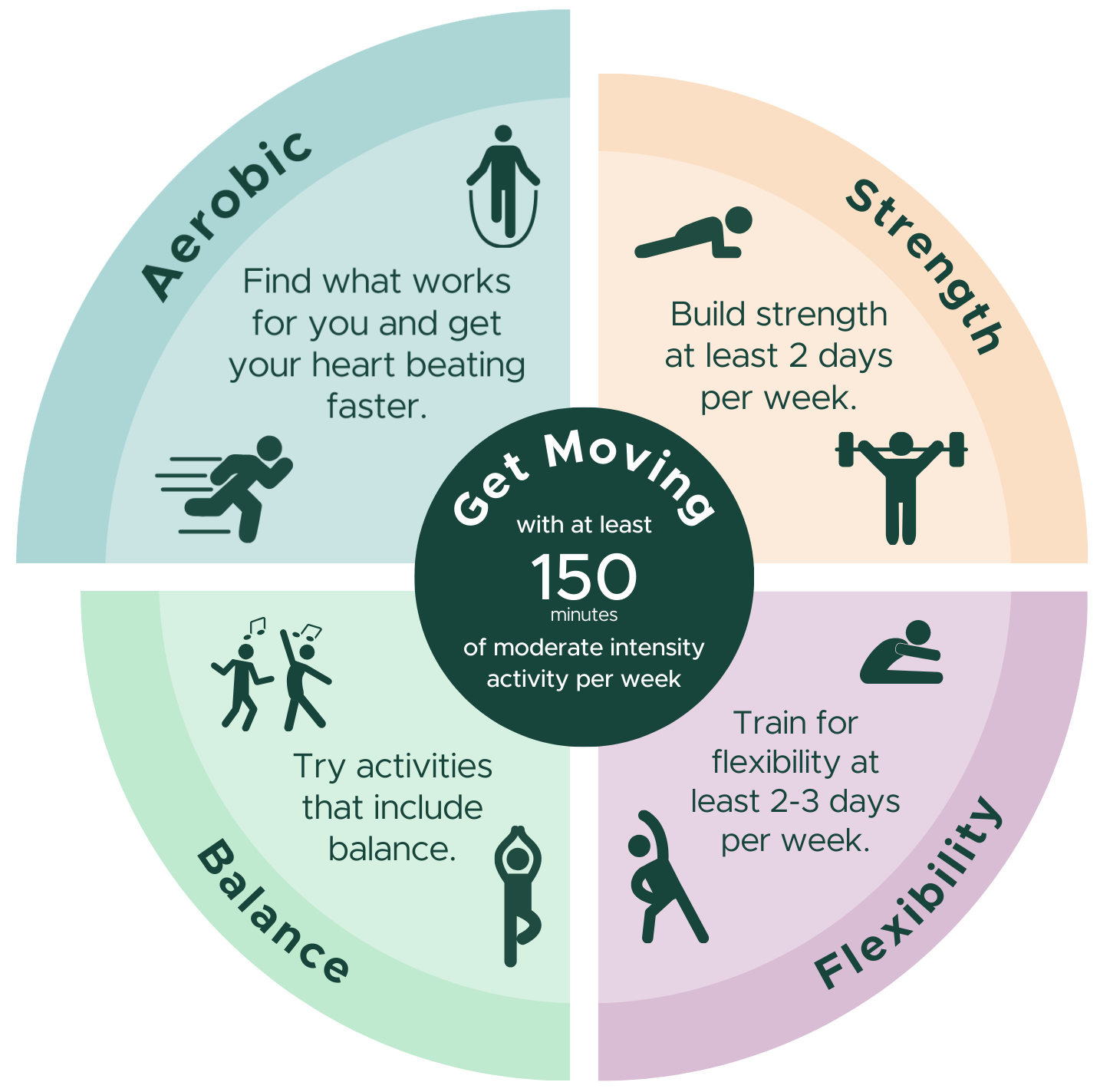
Aerobic activity, also known as cardio, is any movement that gets your heart pumping and makes you breathe faster. Aerobic activities use large muscle groups and are often done for longer periods of time than balance, flexibility or strength activities.
Why does Aerobic Activity Matter?
Aerobic activity helps keep your heart and lungs strong. It supports everyday energy, endurance, and overall health, making daily tasks feel easier. Additional benefits of aerobic activity include:
- Better sleep
- Improved mood
- Reduced stress
- Increased energy
- Support for a healthy weight
Activities that Improve Aerobic Fitness
- Biking
- Walking
- Dancing
- Active play or sports
- Adaptive fitness classes
- Chair aerobics / seated cardio
- Wheelchair or mobility‑aid‑assisted cardio
- Household or yard work that keeps you moving
- Water‑based movement (swimming, water walking, aqua aerobics)
How Much Aerobic Activity is Needed?
Aerobic activity is important for all ages:
- Preschool Children (ages 3 to 5): Encourage active play throughout the day.
- Children and Teens (ages 6 to 17): Aim for at least 60 minutes of moderate- or vigorous-intensity aerobic activity every day.
- Adults: Aim for at least 150 minutes a week of moderate activity or at least 75 minutes a week of vigorous activity. Activity can be broken into short sessions.
- Older Adults (ages 65+): Aim for at least 150 minutes a week of moderate activity or at least 75 minutes a week of vigorous activity, choosing activities that feel safe and comfortable.
Moderate vs Vigorous Aerobic Exercise - What’s the Difference?
An easy way to tell is the “talk test.”
- Moderate activity makes your heart beat faster and your breathing heavier, but you can still talk in full sentences. Examples: brisk walking, easy bike riding, or doing yard work.
- Intense activity makes your heart beat much faster and your breathing so heavy that talking is hard. Examples: running, fast cycling, or playing competitive sports.
Getting Started
- Start slow and build up over time.
- Choose activities you enjoy.
- Break activity into short chunks if needed.
Safety Tips
- Wear comfortable shoes and clothing.
- Drink water before and after activity.
- Stop if you feel pain or dizziness.
- Choose activities that match your ability level.
- Be under the care of a health care provider if you have chronic conditions or symptoms.
Aerobic activity counts in many forms and can fit into daily life in many ways.
Articles
Explore MSU Extension’s articles with research-based tips to support aerobic activity and cardiovascular health.
-
Walking for 15 minutes after a meal may provide the best benefit
Published on October 10, 2025
-
How will you stay active this winter?
Published on April 1, 2025
-
Make active choices for fitness
Published on December 20, 2024
-
How hair care affects physical activity in African American women
Published on November 7, 2024




Videos
Move along with our exercise videos that help you build endurance and get your heart pumping.
 Print
Print Email
Email