


Why Physical Activity Matters for Older Adults
Staying active is one of the best ways to age well. Regular physical activity makes it easier to do everyday tasks like bathing, dressing, and moving around the home or neighborhood. It reduces the risk of falls, and when falls do occur, injuries are often less severe. Staying active also supports strength and mobility, which can help maintain independence longer.
How Much Physical Activity do Adults Ages 65+ Need?
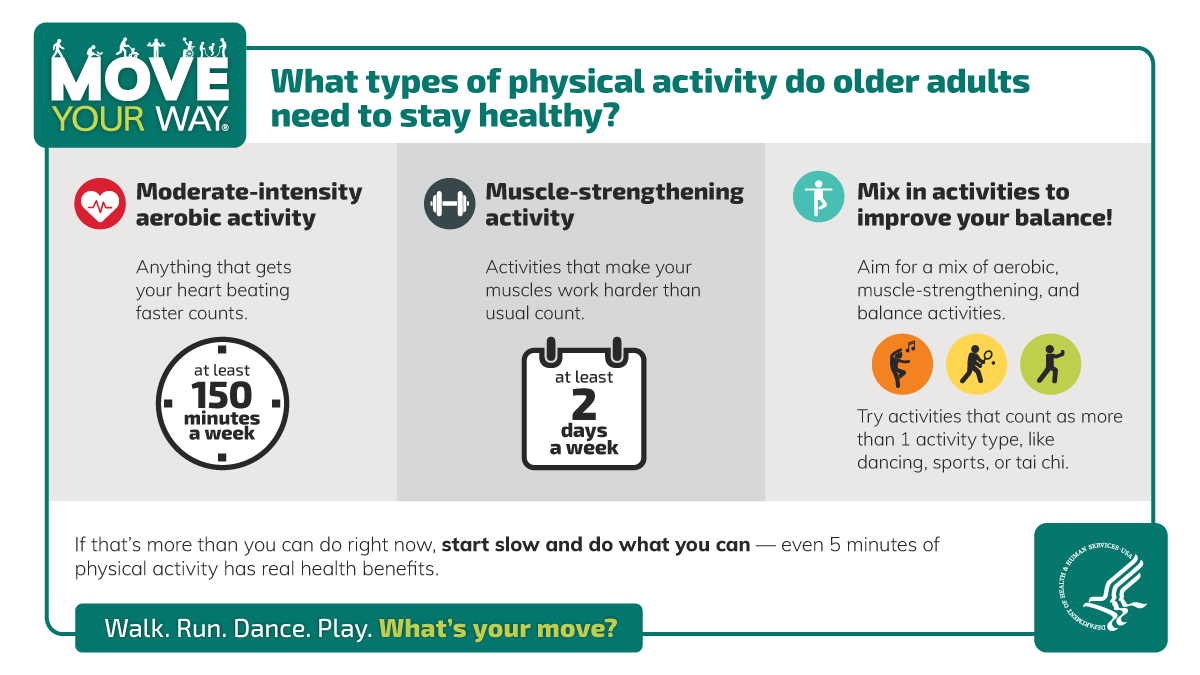
Adults of all ages should move more and reduce sitting time. Any activity is better than none. If chronic health conditions make it hard to reach the recommendations below, be as active as possible based on ability and safety.
For the greatest health benefits, include:
- Aerobic Activity: at least 150 minutes a week of moderate activity (like brisk walking) or at least 75 minutes a week of vigorous activity (like jogging). Spread this out over the week.
- Muscle-Strengthening Exercises: Lift weights, do body weight exercises, use resistance bands, or carry heavy loads at least 2 days a week.
- Balance Exercises: Include activities like tai chi and yoga, to help improve balance and reduce the risk of falls.
Move Your Way®, the physical activity campaign from the U.S. Department of Health and Human Services recommends weekly aerobic, muscle-strengthening, and balance activities for adults ages 65 and older.
What Types of Activities are Best for Older Adults?
Multicomponent activities are especially beneficial for older adults. These activities combine aerobic movement, muscle strengthening, and balance training in one workout, helping support physical function and independence.
Examples of multicomponent and other beneficial activities include:
- Dancing, yoga, and tai chi
- Walking, hiking, or jogging
- Swimming and water aerobics
- Aerobic exercise classes
- Bicycling (stationary or outdoors)
- Yard work such as raking or pushing a lawn mower
- Strength training with resistance bands, weight machines, or hand-held weights
- Body-weight exercises like squats, lunges, push-ups, and planks
- Gardening activities that involve digging, lifting, or carrying
It’s never too late to become more active.
Physical activity benefits add up over time and support healthy aging by keeping the mind sharp, reducing fall risk, managing health conditions, encouraging social connection, and helping people continue the activities they enjoy.
Learn More
Articles
Read MSU Extension articles focused on physical activity and healthy aging.
-
Staying safe and stable during the Michigan winter
Published on December 11, 2025
-
Staying active with neuropathy
Published on December 11, 2025
-
Indoor fitness in the winter
Published on December 11, 2025
-
Walking for 15 minutes after a meal may provide the best benefit
Published on October 10, 2025


Videos
Follow along with exercise videos designed to support strength, balance, and flexibility for adults ages 65+.
 Print
Print Email
Email